Up next in 10

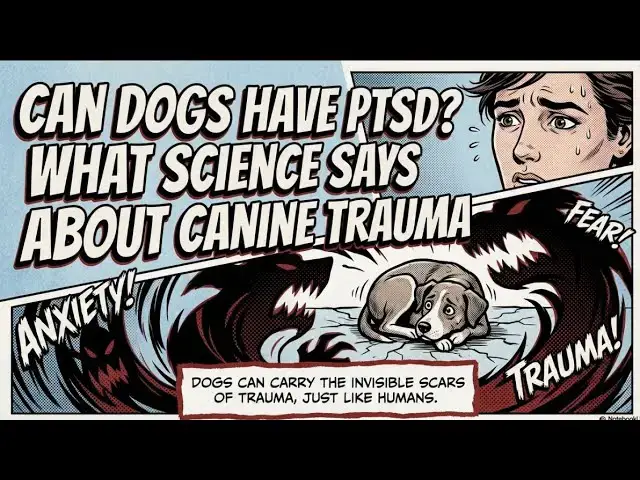
Watch the video guide about PTSD in dogs and how to overcome this scary condition!
To get more in-depth information, we suggest visiting the source material by Doggozila Magazine on the link below: 👇
🔗 https://doggozila.com/can-dogs-have-ptsd/
👆
#dogbehavior #PTSDINDOGS #dogptsd #doganxiety #doganxietyrelief #dogtrauma #servicedogs #doglife #confidentdog #doglove #dogguides #pets #petlove #dogmagazine
Show More Show Less View Video Transcript
0:00
All right. Today, we're going to embark
0:01
on a real hero's journey. Now, this
0:04
isn't a story about capes or super
0:06
villains. It's a story of courage. It's
0:08
a story of science and most importantly,
0:11
the incredible bond between us and our
0:13
dogs. We're about to go inside the mind
0:15
of a hero who's battling an enemy that
0:17
nobody can see. And this right here,
0:20
this is our starting point. For way too
0:23
long, these kinds of scars have been,
0:25
you know, dismissed or just
0:26
misunderstood. But now, science is
0:29
finally validating what so many of us
0:31
have known in our hearts all along. So,
0:34
for our first act, we're going to
0:35
confront a long-held skepticism headon.
0:38
It's all about establishing the
0:39
undeniable scientific reality of what
0:42
these amazing dogs are actually going
0:44
through. You know, this has been the
0:47
question for decades, right? People
0:49
wonder, are we just projecting our own
0:51
human emotions onto our pets, or is this
0:53
something real, something we can
0:55
actually prove? Well, the answer from
0:58
the scientific community is a huge
1:00
resounding yes. We have moved so far
1:03
beyond just stories and anecdotes. We
1:06
now have neurobiological research that
1:08
gives us undeniable proof that the
1:10
trauma these dogs feel has a real
1:13
physiological basis in their brains. And
1:15
make no mistake, this is a formal
1:18
recognized condition. Veterinary
1:20
behaviorists have actually adapted the
1:22
diagnostic frameworks from human
1:24
psychology to identify and treat it in
1:26
dogs. What's so important to get here is
1:28
that this isn't just bad behavior. It's
1:31
a real clinical diagnosis.
1:33
Okay, so now let's go deeper. Let's
1:35
really get inside their head and see how
1:37
this battle unfolds on a neurological
1:39
level. Because this isn't a choice for
1:41
them, it's a war being waged inside
1:43
their own brain. Think of it like this.
1:46
Imagine the brain's alarm system, the
1:48
amygdala, gets hijacked. It's like the
1:50
on switch gets stuck. So, it just starts
1:53
firing at anything that even vaguely
1:55
resembles the original threat. And that
1:57
traps the dog in this constant state of
1:59
fight or flight. So, in a healthy
2:01
system, right, those stress hormones
2:03
like cortisol and adrenaline, they're
2:06
supposed to fade away once the danger's
2:07
gone. But with PTSD, the whole system
2:11
just breaks. The dog's body is
2:13
constantly being poisoned by its own
2:15
stress chemistry. And this creates a
2:18
vicious cycle where the fear is
2:20
physically fueling more fear. And that
2:23
brings us to something really
2:24
fascinating and kind of heartbreaking.
2:26
The nature of traumatic memory. A
2:28
traumatic event isn't stored like a neat
2:30
little story. Instead, it shatters into
2:32
these sensory fragments a sound, a
2:35
smell, a feeling. And when a trigger
2:37
brings those fragments up, it's not a
2:39
memory. It's a flashback. The dog is
2:41
literally reexperiencing the terror as
2:43
if it's happening all over again right
2:45
now. So, you can see the stark contrast
2:47
here, right? A healthy brain can process
2:50
things. It can regulate fear. But a
2:51
traumatized brain, it's locked in
2:53
survival mode. The rational parts of the
2:55
brain are essentially offline,
2:57
completely overruled by this primal
2:59
command to just survive. You simply
3:01
can't reason with a brain that's under
3:02
siege. Okay, so we've seen the internal
3:05
battle, but how does that actually
3:07
manifest on the outside? Let's take a
3:10
minute to learn how to decode the
3:11
signals our dogs are sending us to
3:13
really understand their language of
3:15
fear. And I really want to stress this.
3:18
These are not signs of a bad dog. That
3:20
hyper vigilance, that's an exhausted
3:23
nervous system that just can't find the
3:24
off switch. Avoidance is a smart,
3:27
strategic retreat to a place that feels
3:29
safe. And that aggression that seems to
3:31
come out of nowhere. So often it's just
3:34
a desperate attempt to create distance
3:36
from something scary. These are all
3:38
calls for help. Okay, this next idea,
3:41
trigger stalking, is so so critical for
3:44
understanding those moments where your
3:45
dog just seems to explode out of
3:47
nowhere. See, one small stressor might
3:50
be manageable, but throughout the day,
3:51
these little triggers accumulate. They
3:54
pile up like weights on the dog's
3:55
nervous system. The dropped keys in the
3:57
evening isn't the real problem. It's
3:59
just the final straw that makes the
4:01
whole thing collapse. Now, I know a
4:03
diagnosis like this can feel completely
4:07
overwhelming, but I promise you, it is
4:09
not the end of the story. In fact, it's
4:12
the beginning of the hero's quest for
4:14
healing. It's a journey to help that
4:16
dog's nervous system finally feel safe
4:18
in the here and now. And every good
4:20
quest needs a map, right? The approach
4:22
here is multimodal, meaning it's got a
4:24
few different parts. It always starts
4:26
with a professional guide, a veterinary
4:28
behaviorist who can then help you learn
4:29
new skills through behavior modification
4:32
and crucially help you create a safe
4:34
home environment. A fortress of solitude
4:36
where that healing can really begin. So
4:38
you can see how these pillars all work
4:40
together. Environmental management,
4:42
that's the foundation. Healing just
4:44
can't happen in a chaotic world.
4:46
Behavior modification is the core
4:47
therapy. That's the active work of
4:49
rewiring the brain. And sometimes
4:51
medication can be a crucial support just
4:53
to lower that baseline of anxiety enough
4:55
to make all that learning and healing
4:56
possible. And let's break down these
4:58
tools a little bit cuz each one has a
5:00
really specific job. Desensitization and
5:03
counter conditioning work to change the
5:05
dog's emotional response. Literally
5:07
rewiring trigger equals danger to
5:09
trigger equals something good is about
5:11
to happen. Medication isn't a sedative.
5:13
It's a tool to help correct a
5:15
biochemical imbalance. and management.
5:17
Well, that creates predictability, which
5:19
to an anxious brain is the very
5:21
definition of safety. All right, we're
5:23
coming to the final and honestly the
5:25
most important part of this entire
5:26
quest, your role in all of this. You are
5:29
not just an owner or a trainer. You are
5:31
the indispensable partner in this
5:33
journey. So, this is your mission.
5:36
First, radical patience. I mean it.
5:38
Progress is going to be a spiral, not a
5:40
straight line. Second, manage your own
5:43
emotions cuz your calm is your dog's
5:45
anchor. they feed off of it. Also, build
5:48
a team so you don't have to do this
5:49
alone. And above all else, be your dog's
5:52
advocate. You are their voice in a world
5:54
that can feel incredibly overwhelming. I
5:56
love this quote because it just
5:58
perfectly captures your ultimate role
6:00
here. You are creating a safe harbor for
6:03
them to retreat to. You're providing a
6:05
steady anchor in their emotional storm,
6:08
and you are interpreting the world for
6:09
them, showing your dog moment by moment
6:12
that they are finally truly safe with
6:14
you. So, let's leave with this final
6:17
thought. The quest here isn't about
6:19
erasing the past to get a normal dog
6:21
back. It's about building resilience.
6:23
It's about helping them become a secure,
6:25
happy dog who can navigate their world
6:27
with confidence. It's about co-authoring
6:30
a brand new chapter in their story. One
6:32
that's defined not by trauma, but by an
6:35
unbreakable bond of safety and trust.
#Health Conditions
#Mental Health
#Dogs