Up next in 10

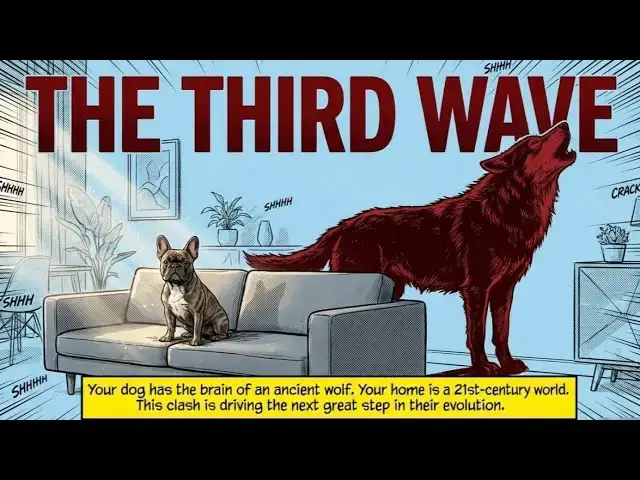
Watch this Video Guide to find out if Dogs Are in A New Phase of Evolution.
If you are interested in this topic, we suggest continuing reading from the source material by Doggozila Magazine on the link below: 👇
🔗 https://doggozila.com/are-dogs-in-a-new-phase-of-evolution/
👆
#evolutionofdogs #dogevolution #dogverse #dogdomestication #wolftodogs #doggielife #doglove #petlove #dogmagazine #dogblog #thirdwaveofdogevolution #petlife #doglife
Show More Show Less View Video Transcript
0:00
Hey everyone and welcome. You know, we
0:02
think we know our dogs so well, right?
0:04
But what if their everyday quirks like
0:06
say absolutely losing their minds when
0:08
the delivery person shows up are
0:10
actually clues to a massive evolutionary
0:12
shift, a change that's happening right
0:14
now in our own homes. Let's dive in. So,
0:17
everything we're about to talk about
0:18
today is based on a really fascinating
0:20
article from Doggozilla magazine that
0:22
asks this exact question. I mean, we've
0:25
all been there, haven't we? The doorbell
0:26
rings and boom, instant chaos. But this
0:29
quote, it just reframes that whole
0:31
moment perfectly. It's suggesting this
0:34
isn't just your dog being naughty. It's
0:36
a piece of their ancient wild past
0:38
smashing right into our 21st century
0:40
world. And that collision, well, it's
0:42
forcing some pretty profound changes.
0:45
And that brings us to the big question
0:46
for this whole explainer. Are we right
0:49
now in our own lifetimes guiding our
0:51
dogs into a totally new phase of their
0:53
evolution, a a third wave of
0:55
domestication? Let's take a look at the
0:58
evidence. Okay, but before we can even
1:00
talk about a third wave, we've got to
1:02
understand the first two. They are the
1:04
massive evolutionary chapters that gave
1:06
us the dogs we know and love today. So,
1:09
wave 1 was this slow kind of natural
1:11
process. We're talking tens of thousands
1:13
of years ago when the bravest or maybe
1:15
just the hungriest wolves started
1:17
hanging around human camps. And then
1:19
something amazing happened. By about
1:20
10,000 years ago, dogs already had a ton
1:22
of physical variety. But then you fast
1:24
forward to the 1800s and wave 2 hits.
1:27
And this was a full-on human-driven
1:29
revolution in breeding, all for specific
1:31
luck. And this chart just breaks it down
1:33
perfectly. Wave 1 was all about
1:35
survival. It was this ancient deal we
1:38
made. We were selecting for temperament.
1:40
You know, the least fearful, most
1:42
cooperative wolves got to stick around.
1:44
It was a total win-win. They got food.
1:46
We got help and protection. But wave
1:48
two, that was all about status symbols
1:50
and what looked good. We started
1:53
selecting for looks, the perfect floppy
1:55
ear, a specific coat color. The entire
1:58
goal just flipped. But here's the catch.
2:00
There was a hidden cost to all this.
2:02
This obsession with appearance led to
2:03
stuff like the popular sire effect,
2:05
where just a few champion show dogs were
2:07
bred over and over and over again. A big
2:10
study on German Shepherds, for example,
2:12
showed this caused a massive nose dive
2:13
in their genetic diversity, which in
2:15
turn led to a spike in health problems.
2:17
The quest for the perfectl looking dog
2:19
sometimes came at the expense of a
2:20
perfectly healthy one. And that brings
2:23
us right up to today. Because now
2:25
there's a new and incredibly powerful
2:27
force shaping our dogs. We've taken them
2:30
out of the fields and put them into tiny
2:32
apartments, creating this huge mismatch
2:34
between their hardwired instincts and
2:36
what we expect from them. I mean, just
2:38
think about it. That instinct to guard
2:40
their territory that makes for a super
2:42
stressful walk in a crowded city. All
2:44
that boundless energy they were bred to
2:45
have for hurting sheep all day. Well,
2:47
that can turn into straight up anxiety
2:49
when they're cooped up in a small
2:50
apartment, their prey drive, their
2:52
barking, these used to be critical
2:54
survival skills. Now, we often label
2:57
them as behavior problems. So, here's
2:59
the bottom line. Our 21st century life
3:01
has basically created a brand new job
3:04
description for dogs. We're not really
3:06
selecting for a top-notch hunter or a
3:08
fierce guardian anymore. No, what we're
3:10
selecting for is a calm, flexible, super
3:13
social companion who can handle the
3:15
craziness of our world. And that demand,
3:18
that is the engine driving this third
3:20
wave. Okay, so that's the theory. It
3:22
sounds good. But is there any actual
3:25
real world evidence that this shift is
3:27
really happening? Oh, you bet there is.
3:30
Honestly, look no further than the
3:32
modern service dog. These dogs are the
3:34
perfect blueprint. They aren't just
3:36
well-trained pets. They're the result of
3:38
decades of intense selective breeding
3:40
for one thing and one thing only,
3:42
temperament. They are bred to be
3:44
absolutely unflapable. And get this,
3:46
research even shows they can have higher
3:48
levels of oxytocin, you know, the
3:50
bonding hormone. They are living,
3:52
breathing proof that we absolutely can
3:54
and are breeding for a specific
3:55
psychological profile. And this isn't
3:57
just a dog thing. The famous Russian fox
4:00
experiment is like the perfect
4:02
scientific model for this. Scientists
4:04
took wild silver foxes and for
4:06
generation after generation they only
4:08
bred the calmst, most human-friendly
4:10
ones. And the results, they were
4:12
mind-blowing. The new generations of
4:13
foxes started acting just like dogs.
4:16
They wanted human contact. They wagged
4:17
their tails. They even started to look
4:19
like dogs with floppy ears and different
4:21
coat patterns. It's proof that selecting
4:23
purely for friendliness can literally
4:25
reshape an animal inside and out. So,
4:27
that begs a really good question, right?
4:29
If the grand prize isn't the perfect
4:31
snout or the silkiest coat anymore, what
4:33
exactly is the most desirable trait
4:35
we're selecting for in this third wave?
4:38
Well, you could almost call it the
4:39
subtle gene. Now, it's not a real gene.
4:41
Obviously, it's a concept, but it
4:43
represents the absolute holy grail for a
4:46
wave three dog. Their built-in innate
4:48
ability to just be calm, to handle
4:50
stress, and to chill out in our loud,
4:53
busy human world. We've shifted from
4:55
breeding for physical form to breeding
4:57
for psychological fitness. Now, I know
4:59
this all sounds very grand and kind of
5:01
academic, but it has huge practical
5:04
meaning for you and the dog that might
5:05
be sitting at your feet right now. This
5:08
literally changes how we should be
5:09
seeing them and living with them every
5:11
single day. So, the next time your dog
5:14
is pulling like a freight train on a
5:15
leash or barking at a plastic bag
5:17
blowing down the street, just remember
5:19
this. They are not trying to be bad.
5:21
They are an ancient creature with
5:23
ancient software trying to operate in a
5:25
world they weren't designed for. Just
5:27
that little shift in how you see it can
5:29
change everything. It builds empathy and
5:32
helps us find kinder and frankly more
5:34
effective ways to train. And here's the
5:36
really cool part. You can actively
5:38
participate in this evolution. When
5:40
you're choosing a dog, try to focus on
5:41
the individual animals temperament, not
5:43
just what the internet says about their
5:45
breed. Socialize your puppy early and
5:47
often. That builds a resilient,
5:49
confident dog. And here is a huge one.
5:51
Make a conscious effort to reward calm
5:54
behavior. Teach them that just settling
5:55
down and relaxing is the best thing they
5:57
can possibly do. You are literally
5:59
helping them adapt. All right, we've
6:01
looked at the long history, the
6:03
pressures of our modern world, and the
6:05
scientific evidence. So, what's the
6:07
final verdict here? And the verdict is
6:10
yes, the evidence is pretty
6:12
overwhelming. Dogs are absolutely
6:14
entering a new phase of their evolution.
6:16
It might not be as flashy as creating a
6:18
whole new breed, but this quieter
6:20
revolution, this shift in temperament
6:22
driven by our simple need for
6:23
companionship is every bit as powerful
6:25
and just as important. But, you know,
6:28
this understanding comes with a really
6:30
big responsibility. It means we have to
6:32
guide this evolution with compassion. We
6:34
have to start prioritizing their health
6:36
and their well-being way above what they
6:38
look like. We aren't just pet owners.
6:40
We're stewards. We are the guardians of
6:42
a species that chose all those thousands
6:44
of years ago to throw their lot in with
6:46
us. We kind of owe it to them to get
6:48
this right. And that leaves us with one
6:50
last really crucial question to think
6:52
about as we continue on this incredible
6:55
journey together, shaping their very
6:57
nature with every single choice we make.
6:59
What kind of dog are we actually
7:01
building for the future? Thanks so much
7:03
for joining me for this explainer. For
7:05
more information about dogs and all
7:07
sorts of dog related things, be sure to
7:09
visit Dogazilla magazine over at
7:11
dogazilla.com.
#Dogs
#Biological Sciences