Up next in 10

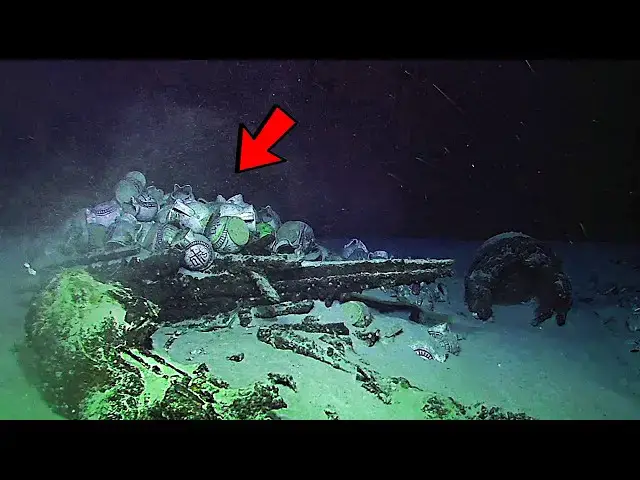
A French Navy underwater drone was scanning the dark seafloor off southern France when sonar detected a strange shape more than 8,200 feet beneath the surface.
At first, it looked like nothing more than an unusual outline in the deep Mediterranean. But when the camera went down, it revealed something incredible: a 500-year-old shipwreck sitting in the darkness, untouched for centuries.
Inside and around the wreck were ceramic jugs, yellow plates, iron bars, anchors, cannons, and clues from a lost 16th-century trading vessel now known as Camarat 4.
This is the story of France’s deepest recorded shipwreck, how it stayed hidden for nearly 500 years, and what the Navy accidentally found in a place no diver could ever reach.
What else is still waiting at the bottom of the sea?
Sources + images:
https://www.popularmechanics.com/science/archaeology/a70927796/french-deepest-shipwreck-found/
https://www.cbsnews.com/news/shipwreck-france-deepest-ever-archaeologists/
https://timesofindia.indiatimes.com/world/rest-of-world/a-hidden-world-2-5-kilometre-down-how-an-underwater-drone-discovered-frances-deepest-shipwreck/articleshow/129831548.cms
https://en.as.com/latest_news/a-military-drone-stumbles-upon-massive-underwater-wreck-and-finds-something-that-shouldnt-be-there-n/
Show More Show Less View Video Transcript
0:00
March 4th, 2025. Off the coast of
0:03
southern France, a French Navy
0:05
underwater drone was scanning the
0:07
seafloor in total darkness. More than
0:09
8,200 ft beneath the surface, there was
0:12
no sunlight, no waves, no sound from the
0:15
world above, only black water, cold
0:18
pressure, and a sonar screen searching
0:20
the bottom of the Mediterranean. At
0:22
first, the signal looked like a strange
0:24
shape on the seafloor. long, straight,
0:27
too organized to be natural [music]
0:29
rock. The Navy had not gone there
0:31
looking for an ancient ship. This was
0:33
supposed to be a deep sea survey. But
0:36
when they sent a camera down to see what
0:38
the sonar had found, the first images
0:40
revealed something almost impossible. A
0:43
ship sitting in [music] the darkness,
0:45
untouched for nearly 500 years. And
0:48
scattered around it were hundreds of
0:50
objects that looked as if they had been
0:52
placed there only yesterday. ceramic
0:54
jugs, yellow plates, iron bars, anchors,
0:58
cannons. A lost trading vessel from the
1:01
16th century found deeper than any
1:04
shipwreck ever recorded in French
1:06
waters. So, how did a 500-year-old ship
1:09
end up more than a mile and a half under
1:11
the sea? What was it carrying? Why was
1:14
it so perfectly preserved? And what did
1:17
the Navy accidentally find in a place no
1:19
diver could ever reach? Let's get into
1:22
it. The discovery happened near
1:24
Ramatuell off the coast of southern
1:26
France not far from Cap Kamarat. [music]
1:30
Above the surface, this part of the
1:32
Mediterranean looks beautiful. Blue
1:34
water, sunlight, tourist boats, quiet
1:37
beaches. But far below that peaceful
1:40
surface is a completely different world.
1:42
At more than 2,500 m deep, [music] the
1:45
sea becomes dark, cold, and almost
1:48
unreachable. No ordinary diver can go
1:51
there. No casual explorer can touch it.
1:54
And for centuries, anything that sank
1:56
that deep was basically gone from the
1:58
human world. That is exactly why this
2:01
wreck survived. The French Navy was
2:03
using an underwater drone to scan the
2:05
seafloor when the sonar picked up an
2:07
unusual shape. Sonar does not show a
2:09
scene the way a camera does. It gives
2:12
you echoes, outlines, patterns. A shape
2:16
can be rock. [music] It can be debris.
2:18
It can be nothing important at all. But
2:21
this shape was different. It had length.
2:23
It had structure. It looked too
2:26
deliberate. [music] So the Navy sent
2:28
down a camera to investigate. And when
2:30
the image came back, the mystery became
2:32
real. There lying on the seabed was the
2:35
outline of an old wooden ship about 30 m
2:38
long, about 7 m wide. Not a modern
2:42
wreck, [music] not a military target,
2:44
not a piece of metal dumped into the
2:46
sea, a ship from the 1500s. The French
2:49
Archaeological Department for Underwater
2:51
Heritage, known as DRSM, [music]
2:55
was alerted. And once experts studied
2:57
the images, they realized how important
3:00
the discovery was. This was [music] not
3:02
just another shipwreck. It was a rare
3:05
16th century merchant vessel preserved
3:07
at an extreme depth. They gave it a
3:09
temporary name, [music] Camarat 4. Not
3:13
because that was the ship's real name.
3:15
The real name is still unknown. Camarat
3:18
4 is the name of the archaeological site
3:21
[music] connected to the nearby Cap
3:22
Camarat area. And the more researchers
3:25
looked at the images, the more
3:27
extraordinary the wreck became because
3:29
the ship was not empty. Its cargo was
3:32
still there. Hundreds of ceramic jugs,
3:35
stacks of yellow plates, iron bars,
3:38
anchors, [music]
3:38
cooking vessels, and six cannons. Three
3:41
near the front, three near the back.
3:44
That detail matters because this was
3:46
probably not a warship. It was most
3:48
likely a merchant vessel. [music] But in
3:50
the 16th century, the Mediterranean was
3:53
not a safe place to move valuable goods.
3:55
Trade routes carried money, food,
3:58
ceramics, metal, supplies, and ships
4:01
that carried valuable cargo also had to
4:03
protect themselves. Pirates, raiders,
4:06
and rival powers were real threats. So,
4:09
a merchant ship carrying cannons was not
4:11
unusual. It was survival. Before we go
4:14
deeper into what they found, take a
4:16
second to like this video, subscribe,
4:18
and hit the notification bell because
4:20
discoveries like this remind us that
4:22
some of the most incredible time
4:24
capsules on Earth are not buried in the
4:26
ground. They are waiting in the dark at
4:28
the bottom of the sea. Now, here is what
4:31
makes Camarat 4 so fascinating. After
4:34
nearly 500 years underwater, parts of
4:37
the cargo were still arranged in ways
4:40
that stunned researchers. Some of the
4:42
plates appeared stacked. The ceramic
4:44
jugs were spread across the rec site.
4:47
The objects had not been taken by
4:49
treasure hunters. They had not been
4:51
destroyed by centuries of human
4:53
interference. They were [music] simply
4:55
too deep, too far, too unreachable. That
4:58
depth protected the wreck better than
5:00
any locked door ever could. For
5:02
centuries, storms moved above it. Ships
5:05
passed over it. [music] Modern France
5:07
grew along the coast. Wars came and
5:10
went. technology changed the world. But
5:13
down there in the darkness, the wreck
5:15
remained almost frozen in time. And that
5:18
is why researchers were so careful. A
5:21
discovery like this is fragile. Not
5:23
because everything will vanish in a
5:25
second, but because disturbing it too
5:27
quickly could destroy information that
5:29
has waited five centuries to be [music]
5:31
read. Every jug has meaning. Every plate
5:34
has meaning. Every iron bar, anchor,
5:37
cannon, and piece of wood could tell
5:39
researchers something about the ship,
5:41
its route, its cargo, and the world it
5:44
came from. The cargo seems to point
5:46
toward northern Italy, possibly the
5:48
Lurian region. That would [music] make
5:50
sense. The Mediterranean was a highway
5:52
of trade. Ships moved between ports,
5:55
carrying goods from one coast to
5:57
another. A vessel like this might have
5:59
left an Italian harbor with ceramics,
6:02
metal, and supplies, heading toward a
6:04
destination we still do not know. But
6:06
somewhere off southern France, something
6:09
went wrong. The exact cause of the
6:11
sinking is still unknown. Maybe it was a
6:14
storm. Maybe the ship was damaged. Maybe
6:16
it took on water. Maybe something
6:19
happened so fast the crew had no chance
6:21
to save the cargo. [music]
6:23
The public evidence does not give a
6:25
final answer. And that is one of the
6:27
reasons this wreck is so powerful. It
6:30
does not just show us what was found. It
6:32
leaves us with the question of what
6:34
happened. One detail confused
6:36
researchers even more. The rear part of
6:38
the ship appeared strangely empty. That
6:41
is unusual for a merchant [music]
6:43
vessel. Ships were valuable. Space was
6:46
valuable. If you were crossing the
6:47
Mediterranean with cargo, you used every
6:50
part of the ship that could carry goods.
6:52
So why did part of the wreck seem empty?
6:55
Was the cargo made of material that
6:57
disappeared over time? Was some of it
6:59
buried under sediment? Was the ship
7:02
carrying something that left no obvious
7:04
trace? Or did the sinking somehow
7:06
[music] scatter part of the load? For
7:08
now, those questions remain open. But
7:11
the site itself may eventually answer
7:13
them. The plan is not to simply raise
7:16
everything from the seabed. That could
7:18
damage the wreck and destroy the
7:19
context. Instead, researchers want to
7:22
study it carefully. They plan to create
7:24
a detailed digital 3D model of the
7:26
wreck. A virtual twin, a way to preserve
7:30
the site, measure it, analyze it, and
7:32
share it without immediately tearing it
7:33
apart. That means historians, [music]
7:36
archaeologists, geologists, ceramic
7:38
experts, and ship specialists can study
7:40
the wreck from different angles. They
7:42
can look at the cargo, the construction,
7:45
the seabed, the position of the objects,
7:48
the possible origin of the ship, and
7:50
maybe piece by piece, they can rebuild
7:52
the story of its final voyage. But there
7:55
was another surprise at the bottom of
7:56
the sea. Not ancient, modern. Around the
8:00
[music] wreck, cameras also showed signs
8:02
of modern pollution. a glove, plastic
8:05
bottles, cans, fishing nets, everyday
8:09
objects that had somehow reached the
8:11
same [music] dark seabed as a
8:12
500-year-old shipwreck. That contrast is
8:15
almost unbelievable. A Renaissance
8:17
trading vessel survived untouched for
8:20
centuries at extreme depth. But even
8:22
there, far beyond sunlight and far
8:25
beyond human reach, modern trash had
8:28
arrived. It is one of the most haunting
8:30
parts of the discovery. [music] The sea
8:32
can protect history, but it also records
8:35
what we leave behind. Camarat 4 is more
8:38
than a shipwreck. It is a message from
8:41
two different worlds. One world from the
8:43
1500s [music] when merchant ships
8:46
crossed the Mediterranean carrying
8:48
ceramics, iron, and supplies between old
8:50
ports and another world from today where
8:54
even the deepest places are no longer
8:56
completely untouched. That is why this
8:58
discovery matters. It is not only about
9:01
a lost ship. It is about trade,
9:04
technology, preservation, pollution, and
9:07
the hidden history still sitting on the
9:09
seafloor. For nearly 500 years, this
9:12
ship was invisible. No one on the
9:14
beaches above could see it. No sailor
9:17
passing overhead knew it was there. No
9:19
diver could reach it. It was simply
9:21
waiting until one day, a Navy drone
9:24
scanned the bottom. A strange shape
9:27
appeared on sonar. A camera went down
9:29
into the darkness and a ship from the
9:32
16th century came back into view. So the
9:34
next time you look at the sea, remember
9:36
Kamarat 4. Remember that beneath the
9:39
waves, beneath the light, beneath the
9:41
reach of human hands, there may still be
9:44
entire stories waiting in silence.
9:46
Because sometimes the ocean does not
9:48
destroy the past. Sometimes [music] it
9:51
hides it perfectly. If you enjoyed this
9:54
story, like the video. Subscribe for
9:56
more strange discoveries and hit the
9:58
notification bell so you never miss the
10:00
next one. And tell us in the comments if
10:03
a 500-year-old ship can stay hidden
10:06
under the sea for this long.
#Jobs & Education