Up next in 10



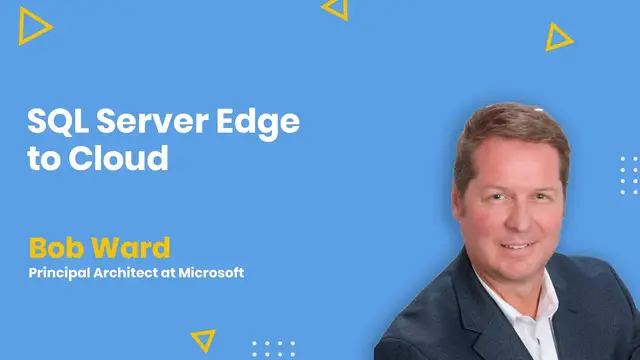
Join us on December 10 with Bob Ward on live AMA to learn about SQL Server Edge to Cloud.
ABSTRACT
Bring the security and performance of the Microsoft SQL engine to the edge with Azure SQL Edge running on ARM64 and x64 architecture. This productivity tool for edge computing combines new capabilities such as data streaming and time series with in-database machine learning and graph features.
Develop your application once and deploy it anywhere across the edge, your datacenter, and Azure. Get the Microsoft SQL database engine optimized for the edge
C# Corner - Community of Software and Data Developers
https://www.c-sharpcorner.com
#csharpcorner #ama #liveshow #sql #server
Show More Show Less View Video Transcript
0:00
Thank you
0:29
Thank you
0:59
Thank you
1:29
Thank you
1:59
Thank you
2:29
hi everyone welcome back to c-sharp corner live show i'm your host steven simon and we are back
2:44
with another episode of ask me anything uh show and uh guess what we have reached to episode number
2:50
27 and looks like i have been streaming this show all through this pandemic and guess what i think
2:56
this is going to be the last episode. So this is going to be the last episode of this season
3:04
After this, we're going to take a break of maybe a month and then we will be back with season two
3:08
Ask Me Anything with some amazing content, brand new speakers, and a lot more exciting stuff. But
3:15
it's not like if this is the last episode of this show, you know, I come in all other shows to that
3:21
c sharp corner for instance on every monday we have this azure ai show that we stream at 10 a.m
3:28
eastern in that show i am the host and i'm the guest where we talk about the entire data science
3:34
ecosystem that azure has built we talk about azure machine learning studio low code no code how you
3:40
can go ahead and run your custom machine learning models on azure so we just talk all about that in
3:44
that show then on wednesdays we have a c sharp corner mvp show where we feature community leaders
3:51
who take their time uh and to contribute in the community on c-sharp corner they may write
3:56
articles contribute through forums chapter leads and some other ways then definitely on thursdays
4:02
we do this ask me anything series on friday we do this growth minded show where we believe that
4:08
you should be the one coding in your entire life you should definitely grow in your personal career
4:13
so we talk about that in that show and one of the very exciting show that uh our one of our
4:19
mp once that is rocking the code world with dotnet dave where he interviews uh people for from uh
4:25
dotnet background some of the engineers uh program managers and directors uh in from dotnet
4:33
having said that let's go ahead and talk about today's uh guest of the show um he he is bob
4:40
watt he's works at microsoft as a principal architect i'm sorry for that background now
4:47
My neighbors, my neighbors are kind of nasty. So, and today we're going to talk about SQL Server Edge
4:56
We have seen that how this SQL has grown. I think the SQL was back in 1970s and even now people are using it
5:03
But if you have a SQL skill, what I really love about this Microsoft ecosystem
5:09
that if you know one thing, if you know C Sharp, Microsoft is going to take your skills to a very mixed level
5:14
If you know C-Sharp, you can now go ahead and work on Azure
5:18
You can build mobile applications, you know, Blazor. In the same way, if you know SQL and you feel like
5:23
hey, you're an old guy, that new database coming in, hold on. Microsoft got your back
5:28
You can take all those skills to the Azure. And that's what we're going to talk about in today's show
5:34
And so let me go ahead and invite Bob Ward without any further ado
5:44
Thank you
6:14
Hi, Bob. Welcome to the live show. Well, howdy. That's what we say in Texas for hello
6:22
And I got to tell you, I'm impressed by that intro. I've never had an intro like that where somebody built a little video of me
6:28
I was trying to remember where were those places that I had traveled and presented in those photographs
6:34
So thank you and thanks for having me here today. Thank you so much, Bob, for taking your time and accepting the invitation to be part of this live show
6:42
Before we go ahead and talk all those technical stuff, right, I would like to ask, how have you been all through this pandemic
6:48
You were talking about behind the scenes that you always loved to travel, right
6:52
How has things changed for you? Well, like anybody else, you know, I've had to adjust, adapt, overcome, improvise like any person would in this situation
7:02
But as it turns out, even before the situation in the calendar year 2020, I was already doing many virtual presentations, webinars, things, especially for international audiences
7:12
So, you know, I was telling you, it was kind of like a 40%, 60% split between, you know
7:17
doing that and then traveling and going to an event. But I certainly do miss being at events in person
7:23
It a way to connect to people that really hard to do online And so obviously like everyone else I very prayerful and hopeful that there be a time soon when we can do that again But the interesting thing is is that I gotten a lot
7:35
more requests to do things. I'm busier, far busier than I've ever been before presenting
7:41
It seems like every week I've got several requests from all over the world to come talk about SQL
7:46
anywhere between the edge and the cloud. So I'm doing well. Thanks for asking. And I hope everybody
7:51
here in the audience is doing the best they can and adapting and overcoming and improvising as
7:57
best they can because, you know, that is the way to kind of, you know, my motto to live my life
8:02
right? Yeah, that's great. I think we all had to change. We had to move to virtual things and
8:07
definitely we are more connected more than ever, I believe. I mean, we have been doing all this
8:11
virtual thing, but I believe at the same time, Bob, we are very blessed that we have all these
8:16
resources and this technology with us, that there are many people who have lost their life
8:20
the families are being affected. Yes. Definitely. Even if you're watching, everyone who's watching this show now
8:27
you are very lucky that you have these resources that you're watching because we have seen many lives
8:32
having affected. Absolutely. So having said that, again, I see your background
8:37
is very interesting. It says Azure SQL revealed. What's that, Bob? What's going on there
8:42
Oh, you mean this right here? Yeah. Well, first of all, you're looking at the background
8:47
of my office here. I'm very blessed to have an office in my home here in Texas. And so, you know, during the pandemic, I literally have been
8:57
working from here. This is where I work. This is where I do presentations. So you're looking at the
9:00
background. A lot of people love this background because it contains, it looks like an office
9:05
right? But also I just thought I'd tell you, it contains some interesting history. So right over here, this little binder is a binder of a training manual. I was given in 1993
9:19
when I joined Microsoft on Sybase. That's because SQL Server has its roots
9:25
in the Sybase product way back in those days, right? So I was cleaning out my office over the last year
9:32
before pandemic and so forth, and I found this manual. You know, we used to have things like hardbound manuals
9:37
back in the day. You know, we had ring binders and so forth, right? But also what you see right here are three books
9:43
that I have written over the last three years, including this one right here, Azure SQL Revealed
9:49
So if you don't mind, I'll just tell you real quickly about the three books because it talks about the journey and it really applies to SQL edge to cloud
9:56
So in 2018, I launched a book called SQL Server on Linux
10:02
And the reason I did that was I didn't see a lot of people talking about that
10:06
We had just launched it, you know, the year before. And interesting enough, I have a Linux background before I joined Microsoft
10:12
So before I joined Microsoft out of college, I was a Unix. We call it Unix back then, by the way. We call it Linux
10:18
I was a Unix C++ programmer working on database systems like Ingress, Oracle, and even Sybase
10:26
And so when I joined Microsoft, you know, I switched to this Windows gear, which I was not used to
10:32
But in those days, I thought that book was neat. And I loved it because I got back to my roots of Linux, of using Bash shell and all those kind of type things
10:40
Right. So I wrote the book on Linux. And that's part of our offering. That's really interesting that customers still need today don't even know that SQL works on Linux
10:48
And then last year, you may have seen, we launched our latest version of SQL Server called SQL Server 2019
10:54
And I was actually part of the team at the engineering team from the very beginning on that project started
11:00
So I was able to literally write a book from the perspective of what was it like to be part of a team from beginning to end to ship a product
11:07
It was fun. And so the first chapter is all about that journey, the history of how we built it
11:11
Right. And then talk about all the great functionality that exists in SQL 19
11:15
and then in December of last year, I was talking to my boss, my manager
11:21
about how to do things maybe a little different on our team. Where do we need some help
11:26
in getting the word out about what we do as SQL Server? And so we agreed that I would spend some time
11:31
on Azure SQL and then what better way to learn and promote that message than write a book
11:37
And so Azure SQL Reveal just launched here a few weeks ago and that's the latest book
11:43
And that book really is interesting because, again, I love telling history stories
11:49
So the first chapter is literally the history of Azure SQL. I went back and interviewed the original team members of the Azure SQL project and asked them, what was it like back then
11:58
I even interviewed a vice president for Microsoft that has left the company that was the vice president of SQL at the time
12:05
What was it like? Like, why did you do it? Right. So we talk about the journey of the history of evolution of Azure and Azure SQL
12:12
And then the book is a really detailed ysis and reference and examples for somebody that has some SQL skills, but they're just not sure how to apply that to the cloud
12:22
So got a lot of great reviews from the book, and I'm excited to see people take a look at it, read it, and see how it will help them, especially if they are living in that world right now where I need to spend some time in SQL, but I got to spend some time in the cloud
12:35
And how do I translate skills between them? Yeah, and I think that book looks very interesting
12:41
things what are we going to do if all people are watching uh after the show ends or maybe maybe
12:45
if i get doing this time i'll grab a link and i'll put it into the comments so if anyone's
12:50
willing to just go ahead and have a look at the book so sure that'd be great so uh uh again so
12:57
again before before we still go ahead and this is ask me anything serious right so of course
13:01
Right. So when I when I said Bob that when was that manual? 1993
13:10
Yeah. So this manual, I was given that manual in October of 1993
13:16
That's when I started with the company at Microsoft. So you remember that one day you remember the date
13:24
I know. Well, it's weird. Right. I mean, I know that it's 27 years ago
13:28
and how do you remember the date? But, you know, here's another way I remember it
13:32
My older son, Troy, is the same age as my, literally the same age as my career at Microsoft
13:38
So that's an easy way for me to remember. He was born in August of 1993. And it is one of the reasons I moved to Microsoft
13:44
because I was working at companies in the United States where I was traveling a lot. I know it sounds funny because I told you I travel a lot now
13:50
but I wanted to go find a company where I didn't have to travel any because I was just having a son that was just born, right
13:56
I wanted to be there with him. And so that was great because Microsoft offered me a job in their support organization where I didn't travel any
14:04
I was just helping people solve problems with SQL Server. And one of the things that Microsoft said to me and I, by the way, we didn't have anybody in Texas
14:12
So I had to fly to Seattle to interview for Microsoft. And one of the things that they said that I attracted to them was the fact that I was a developer, like I was a coder
14:22
So they were like, hey, Bob, here's the source code of SQL Server. When you solve problems with customers, you can go look at the source code if you want to debug a problem to look at that
14:32
And very early on, I got that reputation with our own product team that I could go look at the code that they wrote and tell them, hey, I don't think that's right
14:39
I mean, this is why this is broken. Sometimes they didn't like that, actually. But they appreciated it, right, because I could talk their language
14:46
So I knew database systems. I knew Oracle. I knew Sybase. I knew Ingress
14:50
I quickly learned Microsoft SQL Server and then applied that to looking at the source code I loved it because it was cool to get the opportunity to have access to the source code of a product that that a company produced You know I was writing my own code in those days
15:06
So I enjoyed it because I was getting to see the internals, which kind of led to a reputation
15:10
I started getting in the industry of presenting on the internals of how our product worked
15:15
And I was blessed to be able to look at the code to translate code into
15:19
presentations about how things work. So, Bob, when you say you got it manually October 1993, and when I look at this topic of today, it's SQL Server Edge to Cloud
15:34
SQL is pretty old, but you guys have done a great job to put it on the cloud and all those new stuff
15:41
And when you say you have been a part of this organization that has seen three different CEOs, I mean, not many people would have seen it, right
15:47
You have seen three different CEOs at Microsoft. So to be very frank, Microsoft has seen a phase from a not so good company to now being one of the most trustworthy cloud providers and a very more like a developer centric
16:04
How do you think Microsoft has changed through all this time and become a more very trustworthy provider or company
16:14
Yeah, you know, I won't brand the trustworthy part of it because I've worked for the company
16:19
and I quite frankly think it's one of the greatest companies I've ever worked for in my entire career
16:23
And I've worked for several companies, right? And I'm a very customer-driven person because that's been my job at Microsoft for many years
16:29
So me just looking at the evolution of the company, if you think about it, we were starting out really at a very, you know, this is Windows, right
16:37
That's what we do. It's a Windows company. It's an office company. But in those early days, if you remember, we really tried to attract developers a lot
16:44
We were really going after that developer space. Even Steve Ballmer, one of his biggest mantras was developers, developers
16:50
He wanted to go after that developer community. So I thought for a long period of time, Microsoft did a pretty good job of trying to attract developers towards products that we were building
17:00
And quite frankly, Windows NT was a big part of that. We wanted to attract developers, right
17:08
But we needed developers to write apps in the enterprise space to be credible to the industry
17:13
It's one thing just to be a departmental database. In fact, I'll show this to you
17:17
I have them still right here. These are the diskettes. Oh, my goodness
17:21
These diskettes are what I was given in 1993 to install SQL Server on OS2
17:28
Yes, Stephen, you have no idea what I'm talking about. Yeah, yeah
17:32
But can you imagine this SQL server exists? This is the product right here, just how much it gets, right
17:37
So we wanted to gain credibility from this to enterprise. And so, but we need developers to be part of that
17:44
You have to write apps, right? I mean, you can go out and just build great operating systems and databases all day long
17:49
but who's going to use it unless you have an app for it, right? So we're trying to attract developers
17:53
We're trying to get enterprise worthy. So, you know, we have that journey in the 2000s where we're doing all that thing
18:00
And and then it's interesting. I wrote this in the Azure book, by the way
18:04
We made a decision back in the 2000s time frame. I remember the exact date. We made a decision to hire a gentleman that was running the dynamics division to run what we call server tools and business
18:18
Server tools and business was our enterprise part of our business. Right
18:22
But included the developer part as well. And you may have heard of the name is Sati Nadella
18:27
We said, hey, Sati Nadella, you come run the server tools and enterprise business for us, right
18:31
And he is the one. We had already started the Azure journey, by the way, at that time. But he is the one that really started pushing the cloud hard
18:39
He's like, look, man, we really need to make this a huge part of our strategy. And he's also the person that embraced other things like Linux, like Macs, your Mac OS
18:50
I mean, like he was like, look, we need to be everywhere out there. We're not just going to be a Windows company
18:55
And by the way, that's a little around the time frame we rebranded Azure to Microsoft Azure
19:00
It used to be called Windows Azure. So I think it's the one thing Satya brought that was just truly amazing is that Microsoft will be a company that will appeal to developers anywhere they want it to be
19:13
And quite frankly, that's what eventually led to him approving. We had to get his approval to launch SQL on Linux because during my career, we had talked about doing SQL on Linux
19:22
I know this sounds crazy, but I remember even back in the mid 2000s talking about that topic
19:27
Could we do SQL on Linux? Does it that thing? And just the leadership of the company thought it wasn't the right strategy at the time
19:33
But I really give credit to Satya for making big, bold decisions to say, hey, in Azure, we're going to embrace Linux in Azure
19:41
And we're going to allow virtual machines with Linux to be first class citizens in this ecosystem
19:46
Right. We are. I remember one of the first decisions he made this. This is more of a user thing is he opened up office to iPad like office
19:55
I had friends of mine that have iPads and they couldn't run office on there
19:59
What's going on? Why can't we do office on here? Because office was available for like MacBooks
20:03
And one of the first decisions I saw Satya make as a CEO was like, you know what
20:07
That's crazy. Office can be a great app for iPads. And he did that. And I get a lot of him for like you talked about embracing Azure
20:15
embracing the cloud, and really using that server tools and business. By the way, that organization
20:22
is called Cloud and Enterprise today, and Scott Guthrie runs what Satya used to run. Because what
20:28
happened was, of course, when we needed a new CEO for the company, the board chose Satya from the
20:33
server tools and business vice president to become our CEO. So now Scott runs effectively what Satya
20:39
used to run, although it's gotten bigger, obviously. So we used to be called server tools
20:43
in business. Now it's called cloud and enterprise. But Satya had such bold, bold opinions about how
20:48
we need to embrace so many different things. And it kind of, it goes with the mission of the company
20:54
to empower everybody in the planet to do more, right? And it's not just about Windows anymore
20:58
Although Windows is a huge part of our strategy still. I love running Windows on my laptop
21:02
quite frankly. But, you know, you see me all the time. I run SQL on Linux, containers
21:08
containers is a big part of our strategy we'll talk about that but yeah
21:11
no doubt I've seen that evolution and I think Satya has emboldened the
21:16
trustworthiness of a lot of people and a lot of it has to do with the fact that he embraces
21:20
pretty much where do you want to go run stuff we'll host it
21:24
or we'll help you make you successful open source another thing that he helped emboldened right
21:28
think about the people we've hired at Microsoft I don't know if you saw recently
21:32
the founder of Python now works for us Yeah. People don't know this, but one of the founders of Kubernetes, Brendan Burns, from Google, we hired him to work at Microsoft
21:45
And when I talked to Brendan about that, one of the things he told me was, he told him, he said, I'll come work for you guys, but you got to give me people to contribute to the open source Kubernetes project
21:55
And we did it. We said, sure, of course. And so I suspect the same thing will happen with Python
21:59
Yeah, I mean, what an interesting journey Microsoft has been under the South Terrell leadership
22:06
I was very fortunate to meet him back in 2014. Nice. He stayed in India for the very first time after becoming CEO
22:12
I was a Microsoft partner, so I was pretty lucky enough to meet him
22:16
So yeah, Microsoft loves openness now, I know. And I think when you go ahead and talk about open source Microsoft now also has GitHub right Exactly I don think any other class of its provider can go in and even think about doing that because how Microsoft has been more like a developer centric So that really amazing
22:36
And let's go ahead and quickly talk about, let's get to our topic of the day today. Sure
22:43
SQL Server Edge to Cloud. I mean, as you said, right, that Microsoft is like, hey, where do you want to be going
22:49
to host it? Right? Right. So I think that's what it goes with today
22:53
SQL where you want to run, we're going to allow it. If you want to run it in today, I have it
22:58
If you want to run it on Raspberry Pi. There you go. Yeah
23:02
So, hey, Stephen, what are I, I've got like a slide that kind of summarizes this thing
23:07
You want me to show that to you? Yeah, that would be great. Okay, let's do that. Let's do that
23:11
Let's do it. Let me bring this over here. Let me share my screen
23:17
Let me share this screen. And you let me know if you can see that okay
23:22
I can see that. It says Azure SQL Realt. How about that
23:26
Oh. Okay. Can you see that okay? Mm-hmm. Perfect. Okay. So let me make sure I can still see you
23:34
I'll bring the screen yard up on my other monitor so I can see you. Okay. All right. So again, think about what I talked about diskettes, right
23:41
So the journey for SQL for so many years was Windows NT
23:47
departmental servers, small servers, then enterprise servers. like it's all server thing, right
23:54
And what we made a decision was, is a few years back
23:58
is we felt that the SQL Server engine could be an engine that could power
24:02
many different scenarios in IoT scenarios. So we embarked on a journey
24:08
we announced this year called Azure SQL Edge. And here's the thinking. We found from developers for IoT applications
24:16
that there's a lot of data to process in the IoT space on a device, right
24:21
And so your choices are to stream a lot of data from these devices to some hub or even directly to the cloud and then process it
24:31
The problem is, is that what if what if these devices are semi connected? Right
24:36
Think about a mining company that's out in the wilderness somewhere. And it's not like these people in these wilderness areas are directly connected to the Internet 24 hours a day
24:44
And even if they are, they don't really have maybe the greatest connectivity
24:48
So they can't stream this information like all the time. So what do you do then? Well, we embarked on a journey of taking the SQL engine and reducing the footprint to a very, very small size, like less than 500 megabytes for the engine itself, the code
25:03
But we're able to retain most of the functionality for the engine itself
25:07
And so we said, well, we think since we already know how to run SQL Server in a container, why don't we actually deploy SQL in the small footprint in a container, allow somebody to deploy that container on an IoT device
25:22
We'll bundle it with things like Kafka for streaming purposes. We'll also put into the SQL engine, into that engine that runs on the edge, the ability to natively take that streaming and then do ytics on the streaming in the engine real time on the device
25:40
And then, you know, we had this thing called SQL machine learning services we announced with SQL 16 and 17
25:46
So we already knew how to do R and Python machine learning models. We'll allow somebody to go train a model, put the model on the device, and then go do machine learning directly on the IoT device
25:58
So therefore, what you're sending from the device to, say, a hub or the cloud is processed data
26:05
Or if you're disconnected, you literally could go connect your device, download everything you need, and then go do predictive ytics on the device without being connected
26:15
I mean, Buck Woody, my friend, I love his scenario. we talked about a refrigeration truck, you know, a truck that carries goods that needs to be
26:22
refrigerated. And one of the key parts of this truck is that it must have a battery that is
26:28
viable to keep the refrigeration going. And so companies may, with these refrigeration
26:33
have IoT devices to help them do sensors to decide, you know, how's this thing running
26:39
Is the refrigeration running correctly? Is the truck running properly to keep the goods correct
26:44
The problem is, is that for like the battery, they may have to change out these batteries on a fixed cycle when the battery doesn't really even need to be changed because they can't predict when it should be changed
26:55
They can't afford to go out. So what if we could actually take the SQL engine, take data that's streaming into this truck through the sensors to decide about battery replacement, put a machine learning model into the truck
27:07
And then even though it's not even connected to the Internet, there could be a sensor given to the driver to say, hey, this battery's got to get replaced because there's an issue, potential issue
27:16
So you predict before it goes out to ensure that your trucking line runs smoothly
27:21
So that's Azure SQL Edge. It's versionless SQL Server because we don't have a specific version
27:28
We keep it continuously updated for you. You pull updates that we deploy
27:33
And again, you've got built-in streaming with Kafka. You've got an integration with Kafka in the engine itself
27:39
You've got streaming ytic queries you can run against your screen. And then you can run machine learning models against that
27:45
And it is just SQL servers. So you can literally connect to this thing with Management Studio or your favorite tool
27:50
And you can run column store indexes or other queries that you need to run
27:54
against the SQL engine. So that's the IoT SQL Edge offering that we announced here this year
27:59
It's pretty amazing stuff. Yeah. Yeah, Bob, a quick question. I mean, for guys who are just watching in and they do have
28:07
an IoT background and they've been using Azure for the services, we do know that Azure provides a service that's called Azure IoT Hub. Yeah
28:15
Yeah. How does this thing differ from this Azure IoT Hub? Because I know Azure IoT Hub is used for communication purpose
28:22
you can exchange data. How is different than that service? It's not different. It integrates with it
28:28
So you have the choice on an IoT device to just stream your data as a developer directly to a hub if you want to, right
28:34
You can do that. This gives you the ability for semi-connected and disconnected scenarios to do processing on the device and then stream results of that processing to the hub
28:44
So imagine in this scenario I was talking about that what I'd like to do is take the predictive ysis and stream that result to the IoT hub
28:54
And then I've got reporting and ytics going on in the cloud that's telling me how well is that working across all my fleet
29:01
So, again, you still can stream directly at IoT Hub or you can take Azure SQL Edge and think about you running SQL queries against this and taking the results of that and streaming it to IoT Hub
29:12
That's all an integrated play that we've got built in. That sounds pretty cool
29:16
It is very cool. And that's what customers were telling us. They were like, hey, you know, I love the IoT Hub
29:22
I love IoT technology. but just a raw stream of sensor data or telemetry data isn't going to work for me all the time
29:30
Isn't there a way to offload processing? Think about this as kind of being a smart IoT device where we can take the power of SQL Server at a very small footprint as a container
29:39
and allow you to do processing directly on the device itself without even being connected to the cloud if necessary
29:47
That's cool. That definitely makes sense. that I think instead of just sending the data to the cloud
29:53
and we're just storing it and not making any sense out of it, what you are doing is we're not only sending the data
29:59
we are processing it. making the alerts and all those things. We are generating the insights from the data
30:06
I think you did mention you have the stream ysis where you can do this thing on the real time. Correct
30:13
Yeah. People have seen Azure Stream ytics, think about that type scenario
30:18
Azure Stream ytics. Think about being able to do that processing directly on
30:22
the device itself through SQL Server. Here's the thing, if you're a developer that understands T-SQL
30:28
it all just works with T-SQL, everything does. All right. It looks like this space needs a lot more explored
30:36
and I think this is humongous. You guys have indicated all the good things
30:40
coming from different products and added in one package. That's right. Now, if you think about the journey that we're
30:46
doing and you think about still about what I'll call the word on-premises
30:50
because even though this is Azure SQL Edge, the SQL engine runs on devices
30:55
not in the Cloud, of course, It talks to the cloud, but it runs on wherever you need it, right
31:00
And then if you think of this journey, you think next of SQL 19 and SQL Server on Linux
31:06
Think of those two things. Those are typically running. They don't have to, but they're running typically in your data center as a developer, as administrator
31:14
So SQL 19 being a huge release for us last year. And one of the things we released with SQL 19 that was groundbreaking was Spark integration with SQL in a big data cluster
31:27
So now all of a sudden you could deploy SQL Server in a Kubernetes environment and then you could run native Spark integrated with SQL Server together with Hadoop in this one cluster
31:39
Along with that was this concept called Polybase, where you could then, again, SQL Server run queries and let the data stays where it lives, whether that's Hadoop, Oracle, MongoDB, Teradata, other SQL servers, Azure
31:52
So SQL could become a data hub for you to run your queries
31:57
And so the Spark integration with SQL 19 was a really big thing for us launching that last year
32:01
And the really nice thing, if you look to the right hand side over here, it lines up with SQL Server on Linux, because it turns out this big data cluster is deployed as a series of Linux containers in a Kubernetes cluster
32:15
So all of a sudden now the rich integration with SQL Server, with Linux, with containers, we embrace that 100 percent
32:22
we launched SQL Server on Linux in 2017, but now we're taking SQL Server on Linux
32:28
and doing it in a new way that people aren't used to. So this is really groundbreaking
32:34
We did other things in SQL 19, like we improved the query processor engine
32:38
So as a developer, all of a sudden now, you can take advantage of faster performance
32:43
and not change your code. We took common query patterns that developers struggled with to do
32:48
they would have to do really intense query debugging on to figure out how to solve the problem
32:52
And then they would have to go in and make changes to their code to make it run faster
32:56
We were like, hey, we don't want you to do that anymore. We would love for you to be able to move to this version of SQL
33:01
And then now all these different query patterns you've built would just become faster
33:06
Do you want to see an example of that? That would be great. Okay, let's do that
33:10
So, and it also shows a tool. Now, maybe you've had some people on your show
33:14
show this tool before, Azure Data Studio. Oh my goodness. I was blown away, Bob
33:19
You know, I come from a Python background. and I've been using this Jupyter Notebooks. I don't know when you guys did it
33:25
but this is fantastic. This is great. It's crazy. This has been out for over a year
33:29
the SQL notebook idea. One good thing for your audience here, they may be wondering, where am I going to get all this stuff Bob's showing
33:37
I'll bring up a slide, remind me at the very end, I'll bring up a slide that shows you where you can download any of this stuff
33:42
What I'm showing right here is actually available in a free GitHub repo. Anything right here I'm showing on the left-hand side
33:48
this is all just free where you can just go on all this stuff, anytime you want. This SQL notebook showing a common pattern for developers called table variables
33:58
You might build a stored procedure here like this. Here's what I love about notebooks
34:03
You get to save the results in the notebook. You've seen that before from Jupyter notebooks
34:07
right? For SQL, it's the same way. I literally am not even going to run this. This is offline
34:12
I'm just taking this notebook and I'm showing it to you as it's stored. It's in the GitHub repo
34:17
itself. So this store procedure will run a query against this table variable. And the problem is
34:24
prior to SQL 19, we would assume that there's only one row in this table variable
34:29
This is the assumption of the query processor. Well, that's bad if there's like 300,000 rows
34:33
You may not get a plan in SQL server that's optimal. As a developer, you're frustrated
34:38
because like, look, man, it's not my fault you did that. Make this run faster. So I show here
34:43
in the notebook that if you run this like in a loop, like 25 times, here's the example
34:47
This is going to take like, if you can see here, this is going to take like 21 seconds
34:52
to run. Now, is that bad? Well, yeah, this should run a lot faster in the environment I have, especially if all
34:58
this data is small and in memory. So along in SQL 19 is you as the ability, I'll just scroll through the results here
35:05
down to the bottom. You can come in now and here's what you do. All you do is change the database compat level to 150, which is the latest compat level
35:15
So you could upgrade to SQL 19, keep your compat level for your old version of SQL
35:20
get comfortable with that, move to the latest compat level, run the same query here
35:25
And you remember what the time was before, right? 25 seconds. Now it's eight seconds
35:29
And I didn't do anything. I just ran the code with a new compat level
35:33
I just changed the configuration option. And now I'm just tons faster
35:37
Very simple example of us. And this isn't like a feature, right
35:41
This isn't like an add-on. This just comes with SQL Server. And since it's part of the SQL Server engine, it is SQL Edge to Cloud
35:50
Everywhere SQL runs, Edge to Cloud gets this core type functionality. That's why I wanted to show you this example here
35:56
because anywhere I talk about what SQL is doing, you get something like this
36:01
Whether it's an Azure, Edge, Linux, containers, Windows, wherever, this is something we provide
36:06
This is just one example of what we're doing to help make performance better for developers without you worrying about changing code
36:12
A smarter query processor, basically. Yeah, yeah. So there's one very generic question coming from the audience
36:20
I know it's going to be very tough for you to answer. The toughest question you often see is Bob, there it goes
36:26
How do we improve the performance of a SQL Azure database? Yeah, that's not a tough question
36:31
Of course, it always depends on what the current performance looks like
36:36
I'm gonna show you a resource Deepak, before we're done for GitHub workshop
36:46
GitHub, YouTube videos, Microsoft learn content, where Anna Thompson and I do a complete workshop
36:52
in Azure SQL. And one of the modules is on performance. And that's the one I owned, I did the whole thing
36:59
Anna kind of interviews me as part of this whole thing because I spent a lot of time in this space
37:03
And I show you in this module all the tools, all the monitoring tools, all the capabilities
37:08
how do you scale in Azure? What does it look like in SQL
37:12
What does it look like in Azure? Deepak, one thing you should know is the example
37:16
I just showed you, that works in Azure. Out of the gate, in fact, we shipped that functionality
37:21
called Intelligent Query Processing first in Azure, and then brought it to SQL Server 2019 So the way to improve performance in Azure SQL database is to first get a baseline of where you are And in that module Deepak I talk about how do you approach a performance
37:35
problem in Azure SQL? How do you break it down? And how do you use the various tools to go figure
37:40
out where to get better performance? So I've got a complete, and in fact, what's cool in Microsoft
37:45
Learn is there's a complete module where we give you, check this out, we give you a free Azure
37:51
SQL database sandbox for you to do this. Oh, yeah. So no charge
37:56
Like you have to have an Azure subscription, but if you're worried about paying for how to go try this out
38:01
it's free from Microsoft Learn. Yeah, yeah, definitely, Bob. I love that platform
38:06
But to be honest, you know, I really miss Microsoft Virtual Academy
38:11
Now you think- I remember that. I remember Virtual Academy. Right. But I love this new concept of Microsoft Learn
38:17
where they've added videos, there's also content, But on the right hand side, you get a sandbox, a temporary subscription where you can go in and run it
38:27
And with every other exercise, you can go in and practice it at the same time. So that's a pretty cool thing from MBA to Microsoft Learn
38:34
I mean, what happened is that if you think about SQL Server, we have Developer Edition, right
38:39
Which is free. So you can take Developer Edition, put it on your laptop, and you can try anything you want to go play around with the tools
38:45
You can play around with the notebooks I just showed you. And you don't have to pay any money
38:49
But how do you do that for Azure? So because it's a subscription based service
38:53
Now we do have a, we have programs for through MSDN or Azure free trials
38:57
but those are limited. I mean, you just get a certain amount for this Microsoft learn sandbox
39:02
You go into our Azure SQL fundamentals training. You can go directly to the performance module
39:07
go through all the stuff I'm talking about here and even more depth. And then you just get a free Azure SQL database to go play around and try it
39:13
all out. It's pretty amazing. Yeah. And when you say that, it reminds me of the fact that until December 30th this month
39:20
By the end of this month, they have a discount of certification that's done from maybe like $45 to $15 if you
39:27
come from a place because of this COVID affected 19. You want to do that course on Azure fundamentals and then
39:34
take this certification which is only $15 and I think it will be
39:38
important you want to make the best out of this Christmas. We had people tell us that
39:42
that they've gone through the Azure SQL fundamentals training on Microsoft Learn. They just went from end to end
39:48
It's all modular, so you can do it in pieces. You have to do it all at one time
39:53
You do that, and we've had people said they've gone through that, and it was enough for them to get the certification
39:58
Yeah, that's great. I just love the approach of having that you learn and you do at the same time
40:03
That's pretty cool. I love that approach. Think about this top level here
40:08
Edge, SQL 19 with things like Spark, SQL on Linux in a container
40:14
Kubernetes, Linux, wherever you want to do. So that's the I think this top area is more typically on premises, right
40:22
It's not in a public cloud. You're running this. Although on the right hand side, you know, I'll show you in a second
40:26
You can do that. This is more SQL Server common engine, though, running crosses
40:30
Now you've got to start talking about the cloud. And I think Anna came onto your show and showed and talked about these three things right here
40:39
But let's just kind of refresh everybody's memory. SQL Server and Azure Virtual Machine is a complete control for you
40:46
over the guest operating system, right? You want a specific version of SQL
40:50
like it could be SQL 19. You want SQL on Linux. You want a SQL container
40:54
You own everything inside the OS. Microsoft will host the infrastructure, host your VM
41:00
but you manage the virtual machine because you have complete control of everything you want to do, right? And it's very popular
41:05
It's an easier lift and shift for customers that are used to SQL server on their environment
41:10
because it's just SQL server. You know, when you get inside the VM, it just looks like your own VM
41:14
running VMware or Hyper-V, right? So that's very popular. Although what we've done there in addition though
41:20
is we provided some extra services outside of SQL to help you do like backups, security updates
41:26
things of that nature. Now you look in the middle here for Azure SQL managed instance
41:31
This is like taking a complete SQL instance with system databases, SQL agent
41:36
service broker, replication, and you just go run that, but we're gonna provide a platform for you to do it
41:43
So you don't worry about the operating system anymore. You don't even care what we're doing. You don't worry about physical file placement
41:49
but you get a complete SQL instance. So it feels like SQL server to you
41:54
kind of, you know, the whole package. It feels like a SQL 19 thing that you're using
41:59
But like, for example, we will automate backups and high availability and disaster recovery
42:05
We'll just put all that together for you and give you a service level agreement on top of it. So
42:08
very popular again for an existing SQL server customer and especially developers that are
42:15
counting on a complete SQL experience, right? So if they don't want the whole, if they don't want
42:19
to manage the VM, but they want the complete SQL experience, I'll go there. Now, Azure Database is
42:25
interesting because Azure Database is, it's still a SQL experience, but we're going to take away
42:32
from you on purpose worrying about the instance now. We're just going to say, focus on a database
42:38
We'll worry about the instance for you behind the scenes. We'll manage all that kind of stuff. We'll manage the operating system, the virtual machine, the instance of SQL server
42:45
Just focus on your database and run your app against that. So a lot of new developers that come to SQL love this option because they don't even want a DBA anymore, right
42:55
They just want to be a developer and go run SQL against the database. In fact, I mean, I'm not going to say that Microsoft's your DBA, but we've tried to automate behind the scenes so much stuff to help you not worry about any of those things
43:07
It also opens up new possibilities like elastic pools. You're a developer that has to go manage a thousand databases
43:14
How do you do that? How do you pay for that? So pools help you do it. But it also opens up two interesting options that Anna probably talked about called serverless and hyperscale
43:25
Serverless is very popular for new developers. You don't worry anymore about sale
43:29
We auto scale for you. You just say, look, I think I need between two and 16 cores to run this app
43:35
I have no idea how much I really need, but I'd only like to pay for what I use
43:41
Then you say, well, you know what? I don't even use this database all the time. Like between 2 and 6 a.m., nobody even touches it
43:47
Why would I have to pay for it then? So you can have your database paused and you don't pay for compute time during that cycle
43:56
Hyperscale being one where like I need 100 terabyte database. Like how do I get that as a developer
44:02
and I need you, Microsoft, to worry about sizing and storage. And I need read scale
44:09
I need a lot of read scale. I need to be able to scale out my reads. That's kind of like that hyperscale option
44:14
So Azure Database has some of those unique characteristics, but it's still SQL Server behind the scenes
44:20
So like, for example, the demo I just showed you with the notebook runs against all three of these just the same way
44:25
I can take that same notebook and just point it against any of these three things, and I'm going to get the same results
44:30
intelligent query processing in the engine works the same across all three of these
44:35
This at the bottom here represents Azure, what is going on in the public cloud for SQL
44:41
That's fantastic, Bob. When I look at from left to right, I see initially I have more control on my services, on my database
44:49
and as I go towards the right, it's more like Azure doing it for me
44:53
Can you help us go ahead and divide it into IaaS and SaaS on what falls in IaaS and what falls in SaaS if that makes sense Absolutely So right over here on this left side this is completely IaaS infrastructure as a service And what that means of course is that the infrastructure which means the hardware
45:10
the racks, the servers, the hosts, the networking, the storage, we'll manage that for you. You just
45:15
use it. And inside the operating system itself, the guest, you manage all of that. You have
45:20
complete control over that. You can put whatever you want in there. In fact, a very popular option
45:25
for some of our customers is to use their SQL Server licenses that they purchased
45:30
and apply that here. So they can actually do that with Azure. They can apply their licenses
45:35
to SQL Server inside this virtual machine, and they can run any SQL Server that's supported
45:40
that they want to. It could be Linux, it could be Windows, whatever you want to do. The two on the right are platform as a service. Even though this is a SQL instance
45:48
You don't worry about the virtual machine anymore. All you worry about is an instance of SQL Server
45:53
In fact, when you deploy it, you say, hey, I just want a SQL Server. Can you give it to me
45:57
We'll deploy it for you. Then you start interacting with this, but you never touch a file system
46:02
You don't go to a command prompt on a server anywhere or something. Whereas here, remember, you're still interacting with the virtual machine itself to go do everything
46:10
So this is platform as a service because even though it's a SQL instance, when you deploy it, you just say, I want an instance
46:17
and we install it for you behind the scenes. Then you will use your common SQL tools
46:23
and program in your applications and your APIs to interact with the SQL server
46:28
just like you would with anything else. But here's the beauty of it. We're gonna automate all the high availability for you
46:34
That's the big beauty of the platform part, right? We're gonna automate the deployment, of course
46:39
because you don't worry about a VM, but that high availability is huge
46:43
For example, right out of the gate when you get one of these instances, we are already doing automatic backups for you. And it gets, it's insane what we do
46:51
Imagine a world where what we do is we put the databases separate from the backups and then we
46:57
geo redundant the backups and we have copies of your databases automatically going around in the
47:01
system. That, and that's all there. And then if you want long-term retention, we can do this for
47:05
years for you. Right now in managed instance, you say, I would like really high availability
47:11
So you pick the business critical tier. We will build an availability group behind the scenes, which means you have replicas of your data automatically being deployed
47:20
And you just declare it. You just say, I want it. And we do it. If you had to do that over here in virtual machine or up here in SQL Server, we have all those capabilities
47:29
But you have some configuration set up and maintenance for yourself. The other benefit of platforms of service is service level agreements
47:36
Because of this built-in capability, we give you promises of how available your application is
47:42
And if we miss that, you get money back, basically. It's like, get your money back if we don't meet our promises
47:48
We obviously have a huge incentive to do that. And then Azure Database being the furthest on the right, being the most platform as a service, because, again, don't worry about the instance
47:58
Just figure out your database, and we will go do everything else behind the scenes to help you manage that
48:04
Now, we even offer different things in Azure Database like automatic indexing
48:08
Like, well, if you turn it on, we can help you build indexes automatically. So we can add even additional services for you
48:14
So if you think left to right, it's IaaS, and then the most PaaS offering would be Azure Database
48:19
on the right-hand side. Yeah, and Bob, I also say it this way
48:25
On left-hand side, it's more like you need a DBA, and as you move towards the right-hand side
48:29
you don't need a DBA. So your job is at risk, isn't it? You know, it's funny you mentioned that because I don't want DBAs to get the impression that their jobs just like are absolute in the cloud
48:37
Because even for database and managed instance, there still are some things you may need to do for tuning
48:43
You know, I always I always give the example that if you write really bad queries, because T-SQL is a pretty open query language, right
48:51
If you write really, really bad queries, you're probably going to get some bad performance
48:55
So what we do in Azure Database, so, for example, is we try to help ease the burden of indexing, which can improve your performance, right
49:01
But if you go out there and you build a database of 10 terabytes and then you do a select star from 10 terabytes, you're going to have not good performance, right
49:11
So some of the core performance skills that DBAs are used to today and they work together with developers, I still think these things apply across any of these assets
49:21
That's great. And moments back, Bob, you did mention about if you have an existing SQL license, you can just bring it to this actual SQL server on Azure machines
49:30
and I think that Azure was really kind to go ahead and provide some discounts
49:34
if you already own a SQL license, isn't it? And you do it also, by the way, with managed instance and database
49:39
you have those same options. You can use what's called Azure Hybrid Benefit across all three of these
49:44
So you have SQL licenses, you need to now go to Azure, and you don't want to pay again
49:49
Why would I do that? You can apply those benefits towards any of these options
49:54
That's great. So we will take one question that's coming from our MVPs. Sure
49:57
It says, what operating system do I go ahead and run on Azure SQL Edge
50:05
Thanks for asking that. Right now, Azure SQL Edge is deployed as a Linux container
50:12
It would be a Linux operating system. That would depend on whatever Linux flavor makes sense for your IoT device
50:20
Most of the times, I just demo on Ubuntu. I easily run an Ubuntu
50:25
I can take a Raspberry Pi like you just showed, and I've done it before
50:29
and I can flash that with Ubuntu, and then I can deploy my SQL container. The SQL container is a Linux container
50:35
so it pretty much runs on any Linux operating system you can throw at it. Okay, so did you think, Bob
50:41
just now someone, when you go ahead and talk about containers, talkers, and all that stuff
50:46
do you think it's kind of a little, it has something to add learning edge
50:51
before you go into it? it would require you to go ahead and have good knowledge
50:56
then go ahead and get started with this? For Edge, we try to really help you a lot
51:01
If you don't think about containers, we try to make that very easy for you. We really try to make it easy to learn how to deploy a container
51:09
I wouldn't say that you have to have a huge knowledge of how to do containerization to use Azure SQL Edge
51:14
I think it benefits you a little bit. For example, one of the cool things about containers
51:19
is that to update a SQL server with container, you simply replace it with a new container
51:26
And we show you how to do those kind of type things. So I wouldn't say that it's 100% required
51:30
to be an expert on containers, but to be really good as a developer
51:34
and use containerization, whether it's Kafka or SQL that we deploy here
51:39
it helps to know some of the basics. And in fact, if you want to learn some of the basics
51:43
with SQL server on containers, my SQL 19 workshop that I showed you
51:48
it's also in that SQL 19 book, has a complete chapter on how to do containers with SQL Server
51:52
It gives you fundamentals on how to get started on it. Yeah. There's one comment coming in from me
51:58
He says, Azure is paid so it's the right to learn something and I need to pay the actual amount
52:02
Now, I think we just answered this question and the different resources, Bob did tell that we have a free trial
52:08
We also have this MS Learn platform where you can go in and always use Azure, you want to go and get started
52:12
That's correct. Yeah, just rewind 10 minutes or maybe like seven, eight minutes back and that should help
52:18
Do you have anything on this slide? Yeah, I just want to show you a couple of things here
52:23
I know this gets really busy right Like what are all these icons right I need to make this prettier But one of the things that we have learned is that customers can live in this space on their data center or they can live in the cloud here but they want hybrid now
52:39
Like, how do I get the power of some of the stuff down here at the bottom and put it where
52:44
I want to run Azure? So we announced these new Azure Arc services just this year in preview, and you're going
52:52
to see a lot more next calendar year about this. Think now of running Azure SQL, for example, in Kubernetes in your data center as now a managed instance
53:04
Imagine us bringing the world of platform as a service down to your data center instead of having for you to run it in the public cloud
53:12
And you would set yourselves up in a way where you could be connected or semi-connected and you could pay for it as a subscription
53:20
So we kind of feel this is like our hybrid world. And so we have two things, Azure Arc enabled SQL Server
53:26
which is just taking your existing SQL Server as you're running today and allowing you to run some Azure services like Azure Defender for security rights
53:34
for security purposes, like threat detections and so forth. And then Azure Arc data services being like almost feel like a managed instance
53:41
where we're going to give you that feel of platforms of service, but you don't have to deploy in the Azure public cloud
53:47
You can deploy it anywhere you want to deploy it. So that's a big deal. And then these other things I'm showing over here is just showing you the commonality across all of this
53:55
T-SQL, Python R, and of course, I don't show you all the different languages developer used
53:59
You pick it. Python, Go, Ruby, C plus, C sharp, whatever you want to do, those languages all apply to all of this
54:09
And then security performance and availability are core engine features that work identical across all of this
54:15
See, that's the beauty of the message of edge to cloud. The common thread for you is
54:21
if you think the SQL engine is a database engine that makes your application perform well and shine
54:27
it's the same engine code across all of this stuff. That's pretty amazing
54:31
Think about going from this diskette model. That's why I wanted to have this conversation
54:36
Going from this diskette model to running the SQL engine across all these different things
54:40
in different ways is a pretty amazing story. These are the different tools, of course, that are common
54:45
A lot of people don't know that Azure Data Studio I showed you, by the way, is native to Linux, Mac, and Windows
54:52
So if you're a Mac developer listening right now and saying, I don't want to run any Windows software
54:57
on my MacBook, no problem. Go do a search for Bob Ward's SQL Mac Challenge
55:03
and I show you how to run containers for SQL Server with Azure Data Studio on Mac
55:08
and no Windows software is required, and you can be up and running with SQL for free
55:12
because it's a developer edition on an Ubuntu container. It's pretty crazy
55:17
Yeah. It looks like we need to bring you back as you have many more amazing demos and content with you
55:24
Yeah, it's probably crazy. I probably could be doing this for hours and your audience is like, come back, come back
55:30
Like we should go pick one of these topics next time and we'll dive deeper, right? We could go do containers or something like that, right
55:35
Yeah, that would be great because when I see only one slide, we're almost time
55:38
We're at 55 minutes and we are just on one slide. That's why I only picked one slide today
55:45
Oh, my goodness. That's pretty cool. Yeah. So I just picked one question
55:52
I think it's from an early conversation that I asked, and I just put it into the
55:58
it says moments back you said connected, disconnected, or hybrid. What do you mean
56:03
That's a fair question. Let's talk about Azure Edge about the connected
56:07
disconnected scenario. You could have an IoT device that has Internet properties
56:11
has networking and could be connected to the Internet. But imagine where that IoT device had to execute
56:17
or live somewhere where it's not connected to the internet, but you still need to do processing on it
56:24
You could connect it, download whatever you need, do processing, connect it back
56:28
and then you're doing things. I call that a disconnected or semi-connected scenario
56:33
Azure Arc has the same scenario. You could be running Azure Arc and
56:38
a Kubernetes cluster in your data center, but in that scenario, it's not always connected to the internet
56:44
to Azure, to the public cloud. So in that case, you could be connected once, download what you need, run what you need, connect in an infrequent fashion to upload whatever you wanted to the cloud or connect to the cloud
56:59
So that's kind of what we call this hybrid scenario where you're running some of the time in your data center, but occasionally you're connected to the cloud
57:06
Now, you can choose to be always connected if you wanted to, but we're going to offer you the ability to do this in either one of these fashions
57:11
Yeah, and I think one example could that be if there's a ship, I was just reading on the
57:16
document, if there's a ship and if somebody in the ocean, they only have access to the
57:21
satellite internet, which is very expensive. So you want to be hybrid connected. You don't want to be connected every other day, every other moment, maybe once in a day
57:27
or maybe like six hours in a day. You're storing the data locally and then you're pushing into the cloud and making sure all
57:32
those ysis are coming in. So maybe that scenario could be one too. We want you to have the ability to run SQL Server and do processing without always being
57:40
connected to the cloud. That's really the idea. that's great that's great all right makes sense so do we have anything more in these slides are we
57:48
done no i just wanted to just end with this slide boy isn't this a crazy slide right because i wanted
57:52
people to have resources so like if you wanted to get started with azure sql edge you can just go
57:56
here akms azure sql edge that's a pointer to like a tutorial how to get started as a developer
58:02
if you want to see like the t-sql notebook i showed you if you want a free workshop and this
58:08
is all in GitHub, and I'm an open source developer. You can fork this. You can go sell it if you want
58:13
I don't care. This is a free set of training to use with SQL 19, and you can use it with a developer
58:18
edition of SQL or a container or whatever you want to do. Here's how to get started with a container
58:23
and then these are the ones I mentioned that Anna and I worked on. Here's the Microsoft Learn link
58:28
for you to get a free Azure sandbox, and then we have a GitHub version of it. So, like, if you want
58:32
to just use the GitHub version, use it on your own Azure subscription, you can do that as well
58:36
And then here are these books that I mentioned. And don't forget that Anna was a co-author for an additional book that came out for Azure SQL for developers. These books here are pretty much, there's no question they're developer oriented. Pro SQL Server on Linux, I've had developers that are Linux developers that don't know SQL that love this. Because I even get SQL fundamentals in that book
58:57
Like I wrote it for people that are not SQL people and people that are SQL people, right
59:02
These two books, SQL 19 Revealed and Azure SQL Revealed, this is more for the SQL community that get SQL but want to learn how to use the latest version or Azure
59:12
But this book is really nice for developers that want to learn Azure SQL database and their new developers to the platform
59:18
So we got a lot of stuff out there for you to use. And quite frankly, if you go to AKMS SQL workshops, just aka.ms SQL workshops, it is a complete GitHub repository of free workshop training from Microsoft
59:35
Like we don't mince, you know, we just give it to you. Just do what you want on GitHub. It's all GitHub based
59:39
One thing I didn't get the list on here is Azure SQL for Beginners
59:43
Azure SQL for Beginners is 61 YouTube videos of Anna Hoffman and I
59:49
going over end-to-end Azure SQL for you. We've had over 120,000 views on this since we've launched it
59:55
It's very popular because these videos are like five-minute in length. watch them anytime you want to and learn
1:00:02
They even go along with the whole learning path. Well, that's great
1:00:06
If I need to go ahead and pick any book out of these
1:00:11
and if I'm an expert, I'll go with the left, but if I'm a beginner, I'll start with this bottom right, isn't it
1:00:17
Kind of, yeah. If you're a Linux developer and you want to see SQL Linux but you don't know SQL
1:00:21
this is a good book for you. It's a big book. If you're a new developer and you don't know Azure SQL database, go pick this book right here
1:00:27
If you're an existing SQL server person and you want to pick up what's latest on SQL or Azure
1:00:32
go to these two over here to the left. Yes, maybe for my choice
1:00:36
it is the bottom right one. You might enjoy that, right? Although I will tell you though that this has got a lot
1:00:41
of rich information as well. I really go into depths of how to make it perform well
1:00:46
how does availability work, how to deploy things, how does VM work
1:00:50
Then of course, I love running history, the first chapter, and then I was really blessed
1:00:54
that Scott Guthrie wrote the foreword of the book. That's cool. I think most of the audiences and since the audience is
1:01:01
almost like developers and IT professionals, they would definitely like to go and have a look at
1:01:05
the Azure SQL Reveal because it just covers the entire ecosystem if I'm not wrong with it
1:01:10
Absolutely. This is Azure SQL end-to-end. If you need to understand Azure SQL end-to-end
1:01:15
this is the book for you Even as a developer you need to understand how to deploy things configure things how does availability work for you how does security work for you all that in the book All right That was your slide number two
1:01:28
and we are done with the presentation. No more presentations. I'll stop presenting now
1:01:33
That was a lot. We don't need any more presentations now. Yeah. Sure
1:01:38
One more. I know we are only a couple of minutes over time now, with just two slides. I don't think one question that's coming from
1:01:44
C-sharp on their MEPs and they say, what operating systems, okay, it says, let me reframe it
1:01:50
What devices can we run this Azure IoT Edge? Because when I see
1:01:55
I also have- What was the question again? On what devices can we run this SQL Server Edge
1:02:01
Because right now I have with me this Arduino, and also have this Raspberry Pi. Yeah
1:02:05
Azure Docs talks about all the different form factors and device forms
1:02:10
So it's supported both with, you know, with ARM and Intel devices
1:02:14
It works with both of those. I think the one thing I'd have to double check on is our Android support
1:02:19
I think that's, we'd love to be able to do that. And I'm not sure whether that's something we've actually announced or that we've worked on yet
1:02:26
You know, we see a lot of devices that are Android based. But as far as processors and devices go, ARM, we support both ARM and Intel devices
1:02:33
I mean, if it's ARM, then it covers many, many, many devices. In fact I think in our docs we point you to Azure IoT guys have done a good job of pointing to a catalog of popular devices out there for different types of IoT scenarios
1:02:50
Well, that would be cool. Cameras, sensors, drones, whatever, you name it, right
1:02:57
That's good. That's good. I'll ask one final question, Bob, before you name all these technical questions, right
1:03:02
So we do talk about the entire ecosystem of the SQL, the Azure, your journey
1:03:08
What do you do apart from all this technical stuff? What's your hobbies? How do you train your home
1:03:12
You know what? Besides the fact that I have to maintain my home here
1:03:16
I have three acres of land here in Texas, so I've got to maintain that a little bit
1:03:21
I spent obviously a lot of great time with my lovely wife, Ginger. Both my boys have grown up, so I love to see them from time to time and spend time with them
1:03:28
But I am a massive sports fan. You name a sport that exists, and I probably love it
1:03:36
Now, it's probably more U.S.-based sport. I'm always coming to India, and they're trying to teach me cricket
1:03:40
but I don't get it, man. Sorry. I don't get it. I would say American football
1:03:45
We're in the heart of American football season, right? So I love football, basketball, baseball, even hockey
1:03:51
I love playing golf. I'm a big advocate to play golf. I enjoy doing that
1:03:55
Love getting the opportunity to do the outdoors. So any chance I get to go outdoors I love that We having just incredible weather here in Texas today I probably be outdoors right after this That cool So we should bring you here to India and get you some cricket clubs and bats
1:04:11
Maybe I should go to a match. I've never been to a cricket match before. Yeah, I mean, yeah
1:04:15
Things are going to be tough because of this pandemic. That'll be down the road maybe at some point, right
1:04:21
Yeah, sometimes. Definitely, we'll have to bring you here in India. You've already been coming to India for a long time
1:04:27
We would love to have you back here in India in the C-Shop Corner Annual Level Conference
1:04:31
one of the finest work that we do here in North India. That was an amazing session, Bob
1:04:35
To be honest, it was an honor for me to host you for a very senior person like you
1:04:41
someone who's been working at Microsoft for so long. And thank you so much for contributing to the community
1:04:47
And I, Stephen Simon, we have an entire C-Shop Corner community and its millions of users would like to thank you
1:04:52
for your valuable time and contributing to the community. and we would love to have you back whenever you're available
1:04:57
and I'm counting on you for the SQL conference in 2019. It was my honor and pleasure
1:05:01
and I heard you're having a conference coming up. Maybe I'll have to be a part of that. Yeah, thank you. Thank you, Bob. Thank you so much
1:05:07
Thank you everyone. This is the final episode of AMA, right? This episode number 20 cent
1:05:12
We will be back in the month of January. Until then, you can tune in on my Azure AI show
1:05:17
that I stream every Monday and we'll see you there. Bye bye, Bob. Take care. Bye bye
1:05:21
Take care. See you later
#Software