Up next in 10

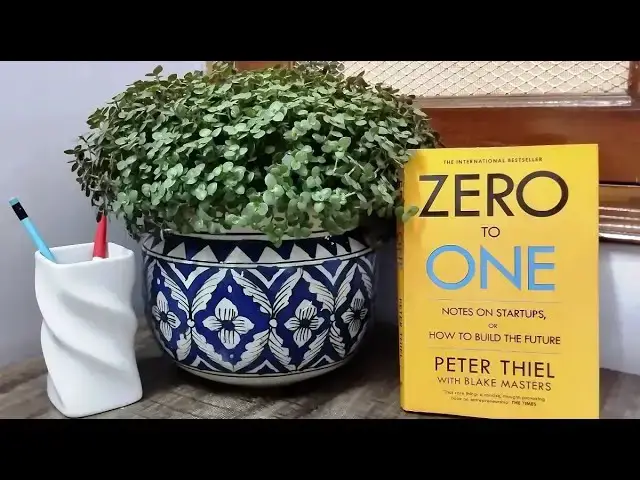
In Zero to One, Peter Thiel draws on his experience at PayPal and Palantir to offer ideas and suggestions for technology startups.
This book is about the questions you need to ask and answers to succeed at doing new things.
It is not a manual or a record of knowledge but an exercise in thinking. That is what a start-up has to do: Question received ideas and rethink the business from scratch.
A new company’s most significant strength is new thinking. Even more essential than nimbleness, small-sized efforts have space to think.
This week, we're diving into Peter Thiel's “Zero to One” — a book that's basically the startup world's most chaotic manifesto disguised as a business guide.
Thiel argues that the real innovation happens when you go from zero to one — creating something entirely new, rather than incrementally improving what already exists.
We'll explore how monopolies might actually be the secret sauce of innovation (yes, you heard that right), and why contrarian thinking is the most valuable skill you're not using.
• A brutally honest breakdown of why most entrepreneurs are basically just copying each other
• Revelations that will make you want to simultaneously quit your job and start a world-changing company
• Strategies for thinking so differently that you might actually create something truly groundbreaking
This approach provides you with a compass, as it is more significant than the speed of your progress to determine your destination.
~~~~~~~~~~~~~~~~~~~~~~~~~~~~~~~~~~~~~~~~~~~~~~~~~~~~
Zero To One Summary (Peter Thiel)
Show More Show Less View Video Transcript
0:00
hey there so you're diving into Peter
0:02
Teal's 0 to1 yeah a book that's
0:05
practically a Bible for Silicon Valley
0:07
startups it's packed with advice from
0:10
teal himself drawing on his experience
0:13
building companies like PayPal and paler
0:16
right in this deep dive we're going
0:18
beyond the usual Business book summary
0:20
okay we're extracting those golden
0:22
nuggets the ideas that'll really shift
0:25
your thinking about Innovation and maybe
0:27
even spark some ideas of your own right
0:30
right off the bat teal throws down a
0:31
challenge okay what does real progress
0:34
actually look like it's fascinating how
0:36
he breaks it down he talks about
0:38
horizontal progress okay which is
0:40
basically copying what already Works
0:43
picture a 100 identical typewriters yeah
0:46
useful yeah but not exactly pushing
0:49
boundaries okay so 100 typewriters is
0:51
more the same right but what about going
0:54
from a typewriter to say the first word
0:56
processor that feels different a much
0:59
bigger Leap Forward exactly that's what
1:01
Theo calls vertical progress going from
1:03
zero to one creating something truly new
1:07
and here's the thing in a world obsessed
1:10
with best practices yeah and playing it
1:12
safe right teal wants us to aim for
1:15
vertical progress to break free from the
1:17
pack and create something truly unique
1:20
that's a powerful thought especially for
1:22
anyone feeling stuck in the Rut of how
1:25
it's always been done it's like what if
1:27
instead of just following the well-worn
1:29
path right we blazed our own trail and
1:32
teal takes this idea even further
1:34
applying it to how we view globalization
1:36
you might think globalization is all
1:38
about groundbreaking Innovation right
1:40
but teal argues it's mostly horizontal
1:43
think of China rapidly adopting
1:45
technologies that were already
1:47
established in the west it's spreading
1:49
existing ideas which is important but
1:51
it's not the same as creating the
1:53
internet for example which totally
1:55
reshaped the world right so are we
1:57
missing out on those gamechanging zero
1:59
to one moments yeah that's a good
2:01
question now teal was right in the thick
2:02
of the boom and bust oh and he came away
2:06
with some lessons that might surprise
2:08
you everyone remembers the dotc Mania of
2:11
the late 90s right oh absolutely it was
2:14
a time of incredible excitement but also
2:16
a lot of hype right and when the bubble
2:18
burst it left many people wary of taking
2:21
big risks it makes sense teal actually
2:23
thinks that post.com Silicon Valley
2:26
became too cautious it's like everyone
2:28
learned the wrong lesson right instead
2:30
of focusing on what went wrong with bad
2:32
ideas they shied away from Bold ideas
2:34
altogether you can almost picture theal
2:36
shaking his head urging people to be
2:39
bolder exactly teal argues that instead
2:42
of focusing on incremental improvements
2:45
right we need to think bigger to create
2:47
entirely new markets he believes that
2:50
real value comes from those zero to one
2:52
leaps not just refining what already
2:54
exists it's a difference between playing
2:56
it safe and Swinging for the fences so
2:59
how do we break out of this incremental
3:01
mindset and start swinging for those
3:02
gamechanging Innovations well this is
3:05
where Teal's take on competition gets
3:06
really interesting he compares the
3:08
traditional model of perfect competition
3:11
okay to the idea of building a monopoly
3:14
okay now we're talking monopolies yeah
3:15
isn't that usually seen as a bad thing
3:17
it is but theal flips the script okay
3:20
think about it in perfect competition
3:23
everyone's selling the same thing like a
3:25
farmer market flooded with apple vendors
3:27
right the only way to compete is by
3:29
lowering prices which leads to razor
3:32
thin profits so you're in this constant
3:34
race to the bottom no just trying to
3:36
stay afloat no one's really winning in
3:38
that scenario exactly but a monopoly by
3:41
contrast has pricing power because they
3:44
offer something truly unique they don't
3:46
have to engage in that constant
3:48
Cutthroat competition right now before
3:50
you think teal is advocating for
3:51
unethical monopolies right let's be
3:53
clear he's not talking about stifling
3:56
competition through Shady tactics he's
3:58
not talking about price gouging crushing
4:00
smaller companies just to be a bully so
4:02
what kind of monopolies is he talking
4:04
about he's talking about companies that
4:06
solve problems so well so uniquely yeah
4:11
that they create their own category they
4:14
become the go-to solution because they
4:16
offer something so valuable that
4:18
competition becomes almost irrelevant he
4:21
uses a great example in the book the
4:24
airline industry versus Google Airlines
4:27
create a ton of value MH by connecting
4:30
people across the world but their
4:32
profits are often slim right because
4:35
they're always competing with each other
4:36
on price right Google on the other hand
4:39
created something so unique and valuable
4:42
with their search engine yeah that they
4:43
essentially built their own category and
4:45
that allows them to capture more of the
4:48
value they create Teal's point is that
4:50
truly great companies aren't focused on
4:52
simply outmaneuvering the competition
4:54
they're focused on building something so
4:56
good that competition becomes an
4:58
afterthought they're playing a different
5:00
game altogether I love that it's not
5:02
about winning the existing game it's
5:03
about creating a whole new game that you
5:06
can Dominate and that leads us to one of
5:09
Teal's most thought-provoking arguments
5:12
that our obsession with competition
5:14
itself might be holding us back think
5:17
about it we're taught to compete from a
5:19
young age in school in sports for jobs
5:23
it's ingrained in our culture right but
5:25
is that always a good thing teal argues
5:28
that this constant focus on competition
5:30
can distract us from what really matters
5:33
okay creating something truly new and
5:35
valuable we become so focused on beating
5:38
the person next to us right that we lose
5:40
sight of the bigger picture that's a
5:42
really interesting point it's like we're
5:43
so busy trying to win the rat race that
5:45
we forget to ask if we even want to be
5:47
in the race in the first place maybe
5:49
instead of just trying to be better than
5:50
everyone else we should be focusing on
5:52
being different exactly I'm creating
5:54
something completely new and that's
5:56
where the idea of Secrets comes in Theo
5:58
believes that truly great companies are
6:00
often built on Secrets unique insights
6:03
that others haven't discovered yet okay
6:05
now this sounds intriguing Secrets yeah
6:07
like some kind of hidden knowledge he
6:09
uses a rather controversial example to
6:11
illustrate this point the
6:14
Unabomber now before you get alarmed
6:16
right heal's point is obviously not to
6:19
endorse the anab bomber's actions right
6:21
let's be clear about that his point is
6:23
that even someone as Twisted as the
6:25
Unabomber could have a grasp of certain
6:28
truths that most people miss the
6:31
Unabomber Manifesto while deeply
6:33
disturbing also revealed a surprisingly
6:35
insightful understanding of human needs
6:38
and goals so are you saying that there
6:39
are still important truths Secrets out
6:43
there waiting to be uncovered exactly
6:45
the's argument is that if we're willing
6:47
to look for them there are still
6:48
Uncharted territories on the map of
6:50
human knowledge yeah and those who dare
6:53
to explore those areas could potentially
6:55
make groundbreaking discoveries like
6:57
there's still a frontier out there and
6:59
the who are willing to venture into the
7:01
unknown are the ones who will find the
7:03
real treasures and once you've got that
7:05
secret and that groundbreaking Insight
7:06
yeah the next step is to build a strong
7:08
foundation for your company and for teal
7:11
that starts with the people he places a
7:14
huge emphasis on choosing the right
7:15
co-founders yeah he even compares it to
7:17
getting married it's about finding
7:20
people who not only share your vision
7:23
but who you can trust and work with
7:25
effectively for years to come it's a
7:27
long-term commitment that's for sure and
7:29
it's it's not just about getting along
7:31
teal also stresses the importance of
7:34
clearly defining ownership okay
7:36
possession and control within the
7:38
company from the get-go so making sure
7:41
everyone is clear on who owns what who's
7:43
making the day-to-day decisions and who
7:45
have the final say it sounds like laying
7:48
the groundwork to avoid conflicts down
7:50
the road exactly especially as the
7:52
company grows speaking of growth the has
7:55
something to say about a very common
7:57
Silicon Valley myth oh if you bu bu it
7:59
they will come oh I've heard that one
8:01
before but teal doesn't buy it does he
8:03
not one bit he's adamant that sales and
8:06
distribution are absolutely crucial
8:08
really even if you have the most amazing
8:09
product in the world so you can't just
8:10
sit back and wait for the customers to
8:12
roll nope you need a
8:15
strategy to get your product in front of
8:18
the right
8:20
people teal emphasizes understanding
8:23
customer lifetime value how much a
8:25
customer is worth to your business over
8:26
the long term right and customer
8:29
acquisition cost got it how much it
8:31
costs you to acquire a new customer it
8:33
makes sense you need to make sure you're
8:35
not spending more money to acquire
8:37
customers than you're making from them
8:40
and this applies to anything really yeah
8:42
it's about understanding how to get your
8:44
ideas yeah your work your value out into
8:46
the world absolutely now let's shift
8:49
gears for a moment and talk about
8:50
something that's on everyone's Minds
8:51
these days technology okay specifically
8:54
artificial intelligence and automation
8:57
will robots take our jobs it's a
8:59
question a lot of people are asking it
9:01
could be a little unnerving to think
9:02
about honestly teal actually offers a
9:04
more nuanced perspective okay he sees
9:06
computers and AI as tools that can
9:08
complement human abilities not
9:10
necessarily replace us entirely more
9:12
like Partners than competitors exactly
9:14
computers are great at processing data
9:16
crunching numbers and doing repetitive
9:19
tasks humans on the other hand are
9:22
better at creativity right critical
9:24
thinking and complex decision making
9:27
it's like each side brings different
9:29
strength to the table he gives the
9:31
example of PayPal's fraud detection
9:33
system okay it combines sophisticated
9:35
algorithms with human review oh
9:37
interesting the algorithms could flag
9:39
suspicious transactions but it was
9:41
ultimately up to humans to make the
9:43
final judgment call so instead of
9:45
fearing AI we should be thinking about
9:47
how we can work with it yeah leverage it
9:49
to augment our own capabilities now are
9:52
you ready for a cautionary tail okay Bri
9:54
in teal uses the clean tech boom and
9:57
bust of the early 2000s as a case study
10:00
and what not to do when building a
10:01
company interesting remember all those
10:03
clean tech startups that were going to
10:05
save the planet it was a time of great
10:06
hope and optimism for sure but a lot of
10:09
those companies unfortunately didn't
10:11
succeed and teal points to some key
10:13
reasons why first your product needs to
10:15
be significantly better than the
10:17
competition okay he says 10 times better
10:20
wow not just incrementally better you
10:22
have to offer a truly compelling reason
10:24
for people to switch from what they're
10:26
already using second timing matters is
10:29
the market ready for your Innovation are
10:31
you too early a lot of clean tech
10:33
companies were ahead of their time it's
10:35
a tough balance right you don't want to
10:37
miss the boat but you also don't want to
10:39
be so far ahead that no one is ready for
10:43
what you're offering and third don't
10:45
underestimate the importance of
10:46
distribution and a clear plan for the
10:48
future a lot of clean tech companies
10:51
struggled to get their products into the
10:52
hands of customers so they may have had
10:54
the technology right but they didn't
10:57
have the business side figured out and
10:59
yet amidst all the clean tech failures
11:01
there was one standout success okay
11:03
who's that Tesla oh okay teal highlights
11:06
Tesla as a company that got it right
11:08
interesting they had a superior product
11:10
they entered the market at the right
11:12
time and they had a brilliant founder
11:14
with a Clear Vision for the future it's
11:17
proof that even in a challenging
11:18
industry like clean tech it is possible
11:21
to build a wildly successful company yes
11:23
if you follow those key principles and
11:25
finally to wrap up this first part of
11:27
our Deep dive let's talk about what Teal
11:29
calls the founders Paradox what makes a
11:32
successful founder the believes they're
11:35
often
11:36
Outsiders people who don't quite fit in
11:38
with the mainstream people who see the
11:40
world a little differently yeah who
11:42
question the status quo they have a
11:44
unique perspective yeah a willingness to
11:46
challenge conventions and an ability to
11:49
spot opportunities that others Miss but
11:52
here's the Paradox that very quality
11:55
that makes them successful can also make
11:57
them targets when things go wrong so
11:59
they're celebrated for their Vision when
12:01
things are going well mhm but they're
12:03
often the first to be blamed When Things
12:04
Fall Apart it's a double-edged sword and
12:07
te challenges us to embrace this Paradox
12:09
to be both different and effective to
12:12
stand out from the crowd while still
12:13
building something truly impactful
12:15
that's a great place to pause for now
12:18
we've covered a lot of ground already
12:19
from the nature of progress to the
12:21
founders Paradox but we're just getting
12:23
started stick with us as we continue to
12:25
unpack the key insights from 0 to one
12:31
welcome back we're continuing our deep
12:33
dives into Peter teal 0 to1 and in this
12:36
part we're going to get even more
12:37
tactical okay focusing on how you can
12:40
actually apply Teal's ideas to your own
12:42
work in life sounds good that's right
12:45
we've talked about the importance of
12:47
thinking big of aiming for vertical
12:49
progress of challenging the status quo
12:52
but how do you actually translate those
12:54
ideas into concrete actions well teal
12:56
has a lot to say about that one of the
12:59
key things he emphasizes is the
13:01
importance of building a strong
13:02
foundation for your company and a big
13:04
part of that is choosing the right
13:05
people he really hamers home the point
13:08
that picking your co-founders is one of
13:09
the most critical decisions you'll make
13:11
he actually Compares it to getting
13:13
married which might sound a little
13:15
dramatic but it makes sense you're going
13:17
to be spending countless hours together
13:20
facing challenges making tough
13:23
decisions it's essential to find people
13:26
who not only share your vision yeah but
13:28
who you can trust respect and work with
13:31
effectively for years to come it's about
13:33
compatibility for sure but it's also
13:36
about making sure everyone is on the
13:38
same page from the start right
13:40
absolutely and teal is very specific
13:42
about this he stresses the need to
13:45
clearly Define ownership possession and
13:47
control within the company from the
13:49
outset okay so who owns what right who's
13:51
making the day-to-day decisions who has
13:54
the ultimate Authority it's about
13:55
setting clear expectations and avoiding
13:58
potential conflicts down the road you
14:00
can imagine how things could get messy
14:02
if those lines aren't clearly drawn
14:03
exactly and speaking of avoiding
14:05
messiness Keel has some strong words for
14:07
a very common Silicon Valley myth oh
14:10
what's that if you build it they will
14:12
come I feel like I've heard that line in
14:13
a movie somewhere yeah probably it
14:15
sounds nice but is it realistic teal
14:18
would say absolutely not he is
14:21
incredibly clear that sales and
14:23
distribution are essential okay even if
14:25
you have the most incredible product in
14:26
the world you can't just sit back and
14:29
expect customers to magically find you
14:32
you have to go out there and make it
14:33
happen yeah but how do you do that
14:35
effectively especially when you're
14:36
starting out teal emphasizes the
14:38
importance of understanding two key
14:41
metrics all what are those customer
14:43
lifetime value okay and customer
14:45
acquisition cost okay let's break those
14:48
down customer lifetime value M that's
14:51
basically how much a customer is worth
14:53
to your business over the long term
14:55
exactly it takes into account how much
14:57
they spend how often they they buy okay
15:00
and how long they stay loyal to your
15:01
brand and customer acquisition cost is
15:04
how much it costs you to get each new
15:05
customer so you're looking at things
15:07
like marketing expenses sales efforts
15:09
that kind of thing precisely and the key
15:12
is to make sure your customer lifetime
15:14
value is significantly higher than your
15:16
customer acquisition cost okay you want
15:18
to be making more money from your
15:19
customers than you're spending to
15:21
acquire them it's a basic business sense
15:24
but it's easy to get caught up in
15:26
building a great product and forget
15:28
about the economics of actually getting
15:29
it into people's hands that's a trap a
15:31
lot of companies fall into yeah for sure
15:34
and it's not just about businesses
15:35
either think about any project you're
15:37
working on any skill you're trying to
15:39
develop it's not enough to just be good
15:42
right you have to be able to get your
15:44
work your talent your value out into the
15:45
world it's about understanding how to
15:47
Market yourself how to connect with your
15:49
audience how to build relationships
15:52
absolutely now let's switch gears and
15:54
talk about something that's on a lot of
15:55
people's minds these days what's that
15:57
the rise of artificial intellig
15:59
right and automation some people see
16:01
this as a threat yeah but teal actually
16:04
offers a more optimistic perspective
16:06
it's definitely a topic that Sparks a
16:08
lot of debate will robots take our jobs
16:11
is AI going to take over the world well
16:13
TLC's computers and AI as tools that can
16:17
complement human abilities okay not
16:20
necessarily replace them entirely so
16:22
partnership rather than a competition
16:24
exactly he points out that computers are
16:27
great at processing vast amounts of data
16:29
crunching numbers doing repetitive tasks
16:33
humans on the other hand excel at things
16:35
like creativity okay critical thinking
16:38
and making complex decisions so it's
16:40
about playing to each other's strengths
16:41
he uses a great example from his own
16:43
experience with PayPal they had a
16:45
sophisticated fraud detection system
16:48
okay that used algorithms to flag
16:50
suspicious transactions right but it was
16:52
still up to human operators to make the
16:55
final judgment call it's a powerful
16:57
example of how human intelligence and
16:59
artificial intelligence can work
17:01
together to create a more effective and
17:03
secure system right and it challenges us
17:06
to rethink the way we approach
17:08
technology instead of fearing AI maybe
17:11
we should be thinking about how we can
17:12
leverage its power to augment our own
17:14
capabilities it's about finding ways to
17:16
use technology to enhance our creativity
17:20
our problem solving abilities our
17:22
ability to make a positive impact on the
17:24
world now teal also uses the clean tech
17:27
boom and bust of the the early 2000s as
17:30
a cautionary tale highlighting some
17:32
common mistakes that entrepreneurs make
17:34
right it was a time of great excitement
17:36
about clean energy and sustainable
17:39
Technologies but a lot of those
17:41
companies unfortunately didn't succeed
17:44
what went wrong teal points to a few key
17:46
factors first he emphasizes the
17:48
importance of having a product that's
17:50
significantly better than the
17:51
competition okay he says 10 times better
17:54
wow not just incrementally better you
17:56
need to offer a truly compelling reason
17:58
reason for customers to switch from what
18:00
they're already using especially if it
18:02
involves changing habits or adopting new
18:04
technologies exactly and second timing
18:07
matters right is the market ready for
18:09
your Innovation are you too early a lot
18:11
of clean tech companies were ahead of
18:12
their time yeah the technology wasn't
18:14
quite there yet or the cost was too high
18:16
or consumer demand wasn't strong enough
18:19
it's like being a musician who releases
18:21
an album before anyone is ready to hear
18:23
that kind of
18:25
music you might be brilliant but if the
18:27
audience isn't there it's not going to
18:29
work and third you can't underestimate
18:32
the importance of distribution and a
18:34
clear plan for the future right a lot of
18:36
clean tech companies struggled to get
18:38
their products into the hands of
18:39
customers they also lacked a clear
18:41
vision for how they were going to scale
18:44
their business and become profitable it
18:46
sounds like they were so focused on the
18:48
technology itself that they neglected
18:50
the business fundamentals and yet amidst
18:52
all the clean tech failures there was
18:54
one notable success story okay I think I
18:57
know who you're talking about Tesla yeah
18:59
teal points to Tesla as an example of a
19:01
company that got it right they had a
19:03
superior product they entered the market
19:06
at the right time and they had a
19:08
brilliant founder with a Clear Vision
19:10
for the future it's a reminder that even
19:12
in a challenging industry like clean
19:14
tech it's possible to build a wildly
19:17
successful company if you follow those
19:19
key principles now let's wrap up this
19:21
part of our Deep dive with one final
19:23
thought-provoking concept what's that
19:25
the founders Paradox what makes a
19:27
successful founder Theo believes they're
19:30
often Outsiders people who don't quite
19:32
fit in with the mainstream people who
19:34
see the world a little differently
19:36
exactly who questioned the status quo
19:38
they have a unique perspective a
19:40
willingness to challenge conventions and
19:42
an ability to spot opportunities that
19:44
others Miss but here's the Paradox okay
19:47
what is it that very quality that makes
19:49
them successful can also make them
19:52
targets when things go wrong so they're
19:54
celebrated for their Vision when things
19:56
are going well but they're often the
19:58
first to be blamed When Things Fall
20:00
Apart it's a double-edged sword and the
20:03
challenges us to embrace this Paradox
20:06
okay to be both different and effective
20:08
to stand out from the crowd while still
20:10
building something truly impactful and
20:13
with that we're going to take a quick
20:14
break but don't go anywhere because when
20:16
we come back we're going to explore what
20:18
all of this means for you and how you
20:20
can apply these powerful insights from 0
20:23
to one to your own life and
20:25
work all right we're back for the final
20:27
part of our Deep dive into 0 to one
20:29
we've covered a lot of ground yeah we
20:31
have exploring Peter Teal's insights on
20:33
everything from the nature of progress
20:35
to the importance of finding your own
20:37
unique path right but here's the big
20:40
question okay how does all of this apply
20:42
to you right what can you take away from
20:44
this book that will actually help you in
20:46
your own life and work well one of the
20:49
key takeaways for me is the power of
20:50
thinking big okay teal constantly
20:53
challenges us to question assumptions to
20:57
push beyond the limits of what we think
20:58
think is possible right he wants us to
21:00
aim for those zero to one moments those
21:04
leaps forward that create something
21:06
truly new and valuable it's easy to get
21:09
caught up in the day-to-day grind to
21:11
focus on incremental improvements and
21:13
just trying to keep up with everyone
21:14
else yeah but Tio reminds us that
21:16
there's so much more potential out there
21:18
it's about having the courage to ask
21:20
those big questions to pursue those
21:23
audacious ideas that might seem crazy at
21:25
first right remember every
21:27
groundbreaking interview ation started
21:29
as someone's seemingly Impossible Dream
21:32
and another big takeaway for me is the
21:34
importance of finding your own unique
21:36
path Peele talks about how competition
21:38
can sometimes distract us from creating
21:41
truly valuable things we get so focused
21:44
on beating the person next to us then we
21:46
forget to ask if we're even running in
21:48
the right direction he encourages us to
21:50
embrace the idea of the founders Paradox
21:53
right to be both different and effective
21:55
it's about finding your own unique
21:58
strengths own unique perspective and
22:00
using those to create something that
22:02
only you could create it's about not
22:03
being afraid to stand out from the crowd
22:05
to be a little bit weird yeah a little
22:08
bit unconventional yeah because those
22:10
are often the qualities that lead to
22:12
truly groundbreaking Innovations now I
22:14
know some of this might sound a bit
22:16
abstract so let's get a little more
22:17
practical okay what are some concrete
22:20
steps people can take to start applying
22:22
these ideas well one thing you can do is
22:23
start by identifying your secrets what
22:26
are those unique insights those pieces
22:29
of knowledge those experiences that you
22:30
have that others don't what problems are
22:33
you uniquely positioned to solve it
22:35
could be anything a passion you've had
22:37
since you were a kid a skill you've
22:39
honed over years of practice a
22:42
perspective that you've gained from your
22:43
unique life experiences and once you've
22:45
identified your secrets think about how
22:48
you can use them to create something
22:50
truly valuable maybe it's starting a
22:52
business writing a book launching a new
22:54
project or even just changing the way
22:56
you approach your work the key is to
22:58
think big okay to be bold and to be
23:02
relentlessly focused on creating value
23:05
and don't forget the importance of sales
23:07
and distribution it's not just about
23:09
having a great idea right it's about
23:11
getting that idea out into the world
23:13
connecting with the right people and
23:15
making sure your value is recognized
23:17
it's about building relationships
23:19
mastering the art of communication and
23:21
understanding how to effectively Market
23:23
yourself and your work absolutely and
23:25
remember this isn't just about startups
23:27
or entrepreneur
23:29
teals insights can be applied to any
23:30
area of Life your career your
23:32
relationships your personal growth it's
23:35
about having the courage to challenge
23:36
assumptions to think differently yeah to
23:39
create something truly meaningful it's
23:41
about leaving your mark on the world
23:43
about contributing something unique and
23:45
valuable that only you could contribute
23:48
so as we wrap up this deep dive into
23:50
zero to one we want to leave you with
23:52
one final thought okay what's your zero
23:54
to one what's that one thing that you're
23:56
uniquely equipped to create that no one
23:58
else can replicate it's out there
24:00
waiting for you to discover it and once
24:03
you do yeah don't be afraid to go for it
24:06
embrace the founders Paradox think big
24:09
be bold and create something
24:11
extraordinary thanks for joining us on
24:13
this deep dive we hope you found it
24:15
insightful and inspiring and remember
24:17
the journey from 0o to one starts with a
24:19
single step what will yours be
#Books & Literature
#Business & Industrial
#Business Education