Up next in 10

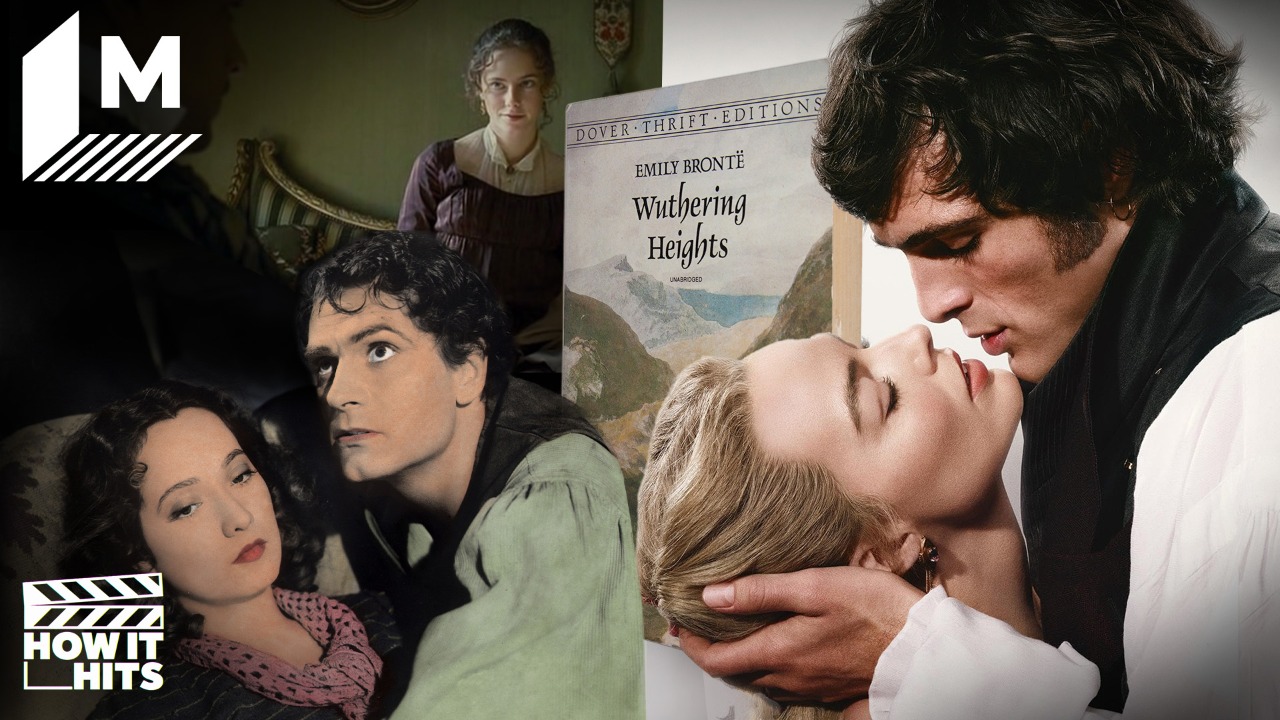
The problem with Emerald Fennell's "Wuthering Heights" is audience expectations.
Feb 14, 2026


Ceci n'est pas Wuthering Heights.
Show More Show Less View Video Transcript
0:00
What do we mean when we say that a Woodering Heights adaptation is bad
0:04
And what does a good one look like? There have been a lot of heated conversations around Emerald Fennell's Woodering Heights
0:14
since it was first announced. Months before the film's release, behind-the-scenes pictures
0:20
and later the film's trailer outraged the internet, as people complained about Fennell's casting choices
0:26
the anachronistic costumes, and everything that signaled that this wouldn't be the adaptation
0:32
of Emily Bronte's Victorian classic that fans were expecting. But what did we expect? And is a good
0:39
adaptation one that mimics the book? Or is there something else that the latest one is missing
0:45
Let's dive into the world of Wuthering Heights. Emily Bronte was born in 1818 in Yorkshire
0:52
and, along with two of her sisters, Charlotte and Anne, would become one of the most prominent
0:58
names in English literature. Woodering Heights, an incredibly charged gothic meta-story about
1:04
romantic obsession, grief, revenge, class, ethnicity, and intergenerational punishment, was Emily's first and only novel. The story centers on Heathcliff, a boy adopted by the
1:17
Earnshaw's at Woodering Heights. The family's daughter, Catherine, is his only solace
1:21
and the two form a very intense bond. Though in love with Heathcliff
1:26
Catherine marries wealthy neighbour Edgar Linton. And so Heathcliff leaves, later returning as a wealthy man determined to exact revenge
1:35
Weather and Heights is written and sent for publication in the mid-1840s
1:43
And when it's published, the Victorians struggle with the violence of the book
1:49
They think it's vulgar. they think it's immoral. One review says read Jane Eyre but burn weather in heights
1:55
Just a year after the book was published Emily Bronte died of tuberculosis
2:00
And it's in a couple of years after in 1850 that you really start to have reviewers acknowledge
2:06
that this is actually a singular book in its power and its originality. A guy called Sidney
2:12
DeBell writes a review that comes out in the Palladium in 1850 and he says that the thinking
2:17
out of some of the passages in this book are the masterpiece of a poet. So recognizing the
2:22
intricacy of the richness of that text, because it's a complex book. It's a multi-layered
2:26
really complex book. Wuthering Heights is not the most straightforward novel to adapt. In fact, most adaptations only
2:32
focus on its first part, the story of Catherine and Heathcliff. The second part, which explores
2:38
how their destructive relationship impacts the destinies of the next generation, remains
2:44
largely unexplored in cinema. I guess Wuthering Heights presents a challenge in
2:50
structural terms and how to tell a story and how big should the story
2:56
that is being told be because of the multi-generational plot of the novel
3:02
So I noticed the necessity of slimming down and focusing on particular parts of the novel So I think that what all the adaptations share And I guess this is what is rooted in cultural memory
3:14
The way the story is adapted in most films and therefore often remembered in culture only tells half the story
3:22
Charlotte Bronte once said an adapter always should stand between Emily and the world
3:26
So it's kind of apt that there have been so many adaptations. On screen, I think this book has been very, very difficult to adapt
3:34
And one of the reasons for that, and one of the reasons a lot of the adaptations are complex and could only do the first half of the book
3:40
is that this book is really centred around huge amounts of ambiguity
3:45
Ambiguity in terms of whether we see the protagonists as romantic or spiritual lovers
3:51
whether we think that they've done anything physical together or not, whether we're meant to like them
3:56
And of course the debates around Heathcliff's origins and the multiple ways in which Emily sets him up
4:02
as a character of colour, but with diverse possibilities for who he is
4:06
On screen, adapters have to remove the ambiguity because you can't really capture the plurality
4:13
of all the possibilities of who Heathcliff is and where he is through the portrayal of one actor
4:19
There's also something else that I think applies to cinema in general
4:23
There is a lot of expectations when it comes to veracity. And cinema has played into that, I think
4:32
through the notions of realism, neorealism, what is realistic, the role of documentary
4:39
mockumentary, all this play with what is real and what is not
4:44
What do we expect to see from the world on screen, whether it's in terms of true representation
4:53
topics that are quite important, of course, but there is this need that a lot of the audience projects onto cinema to give them
5:03
the real picture of the world. And I think it has to do with cinema's audiovisual nature
5:11
This seems to be one of the reasons why Emerald Fennell's Wuthering Heights
5:14
with its anachronistic nature, has created such a strong reaction. Because the audience has no control whatsoever. You think you know Wuthering Heights
5:24
the novel when you go into the cinema to see her film but you don't know Wuthering Heights
5:30
Fennell's version comes in quotation marks. I can't say I'm making Wuthering Heights
5:35
It's not possible. What I can say is I'm making a version of it. There's a version that I remembered
5:40
reading that isn't quite real. She gives a similar answer when challenged about casting a white actor
5:46
to play Heathcliff. Heathcliff in the casting has been controversial not just because of the
5:53
diversity with which is represented in the book, but because of the cultural climate that
5:56
we find ourselves in, that it gives us another opportunity to discuss the topics. And it gives
6:01
us an important opportunity to say, well, what did Emily Bronte understand about British
6:05
imperialism the British Empire colonialism What did they understand by race What and how would she have been representing a character of colour And why does she give us the richness and complexity of referring to so many different possibilities
6:21
This is just one way Fennell's film does not stay true to the source material
6:25
And more so, it famously imagines scenes that do not take place in the novel
6:30
I think a very good way to describe what Emerald Fennell's Woodering Heights is
6:35
a fan fiction version of Woodering Heights, the novel, I don't condemn it
6:40
I think it's a great way to take a story and challenge its supremacy and its
6:48
canonic value and add something to it, something personal, something of you
6:55
And in this case, it has to do a lot more with sex and infantile regression
7:01
And I guess because Emerald Fennell is interested in power dynamics socially
7:06
interpersonally, it's a good fit for her. So she explores a lot more of S&M relationships psychologically in the first part of the film
7:18
There are instances of BDSM, there is puppy play, there is pony play
7:25
There is a lot of acts that go against the grain of what we think a Victorian ethic is or representation
7:34
All these elements could add shock value to Fennell's film. And surely it will be deemed unfaithful to the original story
7:41
But just because some scenes in the book do not seem sexually explicit from a modern point
7:46
of view does not necessarily mean that there was no sex in Brontë's novel
7:51
In one important scene, Heathcliff sneaks in to visit Catherine on her deathbed
7:57
And they're kissing one another. He's leaving bruises on her arm. That is a sex scene for the Victorians
8:03
That is deeply unconventional for the Victorians. These are two married people who are embracing physically in the bedroom, kissing one another
8:10
and talking about loving one another in a way that at that moment is clear
8:15
that it's far beyond anything spiritual, that they are essentially adulterers. The reactions to Fanel's adaptation ironically mirrored the way Bronte's novel was initially
8:25
received. But Wuthering Heights is a dense text. It's a novel within the novel. There are elements
8:30
of unreliable narration that spans generations. And there are, as it was said, complex and ambiguous
8:38
relationships defined by desire, class and race politics. And yet, filmmakers keep trying to
8:45
condense all of that on screen. Maybe because adaptation is not about veracity, but about the
8:51
truth, in a more metaphorical sense. And maybe a successful adaptation is not one that stays true
8:57
to the narrative, but one that stays true to the essence of the story
9:01
And one of my favorites, even though it's absolutely brutal and challenging, is Andrea Arnold's
9:07
It takes on the complexity of the Heathcliff and Kathy relationship. So you get the brutality alongside the tenderness and the connection
9:14
It doesn shy away from the complexities of the racial politics the ethnicity of Heathcliff origins and all of the things around who he could be Andrea Arnold version released in 2011 like Bront novel
9:27
pays close attention to the importance of place in the story. The Yorkshire moors are a defining element for the characters and their emotional landscapes
9:37
Arnold doesn't try to mimic literary approaches, but immerses her retelling of the story deeply in the cinematic language
9:43
Cinematographer Robbie Ryan and his handheld shots, his close-ups focusing on the human body, on objects, on plants and textures, make the story feel present, the characters alive
9:55
To add to that, Nicholas Becker's sound design is diegetic and realistic, not overpowered by a score
10:04
And I think that's something that adaptations, film adaptations, are the only thing that could actually get to that spirit of storytelling
10:12
I keep thinking about René Magritte's painting of a pipe captioned, this is not a pipe
10:17
and the idea that the artwork is always a representation of its subject
10:21
never the subject itself. Throughout the years, there have been many retellings of Wuthering Heights
10:27
and not just in the Anglo-Saxon world, not just a film, but also a cross-form
10:33
including operas, theater, and music. Kate Bush's 1978 debut single titled Wuthering Heights
10:39
which she wrote at the age of 18 from Cathy's perspective, was inspired by the 1967 BBC
10:46
adaptation. Bush famously had not read Bronte's novel at the time. Her song inspired Woodering
10:53
Heights Day, an annual global gathering where participants recreate the song's famous red dress
10:58
music video. Woodering Heights, in all reproductions, is and inevitably will always be
11:04
someone else's interpretation of Bronte's original work. So regardless of what you think about Emerald Fennell's vision
11:12
maybe her attempt to recreate the story, not as it is, but as she experienced it, is somewhat understandable
11:19
The Brontes, across all their books, particularly Jada and Weather and Hines
11:23
you know, they are an industry. You know, there are prequels and sequels and mashups
11:28
and all kinds of spin-offs related to their texts and their worlds
11:32
which tells us something about how much those texts are loved but also how much richness they
11:36
give to creatives and creators. I think in terms of the richness it gives and how adaptation
11:43
gives space for a book to be remade and how that tells us something about its own time
11:49
as much as the past is really really interesting and tells us something about this book and its
11:55
power that people still want to return to it. What is your favourite Whirling Heights adaptation
12:01
and what does it do to work for you? Let us know in the comments
12:07
and check out our series How It Hits for more deep dives on your favorite films and TV shows
Celebrities & Entertainment News
Movies
Literary Classics