Up next in 10

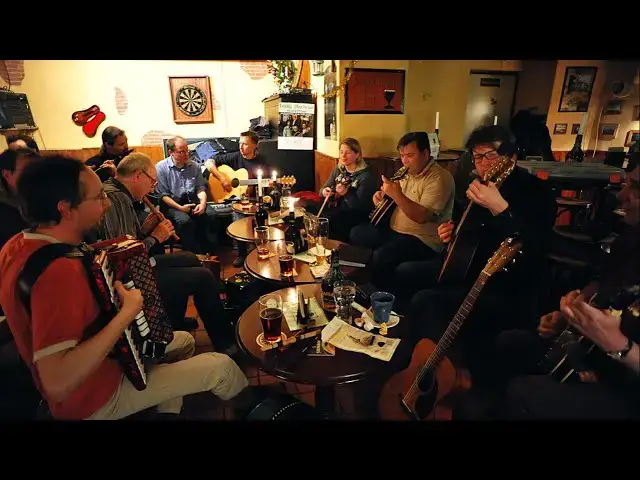
Are you thinking of taking part in an Irish or Folk music session? It can be a wonderful experience. In this video I share some advice and insights I've gained over 30 years of playing in sessions. I discuss session etiquette, what to expect, how to prepare yourself and more.
Thumbnail image by Hinnerk R (Hinnerk Rümenapf), CC BY-SA 3.0, via Wikimedia Commons
irishmusic #irishrecorder #recorder #folkrecorder #session #traditionalmusic
Show More Show Less View Video Transcript
0:01
Are you considering playing a musical
0:02
instrument at an Irish music session? If
0:05
so, then good on you. Um, I'm here to
0:09
give you a little bit of guidance and uh
0:11
maybe a few kind of forewarnings of
0:14
potential hazards that could get in the
0:16
way of an otherwise potentially very
0:18
enjoyable experience. So, there's so
0:21
many different things going on with an
0:23
Irish session. Um, it's a wonderful
0:25
tradition. Apparently, it's not even
0:27
that old a tradition. um not I think
0:30
maybe 50 years or so ago, maybe a bit
0:32
longer than that, but not much more. It
0:34
was much more a kitchen thing. So, you
0:36
had these kind of kitchen music
0:37
sessions. It wasn't so much a pub thing.
0:39
So, you'd still have the, you know, the
0:40
music and the dancing and all that.
0:41
That's kind of goes back a long way. But
0:44
having it specifically in a pub is a
0:45
relatively new phenomenon. And it's a
0:48
great thing, you know, um the the
0:50
punters enjoy it and the musicians, you
0:52
know, come along and they get to play
0:53
music together and that can be a very
0:55
very satisfying experience. It can also
0:57
be quite a difficult experience in some
1:00
ways. So I remember my first time I
1:03
actually played in an Irish session down
1:04
in Brighton. I played the King of the
1:06
Fairies. Um
1:12
that tune. Um I played it on a tin
1:14
whistle and I remember my fingers were
1:16
shaking. I was so terrified. I was
1:18
playing with some really good musicians
1:20
um down in Brighton back in the day. I
1:22
don't know what it's like now, but there
1:23
was some really, you know, very good
1:25
players of Irish music. Um, and I kind
1:29
of had somehow developed the audacity to
1:31
to think that I might be able to
1:34
contribute, you know. Um, so there's a
1:36
lot of kind of hurdles to overcome, I
1:38
guess, in terms of your own confidence
1:41
um, and your perceived as well as actual
1:45
um, you know, what what the other
1:48
musicians are are kind of making of you.
1:50
You know, are they welcoming you? like
1:52
they kind of being downright hostile,
1:53
which can happen. Um, all sorts of stuff
1:56
going on. So, they're a funny bunch of
1:58
the Irish musicians. You know, it's a
2:00
you could argue there's certain kind of
2:02
traits that go into someone being
2:05
willing to put in that amount of effort
2:07
and time and commitment and dedication
2:10
to reach a level of achievement in this,
2:13
you know, this wonderful art of music.
2:15
um you know that that ability to kind of
2:18
hyperfocus and you know all the
2:20
different skills that come with being a
2:22
good musician they're not necessarily
2:25
correlated with social graces. So, I
2:29
mean, you know, very often there's been
2:30
sessions where, you know, you turn up
2:31
and they've all kind of got their heads
2:34
down playing their instruments
2:35
furiously, the banjo and the whatever,
2:36
the fiddle and, you know, but
2:38
accordians, whatever, you know, doing
2:40
their thing and, uh, not necessarily
2:42
that aware of the kind of social
2:44
environment that's going on around them.
2:46
Um, and that's, you know, partly
2:48
understandable because you're focusing
2:50
on the music and that's the priority,
2:51
right? you can't necessarily be, you
2:53
know, entertaining people with your your
2:56
smiles and your warm warm welcoming face
2:58
or what have you while you're trying to
3:00
play this really fast rail and it's like
3:01
taking it everything you've got to kind
3:02
of stay on top of it, you know. Um, so,
3:05
you know, I'm not particularly judging
3:07
this this crowd, but there is there's
3:09
kind of like two,
3:11
this is an idea I came up originally,
3:13
kind of two aspects,
3:15
just one model of, you know, being a
3:17
good session musician, right? By session
3:19
I mean Irish sessions or folk sessions
3:21
in general. So there's your musical
3:23
ability. You know you need to know some
3:24
of the repertoire ideally like you know
3:26
shared repertoire that other people
3:28
know. Um and I'm just going to elaborate
3:30
on that now because it's an important
3:31
point. So some sometimes people come to
3:33
sessions as a kind like a practice
3:35
ground for their professional musical
3:37
careers and they'll play the latest
3:38
whatever set of tunes they've learned
3:40
like you know really high performance
3:42
stuff and it's like it's wonderful in
3:44
some ways to hear it and in other ways
3:45
it's like well I kind of came here to
3:46
play some music. No one knows that tune,
3:48
you know, that that can be an obstacle
3:50
to having a good night at a session. And
3:52
so there's, you know, you got your
3:53
musical skill and then you got the
3:54
crack, right? It's like, and the crack
3:56
is all about everyone basically having a
3:58
good time. And there's a lot that goes
4:00
into having a good time. You know, maybe
4:02
kind of more seasoned musicians aren't,
4:04
you know, it's been a while since
4:05
they've had that experience of coming
4:07
into a session and being a bit, you
4:09
know, bit anxious, a bit kind of
4:10
uncertain of themselves and not not
4:12
knowing how welcome they're going to be.
4:14
Um so you know another aspect you got
4:16
the musical side and then you got the
4:17
crack right and the crack is so
4:18
important and I remember down in
4:21
Brighton wonderful musician and crack
4:24
master called um Ben Paley right so
4:26
fairly well-known musician's father was
4:28
well known as well and as well as being
4:30
a fantastic musician he was also so
4:32
welcoming so kind went out of his way to
4:35
make me feel included um wrote down a
4:39
lot of the tunes not I mean eventually
4:41
there's too many to write down but you
4:42
know he gave me the kind of the notation
4:44
for several of the more popular tunes or
4:46
the more kind of often played tunes
4:49
because at that time you learning by ear
4:51
was like it was a new skill. I wasn't
4:53
very good at it and just you know there
4:55
was always always this sense of like
4:56
encouragement and welcome and um you
4:59
know just it just made me feel so kind
5:01
of uh you know glad to be there happy to
5:03
be there and then there were other
5:05
characters there that can give us stuff
5:07
one way or the other you know what I
5:08
mean it's like no names impuged here but
5:12
um you know just a totally different
5:15
attitude to visiting or new musicians
5:18
coming to the session so it's a
5:21
wonderful thing Um and then there's the
5:23
question of the instrument. So I saw a
5:25
YouTube channel recently people um
5:26
particular guy playing a melodica,
5:28
right? He plays Irish music on the
5:29
melodica. It's not a traditional
5:31
instrument. Sounds very much like a
5:33
concertina. You might not even be able
5:34
to tell the difference if you know
5:36
they're both played well. Um but there
5:38
are some kind of I suppose expectations
5:40
around the instruments that you're going
5:41
to bring to a session. I remember me
5:43
bringing my my bone system silver flute
5:46
had you kind of mixed reaction. One of
5:48
the reasons I did it is because a lot of
5:50
the repertoire, not not a massive part,
5:51
but you know, significant part of the
5:53
repertoire has these wonderful tunes in
5:54
like weird keys like G minor and D
5:56
minor. Not particularly weird in other
5:57
context, but in Irish music, they're
5:59
less common, you know. Um, and I wanted
6:01
to be able to play some of those tunes
6:02
as well. Um, and you can do it with like
6:05
having different length whistles and
6:07
then chopping and changing between tunes
6:08
and all that kind of thing, but I just
6:10
wanted to be to play those other keys
6:13
and also other types of music like a bit
6:15
of klesmo or a bit of, you know,
6:16
whatever other traditions I was
6:18
interested in. So, I played the bone
6:20
system flute. Now, interestingly enough,
6:22
the um I think the first bone system
6:24
flutes were wooden. So these days you
6:26
get bone system, wooden flutes, they've
6:28
become like very much a traditional
6:30
instrument like you know kind of
6:31
archetypal played a wooden flute if you
6:33
can afford it you got keys on it like a
6:35
a bone I don't know if it is bone system
6:37
actually if it's a keyed wooden flute
6:38
but it's certainly you know a precursor
6:40
to it. Um, and I guess, you know,
6:43
traditionally the instruments that would
6:45
be brought to a session were the
6:46
instruments that were around and if
6:48
there's a bunch of penny whistles around
6:49
because they're cheap and affordable,
6:50
then you bring them, you know. Um, you
6:52
know, so playing a recorder, you know,
6:55
I' I'd be a little bit kind of aware of
6:57
people's sensitivities, sensibilities
6:59
around that. But at the same time, it
7:01
sounds very much like a whistle. Um,
7:05
you know, different instruments
7:06
obviously, you know, different different
7:07
tones. But again, you get the
7:09
versatility. You can play in order keys
7:11
without changing instruments. Um, you
7:13
can go home and play different music.
7:15
And also, there's the kind of pragmatic
7:17
thing of like if you're not a
7:18
professional musician, you're not
7:19
playing like regularly. It's actually
7:21
not great to have two or three different
7:23
fingering systems that you're kind of
7:25
falling back on after, you know, years
7:27
of not practicing. It's like, yeah,
7:28
which one should I do? Other
7:30
instrumentalists don't have that
7:31
problem. you know, the fid it's not like
7:32
a different tuning, you know, for a
7:34
different um you know, I don't have to
7:37
change tunings for different kind of
7:38
keys and different uh you know, musical
7:40
genres. Um so, you know, I've kind of
7:43
settled in my my old age, I guess. Um to
7:48
like, okay, I've had a long period
7:49
without playing music. I've had various
7:50
health issues. I don't want to relearn,
7:52
you know, the fingering for the tin
7:54
whistle and the recorder and I don't
7:58
know, bag pipes, play different types of
8:00
bag pipes. or gets a bit much. Keep it
8:02
simple. Record it. And these
8:04
instruments, they're just fantastic.
8:06
This is a modern hour dream. And I have
8:08
I went for a period of playing them in
8:10
sessions and no one complained because I
8:12
could actually play the music. And
8:13
that's the main thing, right? Um and
8:16
also, you know, the Tim Whistle there,
8:18
there are some drawbacks. It's a great
8:19
instrument, but it's not necessarily a
8:20
very loud instrument. And if you've got
8:23
a lot of like accordians or several
8:25
violinists to compete with, it can be
8:26
very hard to kind of be heard. And then
8:28
some of the solutions to that are get
8:30
these really are to get these kind of
8:31
really piercing whistles like the Susato
8:34
plastic whistles are really you know
8:35
they're very practical to stay in tune.
8:36
You can play them outdoors but they're
8:38
loud. Um all these other kind of metal
8:40
things where the higher notes are
8:42
actually you know not necessarily that
8:44
pleasant to hear. Um so you know again
8:47
the recorder has various merits in that
8:49
regard. You can be heard without
8:50
necessarily losing tone quality and that
8:52
kind of stuff. Um, so yeah, you know, a
8:55
few different points here in this video,
8:57
but a basic thing is, you know, if
8:58
you're thinking about going to a folk
8:59
session, go for it and understand that
9:01
some people may just not be particularly
9:03
like welcoming types and, you know, it's
9:05
not about you, it's about them. Um, but
9:07
also, you know, try and be sensitive,
9:09
try and understand the the existing
9:10
dynamic in the group and people know
9:12
each other and, you know, you got to
9:13
kind of
9:15
maybe different priorities, you know,
9:16
recognize different priorities. So your
9:18
priority might be to like overcome our
9:19
confidence and play a tune, you know,
9:20
overcome my anxiety and lack of
9:22
confidence and and play a tune. And
9:23
that's great, but you know, there's
9:25
other reasons for people to be there,
9:27
you know, to just kind of have a good
9:28
time, play tunes that they know and
9:29
love. Um, and hopefully, you know, if
9:33
you're a newcomer, then people will ask
9:35
you what tunes you know, or they'll play
9:37
tunes that are, you know, really well
9:38
known, you know, classic like the
9:39
butterfly or the kesh or, you know, kind
9:42
of classic session tunes that pretty
9:44
much around the world people will know
9:45
how to play.
9:47
So there's there's some thoughts for you
9:49
on sessions if you're thinking of it um
9:50
as a recorder player in particular
9:52
because that's what this channel is
9:53
about. Um but more generally, you know,
9:55
going to a folk session, Irish session
9:57
to play some music. I hope that gave you
9:59
some insight. Thanks for watching.
10:01
Please like and subscribe and I'll see
10:03
you in the next video.
#Arts & Entertainment
#Performing Arts
#Folk & Traditional Music