Up next in 10



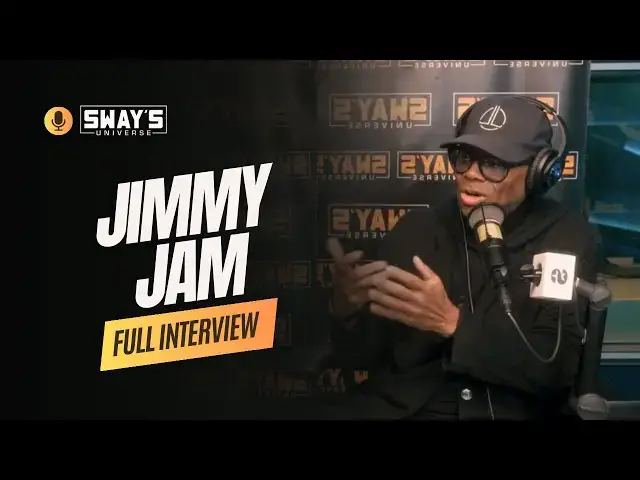
Jimmy Jam joins Sway In The Morning to reveal iconic stories behind the hits that defined generations 🎤. From his legendary collaborations with Janet Jackson, Mariah Carey, Prince, and more to creating timeless classics like "Optimistic" and "Just Be Good to Me," Jimmy shares the magic of music, the humanity behind the melodies, and his journey as a Grammy-winning producer. Hear about his creative process, the impact of mentors like Quincy Jones, and his work with Terry Lewis that shaped the industry. Plus, learn about the Next Verse initiative—a global movement to fight hunger through music. Subscribe for exclusive interviews and be part of the conversation that celebrates culture, creativity, and giving back. Join Sway’s Universe and stay inspired!
#musictherapyimpact #musicproductionhistory #grammywinningproducers #musicindustryinsights #songwritingtechniques
CHAPTERS:
00:00 - Intro
02:20 - Jimmy Jam
05:18 - Importance of Radio
14:21 - Prana Supreme Joins the Conversation
15:28 - Music and Mental Health Impact
17:56 - Personal Songs vs. Chart Hits
23:36 - One Up Duo Collaboration
25:27 - Mike Muse Insights
28:31 - Rhythm Nation Analysis
33:23 - Tracy’s Turn Discussion
40:55 - David Weber on Next Verse Initiative
48:56 - Divine Alignment Explained
51:35 - Get Involved with 100 Million Meals
54:17 - Ways to Contribute
55:40 - Impact of a Dollar Donation
57:10 - Final Thoughts and Reflections
Subscribe Here! http://bit.ly/SubscribeSU
Watch the Best of Sway In The Morning! http://bit.ly/BestOfSITM
Check out More From Sway’s Universe
http://swaysuniverse.com
http://twitter.com/swaysuniverse
http://instagram.com/swaysuniverse
http://facebook.com/swaysuniverse
#SwaysUniverse #SwayInTheMorning #SiriusXM #Shade45
About SWAY’s UNIVERSE
Exclusive interviews from Sway Calloway and the Sway In The Morning/ SwaysUniverse.com team with some of today's biggest celebrities, like Kevin Hart, Kanye West, Eminem, Usher, Jessica Alba, Steve Aoki, Torey Lanez, Julia Stiles and so much more.
Jimmy Jam Reveals Iconic Stories Behind the Hits 🎤 | SWAY’S UNIVERSE
https://youtu.be/w7pikQ8ipMY
Sway’s Universe
https://www.youtube.com/UCuS96jkLKpTaGB_OWnwZV_A
Show More Show Less View Video Transcript
0:00
[Applause] That's one of those voices that you consider an abbott, if you will, an
0:05
oracle of such when it comes to music. In my opinion, Heather B. Listen, in my opinion,
0:10
say what it is, bro. Yeah, it's my opinion. Say what it is. That's what I own. It's my opinion.
0:16
Say it. through my experiences and wisdom and my relationship with music from the 70s to now, playing an
0:23
instrument as the clarinet, the Alto Sachs, um, and becoming an MC and
0:28
producing music with my partner King Tech, independent artist, as well as signed to Giant Warner Brothers under
0:35
Irving Azoff, getting into radio, breaking records in Northern California with the likes of Keith Nafley,
0:42
you know, and um, Hash Hash Carelli and and and and Joey Arbaj.
0:48
Yes. Yes. These are all the folks I worked in and around over the years, you know,
0:53
Harold Austin. Oh, those people supported us big time. I know that's and that's why man, you
0:58
know, and throughout and learning about programming um through being being an artist and and being someone who's
1:05
worked in the studio and work with the likes of the Rizza. Yeah.
1:10
You know, becoming a great friend. Um and you know, watching this man's career, Heather be it's, you know, the
1:17
accolades whether it's multi- Grammy awards or Grammy nominations. Uh they said producer of the year 11 times.
1:24
Inducted into it to the songwriters hall of fame. Inducted into the Rock and Roll Hall of Fame. 16 Billboard Hot 100
1:31
number one hits. Over 100 ASCAP awards, ASCAP Golden Note award, Voice of Music
1:37
Award, producer wrote and wrote over 100 plus gold, platinum, multiplatinum and diamond albums. She
1:46
come on. Thank you and good night. Keep flowing though. Keep flowing. It's
1:52
more. Sure. Historic leadership. Um he's the first black chair of the recording academyy's board. Oscar nomination for
1:59
best original song for again with poetic justice. I could keep going on and on and on. Mariah Carey loves them. Usher
2:06
Mary J. Blige. Luther Vandros. New Edition. Boys to Men. Patty Leel. Rihanna Drake. Charlie Poof. Docat.
2:14
Michael Jackson. Prince. Us. Us. Just to name a few.
2:21
Yes. Got to throw you in there. We got our brother back here, man. He's been on this show many of times. Give it
2:26
up for the one and only Jimmy J. Wow. Absolutely.
2:31
Wow, man. Absolutely. Yeah. Thank you. Thank you, bro.
2:37
Thank you, bro. You've been healing us for decades through your creations, through your through your IP, through
2:43
whatever frequency you've been tapped into that could allows you to be a conduit of sorts. Thank you.
2:49
And and release this energy into the world that's so healing. When we play your music, we smile and we feel good.
2:56
That's why we was just playing Janet Jackson. He be start naming your hits. We got Jimmy Jam here, man. Hey, bro.
3:03
How is it hard to hear your accolades? No, it's nice to hear them because um I
3:10
know that it's something we don't do by ourselves. It's a team sport and when you mention um I'm hearing all
3:16
the names that you're mentioning. Um and all of those DJs are supporters of ours.
3:23
Yeah. Um and if we make the music and nobody ever hears it, then it's like the tree
3:28
that falls in the forest and nobody knows about it. So, like I always tell people, my
3:34
partner Terry has a saying. He always says that everyone makes hits, meaning
3:39
that we just make music. The thing that makes it a hit is when people go out and
3:44
love it and consume it and talk about it, but it gets introduced, our music gets introduced to people by trusted souls
3:52
like yourself, um, like Hash, like the people that you mentioned. And we got so much Bay Area love, man, back in the day
3:59
that I mean, I can't even I can't even put it into words how important that was. But that's the thing. So, it's a
4:06
team sport. We make the music, but y'all present it to people. And that is the team sport of it. And
4:13
that's why when I hear our accolades, every each and every one of y'all in this room is part of that because that's
4:20
what's making it happen. Yeah. Is you guys are the ones that are putting it out there for people to hear it. And that's the beauty.
4:25
So, are you saying that I'm a part of your legacy? That's what I'm saying, brother. I'm
4:31
absolutely saying that even as we sit here today. Yes. Because it's a continuing legacy, you know, we're not stopping.
4:37
Nah, not at all. And so the fact that we're all here together right now, we're continuing to move things forward to giving
4:43
information, to give an uh happiness to people, you know, because it's the I call it the divine art of music
4:49
and that's what we're practitioners of. So there we go. So man, I'm a part of Jimmy Jam and
4:55
Terry Lewis legacy. Have the beat. Did you hear that? Was going to turn this into you. Why did you do this, Jimmy? Why did you
5:02
do it? I got a plaque. We're never going to hear the I want a plaque. Yo, Jimmy, next award
5:08
show. Next award show. I can either meet you at your house or you can have car
5:13
pick me up or let me know. I'm there, man. I got my speech ready, bro. I got my speech ready. Let Let me ask you
5:19
this. There's because of the advancement in technology when we talk about DSPs, you know, people on YouTube, the
5:26
internet. Yeah. Uh there is there's this narrative that goes around the music industry that radio is dead and that
5:33
radio isn't important, can't make impact. What are your thoughts on that?
5:40
Well, I disagree with it and part of the reason I disagree with it is because I was raised on radio. Mhm. Um I grew up and basically everything
5:48
that informed me musically, at least what wasn't being played in my house on, you know, with my mom's, you know,
5:54
record player, um was things I heard on the radio. And I know I can tell you just in the way that Terry and I write
6:01
songs, we've talked about this before, but for people that haven't heard this, you know, growing up in Minneapolis,
6:07
very white community and probably probably three or four% black where when I was growing up
6:14
and so the music that I was hearing was all pop music. There was no black radio.
6:20
Um there was a sun up to sundown AM station on the other side of town that you couldn't really pick up, right? So I
6:27
wasn't hearing any any of the black music, but I was hearing, you know, Seals and Crafts in America and Chicago and Bread and the Carpenters. I was
6:33
hearing all this pop music. So my information was all very much pop music.
6:38
Terry actually grew up in Omaha. Started out in Omaha and then came to Minneapolis.
6:44
So he had totally the black connection to music. And I remember when I first met Terry back in 1973, you have to put
6:50
an and on it because it's so far back. Said 73. 73. And 73. cuz you got to put the ant
6:56
on it cuz it's that far back. But when I met Terry, I remember uh he said, "Uh,
7:02
hey, where are you going?" I said, "I'm going to the record store." He said, "What are you getting?" I'm getting a new Chicago album. He said, "Chic." He
7:07
said, "What about Earthwind and Fire? What about New Birth? What about Tower of Power? What about," you know? And I was like going, "I never heard any any
7:13
of those." And that's how me and Terry ended up bonding together. Wow. He was the one that really introduced me to that music,
7:19
Parliament, Funkadelic, all that all that music. And then I turned him on to, you know, the pop music. And when we
7:26
started writing together, we always say our style is the funky bottom and the pretty top because I'd always write all
7:31
these little beautiful melodies. He'd put a funky bottom on it. And at first it clashed. But then once we figured it
7:36
out, probably our first record that was really a big record that that we that kind of shows that was Just Be Good to Me by the SOS Bam.
7:43
Just be good to me. Y'all wrote that. I don't care about those. Wow.
7:48
Wow. That was that was our first hit. Just be good to me. Wow. Matter of fact, I just saw this right here. Yeah, that's the one.
7:54
808 drum machine. 808 drum machine. Let it breathe for a second. Come on, man. Want to dance?
8:01
Wow. Friday Night Videos. There you go.
8:06
Friday Night Fried Chicken is playing in the kitchen, baby. Let's go. Okay, so talk to us. Lower that down for
8:11
me, Torch, a little bit. Go ahead. Go ahead. Wow. So, the funny thing about this record is when you hear Come on with all
8:17
that sauce on it, right? So we went down to Atlanta to do the uh to record it and
8:24
we were in the time. So we were we were you know part of the whole Prince time thing happening and uh this is so this is 82.
8:32
So the summer of 82 we come to LA after the first time tour which was a controversy tour that we did with him.
8:37
We come to LA, we meet Clarence Avant, the black guy. Oh gosh. Wow. He tells
8:43
us, "I want you guys to produce SOS band." Because we had done a song for them called High Hopes. Uh there was a
8:49
single before. We didn't write, we didn't produce it. We wrote it. Leon Silvers III actually produced it.
8:54
From the Silvers. From the Silvers. Yeah. Who was at the time he was the guy. Yes. Mr. Kaman.
8:59
Yes. Yeah. All All the great soldar records you ever heard basically Leon Silvers III had something
9:05
to do with those records, right? So, and he was one of the first people, actually, he was the first person to
9:11
actually put us in the studio when we came to LA. He was like, "Here's a studio. Just go to work." We said, "Okay, cool." So,
9:16
that was very I thank him to this day for that. Anyway, so Clarence says, "Go
9:22
do SOS band." So, we got to go to Atlanta to do that. So, we end up in the
9:27
middle of the time tour. We had like four days off and we were like, "Okay, let's go down to Atlanta, do this
9:32
record, right?" So, we go down to Atlanta, we do the record, we get caught in a snowstorm. I know you guys heard
9:38
this story before, the snowstorm story. So, anyway, we missed the next time gig.
9:44
And we thought, so when Prince found out about it, he thought we had gone down to see some girls. So, he said, "That's
9:51
what you get for going down and seeing those girls." He literally said it like that. He literally said, "I can do the voice." Like what he said. That's that's what you get for going
9:57
down and seeing those girls. And we were like, "Okay, cool." But he
10:03
had told us, "Don't produce any other acts." Because he knew we wanted to do that, but he said, "Don't produce any
10:08
other bands." So about a week later, couple weeks later, Billboard magazine
10:14
picture of us in the SOS band. Oh, Jamming Lewis in the studio with SOS Band. And this is before the internet,
10:20
right? So we're trying to hide every magazine because Prince is looking for his billboard. He's like, "Where's my billboard?" And we're like, "Ah man,
10:27
we're hiding it." And of course, eventually he sees the picture. So now we fast forward to, you know,
10:33
summertime. This is now after the uh the 1999 tour. So the day we're now going to mix Just
10:40
Be Good to Me. Um we get a call that morning from Prince and he goes, "Meet me at Sunset Sound at 5:00." Whatever.
10:47
We're like, "Okay, cool." So we go and I remember we saw the the accountant was there. And so when we saw the accountant, we said, "Oh, he's firing
10:53
us. We're getting our last checks, right?" But he just said, "Y'all have a good session." We were like, "Okay." We go
10:59
into a room and the room is very much set up like this although this much bigger room but basically
11:06
um it would be basically be like Heather you're you're Prince Terry me
11:13
um nobody here nobody here and then uh Jesse and Morris here
11:19
and Prince goes I told you guys not to produce other
11:24
groups and we said yeah and he said and you produced the That's a Westb. And we
11:30
said, "Yeah." And he said, "So, you're fired." And I said, "Okay, cool." And I got up
11:36
and I walked out. Trying to be tough. Yeah. Well, I just I mean, where's nothing to say? Yeah.
11:41
You know, and so and so Terry stayed in there a little while, tried to reason with him and stuff. So eventually Terry
11:46
comes walking out and Terry goes, "Um,
11:52
by the way, I'm gonna I'm gonna set this up real cool because this hasn't happened before. Um, can we can do do
11:59
you still have Just Be Good to Me queued up? The record queued up? Yeah. Yeah, we could do that. Okay. So, when I say
12:05
I'm gonna say I'm gonna make a queue and then just play the song and then you'll get the way we felt when we heard this. Right.
12:10
So, we go now we had the set the other session. This was at Sunset Sound that Prince was at. So, we got fired at
12:15
Sunset Sound. We go over to this other studio called Larabe and Steve Hodgej was the mix
12:22
engineer. Steve Hodgej mixed all the Leon Silvers records.
12:28
So when you hear the Whispers or you hear Shalomar or you hear Lakeside, any of those records, Steve Hodgej was the
12:34
guy that mixed those records. So we said, "Well, we want Steve Hodgej to mix our record." We had never met him in our
12:39
life. We walk into Larabe Sound. He goes, "Hey, nice to meet you guys." We
12:45
said, "Nice to meet you." He said, "What's wrong?" And I said, "Oh, we just got fired from the time." He said, 'Oh
12:52
man. Said that's messed up. He said, 'Well, he said, 'I don't think you got anything to worry about because this
12:59
record y'all got here, this is a smash. And he hits play and the Steve Hodgej
13:05
mix of Just Be Good to Me comes out the speakers.
13:12
Yeah, right there. We hear this and then this part comes in.
13:20
We were like, "Oh,
13:27
[Applause] yeah. Can we let this rock? We got it.
13:33
We got to play this song now, man. Yeah, man. An amazing man." Oh, man. Bro, I was
13:39
right there with you, bro. Yeah, man. You're fired. this way if I'm not if I'm not.
13:45
Oh my gosh. Did you hit a lot of people? It's been sampled a lot of times. Let me let let me let you hear this.
13:50
Let's play that song. The hood's been good to me for Oh yeah. You had to clear this, right?
13:55
Oh, absolutely. Oh yeah. Absolutely. He said, "I know his way."
14:00
Oh yeah. Oh yeah. Yeah. Absolutely. The Battlecat did. Do you like what they did with it? Yo, I love it. I love it.
14:06
Okay. Wow. Okay. We got Jimmy Jam is in here. 8887423345.
14:12
Wait, hold up. We got Prana Supreme is here, too. Yes. Prana, can you come say hi? This is my
14:18
niece. Hey, is that okay? You know,
14:23
she's been on the show before. She's with one the duel. Shout out to Tequa who is just a music
14:29
activist, just amazing individual. That's my sister. This is my niece right here. I haven't
14:36
seen you since we went when I was in Nashville. Yeah. Yo, Jimmy, we were in Nashville. I was hanging out with Mike Kelv. I was went
14:42
to the Holy Smoke thing and I I hit to Keith. I was like, "Hey, I'm in town. Where should we go and then she was
14:47
like, "Yeah, man. Let's go meet up with Prd." So, we went where was that? The house of We went to Soho House. Soho House. And I was like, "Yo, man." I
14:54
mean, we could get in. I cancelled my membership. And she said, "I think so."
15:00
We get to Soho House. And I was like, "I don't have a membership, uh, any of that." The woman
15:07
said, "That's okay. Prana is here. She's expecting you. She's waiting at a
15:12
table." And and I was like, "Oh, we're getting in." She said, "You're getting in because of Prana." I was like, "Oh my
15:19
god, she got her own section." That was crazy. You run Nashville, huh? I Yeah, a little bit.
15:27
I love that. Well, we were talking before we came on air and uh we were just down in Nashville probably about a
15:32
month and a half ago and Terry and I got honored by Fisk University down there. So, we were just down in Nashville and we were just talking about
15:39
what a beautiful town it was, but just the whole they call it the music city, but it's because really black people
15:45
built that town. That's right. You know, we think about country music and we think of it as a white thing, but that was a that was a black thing. And I
15:51
actually went to the museum down there and we were talking about just how much we've learned about that and how significant that is into really the
15:59
whole history of music. Absolutely. Speaking of culture, I actually have these flowers for you guys.
16:05
Oh, wow. Wow. Yes. Yes. For you guys. I wanted to give you guys something as gratitude and and
16:12
honoring you guys for your contribution to the culture. Oh, thank you. The Supreme
16:19
brought us flowers. Wow. Oh, man. My niece brought me flowers, man. Yo, man. Thank you, niece. Give me a
16:25
hug. Thank you very much. I appreciate you. Wow. Sway is going to be hard to deal with today between Jimmy.
16:32
No, what I've learned today is I'm loved by my niece. Yes. And and and she's acknowledging us and
16:39
then I had a lot to do with Jimmy Jam and Terry Lewis's success. Still bringing that back around to it, right? And you're going to tie you're
16:46
going to bring that tie it all in together. We going to tie it in together. You know what's so funny? Speaking of tying in together, we have David Weber here who
16:52
is our um resident mental health therapist. Um every single month he comes through as a licensed therapist
16:59
and talks with us. And I'm listening to you talk about music and talk about events that happen. And I'm sure some of
17:05
the creation comes from a spiritual place as well and a mental place. And David, I was wondering with your
17:11
experience with music and being a therapist if you can talk about you and Jimmy together, how music helps us, you
17:18
know, in therapy sometimes because I was talking about how I love the song Boys to Men by New Addition. I was talking
17:25
about the Janet Jackson joint. I was talking about Mary Jay Blige, No More Drama. Like I don't know if you
17:30
understand how these songs helped me like like helped me when I was going through things that I probably couldn't
17:37
verbally express but just listening to it it did something for my spirit but it
17:42
mentally it got me through and I think we all when we going through things we press play.
17:47
Yes. You know and so I was wondering if there's a connection David that you possibly here as well in that and you
17:53
can tap on some of the things and some of the songs you created from that space when things were happening. Sure. That's what I was going to ask you. I was wondering if there was a song
18:00
that when you was writing or producing it that maybe the audience doesn't know,
18:05
but for you that was a personal song. Well, they're all personal, but our
18:11
really I mean, here's what I say. It's tough always when people ask sometimes like what's your favorite song that you
18:17
ever done? Favorite is tough because there's a whole lot of things. But I will speak for myself and I'll also
18:22
speak for my partner and I'll say our one and 1A were songs that were very intentional because they were created to
18:29
try to um lift people uh and try to make them feel something.
18:35
So number one would be optimistic by the sounds of blackness. Oh man, that's another that's another
18:41
one. Yes ma'am. So that yeah that song just to me just you know
18:47
and also I always say that's those kinds of songs we don't really write those God writes those songs he just allows us to
18:53
deliver them right and so you know but having Sounds of Blackness who's you know a Minneapolis institution they're still around you
19:00
know 50ome years later they still are making music but to be in the studio with them
19:05
allows you to write a different kind of song and to produce a different kind of song and our thing was we were building our record label at the time which was
19:11
Perspective Records And we said, you know, if we're going to build this building 80 stories high or
19:16
whatever that the, you know, analogy is going to be, we got to dig the foundation 20 stories deep. Sounds of
19:22
blackness was the foundation in which we built all the music that we did. But that song to me, I remember we went
19:29
to New York and we actually went to on WBLS and um we just we spent a couple
19:34
hours there and stuff and I remember when we left New York, literally we had the number one song in New York. I
19:40
remember the next week we went to a we went to a marketing meeting and they said um the guy, you know, was sitting in front of all the charts and
19:46
stuff in front of him and he goes, "These guys got 70 spins on WBLS. How did you do that?" And I said, "Well, we took the group to New York." And it's
19:52
like, you know, when people saw them, they wanted to be a part of that. And uh I remember, you know, you mentioned the
19:58
Grammy uh wins and that kind of stuff, but that that album actually won with Optimistic. Actually won the Grammy that
20:03
year and um and was a number one record, which there hadn't been, I think, a gospel number one since Oh Happy Day. um
20:10
Edward Hawkins or whatever. So yeah, that kind of thing makes you really
20:15
and that's me saying that by the way. That's your voice. Turn that up, man. Listen, man. Come on. Just a little bit of this. A little bit
20:21
of this, you know. Yeah. Wow. Oh, man. I like that. Songs just make you feel good every
20:26
time. What was one A? What was your 1A song? You mentioned Okay, so the one So the 1A
20:32
would be um Yolanda Adams Open my heart. Oh. Oh my gosh. Yolanda. Many times we
20:39
played that for good news Thursday. Yeah, that that one and and the story there and it's interesting because you know we
20:45
talk about industry icon. So Sylvia Ran who just retired. Yeah. Um she was at Electra Records at the
20:52
time and we had tried to sign Yolanda Adams when we were at Perspective when we had our label and there was a bidding
20:57
war and stuff. We weren't able to sign her. So then Sylvia said, "Hey, I just signed Yolanda. I know you guys wanted to work
21:02
with her. Do you guys still want to work with her?" And we said, "We'd love to." So I remember we did three songs with her and Open My Heart was one of the
21:08
songs. And Sylvia when she heard it, she said, "Oh, I cried when I heard this song." She says, "It's the most beautiful song." So of course, you know,
21:14
as record companies do, they put out the first single. It's not that song. And the song does okay. They put out
21:20
another single. It does okay. So we call uh Sylvia and we said, "Silia, what happened to Open My Heart?" And she said
21:27
in true record company form, "Well, it's summertime. You know, it needs to be an
21:33
uptempo record. it needs to be blah blah blah blah blah. And I'm like, but it made you cry.
21:38
And I think she sent it, I want to say, I'm not sure, but it was a DJ in
21:43
Chicago, I think, sent it to him. He played it. His phones lit up. Back in the day, that was the thing. Your phones
21:48
lit up, right? And so that morning, whoever the morning jock was came on and said, "Wait, what was that record you
21:54
played last night? Everybody's requesting it. I don't even have the record." And at that point, she knew,
22:00
"Oh, that's the record. This right here right here." Yeah. Yep. Let's hear that.
22:06
Let's hear that. Torch. No. No. No. Real
22:12
Yolanda. Yolanda Adams. Let me hear Yolanda Adams.
22:17
He came in crashing. Wow. I love that. You changed the mood changer.
22:24
Let's hear that. [Music]
22:29
Afraid of disappointing. need to talk to you
22:37
and ask you for your guidance, especially today
22:46
when my life is so cloudy. Guide me until I'm sure.
22:55
I [Music]
23:04
right there. Yeah. Yeah. Oh, man. Jimmy Jam is here, man.
23:09
So, to me, that kind of music, there's certainly certain music to me really changes the air in the room.
23:14
Yeah. Yeah. And I think both optimistic and that song really change the air. And I so I always say that if you know a hundred
23:20
years from now there was a time capsule and on the time capsule it said Jimmy Jam and Terry Lewis and whoever the aliens came down or whoever and they
23:26
opened it up like what would we want to play that represented us. So they would tell you everything you need to know
23:32
about us and those would be the two songs we would want to play. Wow. Jimmy Jam is here. David Weber's
23:38
here. Beautiful. Thank you. Prana Supreme is here for one the duel who are by the way. Can you just real
23:45
quick cuz we tapped into the country music and your mom and you are the only
23:50
um mom and daughter country duel out there actively and you guys are scoring a lot on the charts. You're
23:56
accomplishing a lot. You're performing a lot. I've heard your music is stupid
24:01
amazing, right? And u and what has that experience in the country realm been
24:07
like for you and can you talk to some of the things you guys have accomplished? Yeah, I mean it's been it's been a very
24:14
eyeopening experience. I think the relationship of black culture to country
24:19
music is that people think they're separate, but they're really the same. I always say that hip-hop and country are,
24:25
you know, two sides of the same coin. They're storytelling genres. And when coming into country, we were
24:32
like, I don't know how we're going to be received as black women doing this. And ours isn't traditional country by any
24:38
means. are adding jazz and pop and hip-hop and it's really a great uh
24:43
fusion of all these things. But it's been wellreceived because we had our Grand Old Opry debut.
24:49
Yes. Come on. Grand Opry Today show. We performed at the Ryman. You know, we
24:56
are doing things that are like the staples and hallmarks of being country artists. And I think especially, you
25:03
know, post your Beyonce, your Tanner Adell's, even the black culture is being like, "Oh, wait. This is ours, too."
25:10
Like the black rodeo in Houston exists and has existed for a long time. You know, southern culture is just as much
25:16
black culture. So, it's been a wonderful experience. And tell them the name of the group and how they can follow you. We are One the Duo. You can follow us on
25:24
Instagram, uh, YouTube, all the things. Everything's won the duo. Mike Muse, you
25:29
u did a lot of coverage on this very topic, right? Um our involvement where where country music truly is origin is
25:36
origin story. You want to tap in on that? Yeah. First of all, what's up Jimmy Jam?
25:41
What's up, Mike Muse? What's up, man? How How are you my guy?
25:47
I'm wonderful, man. I'm wonderful. Always great seeing you, man. Always great to see you. You are to this day always tell you you're one of the
25:52
best storytellers. Uh I just sit and just listen. It's always a treat. Always a joy. Um, Sway to your question, yes,
26:00
it really just such a country music comes from the instrumentation, the
26:05
circular instrumentation of what we know as the banjo today. And so that came over from the subsahara of Africa. And
26:13
when the enslaved individuals came here to United States in keeping with their traditions and timehonored music and
26:19
rhythm, they were able to fashion these circular instruments from back home in
26:24
their home countries to what we now know the banjo to be. And the enslaved individuals are the ones who use this
26:31
instrumentation on the plantations um in part of feeding their soul spiritual
26:38
rhythms and songs and dynamics. And when the whites and the slave owners saw this
26:44
instrument, which is the banjo, they included it in their minstal strolls, which was meant to be a mockery of us
26:51
with the white with the black paint, black face, the red lips, and they used the banjo. Um, what ended up happening
26:58
was the sound of the banjo became so popularized that it got integrated into
27:03
music and turned into race records and due to segregation, the great migration,
27:08
north and south, that ended up becoming part of the the constructs of country
27:14
music. Um, and due to uh race records and segregation, racism that existed,
27:21
um, there seems to be an eraser of the role that black people and enslaved
27:26
people um, had with creating the sound of country music. And so that is the
27:31
origin story of country that it is rooted in the circular instrument that was comes from the diaspora, excuse me,
27:38
the subsahara of Africa. Thank you, Mike Muse. Did you hear that?
27:44
Prana Supreme. She's slapping fingers. Look, Jimmy Jam is here. We got David Weber here. Prana
27:51
Supreme is here. We're all here. We're going to open up the phone lines. We're We're coming. We're at the 40th
27:57
anniversary of We Are the World. Remember that big initiative that took place. It was so incredible. It was very
28:03
powerful. It's been 40 years where there's a new initiative now called the next verse. and and Jimmy Jam is one of
28:10
the u one of the the advocates of the next verse and we're going to talk about what that means and what that means for
28:16
you. We are the world was about a lot of celebrities and a lot of bigname artists coming together to make music. Well, the
28:24
next verse is something different from that. We're going to talk about that up next and how we can eradicate hunger
28:30
around this globe. Here's another Jimmy Jam jam shade 45.
28:38
Critically acclaimed Rhythm Nation. Janet Jackson, Jimmy Jam, Terry Lewis. Wow. What a time. What an era. Boy, boy
28:45
oh boy. Wow. What Rhythm Nation, what it stood for, the meaning behind the movement and the
28:51
messaging and the lyrics. Uh, what Janet Jackson wanted to be able to accomplish.
28:57
um and ended up probably I'm sure y'all superseded all your expectations with this project, right? It was interesting
29:03
because we um going into it, we got to do Control totally by
29:09
ourselves. I mean, she came to Minneapolis, she was there for maybe six weeks. It was about a six week album.
29:14
Nobody really cared. Nobody was really in our business. And we got to just make the record we wanted to make. And um,
29:21
Rhythm Nation, when Rhythm Nation came around, everybody was trying to come to Minneapolis and you should do this, you
29:26
should do that, you and I remember it started off, you should do Control Too, you should do like, you know, whatever.
29:32
And then they wanted her to talk about like her dad and and a bunch of crazy stuff. And we were on a whole different page at
29:37
that point in time. And we were watching what was happening in the news. And literally, we had the TV on and we'd
29:43
we'd be watching MTV or BET or whatever and watching videos or whatever. And then we'd be watching CNN and we wa be
29:49
watching school kids getting killed on a playground. And it was like that was the kind of thing for us that was like we
29:54
need to talk about this. And so we started writing it. And so the Rhythm Nation idea, we had the idea for
30:00
it without any music for it. Okay. And the way the music happened on that
30:06
was um we were in a restaurant just eating and you know there's always music kind of playing in the background, right?
30:11
And I hear Sly I hear Thank You Come on. Slide the Family Stone and it's one of my favorite records of all time.
30:19
Right. Yep. That's it. Oh, rhythm.
30:25
Yes. Oh, yeah. Oh,
30:30
wow. So, I hear this. So, we're in the restaurant and just like we're talking now. It's just kind of in the
30:35
background. Can Can they let that play up to the break? Play it. Play keep it. Just keep it down low underneath. Now,
30:41
so imagine what's happening now. I'm eating and I hear thank you. Now I go back to my conversation just like we're
30:47
having our conversation now, right? So anyway, we're talking talking talking
30:53
and the whole time we're thinking we need a track for Rhythm Nation. It has to be like an anthem. It has to feel
30:58
like, you know, something really big. And um I'm like, we don't have the track, but we know what we want the song
31:05
to be talking about, right? So anyway, we're talking talking talking and we're getting we're like, okay, check please.
31:10
We're going to go back to the studio at some point and you know try to get some stuff done. So now all of a sudden as
31:19
we're kind of talking I hear this bridge of this song which I think is coming up
31:25
now. Hold on. Hold on. I think it's coming up now. I think
31:34
Oh, turn it up.
31:39
Right. Okay. Oh, okay.
31:47
Yo. Oh. And just the reaction y'all had. That
31:53
was the reaction I had. And I said, "Check, please. Check, please. I got to
31:58
go to the studio. I got to go to the studio." And I put it in a put in a little AMS sampler. I just looped that
32:03
part of it. And I did. And I That's all I did. And Janet walked in and she heard it and she said,
32:10
"Is that Rhythm Nation?" I said, "I think so." And we, you know, obviously took the
32:16
track from there and and built it. You're a mad man. That's what it was. But I'm telling you, but that's God. I'm telling you, that's
32:21
God. You walking out just finished your French fries. Yeah. Right. Exactly. You even tipped
32:26
the person good. I know. I'm like, "No, I got to get out of I got I got I had to go to the studio." I was like, "No, no, I got to go to the
32:32
studio. I got to do I while this is on my mind, I I do that." But yeah, it was just, you know, serendipitous or
32:37
whatever the word is you want to use. I heard that part and I've heard that song a million times. And when I heard that
32:42
part just on that particular day having that particular conversation, that was crazy. It was like, oh, that's it right there.
32:48
I will never hear that song the same again now. Like mind blown. Thank you.
32:53
I'll tell you, by the way, there's um I don't know you've seen the documentary, but check out the Sly documentary. It's
32:59
called Sly Lives uh that uh Quest Love directed. Yeah. And there's actually a section in
33:04
that where we explain that story, but the way that it put together and Terry's part of it, too. And he actually
33:10
interviewed us separately. So, he said, 'I want you to tell the story and then I want Terry to tell the story. And it's funny because we tell the exact same
33:17
story, but it's really cool the way he put it together in the uh in the documentary. Jimmy Jam is here. We're going to talk
33:22
about the next verse. Um, and but Tracy, why don't you jump? I know. I see you. I see Tracy like me.
33:30
What's up, Trace? What's up, Tra? Listen, Jimmy. Well, one, I just I have
33:36
to echo what Mike Mu said. You have so many outstanding qualities, but you are a grand wizard of storytelling. So, I
33:43
just have to state that obvious like loud and proudly. And then two, I don't
33:49
know if there's such a thing as like ghost voicing, but you and Barack Obama could definitely ghost voice each
33:55
other's audio books if necessary. You sound so alike. Crazy. Can I tell you who just told me
34:01
that the other day? So, you know the Demon Hunters, the big uh Netflix show. So, the um Huntress, the girls that
34:07
actually sing, one of the girls is named EJ. And EJ when she met me, I just met her
34:13
like a week ago at Jingle Bald or somewhere. I met her and then I saw her the next day at another event and she
34:19
said, "You know, you sound just like Barack Obama." She said, "Have you been told that
34:25
before?" And I said, "Actually, I have been told that before." Because I walked into a room somewhere, like a studio
34:31
somewhere, and I started talking and somebody said, "Jimmy Jam." And I said, "Yeah." And they said, "Oh, we didn't
34:37
know it was you, but I could tell by your voice." And I said, "Ah, okay." Wow. So, yeah. So, I have been I have been told that before. I take that as
34:44
though. I think you're trying right now. Compliment. I know. I'm not trying. Listen, I have a I have
34:49
a very proud mother who was um an English, you know, she taught me
34:54
English. I had like when I was really young like I had a sixth grade reading level when I was like three years old so I was always about the English
35:01
language that was always always my thing and um so yeah my mom is would be very proud to hear you say
35:07
that. Okay man that's amazing. I did want to ask your question. Yeah. Yeah. Yeah. um you know we're
35:12
there's so much beautiful history that's being shared right now and it made me think because you have lived through um
35:18
analog, you've lived through digital. You speak about how observant you are where you're able to pinpoint these
35:24
different sounds and music that you're listening to casually and then use it as a thread to weave this great art. Um now
35:31
we are in an era of AI assisted music. In your opinion, what part of the
35:36
creative process should we never automate? should we never use assistance
35:42
with that we should perhaps strive to be traditionalist in?
35:48
Well, I think the humanity of music should never be erased. I think um you
35:54
know the interesting thing about AI is that it's as a technology it's a wonderful technology um but to me it
36:00
should be used as a tool to help create help humans create. Um just as you know
36:07
we talk about the different technologies. So coming up over the years for us, we came up at a great time. You know, when John Mlan was
36:14
an&rring at&m records and he said, "Who do you want to produce?" And we said, "Janet." And oh, no, we didn't say
36:20
Janet. We said, "Send the roster. Let's see who you have on your roster." And he faxed the roster to us. Because it was
36:26
all about fax machines. And it was all about VCRs, and it was about analog tape, and it was about cutting tape,
36:32
like literally. Um, when digital came in, we were like, "Okay, that's just a different way to do
36:37
that." I started off as a drummer. At 12 years old, I was a drummer in my dad's band. That's how I started in music. Um,
36:43
when drum machines came out, a lot of drummers said, "Oh man, I'm, you know, that's drum machine." I was like, "Oh,
36:48
drum machine, cool. I I'm a drummer. I should be able to do this really well." So, I think part of it is our attitude in whether how we embrace things. I tell
36:55
people that you either are going to get on the train or you're gonna be on the track getting ran over by the train.
37:02
That's the way AI is. you better learn everything you can about it and then figure out how to make it work in your
37:09
workflow. Um, I think that the the cool thing about human music is that there's
37:16
mistakes in human music. And a lot of times when I hear AI generated things,
37:22
they've erased all the mistakes. But a lot of the mistakes is the humanity and what makes the music great.
37:28
Mhm. And I think uh I don't think I mean I'm sure AI will probably figure out how to
37:33
put mistakes into stuff, but I just think that that's the thing we hear when we listen to music and music that we
37:39
really love. It's the quirkiness of the mistakes. Even when we did um you know,
37:44
Rhythm Nation was a great thing because when we did the control actually control album, we recorded it ourselves and we
37:51
recorded everything way too loud because we didn't know what we were doing. We didn't have an engineer. And when Steve Hodgej came to town, same guy that that
37:57
mixed Just Be Good to Me, he came to town and he said, "Who recorded this?" And we patting ourselves on the back. Yeah, we recorded it. We recorded it. He
38:03
said, "It's way too loud." We said, "Oh, can you save it?" He said, "Yeah, it'll be fine." He said, "But next time I come, I'm
38:09
going to teach you guys how to record." And actually, he did. The next record we did after that was Human League. And so he actually taught us how to do, you
38:15
know, the the actual recording. But my point is the reason control sounds the way it sounds. Like if an engineer, a
38:21
proper engineer would have done that record, it wouldn't have sounded the way it sounded, right? But that happened because in watching
38:27
Prince record, he always recorded with everything in the red. And so we're like, "Oh, we're going to record like Prince, right? But we his machine was
38:33
set up different than ours. So we were making a big mistake, but that mistake turned into that sound that people still
38:39
to this day try to emulate." Yeah. So, I just think that's the the not the danger of AI, but I think the thing that
38:45
we will never replace humans. Um, and I also think um but I think the big thing with AI, the other thing with
38:51
AI is that it's about the um the compensation for doing it. Like if
38:57
you're going to take people's voice, you know, whatever, you have to pay them for that. The other thing is the permission
39:03
to do it. Like when I see things out there and I'm going, "Yeah, oh that's funny. Oh, that funny baby is really funny." or that,
39:10
you know, that thing, but are you getting the people's permission to actually do that? And if you are then putting it on a site where
39:16
you're then generating income, are you paying them a royalty for that? So, I think those are the things that need to
39:22
be in place. And it's kind of like if you think about any technology, there's always got to be guard some sort of
39:27
guardrail. So, think about cars. So, they had dirt roads and they had horse and buggy. That was great. When they
39:32
started with cars, they said, "Oo, we'd better pave the roads." And then they put up speed limit signs. And then they
39:38
would put like if it was a sharp curve they'd put you know they put lanes down. Yeah. So to me that's the thing that needs to
39:43
happen with AR. There needs to be some sort of governance of what it is to keep everybody safe and keep everybody um you
39:51
know well compensated for it. I I'll make a good example of something. So we're working with the Eley brothers on
39:57
something uh for we did a Jam Lewis volume one a couple of years ago and we're working on a volume two now. And
40:03
you know, we came in and they did a beautiful vocal as because they're amazing. And there's a thing where we can call
40:10
them to come back and do this little vocal part. Yeah. Or we can just say, "Hey, is it okay if
40:16
we fix this vocal part?" Because they know we're going to comp the vocal and fix it anyway. Can we just fix this? And if you know, Ron says, "Yeah, that's
40:22
fine. Go ahead." Then we're going to do it. But why should he have to come back to the studio if we have the technology
40:28
to fix this one little vocal line? Why should he come all the way just to sing this one line? So to me, that is an
40:33
example where we can use it in a in a great way. Yeah. And I think that's that's the thing. But
40:39
everybody should read up and learn as much about it as they possibly can so that they don't get left behind in it
40:45
because it is already here. It's not even a thing that you can combat. It's here. So embrace it and figure out the best way to uh use it.
40:52
Jimmy Jam is here, man. Big round of applause for that. Let's get to it, man. Um this is amazing. By the way, David
40:59
Weber is here with us joining us. Yeah. Global hunger.
41:04
Every 10 seconds a child dies of hunger and the number of people nearing
41:10
starvation has surged from 80 million to 280 million in this on this planet. Let
41:16
me repeat that because by the time I started this sentence and ended it,
41:21
someone has died from hunger. Every 10 seconds a child dies of hunger
41:28
and the number of people nearing starvation has surged from 80 million to
41:33
280 million. This is a lot of the motivation of why
41:39
the next verse initiative has been created. Yes. Can you speak to that?
41:44
Yes. So um Tony Robbins actually founded 100 billion meals um a few years back
41:52
and the idea was basically because to you know the food crisis in the world that was happening and I think when it
42:00
was thought of initially it was thought of as kind of a you know a world hunger
42:06
thing where whether it was Gaza or the Sudan or places where people couldn't get food and they were literally
42:13
dropping food into these areas to to so people had sustenance and that was the
42:20
original idea. But then in looking at you know the kind of I would call it
42:26
inspiration of we are the world of Live 8 of these things that were happening 40 years ago um Tony thought it would be
42:33
great if we had some sort of soundtrack for that like a soundtrack for giving.
42:38
Um, now technology, as we've just been talking about, because a technology exists now to involve people in it,
42:46
whether it's Instagram or Tik Tok or whatever those things are, we thought why not do what we call the
42:52
next verse, which is rather than, if you think about we are the world, which was beautiful, um, you had a bunch of
42:59
artists gathered in a studio, 40 artists, 50 artists, whatever it is, and it was USA for Africa. It was about
43:05
let's feed Africa. And so, but you passively watched it. You could go by
43:10
the record, but you couldn't really participate in what it is. I think nowadays people want to participate. And
43:16
to me, participating in the art of giving is a great thing. So, we thought
43:21
about what if we do a song that we will write kind of the foundation of the song, which is four very simple lines
43:30
of kind of activation, if you'd call it. I can change the world.
43:35
You can change the world. We can change the world. Love can change the world.
43:42
And by the end of this thing, we make it a
43:48
statement. I will change the world.
43:54
You will change the world. We will change the world. Love will change the
43:59
world. So, we're trying to go from that beginning to that end. Mhm. And so what we're doing is we're writing
44:05
a song. Listen, I have a bunch of great songwriters, obviously my partner Terry Lewis, starting with starting with him,
44:12
but really people from all kind of realms of music that are all contributing verses to the song, right?
44:18
So um you know, for instance, uh John Bonjovi is part of this and Desmond Child who wrote Living on a Prayer,
44:25
which is the biggest John Bonjovi song, he's writing verses for John Bonjovi to
44:30
sing uh in the song. Um, we have people like Font Laoy who did, you know, all
44:35
the Bruno Mar stuff and Die with a Smile and all that. He's writing lyrics for for people to sing. There's a guy, I
44:42
don't know if you know him. He might not be that familiar named Greg Alexander, but he remember the new New Radicals.
44:47
Yeah, you got to get what you get. I got a t-shirt with New Radicals. Do you? Yeah, I love them. So, I hit
44:52
Greg and Greg sent me back right away sent me a beautiful thing. Um, so the idea is we're building the
44:59
song. We're kind of building the plane as we're in the air, but we're building the song. And what we're going to do on
45:05
coming up on the 16th of December, we're actually going to record this song. So, if you think about We Are the World, if
45:11
you could have been a fly on the wall in that session and watched how that came together
45:17
because we have the technology of Zoom. Yeah. We're inviting everybody to join this
45:22
recording session and so you can watch as we record the song.
45:28
Uhhuh. you'll be able to do it and you'll be able to interact. There's different levels of of giving you can
45:33
do. The Zoom is going to be free for anybody and of course there'll be a donation page on the Zoom. But in
45:39
addition to that, for $10, you can join at an elevated level where you can
45:44
actually, you know, set yourself next to your favorite star because there's a bunch of stars that will join us on Zoom.
45:49
Um, and so you can put yourself next to them and do that. And then there's also a 1999 or 1995 per month thing that
45:57
called the lifesavers that you can also join that'll give you all kinds of different things. So the idea is you
46:03
then can write your next verse. So we want the song to not be our version that's going to come out Christmas Day.
46:09
Okay? We don't want that to be the stop of the song. We want you to hear that song and
46:14
then we want anybody who's whether you're a Tik Tocker, whether you're a professional musician, whatever, add
46:20
that next verse, add that remix, do that dance version, do that country version, do that whatever. But it makes the song
46:27
everybody's song. It's a song that should belong to everyone. Everybody should feel empowered to give and
46:32
empowered to add that next verse. So, it's kind of the way we're trying to do it. And I will say behind the scenes,
46:40
although now I'm blasting him because he's not going to be behind the scenes anymore. Uh Lionel Richie, who of course was the
46:46
foundation of We Are the World of We Are the World along with Michael and Quincy. Um Lionel has been advising me behind
46:53
the scenes because it's one of those things that he, you know, he just said, I obviously I've done this. I know what it is. Here's what to
47:00
expect. Here's what to do. And he's kind of given us the seal of approval where he's just kind of gone, okay, I love
47:05
what I'm hearing. I love what you're doing. And that's wonderful. And I will also say on the Quincy Jones side of
47:12
things and we've been talking a lot about, you know, divine alignment or whatever we want to call it.
47:17
So I'll tell you a divine alignment that's really interesting. So when um Tony Robbins called about doing this
47:24
song, we had just cleared out a storage space, right? And so for our wedding, we had asked and I've been married 31 years
47:31
to lovely Lisa, my beautiful bride. I love to hear his ghost writer. Yeah.
47:37
That's right. There you go. There you go. Um, yeah,
47:42
Lisa's great. I just Well, matter of fact, I'll just say one thing about Lisa. At one, when everybody when I was dating back in my early days, and I when
47:49
I was dating, at some point in time, I always would get told somebody would say, "You love your music more than you
47:55
love me." And Terry, my partner, would always say, "Oh, that was like my off switch." When somebody would say that,
48:01
it'd be like, "You don't get it." Because to me that's like saying you
48:06
love water more than you love me. You love oxygen more than you love me. Right? You don't understand. It's like
48:11
music isn't something I do. It's like really who I am. So I need that. And Lisa was the first
48:17
person to not only say that to me. She never said that to me. She totally got it. She totally understood. But she also
48:23
said I remember because I didn't have kids. I was never going to have kids. That was that's a whole another story. I was not going to have kids. But she
48:28
said, "If we ever have kids and get married," because I was never getting married and I said, "Never get married, never having kids." But she said, "If we
48:34
get married and have kids," she said, "there's never going to be anything you can't do because of it."
48:41
Well, then I didn't have any more excuse. Yeah. Go get the ring. Cuz I loved her. Yeah. Yeah. Exactly.
48:47
And actually Yeah. And I actually And I actually And I actually gave her the I actually gave her the ring in front of her parents
48:53
Christmas Day. Wow. Which was kind of cool. Anyway, back in the day. Anyway, I totally went off the subject of the thing, but that is kind
48:59
of part of the subject. But um but so the Quincy thing was so when we got
49:04
married, we asked everybody rather than a wedding gift, give us books for to fill our library. So everybody gave us
49:11
books. And what it did was it it showed people what they thought about us, but it also it allowed us a glimpse into
49:17
what was important to them. Right. The book we got from Quincy's then wife and
49:22
daughter was a Tony Robbins book. And so I showed Tony the book because I
49:28
said, "Yeah, we got a book from Quincy, right?" So anyway, I show him the book and he goes, "Oh, wow. That's great. I
49:34
totally remember that book. Quincy was the best and whatever." So I asked there was a a videographer that had done a
49:40
documentary on us back long time ago. Never came out. And there was some footage of my kids on there from long
49:45
time ago when they were little. I said, "Would you send me that footage?" He sends me the footage. on the footage he
49:50
sends send sends me a there's an interview with Quincy Jones the Quincy
49:56
Joan Quincy Jones says he talks about the art of collaboration and he talks about how you know back in
50:02
the day whether it was Count Basy or uh Frank Sinatra or you know whatever all these different things and then he said
50:07
and we are the world he said that was like the ultimate collaboration and then he says and Jimmy and Terry understand
50:14
that he said I don't know where they get that from but they understand that art and whatever. And this was from 25 years ago
50:22
probably. And when I saw it, it was almost like between all of these parallels of, you
50:28
know, his family giving us the book at our wedding and him saying this, it was almost like he was giving us
50:33
instructions that this is what you need to do. And so when Tony asked, it was like,
50:39
okay, yeah, this is we need to do this. We need to make the attempt. Because to me, the success is in the attempt. And
50:44
it's not even we don't know how it's going to turn out. Yeah. But we just know that rather than sitting and spending energy bashing
50:50
people for not doing something. I even said I spoke at one of Tony's events. I introduced this the song or
50:56
the idea of the song at one of his events and I said, you know, we look at billionaires and we go, why didn't they
51:01
do something? Well, we can do that. Or what we can also do is if we collectively each give a dollar, if a
51:08
billion of us give a dollar, there's our billion dollars. But there's our community. Yeah.
51:14
And we're teaching the art and it's once again it's an art, the art of giving. And you're giving people a chance
51:19
because people look around and they don't they see things that are wrong and they go, "What can we do about it?"
51:24
We want to be the here's what you can do about it and let's do it through music, the divine art, you know. So that's kind of
51:30
the mission. Sorry to be so long. No, no, no, no, man. Bro, I love it, man. Give it up for Jimmy Jam. And so what this means,
51:37
you could go to 100 100billion mills.org.
51:43
Yes. To participate in this. Yes. Right. So, if you any creators, if you're a writer, if you're a choir,
51:50
Yes. if you're just a fan, you're a singer, go to 100 billionmills.org.
51:56
Yep. Right. Yep. December 16th. Tuesday. Tuesday.
52:01
Tuesday. Yep. And you could part. You can not only watch this session, you can add to it.
52:07
Yes. And you can take the song and release, put it out there yourself. We're going
52:12
to put Yes. So, what if you go actually if you look on Instagram right now, if you go to 100
52:17
uh billion meals on the Instagram, people are already posting um versions
52:23
their own versions of the song and it's and it's just a simple I tell you the the inspiration for the song or the melo
52:29
or the melody of the song was basically think about Lean on Me by Bill Withers, right?
52:34
But if you think about the piano part, it's simple. People that don't know how to play piano can play it. Yeah.
52:40
D, right? Simple. But then of course it goes into me. It goes into a whole
52:47
different thing. And then of course we've heard Club Nuvo, Funk It Up. We've heard all different, right? We've heard all the different versions of it.
52:53
So I thought that would be the thing to do with this song. So it's basically five notes up.
53:02
That's all it is. Now we build from that. Put chords on it. We put, you know, whatever. So now if you look
53:09
online you'll see people like with choirs doing it as you said there would be choir version there's all these
53:15
different versions some are super produced some are just little a couple of kids sitting with a piano some people
53:20
it's them playing there's a girl uh Grace Bowers who I love who plays guitar she's in from Nashville as a matter of
53:26
fact so Grace did like a guitar version that sounds like just you know it's just this whole thing but the thing is everybody
53:33
can make it their own it's like the song for everybody to make their own and to to the next verse. Keep this song going.
53:39
Keep it giving. We don't want it to be the end. We want it to be the beginning. Yes. Of what this is. And we want to get
53:45
to I will say Tony's organization is already up to I want to say 60 I might have the
53:51
number wrong. I think it's 63 or 64 billion meals already have been given at this point.
53:56
Wow. So this song we're going to hopefully power to the 100red billion meals by
54:01
2030 and hopefully we'll get there even before that. That's Jimmy Jam, man. appreciate you.
54:07
100 billion meals.org December the 16th. Go on Instagram @ 100billion meals. This
54:14
is how you could contribute in within your passion. Yeah. Right. And I was going to ask Jimmy if you don't mind as we wrap up to talk to
54:21
David about giving especially during this time of year. A lot of people I think Jimmy on surface will say well
54:28
[ __ ] I'm struggling on my own and and I'm dealing with this and I'm dealing with that and I'm going through something and how can somebody help me
54:34
out? right? All all of the things mentally that we deal with in terms of charity and giving. What would you say to people
54:41
right now? Cuz sometimes you feel like and I deal with this, you know, um
54:46
maybe $100 is not enough or they're looking at me like, well, I know you got
54:51
that, so you should be giving $500. You you know, it's kind of tough to judge
54:57
sometimes or to to give. You don't know what to give. What would you say to people right now who maybe just have a
55:02
dollar to give or $10? Yeah, I'm thinking I'm thinking of the verse is better to give than receive. Uh whatever
55:08
you got, I think uh is going to help somebody period. It doesn't it doesn't really matter what the number is
55:13
obviously. Um and when you give from that space, right,
55:19
like like the love Lord loves a cheerful giver. When you're giving from that space, right, when it's not like, okay, I guess I'll give. When it's from a good
55:25
space, it does you good. One of the best things I talk about in terms of depression, dealing with depression,
55:31
is volunteering and giving. Those two things help with depression almost more and exercise help with more than almost
55:36
anything. So giving definitely has an effect on mental health for sure. And last, let me say this real quick. You
55:42
can tell when someone's living in their purpose. Like you speak in such a way that it's
55:47
obvious obviously you've been in your purpose. You've made a bunch of records and everything else, but when you speak about it, it's it's evident that you're
55:54
exactly where you're supposed to be. Thank you, brother. I appreciate that so much. But I think yes, so you just said
56:00
it. So mental giving part and particularly at this time of year,
56:05
a dollar means so much. By the way, I mean, let let me put it to you like this. A dollar in this organization is
56:12
four meals for somebody. Wow. So $10 is 44 meals. Wow.
56:18
So when you think that it's not doing anything for you, and my thing too is listen, we live in a society now where
56:23
there seems to be a lot of negativity. Well, negativity actually hating on somebody, criticizing somebody, there's
56:30
an energy that you're expending to do that. So, take that same energy now and rather
56:36
than criticize what people aren't doing or why aren't you doing that or you could do more, take that same energy and put it into
56:43
something positive. Compliment somebody, make their day better. I wake up every day and my I just thank God for another
56:49
chance. Amen. I don't know what I'm going to do with it, but if I can move somebody in some way to do something in a great way, then to
56:55
me, that's that's why I'm here. I love that. So, that's the way I look at it, man. So, I apprec I appreciate what you're saying and thank you for the mental
57:02
health because that is so important and hopefully music is a big tool in helping
57:08
that helping the healing, you know. Absolutely. This is um our this is our final broadcast live for the year, Jimmy, and
57:15
you are our final guest for 2025. And I couldn't ask for a finer
57:21
final guest of this live broadcast, man. It's just, man, man, what a way to close
57:27
the year broadcast, man. The work you're doing, you're you're an amazing individual. You
57:32
and Terry Terry's funny, too. I don't know if people know that part about him, man. Terry is really funny. But
57:38
the work you're doing, man, is commendable. It's inspirational. Um, people, please, please support 100
57:45
billion 100billion meals.org or December the 16th. Join the movement. This is how
57:50
you can help a lot of creatives. Imagine you can say that you collaborated with Jimmy Jam.
57:56
Come on. And all of those people you see do music. He produced. He produced. Yeah. He
58:01
produces you know. Who did you produce for? You know few you know say Jimmy Jim's
58:08
right here. Yeah. Yeah. For sure.
58:13
You can't talk. It's hard to say it next to you though
58:18
next to you. That's crazy. Well, anyway, man, but thank you. And to
58:23
all our citizens, man, let's clap it up for the year we've had. What an amazing year. God is good. God is great. And we
58:31
are still here. Jimmy Jim, thank you for coming by today. Frana Supreme won the duel, thank you
58:37
for my flowers. Yes. Heather hasn't got me flowers. Absolutely not. Thank you.
Arts & Entertainment
Celebrities & Entertainment News
Entertainment Industry
Music & Audio