0:01
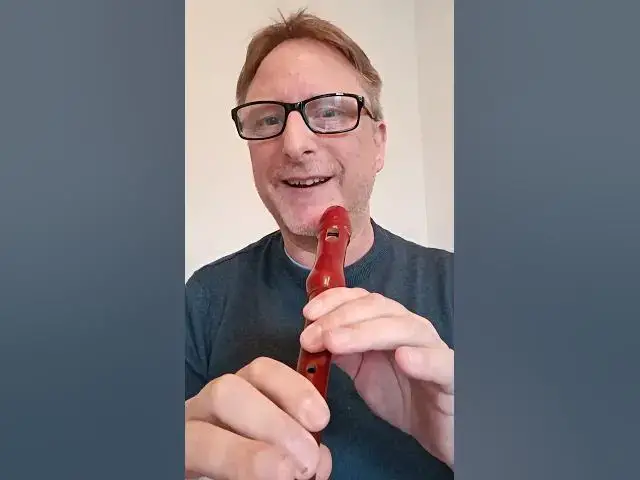
Okay, let's look at slides. So, in Irish
0:04
to whistle playing, they're very
0:05
important and they go a bit like this.
0:09
So, you're coming up from a lower note
0:11
and you're sliding into it. So, you get
0:12
all the micro tones in between.
0:28
you could say it's kind of one of the
0:29
defining characteristics of Irish
0:32
certainly whistle playing. Um such a
0:34
kind of recognizable sound
0:37
brings a kind of sweetness or a kind of
0:39
I don't know just an extra kind of color
0:53
Some of them are the same as on the tim
0:55
whistle and that's usually quite easy
0:57
because it's just the note below. But
0:59
some of them on the recorder are a
1:00
little bit more tricky. So for example
1:05
I have to push the finger forward rather
1:07
than backwards. So normally it's
1:09
backwards but I have to push it forward
1:10
here to get the slide.
1:17
you can come up from the B flat. Now
1:19
it's not meant to be chromatic. Um, and
1:21
it doesn't really sound it, but you
1:22
definitely want to avoid being
1:23
chromatic. It's just a kind of way of
1:25
coloring the note above.
1:33
What else we got? We got coming into the
1:41
That's going to be very hard to slide.
1:42
You might not want to even try that.
1:48
Just come off the lower note if you need
2:04
That one might work for the C. Don't use
2:07
it myself. For the C sharp
2:12
just comes off the B.
2:16
Don't have one for you. E
2:21
but don't linger because like I said
2:23
doesn't want the same chromatic
2:48
Okay, so slides are really going to make
2:50
your recorder playing sound much more
2:52
like chin whistle playing.