0:00
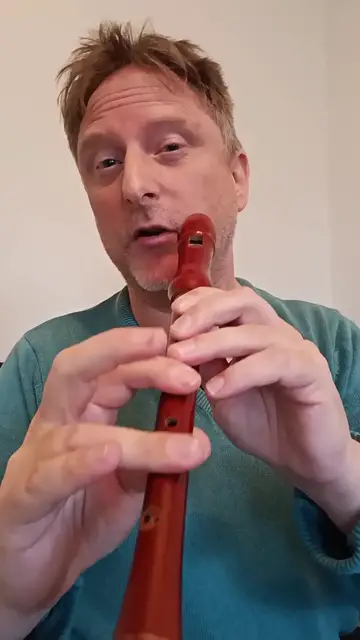
This is a cran which comes from Irish
0:07
So there's a fair bit going on there.
0:09
It's basically just a sequence of
0:14
So we're cutting with an A and then
0:17
we're cutting with this finger, which is
0:19
actually an F sharp on the recorder.
0:20
It's a tuned F sharp. And then this
0:23
finger, which is a slightly out of tune
0:25
F, but the pitch doesn't matter at all.
0:27
It's percussive, right? So you got
0:33
Now, you're going to have different
0:34
combinations. Sometimes you don't need
0:36
the first cut. Sometimes you don't need
0:37
the last one. But it's that the basic
0:39
essence of it is that you need several
0:41
ornaments on the same note. So, you're
0:42
going to use a sequence of fingers.
0:45
So, for example, in the Blani Pilgrim,
0:57
So there I'm articulating the first note
1:00
and then I'm just using the second two
1:04
and then the last part which is back to
1:14
Or I could articulate the first D with
1:16
the cut as well. So you get the full the
1:24
So yeah, maybe for practicing purposes,
1:26
do the full thing. So you articulate the
1:28
you start the whole crown with a cut
1:31
using this ring finger on the top hand
1:41
and the idea is that these cuts have
1:44
very little duration and they're
1:46
basically just uh little breaks in the
1:48
stream of air from the piping. So the
1:50
only way you can articulate on the pipes
1:51
is by breaking the flow of air.
2:02
And it's just a really nice way to
2:03
ornament that D when you got a sequence
2:05
of D's. Just makes it a lot more
2:17
Okay. So that's the cran from Tim
2:20
whistle playing and Irish piping played
2:22
on the desk cam recorder.