0:00
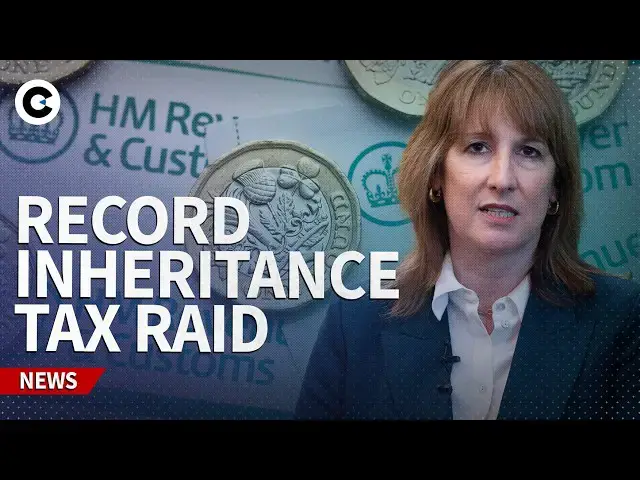
The Treasury has cashed in a record
0:02
amount of money from inheritance tax and
0:05
it could yet rake in more. Official data
0:07
show that annual inheritance tax
0:09
receipts rose to 8.5 billion pounds in
0:12
the financial year between 2025 and
0:14
2026. That's compared to total receipts
0:18
of 8.3 billion pounds in the previous
0:20
year. Under Chancellor Rachel Reeves,
0:23
rules around inheritance taxes have been
0:26
tightened including for rich foreign
0:28
nationals who were not domiciled in
0:30
Britain. But there has also been a
0:32
continued freeze on a threshold of the
0:34
nil rate band of 325,000 pounds on the
0:38
value of people's estates. And as
0:41
people's property valuations grow, more
0:44
middle class families could be forced to
0:47
pay the tax when loved ones die. Those
0:50
last figures do not include any uplift
0:53
from the government's inheritance tax
0:54
rate on family businesses, pension
0:57
savings and farms which all come into
1:00
force later this month. This all means
1:03
that the government is projected to take
1:05
in yet more money from inheritance
1:08
taxes. Alongside that jump, revenue from
1:11
taxes on people's capital income also
1:16
on the year. This has all been part of
1:19
the Chancellor's push to fund a huge
1:21
increase in government spending across
1:23
public services without hiking people's
1:29
The Treasury splashed out 72 billion
1:32
pounds more over the last financial year
1:35
helping to pay for higher wages across
1:37
the NHS and education. That rise in
1:40
inheritance tax is actually fairly small
1:42
in proportion to the massive amount of
1:44
money spent by the government each year.
1:46
But the government had also argued that
1:48
it helps to address inequalities and
1:50
close loopholes. So, do you think
1:53
targeting inheritance is a fair and
1:56
effective way of funding spending
1:58
increases? Let us know in the comments.