0:00
You know, for decades, we've all been
0:02
told the same simple story. The firewall
0:04
is our digital fortress. It's the wall
0:07
that keeps the bad guys out. But what if
0:09
that story is just plain wrong? What if
0:12
that wall, that very thing we trust, is
0:15
now the weakest link in the entire
0:17
chain? What if the tools we've spent
0:19
millions on for protection, have
0:21
actually become the front door for the
0:22
world's most dangerous attackers?
0:25
Look, it's time we all face a really
0:27
harsh reality. The whole concept of a
0:30
secure network perimeter, you know, that
0:32
cozy idea of a safe inside and a
0:34
dangerous outside, it's dead. And the
0:36
real kicker, the firewall vendors
0:38
themselves are the ones who killed it.
0:40
They've become the single greatest
0:42
source of critical vulnerabilities in so
0:44
many networks today. And the cost, well,
0:47
it's just staggering. That number you're
0:49
looking at, that's over half a billion
0:51
dollars in verified ransomware payments.
0:54
That's money flowing directly into the
0:56
pockets of criminals who basically just
0:58
walked right through the front door of
0:59
these broken firewalls. This isn't just
1:01
some technical glitch. It's the fuel for
1:03
a massive global criminal economy. But
1:06
it's not just about the money, is it?
1:08
It's about the human cost. In just one
1:11
single year, the personal healthcare
1:13
data of 259 million Americans was
1:16
compromised. I mean, think about that.
1:18
That's almost the entire population. And
1:20
a staggering number of those breaches,
1:22
they started in the exact same way by
1:24
exploiting a single vulnerable network
1:26
device. And sometimes the cost isn't
1:29
just a number, it's everything. This
1:32
number 730 represents 730 people who
1:35
lost their jobs overnight. Not because
1:38
of a recession or a bad market, but
1:40
because one single ransomware attack,
1:42
which got in through their company's
1:43
firewall, completely wiped a
1:45
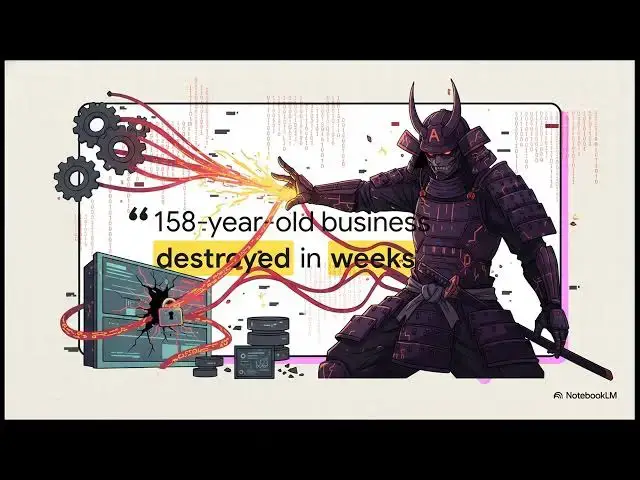
158-year-old business off the map in a
1:48
matter of weeks. So, you have to
1:50
understand this isn't random. It's not
1:52
just bad luck. A sophisticated, almost
1:54
business-like ecosystem has popped up
1:56
around these security flaws. It's a
1:58
literal gold rush for criminals. And the
2:00
broken firewalls from the world's top
2:02
vendors, they're the treasure map
2:03
leading straight to the gold. And you
2:05
can see it right here. This is the
2:07
direct pipeline from a product
2:08
vulnerability to realworld devastation.
2:10
It's not abstract at all. You've got the
2:12
Akira ransomware group who absolutely
2:14
loves going after Cisco and Sonic Wall
2:16
devices and they've racked in nearly a
2:18
quarter of a billion dollars. Then you
2:20
have the CQIN group targeting Forinet
2:21
which led to absolute chaos in the UK's
2:23
healthcare system. These aren't one-off
2:25
attacks. They are known, repeatable, and
2:27
yeah, highly profitable business models.
2:30
This isn't some kind of dark magic. It's
2:32
a business plan. Let's just walk through
2:34
the Akira Group's playbook. Step one,
2:36
scan the internet for a vulnerable Cisco
2:38
device. Step two, get in using an old
2:40
bug or, you guessed it, a weak password.
2:43
Step three, bypass security by just
2:45
spamming an employee with login alerts
2:47
until they accidentally approve one. And
2:49
once they're in, they move fast. I mean,
2:51
they can steal a company's most
2:52
sensitive data in as little as 2 hours
2:53
before locking the whole system down.
2:55
It's methodical, it's efficient, and it
2:58
is devastatingly effective. Okay, so
3:00
we've talked about the tech and the
3:02
criminals, but let's really dig into
3:03
what this means for real people. Because
3:06
behind all the technical jargon and big
3:08
numbers are businesses collapsing and
3:10
frankly lives being put at risk. So let
3:13
me tell you a story. It's about a
3:15
company called KN&P Logistics. A company
3:17
that had been around for 158 years. They
3:20
survived world wars, depressions, you
3:23
name it. They were a pillar of the UK
3:24
logistics industry employing hundreds of
3:26
people. And then it was all gone. Wiped
3:29
out. Not by a market competitor, not by
3:32
a bad economy, but by the Akira
3:34
ransomware group exploiting one single
3:37
weak password on a CiscoVPN. Their
3:40
entire financial and operational systems
3:42
were encrypted and the company just
3:43
couldn't recover. And you want to know
3:46
the most painful part of this whole
3:48
story? It was all completely
3:49
preventable. This wasn't some super
3:52
sophisticated Mission Impossible style
3:54
hack. It came down to a lack of the
3:56
absolute basics. No multifactor
3:58
authentication. that simple step of
4:00
requiring a second code to log in in an
4:02
old unpatched device. This is the
4:05
digital equivalent of leaving your front
4:06
door unlocked with a giant neon sign
4:09
that says welcome. And if you think a
4:11
company going under is bad, the
4:13
consequences can get so so much worse.
4:16
In the UK, the killing group reached a
4:18
healthcare provider by exploiting a
4:20
Forinet firewall. The initial reports
4:22
were bad enough, something like 700
4:24
procedures canled, but the final tally,
4:27
it was over 10,000. Just let that sink
4:30
in for a second. 10,000 canceled cancer
4:33
treatments, surgeries, blood
4:34
transfusions, all because of one
4:36
compromised device. And the ripple
4:39
effect here is just massive. When
4:41
attackers hit Marquee Software
4:43
Solutions, a financial tech company,
4:45
through their Sonic Wall firewall, they
4:47
didn't just hit one company. No, they
4:49
compromised the personal and financial
4:51
data of nearly 800,000 customers from
4:54
over 700 different banks and credit
4:56
unions. One single firewall breach
4:58
created a nationwide financial data
5:00
crisis. But here's the thing. This is
5:03
way bigger than just ransomware for
5:05
profit. The exact same vulnerabilities
5:08
that let criminals in are also being
5:10
used as a playground for the world's
5:12
most sophisticated governmentbacked
5:14
espionage groups. The key difference
5:16
here really is the motive. Ransomware
5:18
groups are loud. There is smash and
5:20
grab. They break things to get paid
5:22
quickly. But nation state spies, they
5:24
are the exact opposite. Their goal is
5:26
silent, long-term persistence. They want
5:29
to sit inside a network for months, even
5:31
years, quietly gathering intelligence
5:32
without anyone ever knowing they're
5:34
there. They're ghosts in the machine.
5:37
And the tools they use, honestly, they
5:39
are on a whole other level. Take
5:41
something called Lerunner. It's a piece
5:43
of malware targeting Cisco devices. This
5:45
is not something you can just fix with a
5:47
simple patch. No, it's designed to
5:49
survive everything. Reboots, software
5:51
updates, even a full upgrade of the
5:53
devices core programming. The only way
5:55
to be sure it's gone is to physically
5:56
rip out the hardware and replace it. And
5:59
if you think this is just some
6:00
hypothetical sci-fi threat, think again.
6:04
This is very real. During a US
6:06
government shutdown, when I staff
6:08
weren't around to do patching, attackers
6:11
breached the Congressional Budget Office
6:13
through their unpatched Cisco firewalls.
6:16
They got access to sensitive economic
6:18
forecasts and budget discussions. This
6:20
is happening at the highest levels. So,
6:23
it's absolutely critical that we all
6:25
understand that this isn't just a Cisco
6:27
problem or a Forinet problem. This is a
6:29
systemic failure. We are right in the
6:32
middle of an industry-wide crisis where
6:34
the very foundation of network security
6:37
is crumbling right underneath our feet.
6:40
And you don't have to take my word for
6:41
it. Just look at the data from SISA, the
6:43
US Cyber Security Agency. These are the
6:46
known actively exploited vulnerabilities
6:49
that they are tracking for each major
6:50
vendor. Forinet has 20, Sonic Wall 14,
6:55
Cisco 12, and the list just keeps going.
6:58
Every major player is contributing to
7:00
this crisis. There is no safe harbor
7:03
here. And this crisis, it didn't just
7:05
pop up overnight. This timeline shows a
7:08
5-year disaster in the making. It began
7:10
with some early warning signs back in
7:12
2021. Then it accelerated as ransomware
7:15
groups started to scale up in 2022. And
7:17
by 2024, we hit peak chaos. We've now
7:21
arrived in this bizarre state of crisis
7:23
normalization where catastrophic
7:24
breaches are just a constant background
7:26
noise and tens of thousands of critical
7:28
devices are just sitting ducks. Which of
7:32
course leaves us with the most important
7:33
question of all. For years, we've poured
7:36
our trust and our budgets into these
7:38
little boxes at the edge of our
7:39
networks. We've built our entire
7:41
security strategy around them. So if the
7:43
firewalls are fundamentally broken,
7:45
what's actually protecting our
7:47
hospitals, our banks, our most critical
7:50
data? What's protecting us?