Up next in 10



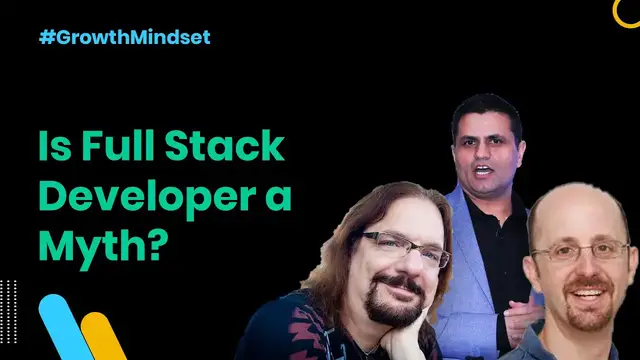
Join us on December 4 with Mahesh Chand & our guest speakers Andy Schwam & David McCarter in the new episode of Growth Mindset Weekly Live Show where they talk about full stack development.
C# Corner - Community of Software and Data Developers
https://www.c-sharpcorner.com
#csharpcorner #liveshow #growthmindset #fullstack
Show More Show Less View Video Transcript
0:00
Thank you
0:29
Thank you
0:59
Thank you
1:29
Hello and welcome to the Growth Mindset Show
1:53
My name is Mahesh Chand. I'm a founder of C Sharp Corner. I see we have a lot of people joined today looks like this is a good topic today to start welcome
2:04
welcome to the show guys good morning Raj Rishabh good morning Shubish, Shoheb, good morning Kunal
2:13
Praful everybody good morning looks like we have a good number of audience today
2:18
we are going to have a fun show today today we are not going to talk about growth mindset what
2:24
we are going to talk about is full stack development and full stack developer and
2:29
the reason this topic came to the picture is recently one of our you know key members and
2:37
advisors and also mvp david mccarter he is also part of our core team he wrote an article on c
2:45
sharp corner that is full stack developer is really a a some a it's like is it even real like
2:53
is there people are they're calling themselves full stack developer so what are they so today's
2:58
goal is we are going to talk about what are these uh full stack developers are what they do what
3:05
their roles are are they real or they're not real and uh today i have changed the format of the show
3:13
little bit today we are going to have more like a tv debate so you guys ready for that one side is
3:19
going to say yes there are full stack developers and they exist and yes and then other side we have
3:27
another guest who's also a good friend um also microsoft mvp uh he is he runs uh his own dev team
3:36
He has been a full stack developer himself. Andy Schwamm. Andy Schwamm also runs his own show
3:44
So yeah, before, you know, we jump in too much into that, let's invite our guests
3:51
Hey, Andy. Hey, David. Welcome to the show. Hey, everybody. Hello. So where you guys are, you know, right now, where are you joining us from and how are things going with COVID situation
4:06
I know it's growing like crazy in the U.S. Well, I'll go first
4:14
David, you go ahead. Most everybody knows me. I'm David McCarter, Donna Dave, and I live in San Diego, California
4:25
And, you know, the COVID is not doing good here. You know, yesterday our governor issued a three-week lockdown for the state
4:35
so we're all supposed to stay home and not go anywhere unless we absolutely have to for the
4:40
next three weeks and so you know we're going into a difficult time you know like a lot of other
4:47
states are in or going to be in very soon so. Andy? Yeah so hi by the way I'm Andy Schwamm for
4:58
those of you that don't know me you can find me on Twitter at Schwammie and I put that in my
5:03
name there down below. As far as COVID stuff goes, it's hard. This is brutal
5:11
I'm home today with my kids at home, like probably many people that are watching, and I'm kind of
5:18
hoping that they don't come walking in. This is the new normal. The funny thing is at work, when I say at work, when we're
5:26
working, we're past the point of worrying about kids coming into the calls and things like that, because it's just the new normal now
5:36
On the flip side, it does make certain things easier, like these kind of streaming situations
5:41
It's really elevated streaming, I think, and the value of live streams and live events
5:49
I don't want to play up the benefits of COVID. That sounds a little
5:53
kind of going the wrong way. We'll all be really happy when it's over. It's been
6:00
it's been really rough you know well i agree i agree right kovid you know some people are actually
6:05
taking advantage of situation they're learning a lot because they have more time some people are
6:10
they started their own streaming some are i need i know some guys are writing books some guys are
6:16
learning certification so all of you guys watching i understand there's a lot of problems going on
6:21
outside but you know on positive side you can also think like hey you know what at least i
6:27
have more time now let me just learn and grow in my career right that's all at least we can do
6:32
on a positive side so you know as a human being we're always looking for positive side you know
6:37
there's always going to be problems but you look at the positive side and try to utilize your time
6:42
such as this show we started and imagine if we have live you know work going on every day nine
6:48
to five whatever we do it will be hard for us to even come join here yeah so all right guys uh good
6:55
morning everybody looks like we have more people joining us and I see some people they are our
7:00
regular frequent visitors welcome everybody to the show today I have here guests Andy Schwamm
7:08
and David McCarter Andy Schwamm is in local in Philadelphia area you are close to me
7:14
David McCarter is on west coast I know David's probably 7 a.m. where you are
7:20
a Victor is here Victor is from West Coast that a good to see you Victor I hope things are going with your new startup Yeah he one of my friends
7:35
I've known Victor for a long time. Yeah, yeah, yeah. Good guy, really
7:40
My favorite at some point. We're going to meet him in person. I want to bring him on the show too, actually
7:45
He's working on a lot of good stuff, like really blockchain and cool stuff
7:50
That's awesome. Okay, guys. So let's kick off a little bit. Before we kick off the debate, I want David to start with a little bit about your show
8:00
You have a show coming up tomorrow. And then you're also writing articles on C Sharp Corner
8:05
You want to spend a minute, let everybody know about it? Sure. Yeah
8:10
My show is back tomorrow. We took a little vacation because of the holidays
8:14
And so we're back tomorrow, 10 a.m. Pacific Standard Time. I don't know what time that is in India
8:20
And it's called Rocking the Code World with .NET Dave. And every week I have a guest on, like a big popular person in the .NET world or the programming world, really
8:34
And I interview them for an hour. And so far, you know, the interviews have gone better than I could have expected
8:42
And I'm really enjoying the show. And I love it. And I can't wait to be back tomorrow
8:47
So tomorrow, my guest is someone I've known actually since the 90s, you know, back in the, you know, the CompuServe days
8:57
Some of you are old enough to remember CompuServe. You know, her and I, I think, worked in CompuServe forums and also her and I collaborated together
9:07
If I remember correctly, we collaborated together for a magazine article for the Visual Basic Programmer's Journal way back in the 90s
9:15
And so that's how long I've known Kathleen. So tomorrow, my really, really good friend, Kathleen Dollar, is going to be on
9:25
And she used to be just like you and me, you know, Microsoft MVP
9:29
And I got to see her every year when I went to Microsoft. But now she works at Microsoft
9:35
And she's actually in charge of – she's a PM for the Visual Studio team
9:40
And since I'm big – Keep that some for tomorrow too. Otherwise, you'll give everything today
9:47
Andy, you want to talk a little bit about what you do, your show, and your work, what you do
9:54
Sure, I'd love to talk about that. So thanks again for having me on the show today. It's great to be with everybody
10:01
So, yeah, I am also a Microsoft MVP. I've been an MVP for over 10 years
10:08
And I do a whole bunch of stuff, you know, sort of community-based. you know, I'm involved in the .NET community, as I would like to say, or the development
10:16
programming community. I'm a speaker and, you know, I've done a lot of different things. I help
10:22
run a conference that we have once a year and hopefully we're back this year in October. It's
10:28
called Tech Bash. I also have a live stream and that is Wednesday nights, Wednesday evenings at
10:36
8.30 p.m. Eastern. It's called the Dev Talk Show. And it's with Chris Gomez and Rich Ross, who maybe
10:42
some of the viewers know. And we're on Twitch and YouTube talking about all kinds of things that
10:48
developers talk about. Sometimes it's topics just like this, right? Sometimes it's just a
10:53
conversation-based show. Sometimes we have code samples, we have guests, and we interview people
10:58
It's sort of like all things development. We're not like just doing code. We talk about things
11:03
that matter to developers. And we do code and we do a whole bunch of stuff
11:08
Great. And you can find me on Twitter. I do want to say one thing to David
11:14
I appreciate, this is more of a compliment for David's show. I appreciate you saying Kathleen Dollard
11:19
was a regular person like us, but Kathleen Dollard is not a regular person like us
11:23
Kathleen Dollard is really, okay. So let's just, you know, I like to be included in that company
11:29
but I wish, you know, just good. So it's a great guest you have
11:34
That's true. Great. I've always looked up to Kathleen. So you're right
11:38
She's on a higher level than I am for sure. That's great
11:43
That's great, guys. Okay. Welcome to the show, guys. We have more people join us
11:47
Everybody, welcome to the show. Today on this growth mindset show, we're talking about full stack development and who are full stack developers
11:56
If you want to become one, what you have to do to become a full stack developer
12:00
so a little background on that full stack development if you look at the number of job
12:06
openings at least in the u.s there are a lot more job openings now for full stack development and i
12:12
believe the full stack development started recently it's because the way software development has
12:19
changed and if you look at the you know you go back like we are all 20 plus years experience in
12:25
software development when we go back there used to be different teams let's start with there used
12:30
to be like they're still there like data guys right they dbas in database administrators
12:36
they usually manage the databases their job was okay you sit in a room where all you are handling
12:42
managing all databases so every time we need to update the database create a new database add a
12:48
new you know store procedure add queries or make sure the databases are running performance indexing
12:55
and all that the database guys all dbas do that and then there is a you know front-end developers
13:03
front-end developers are usually they build user interfaces how your software application looks
13:09
like right it could be a i i'm i am from windows background so i used to write a lot of win forms
13:16
and visual c++ applications and then now move to you know win forms and then wpf and uwp
13:24
and then now every you know these days everybody's building web interfaces websites right web pages
13:29
or apps so when you look at front end these are the developers who are building these front ends
13:36
and there is in between like we sometimes call them back-end developers back-end developers
13:41
are actually programmers they write code but they write code that plug plug in between the database
13:49
or data sources and UI. So that's kind of we break down this whole software development
13:56
you know, like how people work in different parts as a team
14:00
But now recently, what happens is, especially if you look at cloud native architecture
14:07
in cloud native architecture where one person owns the full stack, means UI, the middle tier, the libraries, the services
14:16
and as well as the data. So that's where it's growing more. So companies are saying, listen, guys, we don't have time to deal with UI guys talking to back-end guys taking too much time
14:28
So before I go more into details, and I want Andy, you start with that, and then David, you finish with that
14:35
What's your perspective on your background and now on this full-stack development in general
14:42
Well, I consider myself and have considered myself for years the full stack developer
14:51
The thing is just because I believe that it a valuable thing it good to have full stack developers But I want to contrast something you said I still think it very valuable on teams to say wait hang on let split this up
15:07
And let's have someone focus on the UI. Let's have someone focus on the middle tier
15:11
Maybe someone focuses on the database if that's the way you want to break things down
15:16
There's not a one size fits all situation is what I really want to say
15:19
um yep i think it's i think it's important to be well-rounded these days um because a lot of times
15:27
some of the projects aren't necessarily big enough to have someone to do each one of those parts
15:32
i think you really need to look at it as um as a manager like myself is what's the best situation
15:38
for this particular team or for this particular uh product or this particular project and uh and
15:45
weigh things out that way. David, you want to add that to what Andy said? And obviously
15:53
then I'm going to have more questions specific on one of these, you know
15:58
Yeah, well, you know, I, you know, when I wrote this article, because I actually worked on it for
16:05
a while. And, you know, I started the article because I was looking for a job, I was looking
16:11
for a new contract. And I was, you know, every morning or every other morning, I was on LinkedIn
16:16
you know, looking at the job postings. And there's all these full stack, full stack, full stack
16:21
full stack developers all the time. And then, you know, the list of requirements, you know
16:28
and I put them in my article because I, you know, I got one from like one of the movie companies here
16:33
in California. And, you know, what they're looking for is a full stack developer. And if you look at
16:40
the details, which is in the article, you know, they're actually looking, and I say this in the
16:45
article, it sounds like they're looking for the God programmer, right? The programmer who can do
16:51
everything and he's perfect at it, right? Yes. Yes. And so that's what the job, you know, posting
16:58
sounds like, right? Now, I think we've all been in this business long enough that we know that
17:05
that's not what they're really looking for, right? They just spew all this stuff into job posting
17:11
hoping they get somebody who has some of it, right? And so my thing, especially with the article
17:20
is that software development these days, whether you're doing it in the cloud or not in the cloud
17:26
there's so many pieces to it, right? And it's really hard for one person
17:32
to be good at all of it, right? And that's why a lot of teams these days have broken down into, you know, this group does this, this group does that
17:42
And even in my team at work. So on the product that I work on for a Fortune 25 company, which we released in May, you know, we really only have three developers
17:52
And so we have, I'm the architect and developer. And then I have a junior person who helps me with more of the back end things, you know, the services and the database and all that kind of stuff
18:05
And then we have a front end developer who does all the website stuff
18:10
And that's what he does. And we really don't touch that. And he doesn't really touch our piece right now
18:15
Right. Because we're so busy, you know, we just can't cross help things
18:21
Right. So even in small teams, this is where things are going
18:26
And so, you know, so anyway, to end with, it's just that, you know, the full stack developer
18:33
term for some reason bothers me. And I wrote the article and I was hoping the article would help me
18:40
discover why it bothers me. And it didn't really. But the good thing is it caused a lot of
18:48
comments and postings and people thinking about it. And that's really the point of the article
18:54
right? Well, it's one of those things where we all know that there is not, I mean
19:01
full stack if you ask me and i want to take your take on andy right in your team you hire i want
19:06
you to bring some of your points when you hire this developer what's your team look like what
19:11
they do but i work with a lot of developers you know i work in the teams i'm managing teams
19:16
different projects i'm managing but in reality i you cannot have a developer who is expert in
19:26
everything that's not possible unless you are one of the guys who've been working at it 20 years
19:32
and like us who can call ourselves tech because we know the database we know the data we know
19:39
how to build apis not just build we also know the best practices we also know the most efficient and
19:46
high performance way to build those right and also we know the ui obviously we don't build the ui but
19:53
if you ask me I don't ever ever code HTML but at least I understand a little bit like okay I want
19:59
this component to be here I want my new project to be in React or is it a Blazor I know that but
20:06
I don't really code that so do you think that Andy before you know you start do you all also
20:14
think that full stack developers are canned or lead developers they are not like a developer who
20:20
one or two years experience because in reality they cannot really be there
20:26
Yeah, I think you make some really good points. First of all, I think one thing we can probably
20:31
all agree on, I don't think it's possible to be sort of like what we would call a junior
20:36
full stack developer, right? Because there just hasn't been enough time. I mean no disrespect to
20:41
junior developers who are dabbling in all kinds of different things. But the whole concept that a
20:45
a full stack developer. And David's article talks a lot about being proficient in all these things
20:51
That's a lot to expect from anyone at like a junior level. That's just too much
20:59
So when I hire people, one of the things I noticed, by the way, and this plays right along
21:08
with this, is that the interview process is getting longer and longer and longer. I don't
21:12
mean the process like it takes months. What I mean is the interview itself used to be 30 minutes
21:18
and then it went to 45 minutes, an hour, and an hour and a half, because there's so much
21:22
to talk about these days. It's really hard. Mahesh, I think what you were hinting on
21:27
is sort of the full stack architect, meaning that you're saying you know all these basic areas. You
21:34
don't code in HTML, you said, right? But you are familiar with it enough, and you might make certain
21:39
decisions about what frameworks to use and things like that. And maybe we can consider that's the
21:44
other end of the spectrum. You know, we can say that, again, no disrespect that a junior developer
21:50
can't really be full stack. It's just a lot to expect. But an architect can be somewhat of a
21:55
full stack architect. Now, then we get into the middle. And I think that's where the that's where
22:01
things get complicated. We do hire what I would consider full stack developers, we expect them to
22:08
be pretty good at, you know, .NET and the, you know, middle layer, understanding APIs
22:19
and understanding you know building applications building the business logic in C That the language that we use right Then we expect them to know the database we don expect them to be proficient at database not like a dba level but writing your own sql writing your
22:35
own queries and those kind of things and building uh structures in sql and we uh we do expect them
22:42
to know um some of the uh you know front-end technologies as well whether that be mvc or
22:50
or Angular or something like that. So we do hire full stack developers
22:55
but the tricky thing is managing your expectations of how great you expect them to be
23:00
And to be fair, we don't generally hire what I would consider someone at the junior level
23:06
Again, that's not a knock on juniors, it's basically the situation we're in
23:11
hiring full stack people, you can't hire junior people, right? And that's a problem there too, by the way
23:17
I recognize that. and even in my article you know the the posting that i put in the article you know they wanted
23:26
you know the god programmer with five years experience right yes and and pay and pay is
23:32
probably really low right right well actually i put the pay on there it was one cent yeah so yeah
23:40
so let's yeah so i think you know sometimes in i'm sure you have heard those terms mean and lean
23:46
You know, mean is, you know, start with MongoDB Express and, you know, Angular and Node.js, right
23:54
So that's kind of mean stack. So when, you know, I work with the startups, right
24:00
I work with the startup. I work on a small project. So in a startup, you know, you don't really have three kinds of programmers
24:06
It's usually one guy start and he does everything, right? to start from your little bit database, little bit of APIs or direct calls, your code direct
24:15
node.js and build the Angular or React UI, right? So that's where this came from, a lot of this full stack development, because they expect
24:25
you to know everything about this whole mean stack. And there is a question somebody asked, what is full stack
24:32
So the full stack, let's start with that quick. David, you start quick, like briefly
24:36
Can you briefly explain to people what Fullstack is? And then, Andy, you can finish that
24:42
Well, to me, Fullstack means the different layers of programming that we do
24:48
And I've written about this a lot on C Sharp Corner. And, you know, the layers are basically, you know, the back end database layer
24:56
And then you have a, you know, you have a business layer, communications layer, presentation layer
25:01
So I kind of look at the full stack developer as those layers that I've been teaching for 25 years
25:10
But in my article, I do basically roll them up into three
25:16
There's the backend developer, which I consider myself mostly a backend developer now, even though I am full stack, but I really focus on the backend
25:26
And then there's the front end developer, right, who does all the UI and the apps and stuff like that
25:30
And then there's the middleware developer who does, you know, you know, more of the communication pieces and maybe things like that
25:38
So so I kind of laid them out in the article. But full stack to me means, yeah, everything, you know, including identity, identity
25:47
And yeah. Yep. Andy, you want to add that? Yeah, I can add a little bit to that. I certainly agree with that with that definition
25:56
I would expand upon it a little bit, which is to say that I think it's important for a full stack developer to understand the platform that these column services are hosted on and things like that
26:12
So if it's on Windows, if it's in Azure, they do need to understand those platforms and maybe not to be an admin level knowledge on those things, but certainly to be able to do the basic troubleshooting and to help out with that
26:26
And, you know, I'm going to complicate this even more and say DevOps, maybe DevOps fits into the full stack developer, right? Full stack developer on small teams is working with pipelines and CICD and those aspects as well. And so I'm actually expanding it out even a little broader than David. And I, you know, I still believe in it
26:50
yeah so let's you know so when you think of a full stack developer what is your minimum
26:56
years of experience like roughly i'm not saying exact obviously somebody will learn faster than
27:02
others so if you have to look at the developer say okay resume comes to you and this person has
27:08
that many you know if you have that many years experience you're like this guy cannot be a full
27:13
sectoral firm. Do you ever look at that? I don't know. I try to be pretty careful with
27:22
things about like years. Certainly there are some minimums, right? And as I said earlier
27:28
it's pretty hard to hire someone that we want to have experience in all these different areas
27:32
that's got two, three years of experience. It happens, right? And it can be there
27:38
I think what's important to me is passion and desire. And so if someone wants to be a full stack developer on the team and they're really good at some of the aspects of it, which is usually the case, people have like their strong sides
27:55
Then we say, well, do they have that passion? Are they really interested in learning these other parts? Right
28:00
And how does that how does that balance out the team? So if we have, let's say there's three developers on the team and they happen to be really good at UI, but they're full stack developers, but their strengths are UI
28:13
And then we have another person comes in who's maybe looking for a position and they are not quite full stack developer, but their strength is UI
28:23
Then that's not really going to complement the team really well. On the flip side, if we said, wow, this person's really good at like backend stuff and they haven't really done UI, but they want to get into the UI, there's an opportunity
28:35
There's a fit where everybody can learn from each other and everybody can work together. And so I think there's a gray area when you look at it's not always a decision based on a single person, but the needs of the team
28:48
But in general, we'd be looking for someone who has, you know, a few years experience
28:52
Usually we're looking for developers with around the five-year mark. And again, we don't put the word proficient in there, David, right
29:00
But we're looking for five years with experience in – I mean, I'm not proficient at anything, I don't think
29:06
I don't know. You know, some of the terms, resumes are – we could just spend hours bashing how resume – not resume, sorry, not resumes, job postings
29:18
anything that they ask for is you know that's just classic stuff you know i hope that all right so
29:25
looks looks like we have a good comment here that kind of summarizes it so um guys what we will do
29:32
is uh we're going to take a minute or two two minutes break and we will be back and we will
29:37
continue to talk about full stack development and how to become a full stack developer or
29:42
pretend to become a full stack developer you don't need to be at least you need to know
29:46
and what are other tips, other things you need to look for when you are applying for a job that's so-called full stack developer
29:55
Obviously, as David said, full stack developer is like a superman. You know, he knows he can do everything, but all those people exist there, right
30:05
Or this is just a hoax. So we're going to continue to talk about this after this break
30:10
We will be back. Here at Mindcracker, we create artificial, virtual, and mixed reality games and apps
30:19
Voice-enabled skills and apps. And intelligent apps and integrate AI with IoT products
30:26
We offer advisory services for innovations and startups. We provide cloud and code security and performance services
30:36
We also offer AI-ML blockchain development, consulting, and training. Just visit www.mindcracker.us to make your dreams into a reality
30:50
COVID makes us feel like this and work from home like this
30:56
But what if work looked like this? With a leader like this and a payday that feels like this
31:08
Learn how to change your mind and your mindset with the growth mindset show every Friday at 10 a.m. Eastern
31:22
Welcome back to the growth mindset show. go ahead David you go ahead let's do it it's out of tune yeah yeah welcome to the show guys uh today
31:33
we are talking about full stack development if you are joining us first time this uh this growth
31:38
mindset show is every uh friday 10 a.m eastern um again this show is actually for you uh so our goal
31:47
is if you have any question on your mind it can be any kind of question around software development
31:53
just feel free to post a question okay there's no question it's just called bad question or
31:58
stupid question or you know just feel free to ask us any questions here today I have a guest with me
32:05
Andy Schwarm David McCarter both are very experienced guys Microsoft MVPs I would say
32:12
we all three have 20 plus years experience in software development working for different
32:17
companies. So you guys can ask any questions you have. And today, let's continue talking about this
32:24
growth in full stack development. In the meantime, David, do you have any, you want to play something
32:29
for us? No, my guitar is out of tune, but maybe while Andy's talking, I'll get a different one
32:37
Maybe that one's in tune. All right. I do want to go back just a little bit, and I would want to
32:46
say two quick things that I do talk about in the article. And one is you guys were talking earlier
32:54
and I say this at the end of the article, that if you want to say full stack architect
33:00
I'm totally cool with that, right? Because that's really what I'm at. That's what I am now
33:06
really, in reality, is a full stack architect, right? And because I've done all the stacks
33:11
you know, throughout my career. And I've been, you know, programming for close to 30 years now
33:16
And so and then the other thing is, you know, I taught at the university here for about 18 years
33:25
And, you know, and I actually got, you know, the .NET program. I was teaching .NET a year before it
33:31
came out, you know, because of me and accredited classes a year before, you know, .NET came out. But
33:38
But anyway, but, you know, in those classes, you know, especially the beginner classes, you know, students would always ask me, OK, what what classes should I take after I learn the language
33:49
Right. You know, you know, because then we have, you know, database classes and front end classes and things like that
33:57
And I told them all the time that, you know, kind of go first to the thing you're most interested in
34:04
Right. So if you're more interested in data and things like that, then learn that first
34:10
Right. If you're more interested in websites, learn that first. Right. And once you become good at that, then start learning the other stacks
34:18
Right. But if you try to learn everything at one time, that's going to be really difficult
34:23
It's going to be a daunting task and you're probably going to give up. Right. And so it comes to experience
34:30
Yeah, it comes with experience. Yeah. Yeah. So that so I've been recommending that to students forever now. And and that's what I'm recommending to everybody here, too, especially if you're a junior
34:40
And even the junior person on my team who helps me with this, you know, the product that we have at this company, you know, I've talked to her about the same thing
34:51
And she told me recently, you know, when we were talking about this, that she really is is in wants to learn machine learning and data and AI and things like that
35:01
and that's what she's going to go for first is that part of the stack right yeah so that's great
35:07
um so i want to go back a little bit more um on the you know how we come as a full stack as you
35:14
said david architect right i when you say architect if you ask me i expect them to know everything
35:21
so they are automatically full stack right because they have to know that they have to make sure the
35:26
UI is done right. They have to make sure the APIs and services are done right. They have to know the
35:32
data architecture is done right because otherwise it's not going to work, right? But I think we are
35:38
here talking about the developers, which companies, businesses are expecting them to be hands-on
35:44
Not only they have to create the database table, they have to create the queries
35:48
They have to create the API or service. And also they have to create the UI
35:54
And in NDU, I want to take on that after that, because we come from a background where we used to have this, say, N tier, N layer architecture, right
36:06
You have a website. In website, you have a database, right? Database connected through DB layer
36:12
And there is a business layer where you put all business logic. And then there are UI
36:16
and in the past we would have a ui developer they are expert in ui they are good at creating visual
36:23
screens in html and css or esp.net and now there's a back-end guys will they'll write all the code to
36:32
business layer and db layer and also work direct with database sometimes they will do most database
36:37
work as well right so it's like back-end and front-end so now that's used to call like you
36:44
our architecture was you call it layered architecture or tiered architecture right here
36:49
or has hardware involved obviously but what I want to get more into it and then you can jump in here
36:57
is that you know other day we had a show on cloud we had a conference on cloud and one of the
37:05
two things came out of me you know when you look at today's architecture is one is cloud native
37:10
architecture and other ones could they there are term called microservices architecture now cloud cloud native now includes microservices and one of the
37:19
thing which Vidya he also he works for Microsoft he an architect so he basically and I agree with him how these microservices architectures work is that one person is actually responsible for all parts of that module
37:36
So, for example, if you are a developer in the team and customer module is assigned to you, you are not going to build the customer screen or the customer API, but you'll also be building the sum of the data part or data backend code for the customer as well
37:53
so that's where it becomes a tricky that and i believe they these guys have to be senior guys
37:59
they cannot be junior guys you want to start with the start with that like how to compare
38:06
these two architectures and where we going now you're asking me i think yeah you start and then
38:12
i'm going to ask david is that i have other questions for david okay really quickly i do
38:19
want to know, I'm scanning the chat and, you know, I do see a lot of questions coming by
38:24
things like, you know, well, but I'm proficient or I want to be proficient in one area
38:28
Can I have a good career at that? Certainly. Yeah. Let's take some questions. Yeah. We can
38:33
take some questions. Yeah. I just want to make sure like this is not a one size fits all solution
38:38
Right. But what we can talk about is what we see as common and, you know, certain certain paths
38:45
So you were talking about different architectures and different stacks and things like that
38:53
And where does the full stack fit in? When you're talking about microservices and you're saying that one person would be responsible for a whole component within that microservice
39:03
you could argue that that's like a full stack developer within the component, right
39:07
Because maybe within that component in the microservice, they're accessing data, they're processing data, they're, you know, who knows what kind of business logic is in there
39:16
There's probably not UI. I think that's a safe bet. But they're like full stack as well, right
39:23
I don't know that there's a – I'm trying to sort of piece apart the question you were asking and figure out if there's really – if it matters
39:38
I don't know if it matters whether it's microservices or if it's a cloud architecture
39:44
Can you be full stack? Yeah, and it's okay. Let's go. We can just jump on some questions and take questions for David
39:53
Simon, you want to put some questions up here? So that's a good question
40:04
Go ahead, David. You want to take this question? So if you have experience in desktop and web development
40:11
and you can deploy it, is that full stack? My first reaction is no
40:23
No. definitely yeah i agree yeah that's that's that's the front-end work and and deploying front-end work
40:29
um is it's not really full stack to me really but i don't know i don't know what you guys think
40:36
well i don't want to i don't want to i i don't think you meant this at all but we don't want
40:39
to discredit this person no no yeah right right i know you you know you meant that right like that's
40:45
a great developer that can take the requirements build an application uh and deploy it that still
40:51
isn't quite full stack. That's a different term, right? I don't know what that is. That's like
40:55
you know, still someone with like a variety of experiences. There's a difference between
41:03
you know, like that whole aspect of the kind of developer that can work as a solo developer
41:07
and they can take the requirement, and they can build an application, and they can test
41:11
it themselves and things like that. The stack is more about the various platforms and the various
41:19
sort of components within the application is really more the stack. I earlier mentioned
41:26
maybe I confused the topic a little bit because earlier I mentioned, like, I expect full stack
41:30
developers to be able to develop pipelines and do deployments as well. But that's just
41:39
you know, another part of the nature of like the world we're in where a full stack developer just
41:44
really does a lot of stuff um you know there's a lot of gray areas in this yeah yeah and again
41:50
when you look at even though at david you said and i want to go back to you now after this
41:56
when you are applying looking for these jobs and positions and they're saying oh we are hiring a
42:02
full stack developer if i'm hiring a full stack developer i i don't really ever post i never post
42:10
called full stack developer as in my job postings what i do is i'll say senior.net software developer
42:17
okay when i say that then i will clearly specify oh you should know blazer you should know c sharp
42:23
nine you should know this and you should know a little bit sql right if you know all that you know
42:29
sql you know.net you know how to write a you know say web api and then you can write a blazer code
42:36
To me, this becomes a full stack in .NET ecosystem. Yeah, that's true
42:42
And I'm sorry, what was your question again? I'm sorry. So my question was, does this make sense that if when you look at the full stack development, right, there's a job posting there
42:56
And they say, oh, we want full stack developer. And they put everything in the job requirement
43:01
That's probably the most confusing part that whoever is posting the jobs, they are putting everything in there
43:07
Right. And that's kind of what I talked about in the article is that, you know, they say full stack, but then, you know, their requirements are just kind of insane
43:21
You know, and someone called me insane in the chat. So I'm going to call job postings insane
43:25
OK, because you have to discount most of what's in there, really
43:31
And and and so I don't know who writes these job postings
43:35
I don't know if it's HR or what, but I can't believe a really good development manager writes these job postings
43:42
Right. And so and this is the confusion, I think, is with that word
43:48
And I was just thinking and maybe this is why I had to ask you the question again, is that, you know, I was thinking that, you know
43:55
I was trying to rack my brain. And so far, you know, I can't think of any company where your title is full stack developer
44:03
right? No, your title is going to be, you know, developer two or three or senior developer or lead developer
44:12
something like that. But I don't think anybody says full stack developer at their company
44:18
Right. No, no, no. I never seen that. Yeah. We were having an interesting conversation at work the other day
44:25
I say at work, but we're not really at work. But we were talking about various people on the team
44:33
and it's interesting because the title doesn't really reflect what their knowledge is
44:37
We were actually talking about there was an individual, and can an individual get promoted to, let's say, senior if they're not full-stack developer
44:47
This is actually kind of the thing. We weren't talking about full stack at the time, but when I reflect back on it, that's
44:52
what we were getting at. And it like certainly you can The job title is the job title It your level of proficiency But then we still need to know within that within our pool of talent that some people have areas of different things
45:06
I mean, one senior developer and another senior developer don't necessarily know all the same things. Right
45:12
What regardless of it? And I think the title I've never seen the title as full stack developer. Maybe there's places that work that way
45:20
Okay, so here is a question. Continue with that. Take the question as well, right
45:27
Can you look at this question and see what you think? The company told me, since I do have Angular or React, I cannot consider as full stack
45:36
I am an architect. I have 15 years experience. I have MVC and MVVM experience
45:40
I also work on Windows and Web. They said since he does have Angular, he's not full stack
45:47
That actually seems like maybe it was a typo. That seems to be the contrast
45:52
I would think if, what all the things that were listed there, that person sounds pretty full stack
45:57
I mean, again, does database fit in there? I don't know, right
46:03
So, you know, I think Victor has a question there. When you say full stack
46:08
full stack is really one of the stacks, right? You can have a .NET stack. You can have, you know
46:13
mean stack. You can have a lean, you know, lean stack, right
46:18
So depending on that, if you have mean, you expect, you know, there are four parts in that, right
46:26
MongoDB, Express, and then Angular and Node.js. Node.js is for backend, right
46:32
MongoDB is the database, Express is backend, you know, middle of JavaScript, and then you got Angular as your frontend
46:40
So it's one stack, and I expect, if you look at a full stack developer, I expect that developer to know all those things
46:48
Um, so, but I think the confusion comes is that all of us are not expert and proficient in all these things. And we can only be there more like a 80% backend, 20% UI, right
47:04
Yeah. Great. You know, and you have to play to your strengths. It's important to have strengths within that, I think
47:10
Yeah. To be proficient in all those things, I would like to be that person, but I'm not, right
47:18
And I think let's not raise up imposter syndrome in everyone that's watching this right now and thinking that, you know, some of us consider ourselves full stack and we must be so great
47:30
And maybe they think to themselves, well, I'm not that great. I'm not full stack
47:34
Let's not introduce imposter syndrome here. No one's a proficient at everything
47:39
No. Yeah. And it's important to have strengths within these areas because teams rely on that
47:47
The teams, it's nice to know that one person on the team is the person that can really help sort of tweak that DB query
47:56
Because, sure, I'm full stack, but I'm not like the most proficient in yzing the query plans and things like that
48:05
But there's one person on the team who's full stack. But, wow, I can go to them when I have that query problem
48:11
And I'm making this example up. But that's beautiful. To me, that's a beautiful situation
48:17
So that's a question for you, David, here. I hear one question. No
48:24
No, you can't. We just talked about this. You can learn about it, but you can't do it
48:31
Yeah. You can learn what full stack is, but I agree. Full stack, really, you probably have to have minimum, I would say
48:38
four or five years of experience before I consider even interviewing for a so-called full stack developer
48:46
Yeah. And one thing I want to bring up really quick is that, you know, I state this, I think, in the beginning of the article is that, you know, 20 years ago, you know, even before .NET came out, you know, we didn't have that term
49:02
But, you know, we were pretty much all of us were full stack developers
49:06
We were doing everything back then. And especially, and I write this in the article because I targeted back then startups
49:14
And so you kind of have to do that. But I also state in the article is that programming back then actually was a lot easier
49:24
You know, we didn't have so many platforms. We didn't have mobile
49:29
We didn't have smartphones back then, right? You know, we didn't have smart TVs
49:35
You know, we didn't have Apple Watches and things like that. And so nowadays, you know, trying to do an application, I mean, you know, a full end to end application with one person is really going to be difficult
49:51
Yeah. And I agree with that. If you look at the Windows applications we were writing, we were doing pretty much everything, except that sometimes maybe database was done by DBAs
50:01
Right. But we will write queries there. There was no SQL store box at that time
50:07
Or you will write SQL query direct in your code. Right. And then your business logic is there in one developer
50:13
It was pretty much kind of like a, what we call it, you know, modular approach
50:18
Every one guy was writing everything. Yeah. Yeah. You know, I had this thought during the show here
50:24
as we were talking about this, I'm going to throw out this theory. I don't know if you think. I think going back to the earlier days when I was a programmer and we had that hardcore DBA
50:34
and that DBA made all the changes to the structure of the tables and things like that
50:38
and you submitted those requests, and it took like a week. Remember those days? It took like a week. Yep
50:43
The DBA. I'm not bashing DBAs here, but, well, maybe I am. Those DBAs
50:47
I think that is where full stack development started. When people started saying, I can do the database stuff too
50:55
developers wanted to do that because they didn't want to wait a week for that change to go into the
51:00
database and that's what we used to have to deal with uh i think that is sort of the beginning of
51:05
the what we're calling full stack today where a developer said i can do that too can you let me
51:11
do that so i can make my own changes and move quicker yeah and yeah and i think there's more
51:17
databases now like mongodb they don't need you go to like really own have a heavy machine where
51:24
You have to have 250 MB of RAM running. This is not Oracle where you have to install
51:32
It's going to take three days to install. Now you just have seconds on the cloud and click button and your DB is ready
51:38
You want what? You want SQL web, Azure web. So to me, developers just now go direct and I agree with you
51:46
Work with databases. They don't need DBs at all right now, frankly speaking
51:51
Well, there's still a value of that, right? It's good to have someone. It is, it is, but let's say it might
51:58
Yeah. Application stack, it's not so important, right? In our organization, we have a DBA
52:03
and we have a whole bunch of teams of developers. And on those individual sort of teams
52:10
and in the stack that they're concerned with, a DBA isn't as necessary, right
52:14
But they may consult that one DBA that we have, but that one DBA keeps things going
52:18
and, you know, tweaks things from time to time. And I think what you talking about Mahesh is a great point It all about like abstraction and tooling And thanks to the various layers of abstraction and tooling and things like that that we have on top of things
52:35
it's made it easier for us to be able to work in all aspects of this. If it wasn't for those things
52:43
like you said, the idea of like what it used to take to set up a database and manage that database
52:48
was a full-time job. Like no question about it. We needed that
52:53
Yep. So here's a question for you, David. Good on API and learn that way. We suggest great career
53:04
Good to be good on Web API and learn it that way. Well, you know, that this I think this question kind of goes back to, you know, what I was saying before about how what I recommended to my students is that, you know, it is overwhelming
53:22
right? And that's what I stated. And so, you know, if you want to learn, you know, web API really well
53:28
you know, do that and then start learning the other stacks, right? And I do want to go back
53:35
real quick because I know we're getting close on time is that someone asked, is there always good
53:40
to have a good DBA? And my answer is 1000% yes, right? With it, especially when you're dealing
53:48
with relational databases, right? And I've written about this. I've talked about this until I'm blue in the face
53:54
And that is most developers, I'm not going to say all, but most developers should not be touching the database, right
54:01
Yeah, I mean, yes and no, right? In bigger companies and bigger applications, yes
54:07
But usually if you're working on a smaller project, keep in mind, a lot of work is just smaller websites, right
54:14
They're being built just smaller websites where you don't really, they can't even afford the DBA
54:20
The company cannot even afford to have a full-time DBA. And that's the reality
54:25
I'm not talking about the Fortune 500 companies, right? I'm talking about some small company that has, you know
54:31
few to five developers. They cannot have full-time DBA, you know what I mean? So that's where I think developers should be
54:38
They expect at least senior developer to take that role of understanding the requirement
54:43
gather the data points and create the databases. Yeah, that's true. And yes, you're totally right
54:51
You know, in smaller companies, you know, that's really hard to do. Right
54:54
But even with that, you know, with small companies, I've even helped some of my DBA friends go
55:01
into those small companies on a contract basis and fix up their database and fix their indexes
55:09
and things like that. So you can reach out to a consultant and have them, you know, fine tune your database and
55:15
things like that. So you don't have to have someone 100% on board. Yeah. Correct. So there's
55:21
another question. Let's start with that. Andy, you can take and we can chime in here. What is your
55:26
opinion on emerging tech like AngularJS and I would say React and all these new things? Sure
55:32
That's a great question, first of all. So you have to embrace new technologies. Everything we're
55:39
talking about was a new technology at some point. Let's just try to say
55:43
And there will always be new technologies. Now, AngularJS may be a bit of a stretch to call that emerging, right
55:51
I think Angular is almost like a standard at this point, is React and some of these platforms
55:58
The tricky part to me, we have to embrace these things. As developers, first of all, it's also really exciting
56:03
and it's fun to learn new things all the time. And they can make our products that we build better
56:09
The tricky part is finding a balance. I talk about this a lot with teams, is that you want to find a balance and be careful when you introduce new things
56:20
When you find the right time to introduce something new, I think it's a great thing
56:25
You want to be careful, I think, a little bit to make sure something has gotten a level of adoption, that it's been sort of becoming the real thing
56:33
And I remember, and you guys probably remember, you know, years ago, a couple of years ago when it was Angular versus React
56:39
And we weren't sure if these things were going to stick. And there was a new JavaScript framework coming out every two weeks, right
56:44
And eventually, Angular, I think, really sort of shined and grew out of that
56:50
And React, I think, if my timeline is right, came along a little bit after that, but now has totally, you know, gone on to become a huge thing
56:59
But along the way, there were these little frameworks that some of them didn't really stick
57:04
They might have been great, but they didn't get traction. And this is something I think about as a as a manager, as an architect is like not introducing things that may become like some kind of technical debt for us
57:16
You know, a year later when, you know, it's not really popular
57:20
But oh, yeah. I'm embracing emerging technology and things like that. It's just it's fabulous
57:26
It's a great thing to do. Yeah. And to add to that, it's growing. Angular, React, even Vue is now there's more jobs coming in Vue
57:34
Those are the three. One thing you have to be careful with these new technologies
57:39
I mean, I don't call Angular and React as new emerging anymore because almost every company is building applications in Angular and React
57:47
As a matter of fact, Angular and React are now number one and number two depends on which one is as a front end web development
57:55
if you ask me all the applications now i'm building literally with five clients they're
58:01
all either angular or react right blazer blazer is coming there but i i yeah it's it's a let's see
58:09
let's see what happens to brazier i love blazer obviously i have my c-sharp background but when
58:16
you talk to companies when you talk to a real enterprises uh they're not so keen into it yet
58:21
we are as a hobby I start learning and writing that's great you know but even react is I you
58:27
know I recently I'm not a front-hand developer but I start looking at react it really you know
58:32
I'm a c-sharp guy I don't like javascript and this is like if I look at react and took me literally
58:39
15 minutes I'm like wow this is great I can literally write a component which is actually a
58:44
class and similar to c sharp and i was like wow this is this is interesting so it got me into
58:52
into web development front end development just for fun i wasn't really good building applications
58:58
um so anyway there's another question keep coming is that can you become a master full
59:05
stack development in four to five months no tech studio no i think you need several years four
59:12
five years even or more to become an expert or master in full stack development and you may that
59:20
may not be enough you know can i jump in on that i don't think yeah me i want to be really clear to
59:25
the audience and i don't want to be uh condescending to anybody but i think we should be clear at what
59:30
it means to become a master at and proficient at something because i see this a lot yeah to be
59:37
honest i don't think you can possibly become a master in any one of these things not not full
59:42
stack at any one of these things in four to five months
59:46
Because in four to five months, you haven't really lived through enough of the problems
59:50
enough of the pain points to find what worked well and what didn't work well
59:56
And to be a master at something, we're talking about a deep dive knowledge
59:59
We're talking about understanding the parts of the, let's say, the API that you haven't used yet, right
1:00:05
The various stress points within this framework or something like that. I think the word master here and proficient is really getting thrown around like too much
1:00:18
OK, yeah, I would say if you have four months experience at anything, I mean, we could talk about baking cakes
1:00:26
if you've been doing it for four months I say great that's four more months than me but I don't
1:00:30
think you're a master uh at uh at that you know you haven't a proficient skill there yet because
1:00:38
you just haven't lived through enough of the circumstances and that's 100 100 agree and I
1:00:45
think we will close that with go ahead David you have last minute and then we will do your guitar
1:00:49
we are running out of the time now oh my guitar is out of tune so don't worry about that I'll do
1:00:54
it next time. But the one thing I want to say is we have so many comments. I think we need to do
1:00:59
another one of these. No, that's definitely a great topic. And David has written an article
1:01:05
You still have more questions, go to C Sharp Corner and post comment there. He can or we all
1:01:12
can reply there as well Yeah And you know what I just want to say that article got over a thousand reads in the last day Yeah You know lot of people are interested in this I think No that definitely one of the fastest read articles going on
1:01:31
And a lot of social media is really going on there too. So that's the reason we took this show, right
1:01:36
Because it looks like there were a lot of questions. And if you look at it, David has a good comment here, right
1:01:43
here right so he's saying he has 25 years in software dev like all of us and he's mastering
1:01:50
none exactly and that agrees with all of us and you know andy as you said it's hard to master
1:01:57
anything this is not like a black belt when you go to certain degree do certain tricks and you
1:02:02
become a black belt right this is even you know.net guess what tomorrow there's new.net
1:02:08
feature coming up. You have to know that. Well, you know, I've been playing guitar for
1:02:14
what, 40 years more, I think. And I'm not a master. I never will be a master. But I keep trying
1:02:22
to be one every week, right? So because I practice and learn new songs and I write new songs all the
1:02:29
time. So I'm never going to be a master of that. And I've met some of the top guitarists in this
1:02:35
world and they would say the same thing. All right We will take one more question last question And there no more questions after this guys We running out of time So one more question for both of you Five years experience in What should you expect If you are interviewing a five years guy what do you expect from them Each of you
1:02:54
Yeah, I don't think we can start without talking about some basic things. Five years experience. If you're not familiar and comfortable with generics, then you should be. To me, that's almost like a gateway thing. That's one of the first things I look for
1:03:12
So it certainly should be experienced and have a good understanding of something like Entity Framework, which is sort of a subset of things
1:03:19
But I think that a lot of organizations look for that. Certainly understanding Link very well
1:03:26
I mean, there's so many aspects to it. Right. But I think certain ones are left out
1:03:33
That's the first things that come to my mind. I know we're short on time here. David, one minute. And if you're interviewing five year experience, developer.net, what would you expect
1:03:42
Well, I don't want to go into the language specific stuff, but I would expect a couple things
1:03:49
One is that they're at least experienced in the full development lifecycle, right
1:03:54
And they've done that multiple times. You know they released a product multiple times You know I not expecting them to be a full stack developer but at least go through that software development process multiple times and understand how that process works really
1:04:12
well, I think is one of the things I look for, especially in somebody with five years experience
1:04:17
they should know that. All right, both of you, it was a great session. We learned a lot about
1:04:24
full stack development. It was amazing to have you both back. And thank you so much. And you
1:04:30
have a great weekend and safe, actually safe weekend. Don't forget about my show tomorrow
1:04:36
10 a.m. Pacific Standard Time. All right, guys. Thank you all. Thank you, everybody
1:04:43
for joining us. See you again next Friday, 10 a.m. Eastern. Bring your questions. Thank you
1:04:49
Thanks for having me. Thank you
1:05:24
Thank you
#Arts & Entertainment