Up next in 10

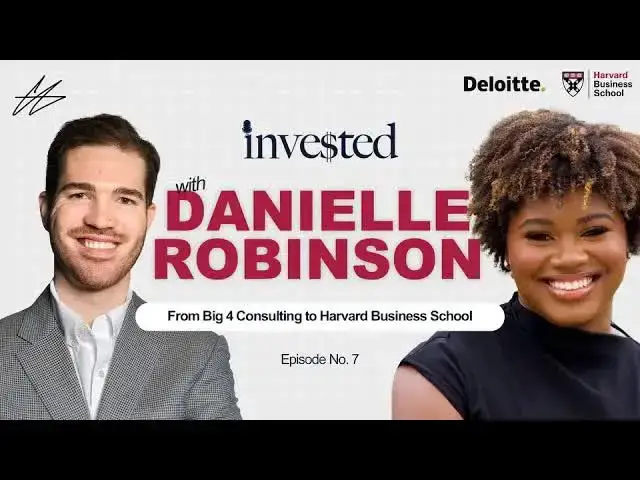
From Big 4 consulting to Harvard Business School | Invested with Danielle Robinson (Ep. 7)
May 1, 2025


Follow Danielle on Tiktok here:
Instagram:
Coaching:
Hello everyone and welcome to the 7th episode of my new podcast series Invested, where I sit down and chat with creators, founders, and business leaders making an impact on this world. Today’s guest is someone that I and over 7,000 other people have followed on TikTok for quite some time now.
Danielle Robinson has carved out a niche for herself on TikTok by sharing authentic takes about her journey through Big 4 consulting and business school. After graduating Phi Beta Kappa from Spelman College, a prestigious HBCU in Atlanta Georgia, she joined Deloitte, where she worked as a consultant supporting Fortune 50 clients navigating complex human capital transformations. After 4 years at Deloitte, she was accepted into Harvard Business School, which is where her content creation journey started. Seeing a unique opportunity, she decided to take a gap year from HBS after her first year to build a coaching and MBA admissions consulting practice called Beyond Ambition Coaching and Consulting. I have been fortunate to have followed Danielle for the last year or so, and can confidently say that she tells it how it is and her content has been a tremendous resource for me while navigating the GMAT exam and deciding what I want to do with my life.
Danielle is as warm as she is bright, and I look forward to diving in to her decision to leave consulting to get her MBA, what the highs and lows of Harvard Business School include, and what’s next for this rising star.
Tags: Danielle Robinson TikTok, Danielle Robinson Harvard Business School, Harvard Business School, spelman college, deloitte consulting, consulting at deloitte, human capital consulting, hr consulting, big 4 consulting to harvard business school, deloitte to harvard business school, how to go to business school from consulting, how to go to business school from big 4 consulting, cameron galbraith podcast, invested podcast, gmat podcast, how to study for the gmat while working in consulting
Show More Show Less View Video Transcript
0:00
Hello everyone and welcome to the seventh episode of my new podcast series, Invested
0:05
where I sit down and chat with creators, founders, and business leaders making an impact on this
0:10
world. Today's guest is someone that I and over 7,000 other people have followed on TikTok for
0:16
quite some time now. Danviel Robinson has carved out a niche for herself on TikTok by sharing
0:22
authentic takes about her journey through Big Four Consulting and Business School. After graduating
0:28
Phi Beta Kappa from Spelman College, a prestigious HBCU in Atlanta, Georgia, she joined Deloitte
0:34
where she worked as a consultant, supporting Fortune 50 clients navigating complex human
0:39
capital transformations. After four years at Deloitte, she was accepted into Harvard Business School, which is where
0:46
her contact creation journey started. Seeing a unique opportunity, she decided to take a gap year from HBS after her first year
0:53
to build a coaching and MBA admissions consulting practice called Beyond Ambition Coaching and
0:59
Consulting. I have been fortunate to have followed Danielle for the last year or so and can confidently
1:04
say that she tells it how it is and her content has been a tremendous resource for me while
1:09
navigating the GMAT exam and deciding what I want to do with my life. Danielle is as warm as she is
1:16
bright and I look forward to diving in to her decision to leave consulting to get her MBA
1:21
what the highs and lows of Harvard Business School include, and what's next for this rising star
1:28
And with that, enjoy the episode. Danielle, thank you so much for joining us here today. Really appreciate you
1:35
Coming on for the seventh episode, I want to give you the opportunity to introduce yourself
1:40
and everything that you bring to the table. And I know it's a lot, so I'll give you the time to
1:46
shine here. Yeah, absolutely. So my name is Danielle Robinson, and it's my mission to help
1:52
ambitious young professionals find fulfillment in their lives. So I grew up in Orlando, Florida
1:59
moved to Atlanta where I attended Spelman College and then stayed in the same city afterwards to
2:06
work at Deloitte Consulting. I'm probably most known online for my time at Harvard Business
2:11
school. I finished my first year, last academic year, and then I've spent the last 10 or so months
2:17
in a gap year building a coaching business where I do MBA admissions, consulting, but also just
2:24
general life coaching and helping people figure out their next steps and build the clarity that
2:28
they really need to lead fulfilling lives. And so I'm very excited to be on the podcast today
2:34
Yeah, no, well, I really appreciate it again. I am from Florida. I went to the University of
2:40
Florida. So obviously I'm very familiar with Orlando. I actually have some friends who are
2:44
at Deloitte in Orlando as well. So a small world there, but kind of just jumping straight into it
2:51
One of the videos on your TikTok talks about prestige. And I'm going to read it off because
2:56
my mind isn't that strong to memorize this whole thing. But it was Paul Graham, who as many might
3:01
know, is the president of Y Combinator. He said, the work that you do should be something that you
3:06
love, not something that's prestigious. Because if you love something, you'll make it prestigious
3:10
I'm just curious if you can share what this means to you and how you have chosen to implement
3:15
this into your own life. Yeah. Oh, it means a lot to me
3:19
I hadn't been aware of his quote until maybe the last year or so, but it definitely is
3:25
very relevant for how I've lived my life. Because growing up, I mean, the whole reason I got into business in the first place was
3:31
because of my dad. He was an oncologist. My mom's a dentist
3:35
And so growing up, I thought I'd follow in their paths in healthcare as well
3:40
But after taking AP Chem and not doing so great, I was like, okay, maybe not
3:47
But my dad always would say, I wish I would have gotten an MBA because now the power is shifting from doctors to healthcare administrators
3:57
And so if you're not really sure what exactly you want to major in in college, maybe business would be something to look into
4:03
So I was an economics major in college and going to a place like Spelman, any alum will tell you or just casually mention that it's the number one HBCU
4:15
So there's a lot of pressure to pursue prestigious things like go to Ivy League grad school, get the top consulting, investment banking jobs, etc
4:24
And so I rarely really took the time to think about what it was I actually wanted to do
4:30
I was always just constantly looking for what's the most prestigious, what will impress the most amount of people
4:36
And so it really, I mean, that kind of determined my path to consulting
4:40
I always knew I wanted to be an entrepreneur, but didn't know what industry or function
4:45
So it served two purposes. It was a great way to figure out what to do with my life, but also was very prestigious, made a lot of money
4:53
So I was like, check, check. OK, perfect. And then getting to business school was kind of similar where, as you know, a lot of consultants make business school their next step
5:04
And so I originally applied because I was burnt out with consulting, didn't know what else to do
5:09
But it wasn't really till I got there and saw so many people at Harvard just kind of unapologetically pursuing prestige just kind of for the sake of it, making as much money as they can just because they can
5:23
and all of those things that I started really taking a hard look at myself and realizing I don't really want that
5:29
I don't really want to work in corporate. I've been trying to fit myself into this box for so long that maybe I should think about something else
5:38
And so I made a video about it on TikTok and it's definitely my most popular video to date
5:44
I had no idea it would spark so much discussion, but I think for a lot of people, not necessarily going with this most prestigious option can be beneficial
5:54
It can allow them to really think critically about what it is they want and allow them to thrive in an environment where they might maybe had not before
6:03
And so, yeah, seeing his quote got me really passionate about it. I just stopped. I was driving and made a video about it right then and there
6:10
So, yeah, I definitely believe in that. Yeah, I mean, so do I. And I think it's one of those things that, you know, you kind of have to experience it to really reflect. And I had a similar experience, similar background. You graduated from my school, went into consulting at KPMG. And I was in this role and I just realized, what was I doing every day? I was like, this isn't what I want to be doing for the rest of my life
6:34
I I'm just not passionate about this work. I'm not even necessarily interested in it
6:39
but it's prestigious. And I didn't want, I felt so privileged to be in that position that I almost
6:44
didn't allow myself to feel like, Oh, woe is me. Um, but I think it's almost like you have to be
6:50
in a position like that. So then realize just how important it is to enjoy a job. Um, so at that
6:56
point I, I kind of, I decided I would take any, a job, I would take a pay cut to be doing something
7:01
I can be passionate about. And so I'm fortunate to have found myself, I guess, in another prestigious
7:06
position, but doing something I really do enjoy. And so I think when I talk to people, I really
7:12
just always emphasize to them, just it's so important to follow something that you can be
7:16
passionate about and do for a long time. Because, you know, so many people go into investment banking
7:21
or consulting because that what the smart kids in their in their college tend to do And it a a competition thing But even if that doesn really result in the most happiness and fulfillment later on in life So totally agree with everything you said
7:35
and, you know, have experienced it firsthand myself. Going into another thing you've spoken
7:41
about at length on TikTok is the importance of building your identity capital, specifically in
7:46
your 20s. I'm curious if you can just kind of describe what is identity capital, as well as
7:52
how it has changed for yourself over the last few years. Yeah, absolutely. So I first heard
7:57
about the concept while reading The Defining Decade by Dr. Mike Witt. Yeah, somewhere here
8:03
Yes. Yeah. So I hadn't really thought about it, you know, like the way that she was describing
8:08
but at the end of the day, identity capital is the sum of all of your life experiences
8:14
and how you spent your time that create who you are. And so in the book, she talks about her own
8:21
experience as a clinical psychologist, despite, you know, going to a great institution for college
8:27
she decides right after college to go to work at Outward Bound as an instructor. So leading people
8:35
through canoe trips and hiking, like none of the things that you would really expect somebody who's
8:40
trying to be a psychologist would do. But she ended up developing, really enjoying it, developing a lot
8:46
of the skills that would be transferable to being a psychiatrist, like leadership skills
8:52
people skills, all of these things that that's all anybody could talk about in her graduate
8:56
school interviews. And so kind of for me, it's basically the same thing, just trying out different things
9:03
that I'm interested in, even if it's not a direct tie to what I ultimately aspire to
9:08
because there's always something that you can learn and the skills can be transferable
9:13
So I think for me, like early in my 20s, my identity capital was very wrapped up in consulting a little bit and empowering black professionals through the work that I was doing with my firm initiative at the time
9:26
But it was pretty basic. I was just kind of doing my nine to five. There wasn't a whole lot of time to have a side hustle or anything like that
9:34
So my identity capital skyrocketed, I would say, in the last two years of going to business school, quitting the job, all of those things
9:43
because in that time, I would say I was able to travel a lot. I've been to six different countries
9:50
14 trips in general, finally spent a summer in New York, was always excited to do that
9:56
And now building out a coaching business and doing things related to being a coach and a speaker
10:03
like taking classes, doing Toastmasters. So I feel like now I've developed so many different
10:10
skills and interests that it makes me a better conversationalist when talking to people because
10:15
I can more easily relate. And just it's helped me develop a lot of different skills I probably
10:20
wouldn't have had if I was just so focused on, okay, I need to get this job and using your
10:25
job as the whole identity capital PR. I was going to say, I mean
10:30
just with the timeline that I know that you're on, I mean, just the last two years
10:34
I'm sure at the beginning of your career working in consulting, that was your life, as you said
10:39
And so I see it with a lot of my friends. It's wherever they are, that's who they are. Like if they introduce themselves to somebody new, it's like, hi, I'm Cameron, the investment banker. I'm, you know, John, the consultant. There's, and no one really expects much else from you because they just expect that to be your whole life. But, you know, I've, I've been fortunate to have so many other things
10:58
So I think for you, taking that step to business school kind of gave you the permission almost to explore different things
11:05
Is that how you felt? Like you felt that you could be kind of anything you wanted to be and kind of, you know, for lack of better terms, rebrand yourself
11:12
Absolutely. Because you don't really realize it at the time when you're in consulting, but you do kind of make it your whole life, you know, like because you're gone a lot of the time throughout the week
11:21
and then the weekends are spent recovering, you don't have that time to discover hobbies and
11:26
things like that if you didn't already have those before. And so it was definitely an exploration
11:32
period for me to try out different things and be like, oh, wait, I can try this. I can try that. I
11:37
don't feel constrained to my relationships that I've developed in a specific industry or whatever
11:43
else. I'm just more free to do what interests me. Yeah. Well, speaking kind of of that and feeling
11:50
chained to the consultant title. You know, what was it about consulting? What was it about your
11:56
role that eventually made you decide to take that leap? Because I understand a lot of people
12:01
they go to business school just to go back to the role they were in before, just at a higher salary
12:07
a higher title. So for you, kind of what was it that made you just want to take that step
12:12
And, you know, more specifically, why was it at that certain period? You know, did you just reach
12:18
promotion? Was it a certain dollar amount in the bank account? What was it that you felt ready to
12:22
make it happen then? Yeah, well, I would say first, I planned to get into consulting, knowing that I
12:29
wasn't trying to make partner. So that was a big part of it. I knew, okay, I wanted to be an
12:34
entrepreneur, I wanted to develop the skill set and then leave. I wasn't trying to get, you know
12:38
stuck and be there for 15 plus years. So I always knew that it would have an expiration date. But I
12:46
think what really did it for me was just the long hours and just feeling kind of stuck in the same
12:53
industry. Because I mean, consulting, you know, is notorious for its kind of lack of work-life
12:59
balance. And that was something that I wanted for the first couple of years of my career. So I could
13:03
really learn what it meant to hustle and grind and have developed that discipline to get things done
13:09
But it wasn't until the summer of 2020 where it was just a very dicey time in consulting where
13:16
You have the threat of layoffs that could happen at any moment. But then if you are on a project, you're working a lot. So I was working 12, 14 hours every day working from home in Orlando and was staying with my mom and brother
13:30
And they would just see how I would be working before they even got up and then working after dinner well after they'd gone to sleep
13:37
And so it really wasn't until seeing other people outside of the consulting bubble that I realized, you know, this isn't healthy
13:45
A lot of other people are doing it, but I don't know if this is really sustainable
13:50
Then I also kind of realized I didn't really want the lives that my managers or even the
13:55
partners on my projects had. They seem very stressed out as well
13:59
The work-life balance didn't seem to get better with experience, which I thought was kind of strange
14:05
And so I'm like, okay, I think this is a recurring theme that maybe this isn't, this is about
14:11
the time that I should start thinking about leaving. And so that's when I started getting serious about business school, but I didn't actually
14:18
leave until I got accepted to business school in 2022. So it was definitely a process of realizing, okay, maybe this is not for me long term
14:27
But now instead of just trying to learn as much as I can in general, let's develop the
14:31
specific skills that we need to be able to confidently leave and go to the next thing
14:36
Yeah. So speaking of that process of applying to business schools, obviously the GMAT is a big
14:43
part of that. That's something we both know well. Would love to just hear a little bit more about
14:47
how you chose to plan all of that. I mean, it was almost a two-year endeavor between applications
14:53
and taking the GMAT all of that So did you have certain mentors in your life who kind of walked you through their process Or was it really reliant on TikTok and social media or what you could find online
15:05
Like, how did you really understand how to go through that? Because it's a daunting process
15:10
Extremely daunting. I think one of the good things about being in consulting, though
15:14
is that a lot of people have gone to business school. And so it was very easy to turn to
15:19
different managers or other co-workers that had just gotten back from business school or had been
15:24
business school in the last five years that provided a lot of great information about different
15:29
programs and whatnot. And so I leaned on them quite a bit for advice on that. And I was lucky to have
15:37
been working from home during that time. And so it was a lot easier to study for the GMAT
15:43
there versus having to do it while on the road and traveling and all of that
15:48
And so I mainly relied on my mentors. I was a part of MLT or Management Leaders for Tomorrow, which has a great MBA prep program for Black, Latin American and Native American applicants
16:02
And so those are the main things I used. But for the GMAT itself, I definitely did it mostly by myself. I did target test prep and I engaged in a tutor towards the end. But even with all those supports and everything, as you know, it's a very self-driven process. You have to be the one to, you know, have the discipline to wake up at 4 a.m. every day to study and take all of those different sacrifices
16:28
Yeah. So at that stage, you take the GMAT, you get a great score. You know, you want to go to
16:34
business school. What were you looking at in terms of where you wanted to go? Was it, okay
16:39
it needs to be a top school. Was it, I would love to be in this certain area? Kind of how did you
16:45
filter that down? Just because obviously there's plenty of business school programs, but you went
16:50
to one of, if not the best. So how did you kind of figure out exactly where you wanted to end up
16:58
one thing that MLT taught us to do was to create a criteria list. And so think about what kinds of
17:04
things you want from an MBA program in terms of career outcomes, location, type of culture
17:10
et cetera. And so for me, I knew that I wanted to start pivoting into entrepreneurship
17:16
maybe not right after business school, but definitely within the next 10 years post-graduating
17:22
And so having a strong entrepreneurial presence was a really big differentiating factor for me
17:28
also wanted to be on the East Coast. And so Stanford and all those other schools seem like
17:33
a bit too far for, you know, from what I was comfortable with. Then I also just really wanted
17:39
a strong school community, be able to really make a lot of friends because I felt like because of
17:45
consulting partly, I was a bit isolated, you know, because when you're traveling all the time and
17:50
then recovering on the weekends, a lot of the friendships that you built up in college just
17:55
kind of start withering away. So I felt like I wanted to develop new friendships and reignite
18:00
some of those friendships that I kind of let slip a little bit while I was working. So those are the
18:06
main factors I was looking at. But Harvard actually wasn't my top choice, like, at all
18:11
like by a long shot, I would say, just because it was in Boston, I wasn't sure about the cold weather
18:17
and the case method and all of those things. But I had a mentor say, you know, if you feel like you
18:23
might have even a slight bit of regret that you don't apply, like you should just apply and don't
18:29
let, don't tell yourself no before letting the school tell you no. So yeah, I applied, not really
18:36
expecting much of it, but then I got accepted and, you know, here we are. Yeah. Well, you know, I
18:43
I understand the case method and all of that. And really the community is a big part, you know
18:48
how did you, I mean, this was fortunately 2022. So we're kind of past COVID with being in hybrid
18:56
or almost fully remote settings. And I think that makes a huge difference, of course. But how did
19:01
you kind of just prepare yourself to go into it and make the most of it? You know, I think for a
19:06
lot of people, they probably feel like if it's, I read it somewhere, but business school or just
19:12
any graduate program could be a second chance at college. And so for myself, just recently
19:17
graduating, it's easy to think how you would do things differently in undergrad, just in terms of
19:21
how you approach other people, joining organizations, like probably just being more open to things
19:26
Was that kind of a thought process that you had going into it, just like having a plan to just
19:32
make the most of it? Or was it kind of just like, all right, let's do this and see what happens
19:36
Yeah, I think it was more of what you were describing. It was kind of like, okay, this is
19:41
not only my second chance at college, but a chance to reinvent myself, do all of the things that I
19:46
might have been too afraid to do previously and just go after it. And so I had a lot of goals for
19:53
myself. I wanted to go on all the trips. I wanted to make a ton of friends. I wanted to start a
19:58
business. I wanted to get straight A's. It's funny, even now chatting with a mentee who's about to go
20:03
to business school, he's following a similar mindset. And I'm like, Ooh, I don't know. That
20:07
sounds kind of like it might be overwhelming, but that's the reality. A lot of people take it as the
20:12
opportunity to just reinvent themselves without then realizing they're actually trying to become
20:19
a totally different person, which may or may not always be the most healthy, I would say
20:25
But yeah, initially, I definitely had all of these goals for myself. But going into Harvard's
20:31
rigorous first year of mandatory classes and all these different things, that list quickly
20:38
started to narrow. And I was like, okay, wait, I nearly need to prioritize because I can't
20:42
fix everything all at once. Right. No, certainly. Is that something you kind of alluded to it there
20:49
but is that something you noticed with people almost changing their personality, almost
20:54
reinventing themselves almost too extensively where it felt that they weren't being their
21:00
authentic selves? Is that something that you kind of face? I think so. Yeah. Because a lot of people
21:06
I mean, at the end of the day, you have to be very accomplished to get into a program like Harvard
21:11
And so to be honest, I feel like a lot of people were like, okay, this is my chance to finally become cool. And so I'm going to be way more social than I probably would act otherwise and really try to get to know everybody, even though that's not necessarily what I would do normally
21:29
So there'd be lots of times where I'd be talking to different classmates at happy hours and we'd be kind of bonding over the fact that we're both introverted and we're exhausted
21:39
And yet here we are. And I see them at the next event because we feel like we need to keep up that, I guess, become that kind of way to be successful
21:47
I think that's part of what the case method instills is that in order to be taken seriously in business, you need to be extroverted. You can't be introverted or shy or anything like that. And so, yeah, it can definitely be exhausting to try to condition yourself to be somebody that you're not
22:05
Yeah, well, that's the perfect transition into my next question, because you also have
22:10
a TikTok talking about at the opportunity to cosplay as an extrovert in certain corporate situations
22:17
Myself being in consulting when I was, I'm super familiar with the amount of happy hours
22:22
and firmwide events for interns and new hires and all just that comes along with that So would love if you could kind of just share what that means to the audience of you know playing as someone who an extrovert I always
22:36
like to bring up the example of, of confidence is even if you fake being confident to somebody
22:40
the person can't tell the difference between faked confidence and real confidence. So would love to just kind of hear your experience about, you know, kind of fabricating some
22:49
some extroverted activities, but yeah, because it is a very important aspect of the corporate
22:55
culture. Absolutely. Yeah. I feel like part of why I decided to go into consulting specifically
23:01
was because I wanted to work on those networking skills because, you know, as you know, in
23:07
consulting, you have to have a strong network in order to be placed on good projects or projects
23:13
with better partners or a better team or better clients, you know, things like that. And so you
23:19
have to learn very quickly how to build relationships with people. And so for me
23:23
cosplaying as an extrovert really means just how do you play up the more extroverted parts of
23:30
yourself without completely burning yourself out? So for me, it was a lot of just being very
23:36
strategic about who I built relationships with and realizing that you don't have to know everybody
23:42
in the office. You just have to know the key decision makers for your performance evaluations
23:47
and maybe the people that are sourcing for projects that you're interested in
23:53
But you don't have to know everybody else outside of that. And so it's being very strategic about not necessarily who you're connecting with
24:02
but also how often you're connecting with them, setting reminders in your phone to reach out to people on a quarterly basis
24:09
all these different things to make it seem like I'm more extroverted than I actually was
24:14
Yeah, no, that makes sense. And it reminds me again of kind of the 80-20 principle where there's, of course, plenty of different situations
24:21
But the classic is 20% of your customers are worth 80% of your sales
24:26
So it's probably the same in the business world. 20% of your connections are actually worth 80% of kind of the opportunities that come your way
24:33
And one of the things that you said in that TikTok I mentioned is, you know, setting a goal for yourself
24:38
This is something that I do myself when I go to networking events here in New York City saying, okay, as long as I talk to one person, I then have permission to leave
24:49
And because it can be daunting kind of going into that, you know, you're tired
24:54
It's after a day of a long day of work. You want to go home. But it's good to kind of set that goal for yourself
24:59
And that's what I always try to do is like, all right, I'm going to talk to at least one person. And then after that, I can feel accomplished and go home
25:04
But typically, I find myself in the first conversation. It goes great. And then I meet someone else and it kind of continues to roll from there
25:11
So I really liked what you said about that, because I think that's just so helpful for a lot of people because you almost need that permission to, you know, call it quits
25:20
So, yeah, just appreciated that. Yeah, of course, because I had to force myself to go to networking events at the beginning
25:27
because, I mean, you don't know people. You're intimidated. You're not sure how it's going to go
25:32
So by just setting that example of, OK, I'm just going to talk to one person that just
25:36
release the pressure. So you don't feel like you have to be there all the time. So that was another
25:40
common trick that one of my favorite managers would do. He'd always say, okay, I'll get to the
25:45
event early and stay for a while. Then I'm leaving. So I can show face that I was there, but I don't
25:50
have to be there the whole time. So just having little goals like that can be really helpful in
25:56
making small strides towards building up your networking skills. Yeah, no, certainly. Kind of
26:02
just touching again on the networking side of things. I mean, from your own experience
26:07
when you meet someone at an event, this would just be helpful for my audience. But, you know
26:12
let's say it's a networking event for business school, and you're meeting some admissions
26:16
counselors or some alumni, or maybe it's an event for, you know, a an internship program that you
26:22
want to apply for. What are some some examples of the right way to kind of approach following up
26:27
after the event. I know there's a lot of different kind of thought processes on how to do that the
26:33
best way, but would just be curious, you know, from your experience, kind of on both sides of
26:37
things. You know, I'm sure you've had people that you've met who then follow up with you in a good way, but just curious what you think is, you know, a smart approach for that situation
26:47
I will, I feel like a smart approach is always following up because a lot of people claim that
26:52
they're going to follow up and then they don't, right? And so just actually sitting down
26:56
setting a plan to create the follow-up is essential, but it's even more important to do it
27:02
very quickly after the event has taken place. And so I typically like to send follow-up emails
27:09
maybe within 24 hours of meeting the person so that what our meeting is fresh on their mind
27:17
and bringing up, mentioning something that we talked about that would jog their memory
27:21
and initiating a time to meet again. So it's not just kind of like
27:27
oh, hey, it's great to meet you. Let's keep in touch. And then y'all never meet ever again after that
27:33
And so I think after every conversation that I've had networking wise
27:37
at the end, I've tried to ask, okay, let's start a plan to meet for the next time
27:43
Are there other people you can introduce me to? Have some kind of impetus
27:47
so that making the follow-up email is kind of like the next step. And so I think just being very action focused is key to having successful follow ups
27:56
Yeah, no, I totally agree. Before going into kind of more of the content side of things, I have kind of a final question about HBS. I'm curious, just from your experience, I mean, how had your views of the business world or of leadership, all those things kind of changed
28:13
Because I'm sure being in an environment like that, just surrounded by the most accomplished
28:17
people and, you know, the professors are all top of their craft as well
28:22
I'm just curious if you had kind of any realizations where the way you thought of the business
28:27
world or just anything kind of shifted over that first year. Yeah, I think, honestly, the biggest lesson I learned that everybody is just a normal person
28:37
Like, while they can seem very, I don't know, intimidating or like they have all the answers
28:43
when you read about them in magazines or the news at the end of the day, you know, they put on clothes
28:48
just like the rest of us. They go to the bathroom, they're normal. And so it's really interesting to
28:54
see, I guess, the more human side of the idols that I'd read about for years and what have you
29:00
And so by that same token, though, everybody is just a normal person. Everybody's also
29:06
there's something that they're still working on improving. The most accomplished person
29:10
is still like, oh, well, I don't have this award or I don't have, you know, whatever else. And so
29:17
everybody's always in pursuit of the next best thing, even though to you, you might think, okay
29:23
they've accomplished everything. What more can they want? But there's always somebody that they're
29:27
aspiring towards or some other next step that they don't feel like they've reached yet. So
29:32
that was very eye-opening for me. Yeah. I mean, that's just a challenge that I think
29:38
a lot of super ambitious people face is almost feeling, not feeling content with where you are
29:46
but that's something that I experienced is just, you know, I wanna be able to relax
29:50
I wanna be able to enjoy the moment, but always pushing towards more. Is that something that you've struggled with
29:55
And you also just alluded to how everybody is chasing something else
29:59
despite everything that they've accomplished. There's always something more. I'm curious for you right now
30:04
what do you think that one more thing is for you? Yeah, I think now it's going into entrepreneurship
30:11
and looking at the different entrepreneurs and thinking, okay, well, wow, I don't have a, like my business hasn't earned
30:17
a million dollars in revenue yet and all those kinds of things. And so it's actually very interesting
30:22
because this time a year ago, I was barely thinking about starting a business
30:27
And so to now, it's like the goalposts always shifts. As soon as you start getting close to starting something, you're like, oh
30:35
So even in content creation, which I know we're about ready to talk about, when I first started, I was like, okay, I just want 1,000 followers
30:41
And then I got 1,000. I was like, okay, now I need 5,000 in 10. It just never ends
30:47
Yeah. No, I feel the same way. I think it was about 10 months ago that I finally reached 10,000 subscribers on YouTube
30:55
But I mean, I've been in this for a long time. And for the longest time, I, of course, was thinking, oh, as soon as I get to that, what, five figures, that's when I'll make it
31:03
When there's a K with a comma in my subscriber thing, that'll be when I feel accomplished
31:10
And that's just not the case. So I've always really just tried to implement those infinite goals
31:16
That's what Ali Abdaal and that's what like Simon Sinek, like there's a lot of kind of thought process around that
31:20
Because if you just set an infinite goal of, okay, every day, I just want to learn one more thing or something new, or I want to meet one new person
31:29
That is something that you can pursue for the rest of your life. And that way, when you reach that goal, you hit the 10,000 subscribers, you graduate from Harvard Business School, you don't feel like, all right, now what
31:41
So that's kind of something I've always tried to think about because I don't want to get to the finish line and realize it's not what I really wanted in the end
31:50
Yeah, absolutely. I mean, the biggest or the book that I've read that most directly talked to that point was this book called Positive Intelligence, where it talks about how, especially if you're a high achiever, you are constantly going to feel disappointment once you reach your goals
32:07
And you're always going to be striving towards something better and never fully feeling satisfied. And that's an awful way to live your life. And so it really starts with you, self-acceptance of yourself where you're at
32:19
And like you said, setting more goals based on what you can do or what things you can change every day versus an outcome that's beyond your control
32:29
Yeah, no, certainly. Well, speaking of outcomes, you've had some successful outcomes in your journey so far with creating content
32:37
We'd love to just kind of hear what was it that made you first creating content
32:41
I'm sure the video you made talking about prestige in the car, that wasn't your first one
32:45
Or at least hopefully not. because a blow up like that would have been impressive
32:49
But what led you down that path? Yeah, it actually started the summer of 2022
32:55
right before I started business school. So I always just growing up was really creative
33:01
loved writing books, all those types of things, but never felt comfortable actually publishing a blog
33:07
or having a YouTube channel because I was just scared about how I'd be perceived
33:12
I was very scared about other people's opinions. And so it was this, I don't know if you remember, but two years ago, there was this trend where influencers would have a video of them dancing and a text overlay of how much money they had made in influencing each month
33:29
And I had seen that and had just taken out a whole bunch of loans for HBS and was like, this could be a good side hustle
33:36
And so I was originally just kind of trying to be an influencer and maybe getting some brand deals, but had no idea what it would end up being
33:46
And so that's kind of what got me started in content creation
33:51
And I was looking for a niche because I saw that initially I was doing self-care, but that seemed kind of saturated
33:57
I didn't really have a clear story to tell there, but notice there weren't a whole lot of MBA content creators
34:03
And so I decided, okay, I'm sure people would want to see what it's like to be at Harvard Business School
34:08
So might as well start, you know, posting about that. And so that's what I was doing for most of my first year, just about what it's like to be at HBS
34:17
And it wasn't until the second semester that people started asking for admissions advice or, you know, help me get into business school
34:25
And so then it started taking a turn and that's kind of where we were for a while
34:30
But now I've shifted to more, you know, still some MBA stuff, but also life coaching content
34:36
Because I realize now so many people that are in that MBA boat, do they really need to go to business school or are they just looking for a change, you know
34:44
And so it's still talking to the same audience, but in a slightly different way. Yeah. Well, it's interesting that I started my YouTube channel before that was really..
34:54
Before a normal person working a job could be making money from the side
34:58
My freshman year of college, which is kind of as my channel as it is now, was started
35:03
That was the years of Jake Paul and all of that. So I was always super hesitant to say I had a YouTube channel because I didn't want to be associated with that
35:11
Yes. But I'm just curious because you started with kind of that end goal in mind of being able to make some income on the side
35:17
Did that help you just in terms of how you even approached your content
35:21
It seemed like you were way more calculated than I was in terms of figuring out your niche, you know, doing the right things to be corporate friendly, to allow yourself to get brand deals
35:32
like I'm curious kind of how you you decided upon that but then also if you think it helped
35:38
set your you know content your TikTok up for more success than kind of someone who
35:42
maybe just randomly picked up their their phone and started recording a video not really thinking
35:47
it would turn into much yeah I don't know I feel like it has pros and cons because it definitely
35:52
helped me develop an audience I feel like more quickly because I was more clear what I wanted
35:58
But then at the same time it also kind of stifled me because I would pay very close attention to ytics and see what performing and what not and maybe not show as much of myself as I probably could because I was trying to focus so hard on that one niche And then kind of you know once I started
36:15
taking a gap year, I was like, oh, dang, I don't know if I really want to be known as like the HBS
36:20
girl, like, you know, and so I think it has pros and cons. I mean, I'm glad that I did it. But at
36:26
the same time, I'm also like, I wonder what else I could have maybe started with before getting so
36:32
deep into the niche. Yeah, no, that, that makes sense. You know, obviously all your content is
36:38
super educational, super helpful. You have to have had a lot of experiences helping students
36:45
young professionals, obviously you do it full time now. It's how you, you, you make a living
36:50
but I'm curious just from, from those experiences, is there anything that kind of stands out in your
36:55
mind as just a super impactful thing that, you know, maybe someone told you or just what was
37:00
the coolest thing that's come from this whole content creation journey? Yeah, I think the
37:05
coolest thing has just being able to meet people in real life after having seen my content
37:11
Because I remember second semester business school, I was honestly a little nervous to tell
37:17
my classmates what I was doing because in the traditional business world, influencing doesn't
37:21
seem that acceptable. So I kind of like kept it under wraps, to be honest. But it wasn't until
37:28
going to a ski trip with several different African-Americans, MBA students from different
37:35
schools where I started getting recognized for my content and being like, oh, I love your videos
37:40
And that was crazy to get that recognition. And even now, sometimes it still happens
37:49
I was in New York last week for a conference. Same thing happened. But I think that's the
37:54
biggest thing and the relationships I've been able to build just from putting myself out there
37:59
And so I think the coolest thing has been last week, actually, I got to meet with a coach who
38:06
has a very successful business, found my profile personally, and wanted to get advice on business
38:12
school. And I wanted her advice on coaching. So we were able to do an exchange. I don't think that
38:17
would have happened had I not started creating content and at least trying to put myself out
38:22
there. Yeah. I mean, there's just, I think creating content, putting yourself out there
38:27
especially in an environment where it's still corporate friendly, family friendly, you know
38:31
it only creates good positive ripples. That's certainly been my experience. I'm honestly
38:37
surprised no one at Harvard like saw through the algorithm, because that's the thing that just
38:42
constantly happens to me. At JP Morgan, it's like I had someone come up to me actually on my floor
38:47
I was like, hey, like I saw your TikTok. I'm like, all right. So yeah, I'm surprised that
38:53
it's something so niche. I guess not too many HBS people are, maybe their algorithms are just
38:58
a little bit weirder. But yeah, I'm kind of surprised. Or at least they didn't bring it up
39:02
to you. No, they did. They did. It's just I didn't really talk about it as much. But I had a classmate
39:07
share my one video I made about like, okay, let me start studying for finals because my videos
39:13
aren't getting views. And they shared it with my whole section group chat. And that was kind of my
39:18
like, I guess, introduction as an influencer. Yeah, as you're coming out moment, you're like, oh, okay. They're like, wait, what? Like, I had no idea you were doing this
39:27
Yeah. Well, yeah, that had to have been, you know, kind of, no, not scary or frightening
39:32
but you really do never know how people are going to perceive you. And that's something
39:36
that I've experienced. I mean, just the transition of how people see content creators. I mentioned
39:41
And Jake Paul, kind of my freshman year, as being the stereotype
39:45
And I think it's been really helpful to see kind of just how certain business leaders and companies have just embraced it
39:53
And just understanding that it creates a more authentic connection to their customers or to their clients, whatever it may be
40:00
So I think especially kind of building a personal brand so early in your career just is only going to set you up
40:07
Because obviously right now, everybody's trying to build a personal brand. That's what LinkedIn is
40:11
that's what all these other things are. So it's great to kind of have a head start on that because
40:15
it's only going to grow more important. Exactly. And I think I was just nervous about being perceived
40:20
and not being wildly successful right off the bat. But you know, you get over it over time
40:26
you're like, okay, well, everybody starts somewhere. And I think it's the most inspirational to look at
40:30
my favorite content creators and scroll all the way down to see their first videos
40:35
and see how much they've been able to grow since then. That always just inspires me to keep going
40:41
Yeah, certainly. I mean, I was at an event last two nights ago, and it was a creator economy event here in New York. And the one person who my friend Brett was interviewing, she's been making content for the last 14 years. And, you know, she has a good amount of following now. But I mean, she's just been in it for so long, that, you know, you put in the work long enough, it's going to compound
41:02
And so even if you don't see a video go viral, sometimes that can be the best thing to happen to you because you don't have that instant spike where everybody expects a certain thing from you
41:11
But I think it's just really motivating and inspiring to see those examples where, you know, someone didn't blow up right from the jump and really did put in the work and is still doing it
41:20
So I totally agree that that can be super inspirational. Yeah, for sure
41:25
I'm so glad, even though I wished that my first videos would go viral, I remember posting my very first video, going to sleep and just imagining hundreds of thousands of views
41:35
And I got like four. And looking back, I'm glad I didn't because going viral, even though it's cool, it like usually means that you're also having a lot more hater comments than you typically experience
41:48
And so if you're not ready for that, it can very easily convince a beginner creator to just stop completely
41:55
Yeah, certainly. Well, kind of going back to the career side of things, and you kind
42:00
of mentioned, just even now, you don't want to be only thought of as the person at Harvard
42:06
Business School or earlier we were talking about not only being the consultant and wanting to have more I curious just because I have a huge amount of my audience that is maybe in a role that they don see themselves being in for the long run or they in an industry and they want
42:22
to pivot, whatever it may be. Can you share some insights that you've gained? I mean, maybe it's
42:27
from others just at HBS or from your own experience or at Deloitte. What does someone need to do to
42:33
pivot? What do they need to think about? What conversations do they need to have? How do you
42:39
approach that? Yeah. So I think it first starts with a lot of self-reflection on what exactly
42:45
is going well in your current job and what's not. Because a lot of times, okay, you think that you
42:52
need to uproot your whole life and go to business school when it's like, okay, maybe you just needed
42:55
a new job and didn't need to go hundreds of thousands of dollars into debt. And so it's
43:00
really yzing what is not working for you. Is it the lifestyle in general? Is it the industry
43:06
Is it maybe where you're located? All these things can play such a big role, but you can't figure that out until you actually sit down with yourself and figure that out
43:16
And then once you decide that, okay, I do want to pivot, start, I wouldn't say quit your job before you have anything lined up, especially in this economy
43:25
That's an awful idea. But start looking at your current job differently and start using it as a launching pad for your next thing
43:33
And so if you already know you want to be gone within the next two years anyway, you know, like for me, at least at Deloitte, I knew, OK, I wasn't trying to do the MBA reimbursement program
43:44
So I didn't feel constrained to only work with the same partners because that's typically what you would do if you're trying to pursue tuition reimbursement
43:54
So you have a lot more flexibility to try new things, go for opportunities and just build that skill set that you'll need to get to that next position or, you know, whatever you're trying to get to next
44:06
And just generally also building your network outside of your company, because I know for years I didn't talk to anybody that wasn't Deloitte until I started thinking about business school and wanted to learn from other professionals that were in HR specifically about their experience
44:22
And so definitely start cold or I guess cold messaging people on LinkedIn and doing those things to really just get a better sense of the landscape that you're trying to get into and seeing if it's a good fit or if there are opportunities to maybe pivot within your current company
44:40
Yeah, no, I think that's fantastic advice. And I get a lot of people, of course, who reach out to me just because I pivoted my career. So people want to kind of mimic some of that
44:50
And the thing I always say is just kind of what you mentioned is see, it's important to see your current role in a different light. It's one thing when you join it and you see kind of where you could be in 10 years, but it's important to think, what are the adjacencies between what I'm doing now and this potential area that I want to pivot into
45:08
And as niche as you may think that your role is, if you think a little bit higher level, there's always something
45:15
Are you interacting with clients? Are you super client-facing? Are you still doing data ysis, even if it's not crunching financial models
45:23
Whatever it may be, there's always something. So I think for so many people, it's just about rewiring their brain about how they think of their roles and responsibilities
45:32
Because the business world is obviously so interconnected. One email job is another email job
45:38
And so it's just important to kind of think about it in a different light
45:43
Yeah, absolutely. And it's just there are always skills that you can transfer to your new position
45:49
I think one thing that I learned having left Deloitte is that even though I left the company, I still have all the skills that I gained along the way
45:57
And so you're never quite starting over, even though it felt like that your knowledge was very niche at the time
46:03
At least for me, I was like, OK, I only basically work in PowerPoint
46:07
like what else can I do? And I realized I do have a lot more skills, but knowing how to present
46:13
things effectively is a very, very important skill. So certainly, yeah. Well, you know
46:19
in terms of presenting and all of that, I'm sure that's something that being a content creator now
46:25
has been super helpful for even just what you were saying before about the importance of reflecting
46:30
on why you want to pivot. I think just reflection in general with your career is so important. And
46:34
And for me, I've been fortunate. Sometimes my best reflection comes from talking to a camera for YouTube video
46:40
And I'm grateful to have been kind of given the opportunity and the permission to think
46:44
that way. And sometimes I feel people just don't ever take that time
46:48
So I'm curious if just through this content creation and the times when you're sitting
46:52
down talking about something you read or something that someone told you, what's been a major
46:57
way that or a breakthrough that you've kind of had through creating that content
47:02
Hmm. Yeah, I think the biggest breakthrough for me is that, you know, realizing that people don't care as much as you think they do. So I know for me, like when I was getting ready to announce that I was going on a gap year, I was just super nervous that my follower count was going to go to zero because everybody just wanted the Harvard content. And that was it
47:25
But I think in realizing and posting about it and realizing, oh, people actually don't care all that much and they're very interested to see what else I do next
47:35
I've learned to take so much pressure off of myself to do things that I think other people want me to do
47:41
Because I think, as I alluded to earlier in the conversation, a lot of my major, what I ended up doing right after graduation were partly to gain other people's approval
47:52
And so once I started realizing, okay, actually, I have to make sure that I'm approving myself first, and everybody will love me for who I am and what I do regardless. I mean, I think that's the biggest lesson that I've learned through content creation, which I was not expecting at all
48:11
Yeah, no, if anything, you probably would go into it thinking, oh, everybody's going
48:15
to care exactly what I'm doing at every waking hour. Um and yeah I mean that was another thing that they were kind of talking about at the event the other week is just people attention span out is so short So take that risk post that different type of content because as much as you think people will care they going to forget about it two days from now So it never too late
48:33
to reinvent yourself. It's never too late to try something new. So I think everything you said
48:37
it's totally aligned with that. Kind of wrapping up here, I know you're a big reader. You've
48:42
mentioned several books already, and your TikTok is full of kind of your ysis into plenty of
48:47
books. But I'm curious, just from your own busy life, your own busy schedule, what are some
48:52
first of all, some big takeaways, but then also how do you carve out the time? What's your process
48:58
for making sure that you're not just starting a book, but actually at times the hardest part is
49:02
finishing a book. So how do you kind of approach all of that? Yeah, it's funny because actually in
49:07
the last year I was talking with a friend, I've read 12 books and I was not reading that much
49:14
when I was in consulting or business school, but having this free time has really allowed me to do
49:19
a lot more of that. But I think the biggest thing is just audio books. I don't really have many
49:24
physical books. So I often read when I am getting ready in the morning, cooking, driving. And so
49:31
that eats up a lot of time. And so that's how I be able to get through so many so quickly
49:37
But I think the biggest takeaway from all the books that I've read, most of which I've talked
49:41
about on my page is that at the end of the day, your mind controls your reality. If you think that
49:48
you, if you hate your job, you hate the friends that you have, all of these things, but you're
49:54
not doing anything to change it. You're just kind of creating a self-fulfilling prophecy and spiraling
50:00
And so you really have to have the discipline to control your thoughts and see the positives
50:05
and everything in order to start creating a better life for yourself as well
50:10
yeah yeah i think that's fantastic advice that's something yeah i think i was i don't know where or
50:17
when but i was just instilled in me at a young age and just i totally understand just the power of
50:22
self-efficacy and believing that you can do something and i think your life is just a great
50:26
example of believing you can do something going out and making it happen so um super motivating
50:32
and again also what you said about the audiobooks that's that's the biggest life hack for me too i
50:36
I'm trying to read books. I obviously have plenty of physical books around me, but they're always a little bit shorter
50:42
The 30-hour ones are the ones that I listen to that I try to get through
50:48
But yeah, I think audiobooks are the biggest life hack, honestly. I'm curious, do you listen to it at two times speed
50:54
Are you a sane person or at 1.5? There was one book, it's behind me somewhere, but it was like the Warren Buffett snowball
51:02
It's like this thick, and I listened to it in college. And I think I was able to train my mind to get up to like 3.2 time speed
51:13
So that was definitely pushing it. But yeah, curious because the speeds are almost a badge of honor with certain people
51:22
Yeah, that's funny because actually I'm the opposite. So reading for me is like my calm time, all that stuff
51:29
And so when people talk too fast, it kind of stresses me out. So I usually actually put my audio books on like 0.9 or 0.8 if they're talking too fast
51:40
Well, yeah. Good for you. Then you're enjoying the process. I honestly could probably take a page out of that book and try that because I agree
51:48
It's probably not the best thing to start my day at such a high speed feeling so stressed
51:52
on my walk to the office. But yeah, no, that's awesome. Thanks
51:56
Well, wrapping up, I mean, you've obviously just had so many great experiences
52:02
I'm curious, do you feel that younger Danielle kind of approaching their freshman year in college would have ever seen yourself in the position you're in now
52:11
And with that said, what advice do you have for that younger version of you
52:16
Yeah, I would say probably not. I don't think I would have envisioned myself coaching, although I would be totally stoked to hear that I was doing that
52:25
I wouldn't have considered that that is an option, you know. And so I think the biggest piece of advice I'd have for her is that life isn't supposed to feel comfortable all the time
52:38
And I would almost argue that if you are in your 20s and you feel very comfortable and secure, you're probably doing something wrong
52:45
Because I think now is the time for exploration, you know, figuring things out
52:51
they don't always work out, but, you know, developing that resilience and the drive and
52:58
the discipline is so important now. And it's, you know, more acceptable to do it now in your twenties
53:03
than if you're older. And so I would say, yeah, definitely try out all the things. Don't be afraid
53:09
to struggle because by going through those and developing the resilience that will help you
53:15
so much more in the future. Yeah, that's great. With that said, thank you so much for joining us
53:22
today. I want to give you the opportunity to plug your TikTok, plug your business, all of that
53:28
just so everybody knows where to find you and where to support you. Yeah, absolutely. So my
53:33
TikTok handle is at GoBeyondAmbition. It's the same for Instagram. Now with this TikTok fan
53:40
And I'm trying to also start posting more on Instagram as well
53:44
Yes. But right now I'm offering MBA admissions, consulting and life coaching services for
53:51
people that feel like they are ready for a change in their life, but they're not exactly
53:56
sure how to do it, what they might want to pivot into, what skills they need to develop
54:01
So all that information is at the link in my bio at either my Instagram or TikTok
54:07
Well, perfect. I couldn't recommend your page, your content more. I don't learn anything more from anyone else
54:14
So again, appreciate you coming on. Wish you the best of luck in the future
54:19
And I'm sure I'll be talking and seeing you soon. So appreciate it. Yeah, thank you so much for having me, Cameron
54:25
I really enjoyed it. Yeah
Colleges & Universities
Standardized & Admissions Tests
Self-Help & Motivational