Up next in 10


What is The Oriental Rat Flea?
Website: https://biologynotesonline.com/
Facebook: https://www.facebook.com/biologynotesonline
Instagram: https://www.instagram.com/biologynotesonline/?hl=en
Show More Show Less View Video Transcript
0:00
Hey everyone. Today we're diving into
0:02
the world of xenopsilla,
0:04
also known as the oriental rat flea.
0:07
This tiny creature plays a huge role in
0:09
public health. So, let's explore what
0:11
makes it so important. Zenopsilopus is a
0:15
small brown flea measuring just 2 to 3
0:17
millime in length. Despite its tiny
0:20
size, this little arthropod has had an
0:22
enormous impact on human history and
0:25
continues to be a significant public
0:27
health concern today.
0:29
The oriental rat flea is what we call an
0:31
ectoparasite. This means it lives on the
0:34
outside of its host, not inside like
0:36
some other parasites. It feeds by biting
0:39
through the skin and sucking blood, and
0:41
it can easily jump from one host to
0:43
another.
0:45
The oriental rat flea primarily lives on
0:47
rats, especially black rats and brown
0:50
rats. While rats are their preferred
0:52
hosts, these fleas can also bite other
0:54
small mammals. And unfortunately for us,
0:57
they can bite humans and our pets, too.
1:00
What makes this flea so notorious is its
1:02
ability to transmit serious diseases,
1:05
most famously bubonic plague caused by
1:07
the bacterium pestus.
1:10
The flea picks up the bacteria when it
1:12
bites an infected rat and then spreads
1:14
the disease when it bites other animals
1:16
or humans.
1:18
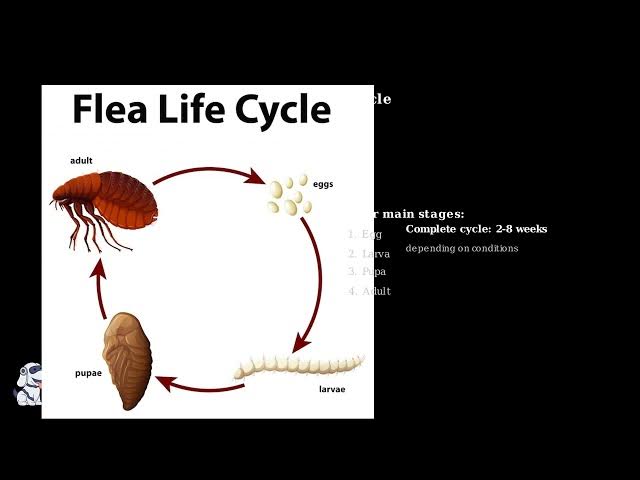
Like all fleas, xenopsilla chiopus goes
1:21
through four life stages: egg, larvae,
1:24
pupa, and adult. Understanding this life
1:27
cycle is crucial for effective control
1:29
as different stages require different
1:31
approaches. The complete cycle can take
1:33
anywhere from 2 to 8 weeks depending on
1:36
temperature and humidity.
1:38
The oriental rat flea has had an
1:40
enormous impact on human history,
1:42
helping to spread devastating plague
1:44
outbreaks, including the Black Death.
1:47
Today, it continues to be a public
1:49
health concern in many parts of the
1:51
world. By understanding this tiny but
1:54
significant creature, we can better
1:56
protect ourselves and develop effective
1:58
control strategies.
2:02
To understand where the oriental rat
2:04
flea fits in the natural world, we need
2:06
to explore its scientific
2:08
classification.
2:10
Think of this like organizing a massive
2:11
library. Every living thing has its
2:14
proper place. All animals are first
2:16
divided into two major groups.
2:18
Vertebrates which have backbones and
2:20
invertebrates which don't. Our flea
2:23
belongs to the invertebrates,
2:25
specifically those with jointed legs.
2:27
Within invertebrates, our flea belongs
2:29
to phylm arthropota, the largest film in
2:32
the animal kingdom. Arthropods are
2:34
characterized by jointed legs, segmented
2:36
bodies and external skeletons called
2:39
exoskeletons. Within arthropods, fleas
2:42
belong to class insecta, the insects.
2:45
This phlogenetic tree shows how
2:46
different insect groups are related to
2:48
each other evolutionarily. Now, let's
2:51
build the complete taxonomic hierarchy
2:53
for xenopsilopus
2:55
step by step. Each level gets more
2:57
specific like narrowing down an address
3:00
from country to street number.
3:01
Kingdomalia includes all animals. Phylm
3:04
arthropota contains insects, spiders,
3:06
and crustaceans. Class insecta is
3:08
specifically the insects. Order
3:11
syphonapa is the flea order. The name
3:13
literally means wingless siphon
3:16
referring to their blood sucking
3:17
lifestyle and lack of wings. Family
3:19
pulsid contains the common fleas.
3:22
Finally, genus Xenopsilla and species
3:24
Kopus give us the complete scientific
3:26
name Xenopsilla Chiopus. The genus name
3:29
means strange flea and Kopus refers to
3:31
the Egyptian pharaoh Kops. Here's what
3:34
our classified flea actually looks like.
3:37
Notice the characteristic features that
3:39
place it in its taxonomic groups. The
3:42
segmented body of arthropods, the six
3:44
legs of insects, and the specialized
3:46
adaptations of fleas. Understanding this
3:49
classification helps scientists
3:51
communicate precisely about this species
3:53
and understand its relationships to
3:55
other organisms.
3:57
When we say xenopsilopus,
3:59
every scientist worldwide knows exactly
4:01
which flea we're discussing. The
4:03
oriental rat flea has very specific
4:05
habitat preferences that determine where
4:08
you're most likely to encounter them.
4:10
Understanding these preferences is
4:12
crucial for prevention and control.
4:15
Xenopsilla Chiopus thrives in warm
4:17
environments. These fleas are primarily
4:20
found in tropical and subtropical
4:22
climates where temperatures remain
4:24
consistently warm throughout the year.
4:27
These fleas are particularly common in
4:29
urban areas where rat populations are
4:31
high. Cities provide ideal conditions
4:34
with abundant food sources, shelter, and
4:36
dense populations of both rodents and
4:38
humans.
4:40
Sewers and underground systems are prime
4:42
habitats for these fleas. These
4:45
environments provide the dark, humid
4:47
conditions they prefer, along with
4:49
protection from weather and high levels
4:51
of rodent activity.
4:54
Basements and indoor spaces also provide
4:56
excellent habitats. These areas offer
4:58
consistent temperatures, storage areas
5:00
with clutter that rodents love, and are
5:02
often located near rodent nesting sites.
5:07
Rodent nests and burrows are perhaps the
5:09
most important habitats. These locations
5:12
provide direct access to hosts for blood
5:14
meals, warm and protected environments,
5:16
and organic debris that flea larvy need
5:19
to develop.
5:20
The key takeaway is simple. Wherever you
5:23
find high rodent populations, you're
5:25
likely to find oriental rat fleas
5:27
nearby. These two species are intimately
5:30
connected. So controlling rodent
5:32
populations is essential for flea
5:34
management. Remember, if you're in a
5:36
warm climate with urban rodent problems,
5:39
these fleas are probably present in
5:41
sewers, basement, and anywhere rats make
5:44
their homes. Understanding the physical
5:46
characteristics of xenopsilicopus
5:48
helps us identify this important disease
5:50
vector.
5:52
These tiny fleas have several
5:54
distinctive features that make them well
5:56
adapted for their parasitic lifestyle.
5:58
Oriental rat fleas are remarkably small,
6:01
measuring only 2 to 4 mm in length. To
6:05
put this in perspective, they're about
6:06
the size of a grain of rice or smaller
6:09
than your fingernail. The fle's body is
6:11
laterally compressed, meaning it's
6:13
flattened from side to side like a coin
6:16
standing on edge. This unique shape
6:19
allows them to move easily through the
6:21
dense fur of their hosts without getting
6:23
stuck. Oriental rat fleas are typically
6:26
brown to black in color, giving them a
6:28
dark appearance that helps them blend in
6:30
with their environment. Here we can see
6:32
the actual appearance of these tiny
6:34
parasites.
6:36
These fleas have incredibly strong legs
6:39
that allow them to jump distances up to
6:42
150 times their own body length. This
6:45
extraordinary jumping ability helps them
6:47
move between hosts and escape danger. A
6:49
crucial identifying feature of
6:51
xenopsilicopus is what it lacks pronodal
6:54
and genol combs. Many other flea species
6:57
have these comblike structures but the
6:59
oriental rat flea does not making this
7:01
an important diagnostic characteristic.
7:04
Another distinguishing feature is the
7:06
messopuron which is divided by internal
7:09
sclerization.
7:10
This internal structural characteristic
7:13
while not visible to the naked eye is
7:15
important for scientific identification
7:17
and classification of the species.
7:20
To summarize, the oriental rat flea can
7:22
be identified by its small size,
7:25
laterally compressed dark body, powerful
7:27
jumping legs, and importantly the
7:29
absence of pronodal and gen combs. These
7:32
physical characteristics make it
7:34
perfectly adapted for its parasitic
7:36
lifestyle and help scientists
7:37
distinguish it from other flea species.
7:41
The oriental rat flea goes through a
7:43
complete metamorphosis with four
7:44
distinct stages. Understanding this life
7:47
cycle is crucial for effective flea
7:49
control strategies.
7:52
Stage one begins with the egg. Female
7:54
fleas lay their eggs in small batches of
7:57
10 to 20 at a time. These tiny white
7:59
oval-shaped eggs are not sticky, so they
8:02
easily fall off the host animal into
8:04
carpets, bedding, and cracks in floors.
8:07
Stage two is the larvae. When eggs
8:10
hatch, tiny wormlike larve emerge. These
8:12
larve are blind and avoid light,
8:14
preferring dark, humid areas. They feed
8:17
on organic debris, including dead skin
8:19
cells, hair, feathers, and even adult
8:21
flea feces, which contain undigested
8:23
blood.
8:25
Stage three is the pupa. After the final
8:27
laral mol, the larvae spins a protective
8:30
cocoon around itself. Inside this
8:32
cocoon, the remarkable transformation
8:34
from larvae to adult flea takes place.
8:37
The pupa stage typically lasts 1 to two
8:39
weeks, but can extend much longer in
8:41
unfavorable conditions.
8:44
Stage four is the adult flea. The fully
8:47
developed adult emerges from the cocoon,
8:49
ready to jump onto a host and begin
8:51
feeding on blood. Adults can live for
8:54
several weeks to months, and females can
8:56
begin laying eggs within 24 to 48 hours
8:59
after their first blood meal.
9:02
Understanding this complete life cycle
9:04
is essential for effective flea control.
9:07
Since only adult fleas live on the host,
9:09
the majority of the flea population,
9:12
eggs, larve, and pupé actually live in
9:14
the environment. This means successful
9:17
flea control must target all life
9:19
stages, not just the adults you can see.
9:22
The blocked proventriculus is one of the
9:24
most important mechanisms by which fleas
9:26
transmit plague bacteria to new hosts.
9:29
This process involves a specific part of
9:31
the fleas's digestive system. When a
9:34
flea feeds on an infected rodent, it
9:36
ingests your pestus bacteria along with
9:39
the blood meal. These bacteria then
9:41
begin to multiply rapidly inside the
9:44
fle's digestive system. Over the next
9:46
several days, these bacteria continue to
9:48
multiply and begin forming what
9:50
scientists call a bofilm. This bofilm is
9:53
a sticky protective layer that the
9:55
bacteria create around themselves. The
9:58
crucial step occurs when this bacterial
10:00
mass migrates forward and blocks the
10:02
proventriculus.
10:04
The proventriculus is a valve-like
10:06
structure that normally allows food to
10:09
pass from the forut to the stomach. Now
10:11
we reach the critical moment. When the
10:13
hungry flea attempts to feed on a new
10:15
host, something goes wrong with its
10:17
normal feeding process. The flea inserts
10:19
its feeding tube into the new host and
10:22
begins to suck blood. However, because
10:24
the proventriculus is blocked, the blood
10:27
cannot flow normally into the flea's
10:29
stomach. Unable to feed properly, the
10:31
flea becomes frustrated and tries harder
10:34
to suck blood. This creates pressure
10:36
that forces the flea to regurgitate the
10:38
blocked contents back into the bite
10:41
wound. This regurgitation delivers
10:43
thousands of plague bacteria directly
10:45
into the new host's bloodstream through
10:47
the bite wound. This is how the blocked
10:50
proventriculus mechanism efficiently
10:52
transmits plague from infected fleas to
10:54
healthy hosts. The key point to remember
10:57
is that this blocked proventriculus
10:59
mechanism makes the flea a very
11:01
efficient disease vector. The blockage
11:04
forces the flea to repeatedly attempt
11:06
feeding and regurgitate bacteria
11:08
ensuring successful transmission to new
11:10
hosts. We've learned about blocked
11:12
proventriculus transmission, but there's
11:14
another way fleas can spread plague
11:16
called earlyphase transmission or EP.
11:20
This mechanism makes plague transmission
11:22
even more efficient and dangerous.
11:25
Earlyphase transmission occurs when a
11:27
flea feeds on an infected host. Unlike
11:30
the blocked proventriculus method, EP
11:32
happens immediately after feeding
11:34
without any waiting period. Here's the
11:36
key difference in timing. With
11:38
earlyphase transmission, the flea can
11:40
spread plague within minutes to hours
11:43
after feeding on an infected host.
11:45
Compare this to the blocked
11:46
proventriculus method, which requires
11:49
days to weeks of incubation.
11:52
The mechanism behind earlyphase
11:54
transmission is straightforward. When a
11:56
flea feeds on an infected host, plague
11:59
bacteria enter its digestive system.
12:01
Unlike blocked transmission, these
12:04
bacteria remain active and the flea can
12:06
immediately transmit the disease to its
12:08
next host without any waiting period.
12:12
Earlyphase transmission has serious
12:14
implications for public health. It makes
12:17
plague transmission faster and more
12:19
efficient, which means outbreaks can
12:21
spread more quickly and are harder to
12:23
control. This mechanism helps explain
12:26
why plague has been such a persistent
12:28
threat throughout human history. The
12:31
oriental rat flea isn't particularly
12:33
picky when it comes to choosing a host
12:35
for its blood meals. Understanding their
12:37
host preferences helps explain why
12:40
they're such effective disease vectors.
12:42
Here we see the oriental rat flee under
12:45
magnification. This tiny parasite has
12:47
evolved to feed on the blood of various
12:49
mamalian hosts. The primary hosts for
12:52
nupsilopus are rats, particularly the
12:55
black rat and brown rat species.
12:57
These rodents provide the ideal
12:59
environment for flea reproduction and
13:01
survival in urban settings. However,
13:04
these fleas are opportunistic feeders.
13:06
When rats aren't available, they readily
13:09
switch to other small mammals, and even
13:10
our beloved pets. The fleas secondary
13:13
hosts include other small mammals like
13:15
mice, domestic pets such as cats and
13:18
dogs. And unfortunately, humans serve as
13:20
accidental hosts when other preferred
13:22
hosts are scarce.
13:25
When fleas bite humans, they can cause
13:27
uncomfortable skin reactions and more
13:30
importantly potentially transmit
13:32
diseases. The images show a flea feeding
13:34
on human skin and the resulting skin
13:37
irritation that can occur. This broad
13:40
host preference is exactly what makes
13:42
the oriental rat flea such an effective
13:44
disease vector. By being able to feed on
13:48
multiple host species, infected fleas
13:50
can spread diseases like plague across
13:52
different animal populations and to
13:54
humans. Understanding the host
13:56
preferences of xenopsilopus
13:59
helps us appreciate why controlling both
14:01
rodent populations and protecting pets
14:03
and humans from flea bites is crucial
14:06
for preventing disease transmission.
14:09
The flea index is a crucial measurement
14:11
tool that helps public health officials
14:13
assess the risk of plague transmission
14:15
in communities.
14:17
Understanding this index can mean the
14:19
difference between preventing an
14:20
outbreak and responding to one.
14:24
Let's see how the flea index is
14:25
calculated with a simple example.
14:28
Imagine we examine five rats in a
14:30
community and count the fleas on each
14:32
one. To calculate the flea index, we add
14:35
up all the fleas found and divide by the
14:37
number of hosts examined. In this case,
14:39
we have 2 + 5 + 1 + 4 + 3 fleas, which
14:44
equals 15 total fleas divided by five
14:46
rats. For the oriental rat flea,
14:48
scientists use a specific flea index or
14:51
SFI. This focuses specifically on xenoid
14:54
kopus fleas rather than all flea species
14:56
combined. The critical threshold for
14:58
public health concern is when the SFI
15:01
exceeds 1.0. O this means there is more
15:04
than one oriental rat flea per host on
15:07
average indicating a high risk for
15:09
plague transmission during endemic
15:11
seasons. Public health officials use the
15:13
flea index data to make critical
15:15
decisions about community interventions.
15:17
When the SFI exceeds the threshold, they
15:20
can implement targeted control measures
15:23
before an outbreak occurs. The flea
15:25
index serves as an early warning system,
15:27
allowing communities to take preventive
15:29
action rather than reactive measures.
15:32
This scientific approach to risk
15:34
assessment has proven invaluable in
15:36
preventing plague outbreaks worldwide.
15:39
Environmental control through rodent
15:41
management is one of the most effective
15:43
strategies for controlling flea
15:44
populations.
15:46
The relationship is simple. Fewer
15:48
rodents means fewer fleas, which means
15:51
lower disease transmission risk.
15:54
Before implementing control measures,
15:56
you need to identify if you have a
15:58
rodent problem. There are several
16:00
telltale signs that indicate rodent
16:03
activity in your environment.
16:05
Once you've confirmed rodent activity,
16:07
there are several control methods
16:09
available. Each method has its own
16:11
advantages and considerations for
16:13
effectiveness, safety, and humaness.
16:17
The most effective approaches typically
16:19
involve multiple strategies.
16:22
Trapping is often the safest method for
16:24
indoor use. While rodenticides may be
16:26
necessary for severe infestations, but
16:29
require careful handling,
16:31
prevention is equally important as
16:33
active control. By eliminating what
16:36
attracts rodents in the first place, you
16:38
can prevent infestations from occurring
16:41
and reduce the need for more intensive
16:43
control measures.
16:45
Remember these key principles for
16:46
effective rodent management. Eliminate
16:49
food sources. seal entry points, use
16:52
appropriate control methods safely, and
16:54
maintain regular monitoring. Successful
16:57
rodent control directly translates to
16:59
effective flea population management.
17:02
Effective flea control starts with
17:04
understanding their preferred
17:05
environment. Fleas thrive in cluttered
17:08
and unsanitary conditions where they can
17:10
hide, breed, and find food sources
17:13
easily. Cluttered environments provide
17:15
fleas with hidden breeding spots,
17:17
protection from cleaning efforts,
17:18
organic debris that larve feed on, and
17:22
easy access to their hosts.
17:24
This comparison shows the dramatic
17:26
difference between a clean, organized
17:29
space and a cluttered environment.
17:32
The clean room offers fewer hiding spots
17:34
for fleas, while the cluttered room
17:36
provides countless places for fleas to
17:38
hide and breed.
17:40
Three key cleaning methods can
17:42
significantly reduce flea populations.
17:44
Regular vacuuming removes adult fleas,
17:46
eggs, and larae from carpets, and
17:48
cracks. Removing clutter eliminates
17:51
hiding spots in breeding areas. Washing
17:53
fabrics in hot water kills fleas at all
17:55
life stages.
17:58
Rodent nesting areas require special
18:00
attention because they are hot spots for
18:02
flea activity. Mice and rats create
18:04
nests in hidden areas using materials
18:06
like straw, paper, and fabric. These
18:08
nests become breeding grounds for fleas.
18:12
Remember these key takeaways for
18:14
effective sanitation based flea control.
18:16
Clean environments naturally have fewer
18:19
fleas. Regular vacuuming, especially in
18:21
pet areas, removes fleas at all life
18:23
stages. Removing clutter eliminates
18:26
hiding spots. Pay special attention to
18:29
areas where rodents might nest. Most
18:31
importantly, consistency in your
18:33
cleaning routine is essential for
18:35
long-term flea control success.
18:37
Sometimes dealing with flea infestations
18:39
requires professional expertise.
18:42
Professional pest control services bring
18:44
specialized knowledge, tools, and
18:47
methods that go far beyond what
18:49
homeowners can achieve on their own. You
18:51
should consider calling professional
18:52
pest control when facing severe
18:54
infestations, when your own efforts have
18:57
repeatedly failed, when multiple rooms
19:00
are affected, or when there are health
19:02
concerns in your household.
19:05
Professional pest control technicians
19:07
bring specialized equipment, expert
19:09
knowledge of flea biology, comprehensive
19:11
treatment plans, and strict safety
19:14
protocols. They understand how to target
19:16
fleas at every stage of their life
19:18
cycle. Professional treatments use
19:21
targeted insecticide applications,
19:23
including residual sprays, growth
19:25
regulators, and specialized dust
19:27
formulations. They employ a multi-stage
19:30
approach that eliminates adult fleas,
19:32
prevents laral development, and modifies
19:35
the environment to break the flea life
19:37
cycle.
19:39
Professional pest control services
19:41
achieve success rates of 90 to 95%
19:44
compared to 30 to 50% for DIY methods.
19:48
They provide guaranteed results with
19:49
warranties, safe application by trained
19:52
technicians, comprehensive inspections,
19:54
and follow-up visits to ensure complete
19:57
elimination. Remember
19:59
these key points. Professional pest
20:02
control is most effective for severe
20:03
infestations. Trained technicians use
20:06
specialized tools and comprehensive
20:08
approaches. Success rates are
20:10
significantly higher than DIY methods.
20:13
The investment in professional services
20:15
saves time and ensures reliable results.
20:19
For those seeking a more natural
20:21
approach to flea control, dietmacous
20:23
earth offers an effective non-toxic
20:26
solution that works through mechanical
20:28
action rather than chemicals. Datmacious
20:31
earth is a fine powder made from
20:33
fossilized remains of tiny aquatic
20:35
organisms called datoms. Under a
20:38
microscope, you can see these datoms
20:40
have intricate glass-like structures
20:42
with sharp edges. Dietimmacous earth
20:44
works through physical action, not
20:47
chemical poisoning. The microscopic
20:49
sharp edges of the datom particles
20:51
damage the waxy protective coating on
20:53
insects like fleas, causing them to lose
20:56
moisture and dehydrate. Dietimmacous
20:58
earth is widely available in various
21:00
commercial formulations. Look for
21:03
foodgrade quality products that are
21:05
specifically designed for pest control
21:07
and safe to use around your family and
21:09
pets. To apply dietimmacous earth
21:12
effectively, sprinkle a thin layer in
21:14
areas where fleas are present, such as
21:17
carpets and around pet bedding. Focus on
21:19
cracks and crevices where fleas might
21:21
hide. Leave it for 1 to 2 days before
21:24
vacuuming up. Remember to use only
21:26
foodgrade dietimmacous earth. Avoid
21:29
inhaling the dust and keep the powder
21:31
dry for maximum effectiveness. Always
21:33
reapply after vacuuming or cleaning the
21:36
treated areas. Dietmacous earth provides
21:38
a natural mechanical approach to flea
21:41
control that is safe for your family and
21:44
pets. While it may take longer to work
21:47
than chemical treatments, it offers
21:49
peace of mind for those preferring
21:51
natural pest control methods. Regular
21:53
vacuuming is one of the most effective
21:55
and accessible methods for controlling
21:57
flea populations in your home. This
22:00
simple household activity can
22:02
significantly reduce flea numbers when
22:05
done correctly and consistently.
22:07
Vacuuming works by physically removing
22:09
fleas at multiple life stages. It
22:11
captures adult fleas, sucks up eggs
22:14
before they can hatch, removes larve
22:16
from carpets and cracks, and eliminates
22:18
the organic debris that larve feed on.
22:22
Effective vacuuming requires proper
22:24
technique. Vacuum daily in areas where
22:26
fleas are present using slow overlapping
22:29
strokes to ensure thorough coverage. Pay
22:32
special attention to pet sleeping areas,
22:34
carpet edges, upholstery, and any cracks
22:37
or crevices where eggs might hide. The
22:40
most critical step in vacuum flea
22:42
control is immediately emptying the
22:44
vacuum bag or canister after each use.
22:47
Fleas can survive inside the vacuum and
22:49
may escape if not properly disposed of.
22:52
Eggs can also continue to develop inside
22:54
the vacuum bag. Always seal the vacuum
22:56
bag before throwing it away or
22:58
thoroughly clean the canister with hot
23:01
soapy water. This prevents any surviving
23:03
fleas from reinfesting your home.
23:07
Focus your vacuuming efforts on high
23:09
priority areas where fleas are most
23:11
likely to be found. Pet sleeping areas,
23:14
spaces under furniture, carpet edges,
23:16
and upholstered furniture should receive
23:19
extra attention. Combine vacuuming with
23:21
other cleaning methods for maximum
23:23
effectiveness. Wash pet bedding in hot
23:25
water weekly. Steam clean carpets
23:28
monthly and mop hard floors regularly to
23:31
create an environment hostile to flea
23:32
development. Remember, consistency is
23:35
key. Regular daily vacuuming combined
23:38
with immediate disposal of vacuum
23:40
contents can significantly reduce flea
23:42
populations and prevent reinfestation
23:45
when used as part of an integrated pest
23:47
management approach. Protecting yourself
23:49
and your pets from oriental rat fleas
23:52
requires a two-pronged approach. Regular
23:54
pet treatment and personal protective
23:57
measures. Understanding the flea life
23:59
cycle helps us see why regular pet
24:01
treatment is crucial. Fleas spend most
24:04
of their time in the environment, but
24:06
they need blood meals from hosts like
24:08
your pets to reproduce.
24:10
Several effective flea control products
24:12
are available for pets. Spot-on
24:14
treatments like these are applied
24:16
directly to your pet's skin and provide
24:18
longlasting protection. Other options
24:21
include flea collars, oral medications,
24:23
and specialized shampoos.
24:26
Always consult your veterinarian before
24:28
choosing a flea control product. They
24:30
can recommend the most appropriate
24:32
treatment based on your pet's age,
24:34
weight, and health status.
24:37
Follow dosage instructions carefully and
24:39
maintain a regular treatment schedule
24:41
for maximum effectiveness. When entering
24:44
areas where fleas are likely to be
24:46
present, wear protective clothing. Long
24:49
sleeves and pants create a barrier
24:51
between your skin and potential flea
24:53
bites. This farmer demonstrates proper
24:56
coverage for outdoor work in fleaone
24:58
environments. Pay special attention to
25:00
protection in high-risk areas. Tall
25:03
grass, areas with rodent activity,
25:05
basement, and pet sleeping areas are
25:08
common places where fleas congregate.
25:10
Even a simple walk through grass can
25:12
expose you to fleas. So, proper footwear
25:14
and clothing are essential. Remember
25:17
these key takeaways. Treat your pets
25:19
regularly with veterinarian approved
25:21
products. Wear protective clothing when
25:24
in flea prone areas. Focus your
25:26
protection efforts on high-risk
25:28
environments. And always combine pet
25:31
treatment with personal protection
25:32
measures for the most effective flea
25:35
control strategy. Xenopsiliopus holds a
25:38
notorious place in medical history as a
25:40
major vector for one of humanity's most
25:42
feared diseases, bubonic plague. This
25:45
small flea acts as a disease vector,
25:47
meaning it carries and transmits
25:49
dangerous pathogens from one host to
25:51
another. The primary pathogen carried by
25:54
this flea is your pestus, a rod-shaped
25:58
bacterium that causes bubonic plague.
26:00
This highly infectious organism has been
26:03
responsible for devastating pandemics
26:05
throughout history.
26:07
Bubonic plague is characterized by
26:09
several distinctive symptoms. The most
26:11
notable are swollen lymph nodes called
26:13
bubos which appear in the neck, armpits,
26:16
and groin areas. Patients also
26:18
experience high fever, severe chills,
26:21
headache, and general weakness. These
26:23
symptoms develop rapidly after
26:25
infection.
26:26
Without proper treatment, bubonic plague
26:29
can be fatal in 30 to 60% of cases. The
26:33
disease progresses rapidly and can
26:34
spread to the lungs, becoming even more
26:37
dangerous.
26:38
This tiny flea has had an enormous
26:40
impact on human history. The black death
26:43
pandemic of the 14th century spread
26:46
primarily by zenopsis
26:48
killed an estimated 75 to 200 million
26:51
people across Europe and Asia.
26:53
Understanding xenopsilicopus as a
26:55
disease vector remains crucial for
26:57
modern public health efforts to prevent
26:59
and control plague outbreaks around the
27:01
world.
27:04
The black death of the 14th century
27:06
stands as one of history's most
27:08
devastating pandemics and the oriental
27:10
rat flea played a central role in this
27:13
catastrophe.
27:14
The pandemic began in 1347 when infected
27:18
ships arrived in European ports and
27:20
spread rapidly across the continent over
27:22
the next four years. This tiny flea
27:26
xenopsila kopus was the primary vector
27:29
that carried the plague bacterium pestus
27:31
from infected rats to humans throughout
27:33
medieval Europe.
27:35
The Black Death killed an estimated 75
27:38
to 200 million people, representing 30
27:41
to 60% of Europe's entire population.
27:45
Entire villages were wiped out, leading
27:47
to widespread social and economic
27:49
collapse.
27:51
The plague spread along medieval trade
27:53
routes as infected rats and their fleas
27:55
traveled on ships and caravans.
27:58
Dense urban populations with poor
28:00
sanitation provided ideal conditions for
28:02
the disease to flourish.
28:05
The Black Death fundamentally changed
28:07
European society, leading to improved
28:09
sanitation practices, advances in
28:12
medicine, and a greater understanding of
28:13
how diseases spread through vectors like
28:15
fleas. The Black Death serves as a
28:19
powerful reminder of how a tiny organism
28:21
like xenopsilopus
28:23
can have devastating consequences for
28:25
human civilization when conditions allow
28:27
it to thrive.
28:30
Despite being an ancient disease, plague
28:32
caused byia pestus remains an ongoing
28:35
public health concern in the 21st
28:37
century. The oriental rat flea continues
28:40
to transmit this deadly pathogen in
28:42
various regions around the world.
28:45
The black dots on this world map show
28:47
where plague cases are still reported
28:49
today. Africa has the highest
28:51
concentration, particularly in
28:53
Madagascar and the Democratic Republic
28:54
of Congo. Asia sees cases in China,
28:57
Mongolia, and Kazakhstan, while the
28:59
Americas report cases in Peru, and the
29:01
southwestern United States.
29:04
The transmission cycle remains the same
29:07
as it was centuries ago. Fleas feed on
29:09
infected rodents, become carriers of the
29:11
plague bacteria, and then bite humans.
29:14
Modern outbreaks typically occur in
29:16
areas with poor sanitation, high rodent
29:19
populations, and overcrowded living
29:20
conditions.
29:22
This microscopic view shows pestus
29:25
bacteria, the causitive agent of plague.
29:28
When transmitted to humans, it causes
29:30
bubonic plague characterized by painful
29:32
swollen lymph nodes called bubos.
29:35
Between 2010 and 2015, there were over
29:38
3,200 cases worldwide with 584 deaths.
29:43
Without treatment, mortality rates
29:45
reached 30 to 60%. Continuous
29:48
monitoring and surveillance are crucial
29:50
for preventing plague outbreaks. Public
29:53
health agencies monitor rodent
29:55
populations, test fleas for plague
29:57
bacteria, track human cases, and monitor
30:01
insecticide resistance. The World Health
30:03
Organization recommends early detection
30:05
systems, vector control during
30:07
outbreaks, and community education
30:10
programs to maintain public health
30:11
protection. While oriental rat fleas are
30:14
primarily known as disease vectors, they
30:17
also play important roles in natural
30:19
ecosystems and food and food webs.
30:22
Understanding these ecological
30:23
relationships helps us see the bigger
30:25
picture of how these organisms fit into
30:27
nature. In nature, every organism is
30:30
connected through food webs. Fleas,
30:32
including xenopsilopus, are no
30:34
exception. They serve as both consumers
30:36
and prey in these intricate ecological
30:39
networks.
30:41
Several types of animals feed on fleas,
30:43
helping to control their populations
30:44
naturally. Birds, spiders, ants, and
30:48
some small mammals all consume fleas as
30:50
part of their diet. This predation helps
30:52
maintain ecological balance.
30:55
Flea larve also contribute to
30:57
decomposition processes. They feed on
31:00
organic debris, dead skin cells, and
31:02
other organic matter in their
31:04
environment. This feeding helps break
31:06
down organic material and recycle
31:08
nutrients back into the ecosystem.
31:11
The flea life cycle demonstrates their
31:13
ecosystem integration. Each stage plays
31:16
a different role. Eggs develop in the
31:18
environment. Larve consume organic
31:21
debris. Pupé transform in protective
31:23
cocoons and adults feed on host animals.
31:26
Every stage contributes to the food web
31:28
in different ways.
31:30
While fleas do have ecological roles, we
31:33
must balance this against their
31:35
significant health impacts. They provide
31:37
food for some animals and help with
31:39
decomposition, but their ability to
31:41
transmit serious diseases like plague
31:44
and typhus makes them a major public
31:46
health concern. The health risks far
31:49
outweigh their ecological benefits.
31:51
Understanding the ecological role of
31:53
fleas helps us appreciate the complexity
31:56
of natural systems, but protecting human
31:58
health must remain our primary concern
32:01
when dealing with these disease vectors.
32:05
Scientists around the world are
32:06
constantly studying xenopsilopus to
32:08
better understand this important disease
32:10
vector.
32:12
This ongoing research is essential for
32:14
developing more effective control
32:16
strategies and preventing future
32:18
outbreaks.
32:19
Research focuses on several key areas.
32:22
Scientists study the fleas's detailed
32:24
biology and morphology, analyze their
32:27
feeding behavior patterns, investigate
32:29
how they interact with disease-causing
32:31
pathogens, and examine mechanisms of
32:33
insecticide resistance.
32:36
Recent breakthroughs have revolutionized
32:38
our understanding of these fleas.
32:41
Scientists developed a Tacman PCR assay
32:43
for rapid detection of insecticide
32:45
resistance. They identified specific
32:48
genetic mutations in Madagascar
32:50
populations and confirmed that plague
32:52
bacteria can be passed from mother fleas
32:55
to their offspring.
32:57
Monitoring programs operate worldwide to
32:59
track flea populations and disease risk.
33:02
The World Health Organization
33:04
coordinates global surveillance with
33:06
special focus on high-risisk areas like
33:08
Madagascar. Scientists track flea index
33:11
values and continuously test for
33:13
insecticide resistance to guide control
33:15
strategies.
33:17
Future research will focus on
33:19
understanding climate change impacts on
33:21
flea distribution, developing
33:23
alternative control methods beyond
33:25
traditional insecticides, creating
33:27
advanced genetic tools for population
33:29
control, and building predictive models
33:32
to forecast disease outbreaks before
33:34
they occur.
33:36
The key takeaway is that continuous
33:38
research and monitoring are absolutely
33:40
essential for staying ahead of evolving
33:42
threats. As fleas develop resistance and
33:45
climate change alters their
33:46
distribution, ongoing scientific
33:49
investigation remains our best defense
33:51
for protecting public health.
33:54
One of the biggest challenges in
33:56
controlling the oriental rat flea today
33:58
is its growing resistance to
34:00
insecticides. This resistance makes our
34:02
traditional control methods less
34:04
effective and poses serious public
34:06
health concerns. The oriental rat flea
34:09
has developed resistance to many common
34:11
insecticides that were once highly
34:13
effective.
34:15
This means that the chemicals we rely on
34:17
to control flea populations are no
34:19
longer working as well as they used to.
34:22
Madagascar provides a clear example of
34:24
this problem. This island nation has a
34:27
high incidence of plague, but flea
34:29
populations there now show resistance to
34:31
multiple insecticides, including
34:33
deltrine, peromethine, and DDT.
34:37
This resistance is caused by genetic
34:39
mutations in the fleas DNA. Specific
34:41
mutations called Ltown for F and Lorport
34:45
H affect the voltage gated sodium
34:47
channels in the fleas nervous system,
34:50
creating what scientists call knockdown
34:52
resistance.
34:54
Even more concerning is cross
34:56
resistance. When fleas develop
34:58
resistance to one insecticide, they
35:00
often become resistant to other
35:01
insecticides as well, even ones they
35:04
haven't been exposed to. This makes
35:06
control efforts extremely challenging.
35:09
This growing resistance presents a
35:11
significant challenge for public health.
35:14
Traditional control methods are becoming
35:16
less effective, requiring continuous
35:19
monitoring of flea populations and the
35:21
development of new control strategies to
35:23
protect communities from fleaorn
35:25
diseases.
35:27
Climate change is creating new
35:29
challenges for controlling the oriental
35:31
rat flea. Currently, xenopsilopus
35:34
thrives in tropical and subtropical
35:37
regions where temperatures remain
35:38
consistently warm. These fleas require
35:41
specific temperature ranges to survive
35:43
and reproduce effectively. They cannot
35:46
tolerate freezing temperatures and need
35:48
warm humid conditions to complete their
35:51
life cycle successfully.
35:53
As global temperatures rise, the
35:55
geographic range suitable for rat fleas
35:58
is expanding. Areas that were previously
36:01
too cold are becoming warm enough to
36:03
support flea populations year round.
36:06
This expansion means that regions
36:08
previously considered safe from plague
36:10
transmission may now face new risks.
36:13
Northern areas of continents, higher
36:15
altitude regions, and temperate zones
36:18
could become suitable for flea
36:19
populations. Specific examples include
36:22
northern Africa, parts of southern
36:24
Europe, the northern United States, and
36:27
southern Australia. These areas may need
36:30
to develop new surveillance and control
36:32
strategies.
36:33
The key takeaway is that climate change
36:36
is not just an environmental issue, but
36:38
also a public health concern. As
36:41
temperatures rise, disease vectors like
36:43
the oriental rat flea can expand into
36:45
new territories, requiring updated
36:48
prevention and control strategies.
36:50
Public health officials and researchers
36:52
must now consider climate projections
36:54
when planning flea and plague control
36:56
programs, ensuring that communities in
36:59
newly at risk areas are prepared for
37:01
potential outbreaks.
#Health Conditions
#Infectious Diseases
#Public Health