Up next in 10


What is Ascaris lumbricoides? - The Parasitic Roundworm
Website: https://biologynotesonline.com/
Facebook: https://www.facebook.com/biologynotesonline
Instagram: https://www.instagram.com/biologynotesonline/?hl=en
Show More Show Less View Video Transcript
0:00
Hey everyone. Today we're diving into
0:02
the world of Ascaris lumberccoides, a
0:04
common parasitic roundorm that affects
0:07
millions of people worldwide.
0:09
A scaras lumbracoides is a parasitic
0:12
roundorm, also known as the giant
0:14
roundorm. It's one of the most common
0:16
parasites affecting humans with over 700
0:19
million people infected worldwide.
0:22
The infection starts with these
0:24
microscopic eggs. They have a thick
0:26
protective shell that allows them to
0:28
survive in soil for many years, waiting
0:31
for the right opportunity to infect a
0:33
new host.
0:35
Adult ascaras worms are quite large for
0:37
parasites. This image shows the
0:40
anatomical differences between male and
0:42
female worms. They live in the human
0:44
intestine and can survive there for 1 to
0:47
two years.
0:49
Understanding a scar is crucial because
0:51
it's the most common soil transmitted
0:53
parasite worldwide. It particularly
0:56
affects children's growth and
0:57
development. But but the good news is
1:00
that it's completely preventable with
1:02
proper knowledge and hygiene practices.
1:06
Throughout our exploration, we'll
1:07
discover how this parasite infects
1:09
people, understand its complex life
1:11
cycle, learn about symptoms and
1:14
diagnosis, explore treatment options,
1:17
and discuss prevention strategies. Think
1:19
of it as becoming a detective in the
1:21
world of paracettology. By the end of
1:23
our journey, you'll have a comprehensive
1:25
understanding of ascaris lumbercoides
1:28
and be equipped with knowledge that
1:29
could help protect yourself and others.
1:32
Ready to become an ascaris expert?
1:35
Let's go. A scariis is a parasitic
1:39
infection that affects millions of
1:41
people worldwide. Understanding what
1:43
this condition is and how it develops is
1:46
crucial for recognizing its impact on
1:48
global health. Ascariosis is the
1:51
infection caused by a parasitic roundorm
1:53
called ascaris lumberccoides. This
1:55
scientific name refers to the specific
1:58
species of worm responsible for this
2:00
condition. Ascariosis belongs to a group
2:03
called soil transmitted helmets. This
2:05
means the infection spreads through
2:07
contaminated soil containing parasite
2:09
eggs. These eggs can survive in soil for
2:12
many years making the infection
2:14
particularly common in areas with poor
2:16
sanitation.
2:18
The primary site of a scaris infection
2:20
is the small intestine. This is where
2:23
adult scaras worms establish themselves,
2:25
live and reproduce. As you can see in
2:28
this illustration, the worms can form
2:30
clusters within the intestinal tract.
2:33
The transmission of a scares follows a
2:36
clear pathway. First, an infected person
2:38
contaminates soil through poor
2:40
sanitation practices. The eggs then
2:42
mature in the contaminated soil over
2:44
several weeks. Finally, a new person
2:47
becomes infected by accidentally
2:49
ingesting the contaminated soil or food
2:51
grown in that soil. To summarize, a
2:55
scarasis is a parasitic infection caused
2:57
by a scarce lumber round worms. It's
3:00
classified as a soil transmitted helm
3:02
infection that primarily affects the
3:04
small intestine and spreads through
3:06
contaminated soil. Understanding these
3:09
basic facts helps us recognize why a
3:12
scariasis remains a significant global
3:14
health challenge.
3:16
Adult ascaras worms are surprisingly
3:18
large parasites. They can grow up to 40
3:21
cm long. That's longer than a standard
3:24
pencil and about the length of a school
3:26
ruler. These worms have a distinctive
3:29
appearance. They're typically pinkish or
3:31
white in color with a smooth cylindrical
3:34
body. Think of them as looking like
3:35
thick spaghetti noodles, but much longer
3:38
and definitely not something you'd want
3:40
on your dinner plate. Here we can see
3:43
actual male and female ascaras worms.
3:46
Notice how the female worm is noticeably
3:48
larger and thicker than the male. This
3:50
size difference is called sexual
3:52
dimmorphism and is common in many
3:54
parasitic worms. Male and female ascaras
3:56
worms have several key differences.
3:59
Males are typically smaller ranging from
4:01
15 to 25 cm while females can reach up
4:05
to 40 cm. Males have a distinctive
4:08
curved tail whereas females have a
4:10
straight tail.
4:12
This anatomical diagram shows the key
4:14
features of both male and female escaris
4:17
worms. Both have a mouth at the front
4:19
end for feeding, excretoryy pores for
4:22
waste removal, and lateral lines running
4:24
along their bodies. The reproductive
4:26
structures differ between males and
4:28
females with males having specialized
4:30
structures for mating.
4:32
Understanding the morphology of a scaris
4:35
helps us identify these parasites and
4:37
appreciate just how large and well
4:39
adapted they are for life in the human
4:42
intestine. Their size and distinctive
4:45
features make them one of the most
4:47
recognizable parasitic worms affecting
4:49
humans worldwide. Understanding the
4:51
ascaris life cycle is crucial to
4:53
grasping how this parasite spreads and
4:56
infects humans. This complex journey
4:59
involves multiple stages and takes the
5:02
parasite through different parts of the
5:03
human body. The cycle begins with a
5:05
scarce eggs in contaminated soil. These
5:08
eggs have thick protective shells that
5:10
allow them to survive in the environment
5:12
for months or even years. Humans become
5:15
infected when they accidentally ingest
5:17
these eggs through contaminated food,
5:19
water, or by touching contaminated
5:22
surfaces and then their mouth. Once
5:24
swallowed, the eggs travel to the small
5:26
intestine where they hatch into tiny
5:28
larve. These larae are microscopic but
5:31
highly mobile. Here's where it gets
5:33
fascinating. The larae don't stay in the
5:36
intestine. Instead, they penetrate the
5:38
intestinal wall and enter the
5:40
bloodstream, traveling through the liver
5:42
and heart to reach the lungs. In the
5:45
lungs, the larve mature for about 2
5:47
weeks. They can cause coughing and
5:49
respiratory symptoms. Eventually, they
5:52
are coughed up into the throat and
5:54
swallowed again. After being swallowed
5:56
for the second time, the larve return to
5:58
the small intestine where they finally
6:00
mature into adult worms. These adults
6:03
can grow up to 40 cm long. Adult female
6:06
worms produce thousands of eggs daily
6:08
which are passed out in human feces. If
6:11
sanitation is poor, these eggs
6:13
contaminate the soil and the cycle
6:15
begins again. This complete life cycle
6:17
takes about two to three months from egg
6:19
ingestion to adult worm maturation.
6:22
Understanding this cycle helps us see
6:24
why good sanitation and hygiene are so
6:27
important in preventing a scarce
6:29
infections. Understanding how a scarce
6:32
transmission occurs is crucial for
6:34
prevention. The process is simpler than
6:36
you might think, but the consequences
6:38
can be serious if proper precautions
6:40
aren't taken.
6:42
Ascaris transmission occurs when people
6:44
accidentally ingest microscopic ascaris
6:47
eggs. These eggs are incredibly small
6:50
but contain the potential for a full
6:52
parasitic infection.
6:54
Here's what eggs look like under a
6:56
microscope. These oval-shaped parasites
7:00
have incredibly thick protective shells
7:02
that allow them to survive in harsh
7:04
environmental conditions for many years.
7:07
Contamination
7:08
typically occurs through fresh produce,
7:11
especially fruits and vegetables that
7:12
grow close to the ground. Water sources
7:16
can also become contaminated and food
7:18
grown using human waste as fertilizer
7:20
poses a particularly high risk. Poor
7:24
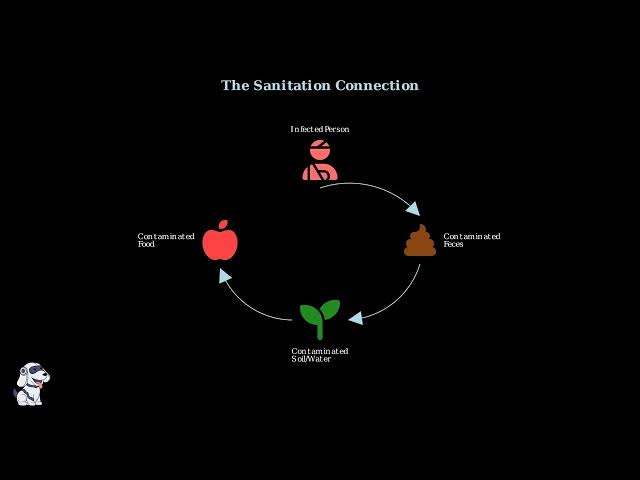
sanitation creates a dangerous cycle.
7:26
When infected people defecate outdoors
7:28
or when human waste is used as
7:30
fertilizer, ascarous eggs contaminate
7:32
the soil and water. This contamination
7:35
then spreads to food crops, completing
7:37
the transmission cycle.
7:40
The good news is that transmission can
7:42
be easily prevented with proper hygiene.
7:45
Thorough handwashing and careful
7:47
cleaning of fruits and vegetables can
7:49
break the transmission chain and protect
7:52
you from infection. Remember, ascarous
7:54
eggs can survive in the environment for
7:56
years, making prevention through good
7:58
hygiene practices absolutely essential.
8:01
Always wash your fruits and vegetables
8:04
and maintain proper hand hygiene to
8:06
protect yourself and your family. A
8:08
scarce lumber represents one of the
8:11
world's most widespread parasitic
8:13
infections. The numbers are truly
8:15
staggering. Between 772 and 892 million
8:20
people are currently infected with this
8:21
roundorm globally.
8:24
This infection is not distributed evenly
8:26
around the world. Let's look at a map
8:28
showing where a scar is most prevalent.
8:31
The red areas indicate the highest
8:33
infection rates while gray areas show
8:36
much lower prevalence. The highest
8:38
infection rates are found in tropical
8:40
and subtropical regions. Three main
8:42
areas stand out. Asia, subsaharan
8:45
Africa, and parts of the Americas. These
8:48
regions share common characteristics
8:50
that make a scarce transmission more
8:52
likely. What do these regions have in
8:55
common? poor sanitation infrastructure.
8:58
This image shows the reality in many
9:00
affected areas. Contaminated water
9:02
sources, inadequate waste management,
9:05
and crowded living conditions that
9:07
facilitate the spread of ascaras eggs.
9:10
In these environments, ascaras eggs can
9:13
survive in contaminated soil for years.
9:16
Here we see the microscopic eggs that
9:18
cause infection and the adult worms they
9:20
develop into. Understanding this global
9:23
distribution helps us target prevention
9:25
and treatment efforts where they're
9:27
needed most. The global distribution of
9:29
a scarce clearly shows that this is not
9:32
just a medical issue, but a
9:34
socioeconomic one. Addressing the nearly
9:36
900 million infections worldwide
9:39
requires improving sanitation
9:41
infrastructure alongside medical
9:43
treatment in the most affected regions.
9:46
Many people infected with a scarce don't
9:48
even realize they have it. However, when
9:50
symptoms do appear, they can range from
9:52
mild discomfort to serious health
9:55
complications. Let's explore what to
9:57
watch for. The first important thing to
9:59
understand is that many ascaris
10:02
infections are completely asymptomatic.
10:04
This means infected people feel
10:06
perfectly normal and have no idea
10:08
they're carrying these parasites.
10:10
However, when symptoms do occur, they
10:13
often affect the digestive system.
10:15
Abdominal pain and diarrhea are common
10:18
complaints, especially as adult worms
10:20
grow and multiply in the small
10:21
intestine. Children are particularly
10:24
vulnerable to malnutrition from a scarce
10:26
infections. The worms compete for
10:28
nutrients, and heavy infections can lead
10:30
to poor growth, weight loss, and
10:33
developmental delays. During the laral
10:35
migration phase, when young worms travel
10:37
through the lungs, patients may
10:39
experience respiratory symptoms. This
10:42
includes persistent coughing, shortness
10:44
of breath, and chest discomfort. To
10:47
understand when these symptoms occur,
10:49
let's look at the ascaris life cycle.
10:52
Respiratory symptoms happen during laral
10:54
migration through the lungs, while
10:56
abdominal symptoms occur when adult
10:58
worms establish themselves in the
10:59
intestines. Remember these key points.
11:02
Many infections are silent, but when
11:04
symptoms appear, watch for abdominal
11:07
pain and diarrhea. Be especially
11:09
concerned about malnutrition in children
11:11
and don't ignore persistent respiratory
11:14
symptoms that could indicate laral
11:15
migration.
11:17
When doctors suspect an ascarous
11:19
infection, they have three main
11:21
diagnostic methods available. Each
11:23
method provides different information to
11:26
confirm the presence of these parasitic
11:28
worms. The most common and reliable
11:30
method is examining stool samples under
11:33
a microscope to look for ascarous eggs.
11:36
This is the gold standard for diagnosis
11:38
because the eggs have a very distinctive
11:40
appearance. Under the microscope,
11:42
ascaras eggs are easily recognizable.
11:45
They are ovalshaped with a thick
11:47
protective shell and contain granular
11:49
material inside. Here we can see a
11:51
closer view of individual ascaris eggs.
11:54
Notice the thick layered shell structure
11:56
and the granular contents inside. These
11:59
distinctive features make identification
12:02
straightforward for trained laboratory
12:03
technicians.
12:05
Ascaris eggs have several key
12:07
identifying features that doctors look
12:08
for. They are ovalshaped, measure about
12:11
45 to 75 micrometers in length, have a
12:14
thick protective shell, and contain
12:17
granular cytoplasm. Sometimes stool
12:19
examination isn't enough, especially
12:22
when worms have migrated to other parts
12:24
of the body. In these cases, doctors use
12:27
medical imaging techniques like X-rays
12:29
to locate the worms. This abdominal
12:31
X-ray shows adult ascaras worms as
12:34
tubular snake- like shadows in the
12:36
intestines. The arrows point to these
12:38
characteristic worm shapes that doctors
12:40
can easily identify. Different imaging
12:42
techniques can be used depending on the
12:44
situation. X-rays are most common, but
12:47
ultrasound, CT scans, and MRI can also
12:50
detect worms in various organs,
12:52
including the liver, pancreas, and bile
12:54
ducts. In some cases, diagnosis is
12:56
straightforward because adult worms are
12:58
actually visible. Patients may see worms
13:00
in their stool or rarely cough them up
13:03
or vomit them. Adult ascaras worms are
13:06
quite large, measuring 15 to 40 cm in
13:09
length. When they are passed in stool or
13:12
vomited up, they are unmistakable and
13:14
provide immediate confirmation of
13:16
infection. To summarize, doctors have
13:19
reliable methods to diagnose a scarce
13:21
infections. Stool examination remains
13:24
the gold standard. Imaging helps locate
13:26
worms throughout the body and sometimes
13:29
the worms make themselves obvious by
13:31
being visible to the naked eye. The good
13:33
news about ascarasis is that it's
13:35
completely treatable. Modern medicine
13:38
offers several effective options to
13:40
eliminate these parasitic worms from the
13:42
human body. There are three main anthic
13:45
medications used to treat escarasis.
13:47
Albendazol is the most commonly
13:48
prescribed requiring just a single dose.
13:51
Meendazol is taken over three days and
13:54
is particularly safe for children.
13:56
Ivormectin is a newer single dose option
13:58
that's proving very effective.
14:02
Pregnant women require special
14:04
consideration when treating escariosis.
14:07
Parental pamoate is the medication of
14:09
choice during pregnancy because it's
14:11
been proven safe for both mother and
14:13
baby. This single dose treatment works
14:16
by paralyzing the worms making them easy
14:19
to eliminate from the body.
14:21
In severe cases where large numbers of
14:23
worms cause intestinal obstruction,
14:25
surgery may be necessary. This is a
14:28
medical emergency that requires
14:30
immediate intervention. Surgeons remove
14:32
the mass of worms and repair any
14:35
intestinal damage followed by
14:37
anthomementic medication to eliminate
14:39
any remaining parasites.
14:41
These medications work by targeting the
14:43
worm's nervous and muscular systems.
14:46
They paralyze the worms, disrupt their
14:48
metabolism, and prevent them from laying
14:51
eggs. Once paralyzed, the worms are
14:54
naturally expelled from the body through
14:56
normal bowel movements. The success rate
14:59
for treating ascarasis is excellent with
15:02
cure rates between 95 and 100% when
15:05
proper medication is used. Symptoms
15:08
typically improve within days and
15:10
complete worm elimination occurs within
15:12
1 to two weeks. Follow-up testing is
15:15
recommended to ensure the infection has
15:17
been completely cleared. Prevention is
15:20
always better than treatment when it
15:21
comes to a scarce infections. By
15:24
focusing on key prevention strategies,
15:26
we can stop this parasite in its tracks
15:28
before it ever reaches the human body.
15:31
Prevention of a scarce relies on three
15:33
fundamental pillars that work together.
15:35
First, improved sanitation systems
15:38
prevent contaminated waste from reaching
15:39
the environment. Second, safe drinking
15:42
water eliminates one route of
15:44
transmission. Third, good hygiene
15:47
practices, especially handwashing,
15:49
create a personal barrier against
15:50
infection. Proper handashing is one of
15:53
the most effective ways to prevent a
15:55
scarce infection. The World Health
15:58
Organization recommends following these
16:00
nine essential steps, especially before
16:02
eating and after using the toilet. This
16:05
simple practice can dramatically reduce
16:08
your risk of ingesting a scarce eggs.
16:11
Effective prevention requires
16:12
communitywide efforts. This includes
16:15
establishing safe water systems, proper
16:17
sewage treatment facilities, community
16:19
education programs, and environmental
16:22
cleanup initiatives. Organizations like
16:24
Action Against Hunger work to improve
16:26
water access and sanitation in
16:28
vulnerable communities worldwide. The
16:31
World Health Organization recommends
16:33
preventive chemotherapy as a key
16:35
strategy in high prevalence areas. This
16:38
involves mass drug administration to
16:41
entire communities, particularly
16:42
targeting school-aged children and
16:44
pregnant women. By treating populations
16:47
before symptoms appear, we can
16:49
significantly reduce the parasite burden
16:52
and break the transmission cycle.
16:54
Successful ascaris prevention combines
16:56
personal hygiene practices with
16:58
communitywide sanitation improvements
17:00
and strategic preventive treatment
17:02
programs. When individuals practice good
17:05
hygiene, communities invest in clean
17:08
water and sanitation and health
17:10
organizations implement preventive
17:12
chemotherapy, we can effectively stop a
17:14
scarce in its tracks. Every person and
17:18
every community can make a difference in
17:20
this global health challenge. Preventive
17:22
chemotherapy represents one of the most
17:24
effective strategies in the global fight
17:26
against a scariosis. This approach
17:29
involves systematically treating entire
17:31
populations in high-risisk areas even
17:33
before symptoms appear. Preventive
17:36
chemotherapy is a public health strategy
17:39
where medications are given to entire
17:41
populations in areas where parasitic
17:43
infections are common. Rather than
17:46
waiting for people to get sick, we treat
17:48
everyone to prevent severe infections
17:51
from developing. The World Health
17:53
Organization recommends using two main
17:55
medications for preventive chemotherapy
17:57
against escariosis, alendazol and
18:01
meendazol. These safe, effective drugs
18:04
are distributed to entire communities in
18:06
areas where ascariosis is common.
18:09
Preventive chemotherapy focuses on three
18:11
main groups who are most at risk.
18:14
preschool children from ages 1 to 5,
18:17
schoolage children from 5 to 14, and
18:20
pregnant women after their first
18:21
trimester. These groups are prioritized
18:24
because they face the highest risk of
18:26
severe complications from a scariosis.
18:29
Preventive chemotherapy programs focus
18:31
on geographic areas where a scariasis is
18:34
most common. This world map shows
18:36
prevalence rates with red areas
18:38
indicating the highest infection rates.
18:41
Countries in Asia, subsaharan Africa,
18:43
and parts of the Americas receive
18:45
priority for mass drug administration
18:47
programs.
18:49
In practice, preventive chemotherapy
18:51
programs work through community health
18:53
systems.
18:54
Community health workers distribute
18:56
medications doortodoor. Schools become
18:59
distribution centers for children, and
19:01
pregnant women receive treatment during
19:02
routine clinic visits. Programs
19:05
typically repeat treatment annually or
19:07
twice yearly with careful monitoring to
19:10
ensure high coverage rates.
19:12
Preventive chemotherapy offers
19:14
significant benefits for both
19:16
individuals and communities. It reduces
19:19
overall infection rates, prevents severe
19:22
complications in children, and
19:24
represents a highly cost-effective
19:26
public health intervention. Children who
19:28
receive regular treatment show improved
19:30
nutritional status, better growth, and
19:33
enhanced school performance.
19:35
The key takeaway is that preventive
19:37
chemotherapy breaks the cycle of a
19:40
scariosis transmission by treating
19:42
entire communities before severe
19:44
infections can develop.
19:46
This proactive approach has proven to be
19:49
one of the most effective strategies for
19:51
controlling this global health
19:53
challenge. Exciting developments in a
19:55
scarce treatment. As of January 2025, a
19:59
groundbreaking new combination therapy
20:01
has received positive scientific
20:02
approval for treating soil transmitted
20:05
helmet infections, including escarasis.
20:09
This combination therapy brings together
20:11
two powerful drugs that work in
20:13
completely different ways. Ivormectin
20:16
targets the parasites nervous and
20:17
muscular systems, essentially paralyzing
20:20
the worm. Meanwhile, Albendazole attacks
20:23
the parasites metabolism and energy
20:25
production systems, effectively starving
20:27
the worm to death. Together, they create
20:30
a powerful one-two punch. The
20:32
combination of these two mechanisms
20:34
creates a synergistic effect. The
20:37
treatment has higher success rates,
20:39
eliminates worms faster, and reduces the
20:42
risk of drug resistance developing.
20:44
Here we can see how ivormectin works at
20:47
the cellular level. It interferes with
20:49
protein transport mechanisms that are
20:51
crucial for the parasite survival,
20:53
disrupting normal cellular functions.
20:57
This new combination therapy is approved
20:59
for use in adults, adolescents, and
21:02
children who are 5 years of age or
21:04
older. This represents a significant
21:06
advancement in treating escarasis across
21:09
different age groups. However, it's
21:11
important to note that this combination
21:13
is not recommended for children under 5
21:16
years old and patients should always
21:18
consult with their healthare provider
21:20
before starting any treatment.
21:24
This combination therapy is particularly
21:26
effective because it targets multiple
21:28
stages of the ascaris life cycle. The
21:31
drugs work together to eliminate adult
21:33
worms, disrupt laral migration, and
21:36
prevent reproduction. This represents a
21:38
major step forward in treating escariis,
21:41
offering patients and health care
21:43
providers a more effective tool in the
21:46
fight against this widespread parasitic
21:48
infection. Drug resistance is becoming
21:50
one of the most serious challenges in
21:52
treating a scarce infections. When
21:55
parasites develop resistance to
21:57
medications, our treatment options
21:59
become limited and less effective. Under
22:01
normal circumstances, antholmentic drugs
22:04
effectively target and eliminate a
22:06
scarce parasites. The medication
22:08
disrupts essential biological processes
22:10
in the worm leading to its death.
22:14
Let's look at how one important class of
22:16
drugs, benzomitoles, normally works
22:18
against parasites. These drugs attack
22:21
the parasites vital systems in multiple
22:23
ways. This multi-target approach makes
22:26
benzomyitoles very effective against
22:28
healthy parasites. But resistance can
22:30
develop when parasites find ways to
22:33
overcome these mechanisms.
22:35
However, some ascaras parasites have
22:38
developed resistance to these drugs.
22:40
When resistance occurs, the same
22:42
medications that once worked effectively
22:45
now have reduced or no impact on the
22:47
parasites.
22:49
The problem of antholmentic resistance
22:51
extends beyond just a scarce. Resistance
22:53
has become common across different types
22:55
of parasitic worms, particularly in
22:57
livestock, and affects all major drug
23:00
classes. Notice that resistance exists
23:02
to all drug classes with gaps in our
23:05
treatment options. This is especially
23:07
problematic in sheep due to factors like
23:09
poor immunity in young animals and the
23:11
pathogenic nature of certain worm
23:13
species.
23:16
Once drug resistance develops in a
23:18
parasite population, it cannot be
23:20
reversed. This is because the genetic
23:22
changes that cause resistance become
23:25
permanently established in the parasites
23:27
DNA and are passed on to future
23:29
generations.
23:32
Reports show that single dose anthic
23:34
treatments are becoming less effective.
23:36
Where these drugs once achieved cure
23:38
rates of 95% or higher, some areas now
23:42
see effectiveness drop to 50% or even
23:44
lower.
23:46
Because drug resistance is irreversible,
23:49
researchers are urgently working on
23:51
multiple fronts. This includes
23:53
developing new drugs, creating
23:55
combination therapies, improving
23:57
diagnostic tools, and strengthening
23:59
prevention strategies to reduce our
24:01
reliance on treatment alone. The growing
24:04
threat of drug resistance makes it clear
24:06
that we cannot rely solely on current
24:08
treatments. A comprehensive approach
24:11
combining new research, better
24:13
prevention, and improved monitoring is
24:15
essential to stay ahead of resistant
24:17
parasites.
24:20
We're discovering that the boundaries
24:21
between human and animal parasites,
24:23
aren't as clear as we once thought.
24:26
Today, we'll explore how a scarum,
24:28
traditionally known as the pig
24:29
roundworm, can actually infect humans,
24:32
too.
24:34
Ascarasum is a parasitic roundorm that
24:37
has traditionally been considered a
24:39
pigspecific parasite. It's remarkably
24:42
similar to the human roundorm ascaris
24:44
lumbercoides belonging to the same
24:46
family but with different host
24:48
preferences.
24:51
For decades, scientists believe these
24:53
parasites had strict host preferences.
24:56
Ascarasum infected pigs, ascaras
24:58
lumberccoides infected humans. And there
25:01
were clear species barriers. But recent
25:03
research has challenged this traditional
25:05
view. New discoveries reveal that a scar
25:08
sum can actually infect humans even in
25:11
areas where the human roundorm isn't
25:13
common. Scientists have also found
25:15
hybrid forms that combine
25:17
characteristics of both species.
25:21
Laboratory studies like this one help
25:23
scientists examine specimens more
25:25
closely. By studying worms extracted
25:28
from both pigs and humans, researchers
25:31
can identify genetic markers that reveal
25:33
cross-species infections.
25:37
This creates a significant diagnostic
25:40
challenge. The eggs of a scarum and
25:42
ascaras lumberccoides look nearly
25:45
identical under a microscope.
25:47
Traditional diagnostic methods cannot
25:49
distinguish between the two species.
25:53
These findings have important public
25:54
health implications. People living near
25:57
pig farms may face higher infection
25:59
risks, and infections are now possible
26:02
even in areas where human roundworm
26:04
isn't common. While the same medications
26:07
treat both species, accurate diagnosis
26:09
helps us better understand and track
26:11
transmission patterns.
26:15
The key takeaways are clear. Species
26:18
barriers between parasites aren't as
26:20
absolute as we once believed. We
26:22
urgently need better diagnostic tools to
26:25
distinguish between these closely
26:26
related species. Most importantly, this
26:29
highlights why we need a onehealth
26:31
approach that considers the
26:33
interconnections between human, animal,
26:35
and environmental health.
26:39
Current diagnostic methods for ascaris
26:42
infections have significant limitations
26:44
that affect our ability to provide
26:46
effective treatment. Understanding these
26:49
challenges is crucial for improving
26:51
patient care. Currently, doctors
26:53
diagnose ascarous infections through
26:55
three main methods. First, they examine
26:57
stool samples under a microscope to look
26:59
for parasite eggs. Second, they use
27:02
imaging tests like X-rays or CT scans to
27:05
detect adult worms. Third, they
27:07
sometimes identify adult worms that are
27:09
passed in stool or vomit. While these
27:11
methods can identify a scarce
27:13
infections, they have important
27:15
limitations. The image shows male and
27:18
female ascaras worms, but current
27:20
diagnostics often cannot distinguish
27:22
between different ascaras species that
27:24
may require different treatment
27:25
approaches.
27:28
These diagnostic limitations create
27:30
several serious problems in clinical
27:32
practice. The first major limitation is
27:34
that current methods cannot distinguish
27:37
between ascaris lumberccoides which
27:39
infects humans and ascaras which
27:42
typically infects pigs but can also
27:44
infect humans.
27:46
This distinction is becoming
27:47
increasingly important for proper
27:49
treatment. Second, egg counts in stool
27:52
samples are extremely variable and
27:53
unreliable.
27:55
This makes it difficult to assess the
27:57
true burden of infection or track
27:59
treatment effectiveness over time.
28:01
Third, current methods may miss light
28:04
infections or early stage disease when
28:06
symptoms are not yet apparent, but
28:08
treatment would be most effective.
28:10
Finally, advanced imaging tests are
28:12
expensive and often unavailable in the
28:15
tropical and subtropical regions where
28:17
ascarous infections are most common. The
28:19
inability to differentiate between a
28:21
scarce species has become a critical
28:24
diagnostic challenge. Recent research
28:26
has shown that a scar sume,
28:28
traditionally considered a pig parasite,
28:30
can also infect humans even in areas
28:32
where human escaris is not common.
28:35
However, current diagnostic tools cannot
28:37
tell these species apart. This
28:39
diagnostic gap has serious implications
28:42
for patient treatment and public health
28:44
planning. Improved diagnostics would
28:47
enable doctors to select the most
28:49
effective treatment for each specific
28:51
parasite species. This image shows
28:54
various diagnostic specimens that could
28:56
benefit from more precise identification
28:58
methods. Better diagnostics would also
29:01
help create accurate maps of where
29:03
different ascaris species are found,
29:05
enabling more effective public health
29:07
interventions.
29:09
They would improve monitoring for drug
29:11
resistance, which is becoming an
29:13
increasingly serious problem in parasite
29:15
treatment. Most importantly, precise
29:18
diagnosis leads to better treatment
29:20
outcomes and reduced reinfection rates.
29:23
So, what would improve diagnostic tools
29:25
look like? Future diagnostic tools need
29:28
to incorporate DNA based methods that
29:30
can definitively identify different
29:32
ascaris species. These molecular
29:34
techniques can distinguish between
29:36
alumberccoides and asum with high
29:38
accuracy. We also need rapid point of
29:41
care tests that can provide results
29:43
within minutes rather than days allowing
29:46
for immediate treatment decisions. Most
29:48
critically, these tools must be
29:50
affordable and suitable for use in
29:52
resource limited settings where a scarce
29:55
infections are most common. Let me
29:57
summarize the key points about
29:58
diagnostic improvements. First, current
30:01
diagnostic methods cannot reliably
30:03
distinguish between different ascaris
30:05
species, which is becoming increasingly
30:07
important as we learn more about cross
30:09
species infections. Second, accurate
30:12
species identification is essential for
30:14
selecting the most effective treatment
30:17
and monitoring drug resistance. Third,
30:20
improved diagnostics directly translate
30:22
to better patient outcomes and more
30:24
effective public health interventions.
30:26
Finally, the next generation of
30:28
diagnostic tools must combine accuracy
30:31
with speed and affordability to be truly
30:34
useful in the fight against ascarous
30:36
infections worldwide. While treatment
30:38
and prevention strategies exist for
30:40
ascaris infections, researchers are
30:42
working toward an even more powerful
30:44
tool, a vaccine. Currently, vaccine
30:47
development for ascarasis is in the
30:49
early research phase with no vaccines
30:51
yet reaching human clinical trials.
30:54
Developing vaccines for parasitic worms
30:56
like ascaris presents unique challenges.
30:59
Unlike bacteria or viruses, parasitic
31:02
worms are complex multisellular
31:04
organisms with sophisticated ways of
31:06
evading the human immune system. The
31:08
ascaris life cycle involves multiple
31:10
stages from eggs in the environment to
31:13
larve migrating through the lungs to
31:15
adult worms in the intestines.
31:17
A successful vaccine would need to
31:19
target the right stage at the right
31:21
time. However, recent advancements in
31:24
recombinant protein technology are
31:26
offering new hope. This cutting edge
31:28
approach allows scientists to produce
31:30
specific ascaris proteins in the
31:32
laboratory which can then be tested as
31:34
potential vaccine candidates.
31:37
A successful ascaris vaccine could
31:39
revolutionize prevention efforts.
31:41
Instead of relying solely on repeated
31:43
drug treatments, a vaccine could provide
31:46
longlasting protection, especially for
31:48
children in high-risisk areas. While the
31:51
prospects are promising, vaccine
31:53
development is a lengthy process.
31:55
Researchers estimate it could take many
31:57
years before a safe and effective
31:59
ascaris vaccine becomes available for
32:02
widespread use. The development of an
32:04
ascaris vaccine represents hope for the
32:07
future. While we wait for this
32:09
breakthrough, current prevention and
32:11
treatment strategies remain our best
32:14
tools for fighting this global health
32:16
challenge. Medical professionals
32:18
sometimes encounter escaris worms in the
32:20
most unexpected places. These unusual
32:23
cases help us understand just how far
32:25
these parasites can travel in the human
32:27
body. Our first case involves a
32:30
23-month-old boy from Central America.
32:33
During a routine diaper change,
32:35
caregivers discovered a 10-in long round
32:37
worm. The child had been airlifted to
32:40
the hospital due to acute respiratory
32:42
failure, making this discovery even more
32:45
significant. In an extremely rare case,
32:47
an escaris worm was discovered in the
32:50
plural cavity during a needle-guided
32:52
aspiration procedure. The plural cavity
32:54
is the space around the lungs, making
32:56
this an incredibly unusual location for
32:59
the parasite. Perhaps one of the most
33:01
surprising cases involved a 45year-old
33:04
male patient. During a surgical
33:06
operation, medical staff discovered a
33:08
young ascaras worm in the patient's oral
33:10
cavity. This shows how these parasites
33:13
can migrate throughout the body in
33:15
unexpected ways. These images show real
33:19
medical cases and research. We can see
33:21
laboratory professionals examining
33:23
ascarous specimens, microscopic
33:25
cross-sections revealing internal
33:27
anatomy and how these parasites appear
33:30
within the human intestinal tract. These
33:32
unusual cases teach us important
33:34
lessons. First, ascarous parasites can
33:37
migrate to unexpected locations in the
33:39
human body. Second, these cases
33:42
demonstrate the remarkable ability of
33:44
these worms to travel throughout our
33:45
systems. Finally, medical professionals
33:48
must remain vigilant for unusual
33:50
presentations of common parasites.
33:53
Certain groups of people face
33:55
significantly higher risks of a scarce
33:57
infection. Understanding who these
33:59
vulnerable populations are helps us
34:01
target prevention and treatment efforts
34:03
more effectively. Four main groups face
34:06
elevated risks. international travelers
34:09
visiting endemic areas, immigrants and
34:11
refugees from high prevalence regions,
34:14
international adopes, and children
34:16
between two and 10 years old.
34:19
International travelers face increased
34:21
risk when visiting tropical and
34:23
subtropical regions where ascaras is
34:25
endemic. Poor sanitation in some
34:27
destinations creates exposure
34:29
opportunities through contaminated food
34:32
and water.
34:34
Recent immigrants and refugees represent
34:36
another high-risisk group. Many come
34:38
from countries with high ascaris
34:40
prevalence and refugee camps often have
34:42
deplorable living conditions that
34:44
facilitate transmission.
34:46
International adopes, particularly
34:49
children adopted from countries with
34:50
high ascaris prevalence, require special
34:54
screening. The adoption process often
34:56
involves travel to endemic regions and
34:58
potential exposure before proper medical
35:01
evaluation.
35:03
Children between 2 and 10 years old
35:05
represent the most heavily infected age
35:07
group. Their developing immune systems,
35:09
behavioral patterns, and increased soil
35:12
contact make them particularly
35:13
vulnerable to a scarce infection.
35:17
Understanding these high-risisk groups
35:19
is crucial for targeted prevention
35:21
strategies. Healthcare providers should
35:23
screen these populations more carefully
35:26
and public health programs should
35:27
prioritize these vulnerable groups for
35:30
intervention and education.
35:33
Ascarious infections have devastating
35:35
effects on children's growth and
35:36
development. Unlike adults, children are
35:40
particularly vulnerable to the long-term
35:42
consequences of these parasitic
35:44
infections.
35:45
Heavy ascaris infections cause
35:47
significant growth retardation in
35:49
children. An infected eight-year-old may
35:52
be significantly shorter and weigh less
35:54
than their healthy peers, creating
35:57
lasting physical disadvantages.
35:59
Ascaras worms live in the small
36:01
intestine where nutrient absorption
36:03
occurs. These large parasites physically
36:06
block the absorption of essential
36:08
nutrients leading to malnutrition even
36:11
when children eat adequate food.
36:14
Cognitive development follows
36:15
predictable stages in healthy children.
36:18
However, ascarious infections can
36:20
significantly delay or impair these
36:22
crucial developmental milestones,
36:24
affecting learning, memory, and problem
36:26
solving abilities.
36:29
Children aged 2 to 10 years are most
36:31
heavily infected by ascaris. The
36:34
consequences include growth retardation,
36:36
malnutrition, and cognitive disabilities
36:40
that can affect learning and school
36:41
performance throughout their lives.
36:44
The key takeaway is clear. Children must
36:47
be protected from a scarce infections.
36:49
The physical and cognitive impacts can
36:51
last a lifetime making prevention and
36:54
early treatment absolutely critical for
36:56
healthy child development.
37:01
One of the biggest challenges in
37:03
fighting ascarus infections is
37:05
reinfection.
37:07
Even after successful treatment, people
37:09
in endemic areas face an extremely high
37:11
risk of getting infected again. The
37:13
statistics are staggering. In endemic
37:16
areas, reinfection rates can reach as
37:18
high as 95% within just 12 months after
37:22
treatment. This means that almost
37:24
everyone who gets treated will become
37:26
infected again within a year. But why
37:29
does reinfection happen so easily? The
37:31
answer lies in understanding the
37:33
persistent cycle that keeps communities
37:36
trapped in infection. The reinfection
37:38
cycle is a vicious circle. It starts
37:40
when someone receives treatment and
37:42
temporarily recovers from their ascaris
37:44
infection. However, in endemic areas,
37:47
the environment remains contaminated
37:48
with ascaris eggs. Poor sanitation means
37:52
that contaminated soil is everywhere,
37:54
making reexposure almost inevitable.
37:56
This leads to reinfection and the cycle
37:58
begins all over again. The person
38:01
develops symptoms, contributes more
38:03
contamination to the environment and the
38:05
problem perpetuates itself. This cycle
38:08
shows why single treatments are not
38:10
enough. The arrow keeps moving,
38:12
representing the continuous nature of
38:14
reinfection in endemic communities.
38:17
Several key factors make reinfection
38:19
rates so high. Understanding these
38:21
factors helps explain why this problem
38:23
is so persistent. First, the
38:26
contaminated environment persists long
38:28
after individual treatment. A scarce
38:30
eggs can survive in soil for many years,
38:33
creating a reservoir of infection that
38:35
constantly threatens the community. Poor
38:38
sanitation facilities and limited access
38:40
to clean water mean that people cannot
38:42
avoid contact with contaminated soil and
38:45
water sources. Finally, when only some
38:47
people in a community receive treatment,
38:50
the overall contamination level remains
38:52
high, making reinfection of treated
38:55
individuals almost certain. These high
38:57
reinfection rates have serious
38:59
implications for public health programs
39:01
and treatment strategies. The high
39:03
reinfection rates teach us that single
39:05
treatments are not sufficient.
39:08
We need communitywide approaches that
39:10
combine treatment with environmental
39:12
improvements and ongoing prevention
39:14
efforts. Understanding reinfection rates
39:17
helps explain why ascaris remains such a
39:20
persistent global health challenge
39:22
despite effective treatments being
39:24
available. A scariis and other neglected
39:27
tropical diseases represent one of the
39:29
world's most significant yet overlooked
39:31
economic challenges.
39:34
The numbers are staggering and the
39:35
impact reaches far beyond individual
39:37
health. Neglected tropical diseases
39:40
including escariosis affect more than 1
39:43
billion people worldwide. This
39:45
represents roughly one in every seven
39:47
people on our planet.
39:49
This world map reveals the devastating
39:51
geographic concentration of neglected
39:54
tropical diseases. The darkest regions
39:57
primarily in subsaharan Africa and parts
39:59
of Asia bear the heaviest burden with
40:02
seven or more different neglected
40:04
tropical diseases affecting their
40:05
populations simultaneously.
40:08
These affected regions lose billions of
40:10
dollars annually due to neglected
40:12
tropical diseases. The economic impact
40:14
comes from multiple sources. health care
40:17
costs, lost productivity, reduced
40:19
educational outcomes, and decreased
40:21
economic development.
40:24
The economic burden of neglected
40:26
tropical diseases manifests in four
40:28
major areas. Health care systems strain
40:31
under treatment costs. Worker
40:33
productivity plummets due to illness and
40:35
disability. Children miss school,
40:37
limiting their future earning potential.
40:40
And entire regions experience slower
40:42
economic development.
40:44
This chart reveals a critical disparity
40:47
in healthcare spending. Subsaharan
40:50
Africa and low-income countries shown in
40:52
green spend the highest percentage of
40:54
their GDP on healthcare. Yet, these are
40:57
precisely the regions most affected by
41:00
neglected tropical diseases,
41:02
highlighting the urgent need for
41:03
international support and more efficient
41:06
prevention strategies. The solution lies
41:08
in strategic investment. Prevention
41:10
programs cost far less than treating
41:13
established infections and their
41:15
complications. Mass drug administration,
41:18
improved sanitation, and health
41:20
education represent some of the most
41:22
costeffective interventions in global
41:24
health.
41:25
The economic impact of a scary ISIS and
41:28
other neglected tropical diseases
41:30
represents both a massive challenge and
41:32
a tremendous opportunity. With over 1
41:35
billion people affected and billions of
41:37
dollars lost annually, the case for
41:39
investment in prevention and treatment
41:41
programs has never been clearer. The
41:44
cost of neglect far exceeds the cost of
41:46
action. While many ascaris infections
41:49
are mild or asymptomatic, the parasite
41:52
can have deadly consequences.
41:54
Understanding the mortality associated
41:56
with a scarasis reveals the true
41:58
severity of this neglected tropical
42:00
disease. A scariosis causes an estimated
42:03
2,000 to 10,000 deaths every year
42:06
worldwide. This may seem like a small
42:09
number compared to other diseases, but
42:11
each death represents a preventable
42:13
tragedy. The most heartbreaking aspect
42:16
is that these deaths occur predominantly
42:18
in children. Young bodies are more
42:21
vulnerable to the complications that can
42:22
arise from heavyworm burdens. There are
42:25
two primary ways that ascarous
42:27
infections become fatal. The first is
42:30
intestinal obstruction where large
42:32
numbers of adult worms physically block
42:34
the intestines preventing normal
42:36
digestion and bowel function. The second
42:39
major cause is biliary obstruction where
42:41
worms migrate into the bile ducts
42:43
blocking the flow of bile and causing
42:46
severe complications in the liver and
42:48
pancreas. Medical imaging can reveal the
42:50
severity of these obstructions. This
42:53
X-ray shows a patient with bowel
42:55
obstruction, demonstrating how serious
42:57
these complications can become. These
42:59
deaths are particularly tragic because a
43:02
scarasis is entirely preventable and
43:04
treatable. With proper sanitation,
43:06
regular deworming programs, and access
43:09
to health care, these fatalities could
43:11
be eliminated. The mortality statistics
43:14
underscore why a scariosis cannot be
43:16
dismissed as just another intestinal
43:18
parasite. For vulnerable populations,
43:21
especially children in endemic areas,
43:23
this infection can be a matter of life
43:25
and death. We've covered a lot of ground
43:27
learning about ascaris lumberccoides.
43:30
Now, let's wrap up with some final
43:32
thoughts on this important global health
43:34
challenge.
43:35
Ascaris lumberccoides is the most common
43:38
parasitic worm infection in the world,
43:40
affecting over 700 million people. It
43:43
particularly impacts children causing
43:45
malnutrition and developmental problems
43:48
and spreads primarily through poor
43:50
sanitation. These microscopic eggs in
43:52
contaminated soil are where it all
43:54
begins. Each one represents a potential
43:57
infection that could impact someone's
43:59
health and quality of life. The
44:02
transmission cycle is well understood.
44:04
Humans are the reservoir and the eggs
44:06
survive in soil for years waiting for
44:09
the next host through contaminated food
44:11
or water. The human cost is real and
44:14
heartbreaking. Children suffer the most
44:16
with severe malnutrition and
44:18
developmental delays that can last a
44:20
lifetime. But here's the encouraging
44:22
news. We know how to fight this. The
44:24
solutions exist and they work when
44:26
implemented properly. Clean water and
44:29
sanitation are fundamental. The United
44:32
Nations has made this a global priority
44:34
because access to clean water and proper
44:36
sanitation can prevent most ascarous
44:39
infections. Countries that have invested
44:41
in these approaches have seen dramatic
44:43
reductions in ascaris infections.
44:46
Brazil, China, and several other nations
44:49
have made remarkable progress through
44:51
coordinated efforts. The fight against
44:53
ascarus lumbercoides is really a fight
44:55
for human dignity and potential. Every
44:58
child deserves to grow up healthy,
45:00
well-nourished, and able to reach their
45:02
full potential. Through continued
45:04
research, improved treatments, better
45:07
sanitation, and global cooperation, we
45:10
can work toward a world with far fewer
45:12
ascarous infections. The tools exist
45:15
now. We need the will to use them. Thank
45:17
you for learning about this important
45:19
global health challenge.
#Health Conditions
#Infectious Diseases