live_tv
Livestream Starting Soon
00
Hours
:
00
Minutes
:
00
Seconds
Up next in 10


Motility – Definition, Types, Importance, Examples
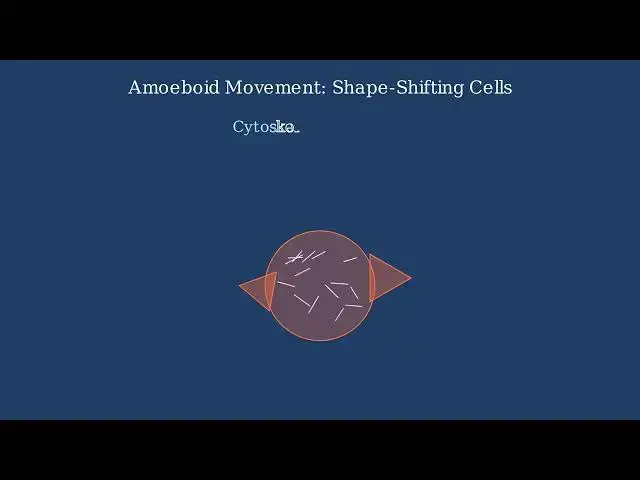
In this informative video, we delve into the concept of motility, exploring its definition, various types, and significance in biological systems. Motility refers to the ability of organisms or cells to move independently using metabolic energy. We will discuss the different forms of motility, including amoeboid movement, ciliary movement, and flagellar movement, providing examples from both unicellular and multicellular organisms. Understanding motility is crucial for comprehending various biological processes, including reproduction, feeding, and response to environmental stimuli. Join us as we uncover the fascinating world of motility and its vital role in life sciences. #Motility #Biology #LifeSciences
Website: https://biologynotesonline.com/
Facebook: https://www.facebook.com/biologynotesonline
Instagram: https://www.instagram.com/biologynotesonline/?hl=en
sperm motility,sperm motility treatment,low sperm motility,sperm motility percentage,how to increase sperm motility,low sperm motility treatment,sperm motility normal,sperm motility analysis,low sperm motility causes,sperm motility percentage for pregnancy,causes of low sperm motility,sperm motility for iui success,sperm motility progressive,what is normal sperm motility?,increase sperm motility,how to conceive with low sperm motility,importance
Show More Show Less View Video Transcript
0:00
what is motility in biology at its core
0:02
motility is the fundamental capacity for
0:04
autonomous movement in biological
0:07
organisms motility is defined as the
0:10
ability of organisms or cells to move
0:12
independently using metabolic energy
0:15
motility differs from passive movement
0:17
in several key ways active motility
0:20
requires metabolic energy and is
0:21
self-directed and purposeful in contrast
0:24
passive movement relies on external
0:26
forces requires no energy expenditure
0:29
and lacks directional
0:31
control motility operates across
0:33
multiple biological scales at the
0:36
cellular level motility includes
0:38
movements of individual cells using
0:40
structures like fleella or psyia at the
0:43
organism level motility involves
0:45
coordinated movements of muscles and
0:47
appendages and at the population level
0:49
motility can involve migration patterns
0:52
and collective movement
0:54
behaviors understanding motility is
0:56
crucial to biology for several reasons
0:59
motility allows organisms to acquire
1:01
essential resources like food water and
1:04
nutrients it enables creatures to escape
1:06
predators and other threats motility is
1:09
essential for finding mates and
1:11
successful reproduction it allows
1:13
species to explore and colonize new
1:15
environments and at the cellular level
1:18
motility is critical for immune
1:19
responses and developmental processes as
1:22
we conclude our introduction to
1:23
biological motility let's review the key
1:26
concepts motility is autonomous movement
1:29
powered by metabolic energy distinct
1:31
from passive movement that relies on
1:33
external forces it functions across
1:36
multiple biological scales and is
1:38
essential for survival reproduction and
1:40
cellular functions
1:43
muscular movement is a primary form of
1:45
motility in animals enling everything
1:48
from simple actions to complex
1:51
locomotion muscles are composed of
1:53
specialized fibers containing protein
1:55
filaments called actin and meosin inside
1:58
each muscle fiber are thousands of
2:00
sarccomirs the basic functional units of
2:03
muscles muscle contraction occurs
2:04
through the sliding filament mechanism
2:07
where actin and meosin filaments overlap
2:09
and slide past each other
2:12
the crossbridge cycle is powered by ATP
2:15
which provides energy for muscle
2:17
contraction this cycle involves ATP
2:20
binding hydraysis crossbridge formation
2:22
the power stroke and release of
2:25
byproducts these molecular contractions
2:27
translate to coordinated movements in
2:29
complex organisms for example human
2:32
walking involves the coordinated
2:34
contraction of multiple muscle groups to
2:36
create a smooth balanced gate while a
2:39
bird's flight relies on rapid wing
2:41
muscles that contract in precise
2:43
sequences to generate lift and
2:46
propulsion muscular movement requires
2:49
significant energy input primarily in
2:51
the form of ATP generated from glucose
2:54
metabolism the conversion of chemical
2:56
energy to mechanical work is remarkably
2:58
efficient in muscles but still results
3:01
in heat production
3:03
muscles exhibit remarkable adaptability
3:05
in balancing energy efficiency with
3:07
performance requirements from the
3:09
molecular level to complex coordinated
3:12
movements muscular contraction enables
3:14
the diverse forms of locomotion we see
3:17
throughout the animal kingdom hydraulic
3:20
movement represents one of nature's most
3:21
elegant solutions for creating motion
3:23
without traditional muscles hydraulic
3:26
systems work using incompressible fluids
3:28
under pressure when force is applied to
3:31
one part of a closed fluid system that
3:34
pressure is transmitted equally
3:36
throughout the entire
3:38
system spiders offer a fascinating
3:40
example of hydraulic movement unlike
3:43
vertebrates spiders lack extensor
3:45
muscles in their legs instead they pump
3:48
hemolymph their equivalent of blood into
3:50
their legs to extend them through
3:52
hydraulic
3:54
pressure sea stars demonstrate another
3:56
remarkable hydraulic system they use
3:59
what's called a water vascular system
4:01
with tube feet controlled by fluid fil
4:04
ampy when an impella contracts it forces
4:07
water into the tube foot extending it
4:09
for movement or
4:11
attachment compared to muscular movement
4:14
hydraulic systems have distinct
4:15
advantages and limitations they're
4:18
simpler with fewer components and can
4:20
transmit force efficiently however they
4:23
typically have slower response times and
4:25
are vulnerable to leaks despite these
4:28
trade-offs hydraulic movement represents
4:30
a fascinating evolutionary solution that
4:32
has evolved independently in several
4:35
animal
4:37
groups fleeller motility is a remarkable
4:40
form of cellular propulsion that allows
4:42
microscopic organisms to move through
4:45
fluid
4:50
environments fleella are whip-like
4:52
structures that extend from the cell
4:54
body there are two distinct types the
4:57
complex ukareotic fugellum and the
4:59
simpler proaryotic flegellum ukarotic
5:02
fugella found in human sperm cells
5:04
contain a complex arrangement of
5:06
microtubules proarotic fugella seen in
5:09
bacteria like ecoli consist of a rotary
5:12
motor at the base connected to a rigid
5:15
filament the movement mechanism differs
5:17
dramatically between the two types of
5:19
fugella ukareotic fugella create a
5:22
wavelike motion through the sliding of
5:24
internal microtubules powered by motor
5:27
proteins called
5:28
dinines in contrast proaryotic fugella
5:31
operate like a tiny rotary motor
5:33
spinning the rigid filament to create a
5:36
corkcrew motion that propels the
5:37
bacterium
5:39
forward let's see fleeller motility in
5:42
action with two key examples first human
5:45
sperm cells use their single powerful
5:47
flegellum to swim toward the egg sperm
5:50
navigate by detecting chemical gradients
5:52
released by the egg a process called
5:54
chemotaxis their flegellum creates a
5:57
powerful asymmetric wave that propels
5:59
them through the female reproductive
6:02
tract bacteria like E.coli use multiple
6:05
fleella that can rotate in coordination
6:08
to achieve directed movement bacteria
6:10
move using a run and tumble strategy
6:13
during runs fugella rotate
6:15
counterclockwise in synchrony pushing
6:17
the cell forward when fleella rotate
6:20
clockwise they cause the bacterium to
6:22
tumble and change
6:24
direction let's examine the remarkable
6:26
precision and efficiency of these
6:28
microscopic propulsion systems despite
6:31
their tiny size flagagillated cells
6:33
achieve impressive speeds sperm can
6:36
travel about five body lengths per
6:38
second while bacteria can move at speeds
6:40
of up to 10 body lengths per second even
6:43
more remarkable is their navigation
6:45
precision bacteria can detect chemical
6:48
concentration changes of less than 1%
6:51
allowing them to efficiently navigate
6:53
toward nutrients or away from toxins
6:55
fleeller motility demonstrates nature's
6:58
ability to create efficient precise
7:00
propulsion systems at the microscopic
7:02
scale enabling cells to navigate their
7:05
environments with remarkable
7:06
effectiveness
7:12
amiioid movement represents one of
7:14
nature's most flexible forms of cellular
7:16
locomotion in this remarkable form of
7:18
movement cells dynamically change their
7:21
shape by extending and retracting
7:23
temporary projections called pseudopodia
7:25
or false feet pseudopodia are extensions
7:28
of the cell membrane that allow
7:30
directional movement similar to a foot
7:32
reaching forward to take a step
7:36
the key to amiioid movement is the
7:38
dynamic rearrangement of the cell's
7:40
cytokeleton primarily composed of actin
7:43
filaments this movement involves three
7:45
key processes actin polymerization
7:48
pushes the membrane forward meiosin
7:50
contraction pulls the rear of the cell
7:52
and their coordinated assembly and
7:54
disassembly creates directional
7:57
motion amoboid movement is found in
8:00
several types of cells throughout nature
8:02
free living amiebas use this movement to
8:05
navigate their aquatic environments in
8:07
search of food white blood cells employ
8:10
amiioid movement to chase and engulf
8:12
pathogens during immune responses some
8:15
cancer cells utilize amiioid movement
8:18
during metastasis allowing them to
8:20
migrate through tissues and spread to
8:21
new locations in the
8:23
body a key advantage of amuoid movement
8:26
is the ability to navigate through
8:28
complex environments
8:30
cells can squeeze through tight spaces
8:33
and change direction rapidly as they
8:35
encounter barriers in their
8:37
environment ameboid movement plays
8:40
crucial roles in both normal physiology
8:42
and disease states in normal physiology
8:45
it enables immune cell migration
8:48
contributes to wound healing and is
8:50
essential for various aspects of
8:52
embryionic development however in
8:54
pathological conditions this same
8:56
movement mechanism can facilitate cancer
8:58
metastasis contribute to chronic
9:00
inflammation and enable certain invasive
9:03
infections ultimately amiboid movement
9:06
represents one of biologyy's most
9:08
versatile forms of cellular motility
9:10
enabling cells to adapt to and navigate
9:13
through incredibly diverse environments
9:17
bacteria have evolved specialized forms
9:20
of movement beyond the well-known
9:21
fleeller motion two fascinating
9:24
mechanisms are swarming and gliding
9:26
motility swarming motility involves the
9:29
coordinated movement of bacterial
9:31
populations across surfaces these
9:33
bacteria move as a collective creating
9:35
distinctive patterns during swarming
9:38
bacteria produce surfactants and use
9:40
their fleella in a coordinated fashion
9:42
this allows them to rapidly colonize
9:44
surfaces and form bofilms in contrast
9:48
gliding motility allows bacteria to move
9:50
smoothly across surfaces without any
9:52
visible propulsion structures like
9:54
fleella gliding bacteria use molecular
9:57
motors and focal adhesion complexes as
10:00
they move many leave behind slime trails
10:03
that can aid in colony
10:05
formation at the molecular level both
10:07
types of motility rely on complex
10:10
protein machinery molecular motors
10:12
generate force through confirmational
10:14
changes in protein structures focal
10:16
adhesion complexes act as anchors
10:19
attaching to surfaces and allowing the
10:21
bacteria to pull themselves forward in a
10:24
process similar to
10:26
crawling these specialized forms of
10:28
motility have profound ecological
10:30
significance they enable bacteria to
10:32
colonize new habitats and adapt to
10:35
changing environments through swarming
10:37
and gliding bacteria can form structured
10:40
bofilms complex communities that provide
10:43
protection and increased resistance to
10:46
antibiotics recent research has revealed
10:48
the remarkable complexity of these
10:50
bacterial
10:51
movements scientists have discovered
10:54
sophisticated genetic regulatory
10:55
networks that control swarm behavior we
10:59
now understand that bacteria use
11:01
chemical signals to communicate with
11:02
each other allowing them to coordinate
11:04
their movements as a
11:07
collective these motility mechanisms
11:09
also play crucial roles in host pathogen
11:11
interactions and bacterial survival in
11:14
diverse environments understanding the
11:17
molecular basis of bacterial motility
11:19
has opened new possibilities for
11:21
developing innovative antibiotics that
11:23
target these movement mechanisms in
11:26
conclusion bacterial swarming and
11:28
gliding demonstrate that even the
11:30
simplest forms of life have evolved
11:32
sophisticated movement strategies these
11:35
motility mechanisms showcase the
11:37
remarkable complexity and adaptability
11:39
of bacterial
11:42
life motility plays a crucial role in
11:45
both survival and reproductive success
11:47
across the animal kingdom
11:51
predator prey interactions often come
11:53
down to a contest of speed and agility
11:56
the ability to move faster or change
11:58
direction more efficiently can mean the
12:00
difference between life and death for
12:03
example cheetahs can reach speeds of up
12:05
to 100 km hour to catch gazels meanwhile
12:09
prey species have evolved erratic
12:11
movement patterns that make them harder
12:13
to predict and catch
12:17
migration requires incredibly efficient
12:19
movement over vast distances animals
12:22
travel thousands of kilometers to access
12:25
seasonal resources and breeding grounds
12:27
arctic turns hold the record for the
12:29
longest migration flying 71,000 km
12:33
annually between the Arctic and
12:34
Antarctic grey whales travel 22,000 km
12:38
between feeding grounds and breeding
12:40
areas
12:43
reproductive success often depends
12:45
directly on mobility in many species
12:48
sperm cells must swim efficiently to
12:50
reach and fertilize eggs sperm
12:52
competition is fierce with the most
12:55
modal cells having the best chance of
12:57
success the fastest and most efficient
12:59
swimmers typically fertilize the egg
13:02
plant reproduction also depends on
13:04
mobility but often through relationships
13:06
with pollinators bees and other insects
13:09
transport pollen between flowers
13:11
enabling
13:13
reproduction movement requires a
13:15
significant energy investment different
13:18
forms of motility have varying energy
13:20
costs flying is typically the most
13:22
energyintensive form of movement
13:24
followed by running and swimming walking
13:27
is generally more efficient for motility
13:30
to evolve and persist its benefits must
13:32
outweigh its costs the energy invested
13:35
must provide proportional advantages in
13:37
survival or
13:40
reproduction throughout evolutionary
13:42
history selective pressures have shaped
13:44
diverse motility mechanisms to maximize
13:47
both survival and reproductive
13:51
success immune cell motility is
13:54
fundamental to human health white blood
13:56
cells such as neutrfils and macrofasages
13:59
actively migrate to sites of infection
14:01
or injury this directed movement called
14:03
chemotaxis is guided by chemical signals
14:06
from damaged tissues or
14:08
pathogens sperm motility is critical for
14:11
human
14:12
fertility healthy sperm cells use their
14:15
fleella to propel themselves through the
14:17
female reproductive tract this journey
14:20
can span over 15 cm and requires both
14:23
motility and endurance to reach the egg
14:44
gastrointestinal motility is essential
14:46
for proper digestion the digestive tract
14:49
uses a process called paristelis
14:52
coordinated muscle contractions that
14:54
propel food from the esophagus through
14:56
the stomach and intestines this rhythmic
14:58
movement ensures food is properly mixed
15:00
with digestive enzymes and moves at the
15:03
correct pace for optimal nutrient
15:04
absorption
15:07
motility disorders occur when normal
15:09
movement mechanisms
15:12
malfunction in imotiles cyia syndrome
15:15
psyia in the respiratory tract fail to
15:17
move properly preventing the clearance
15:19
of mucus and pathogens gastroparesis is
15:23
a condition where stomach muscles don't
15:24
function properly delaying emptying and
15:27
causing symptoms like nausea and
15:29
bloating
15:31
both pathogens and cancer cells can
15:33
exploit motility mechanisms to cause
15:37
disease invasive bacteria use fugella
15:40
and other motility structures to
15:42
penetrate tissues and evade immune
15:44
responses cancer cells that develop
15:46
enhanced motility capabilities can
15:49
metastasize breaking away from the
15:51
primary tumor and spreading to distant
15:53
sites in the
15:55
body understanding motility mechanisms
15:58
has led to numerous medical
15:59
interventions
16:00
for fertility issues treatments can
16:02
enhance sperm motility or bypass
16:05
motility requirements through techniques
16:07
like in vitro
16:08
fertilization gastrointestinal motility
16:11
disorders are treated with medications
16:13
that either stimulate or inhibit muscle
16:16
contractions depending on the condition
16:18
researchers are developing anti-tastatic
16:21
therapies that target cancer cell
16:23
motility mechanisms to prevent spread
16:26
for respiratory disorders like imotile
16:28
celia syndrome therapies help compensate
16:30
for poor mucosiliary
16:35
clearance the ability to move has
16:37
profoundly shaped the course of
16:39
evolution and the diversity of life on
16:41
Earth from the earliest simple cellular
16:44
movements to complex migration patterns
16:47
motility has steadily evolved over
16:49
billions of years
16:51
the ability to move allowed organisms to
16:54
explore and adapt to new environments
16:56
this opened up ecological niches that
16:58
were previously
17:01
inaccessible predator prey relationships
17:03
created an evolutionary arms race of
17:06
movement faster predators selected for
17:08
quicker prey and more agile prey
17:10
required better hunters driving
17:13
co-evolution motility doesn't exist in
17:16
isolation it connects intimately with
17:18
other biological systems movement
17:20
requires energy from metabolism guidance
17:22
from sensation and serves the ultimate
17:25
goal of successful
17:27
reproduction from microscopic cellular
17:30
movements to global migrations motility
17:33
remains one of the most fundamental and
17:35
fascinating aspects of life on Earth the
17:38
ability to move has not only shaped our
17:40
planet's biodiversity but continues to
17:43
drive evolution today