Up next in 10


Malaria Explained - Causes, Transmission, and Prevention
Website: https://biologynotesonline.com/
Facebook: https://www.facebook.com/biologynotesonline
Instagram: https://www.instagram.com/biologynotesonline/?hl=en
Show More Show Less View Video Transcript
0:00
Malaria is one of the world's most
0:01
serious infectious diseases. But what
0:04
exactly is malaria and how does it
0:06
affect the human body? Malaria is a
0:09
life-threatening disease that affects
0:11
millions of people around the world.
0:13
Unlike common infections caused by
0:15
bacteria or viruses, malaria is caused
0:18
by tiny parasites that live inside our
0:20
blood cells. Now, how do these parasites
0:22
get into our bodies? This is where
0:24
mosquitoes come into the picture. Only
0:27
female anophles mosquitoes can transmit
0:30
malaria. Think of the mosquito like a
0:32
tiny needle that carries malaria
0:34
parasites. When an infected mosquito
0:37
bites you, it injects these parasites
0:39
directly into your bloodstream. The
0:41
process happens so quickly that you
0:44
might not even notice the mosquito bite
0:46
until it's too late. Once inside your
0:48
body, these parasites begin a complex
0:50
life cycle that makes you sick. Here's a
0:53
simplified view of what happens. The
0:55
parasites first travel to your liver,
0:57
then multiply and infect your red blood
0:59
cells. This complex cycle is what causes
1:02
the symptoms of malaria. Let's summarize
1:05
the key points about malaria. Remember
1:07
these key points. Malaria is caused by
1:10
parasites transmitted through mosquito
1:12
bites. The mosquito acts like a tiny
1:14
needle, injecting these parasites into
1:17
your bloodstream where they multiply and
1:19
cause serious illness. Understanding
1:22
this basic mechanism is the first step
1:24
in learning how to prevent and treat
1:26
malaria. In the next sections, we'll
1:29
explore the specific parasites that
1:30
cause malaria and dive deeper into how
1:33
this disease affects the human body. Now
1:36
that we understand what malaria is,
1:38
let's meet the real culprits behind this
1:40
disease, the plasmodium parasites. These
1:43
microscopic organisms are the actual
1:45
cause of malaria in humans. There are
1:47
five main species of plasmodium
1:49
parasites that can infect humans and
1:51
cause malaria. Each species has
1:54
different characteristics and poses
1:55
different levels of threat to human
1:57
health. Among these five species,
1:59
plasmodium falsiparam stands out as the
2:02
most dangerous. It's responsible for the
2:04
majority of malaria deaths worldwide and
2:07
can cause severe complications that can
2:09
be fatal within hours. In contrast,
2:12
plasmodium vivax is the most widespread
2:15
and common malaria parasite globally.
2:17
While it's generally less severe than
2:19
palsiparum, it can still cause
2:21
significant illness and has unique
2:23
challenges for treatment. Let's look at
2:25
what these parasites actually look like
2:27
under a microscope. Here we can see
2:30
plasmodium vivac parasites inside human
2:32
red blood cells. The parasites appear as
2:35
dark ring-shaped structures inside the
2:38
red blood cells. Each infected cell
2:40
contains the parasite that multiplies
2:43
and eventually bursts the cell,
2:45
releasing more parasites into the
2:47
bloodstream. Here's another microscopic
2:49
view showing multiple infected red blood
2:51
cells. You can see the characteristic
2:54
ring-shaped parasites with dark spots
2:56
inside several cells. As the infection
2:58
progresses, we can see more severe
3:01
damage to the blood cells. This image
3:03
shows abnormally shaped cells and
3:05
multiple parasites which is typical of a
3:08
more advanced malaria infection. What
3:10
makes paloparam so dangerous is its
3:13
ability to cause infected red blood
3:14
cells to stick to blood vessel walls
3:17
blocking circulation to vital organs
3:19
like the brain, kidneys, and lungs. This
3:22
can lead to cerebral malaria, kidney
3:24
failure, and respiratory distress.
3:27
Understanding these different plasmodium
3:29
species is crucial for proper diagnosis
3:31
and treatment. Each species requires
3:34
specific approaches and identifying the
3:37
exact parasite type helps doctors choose
3:39
the most effective treatment strategy.
3:42
The malaria parasite has one of the most
3:44
complex life cycles in nature requiring
3:47
both a mosquito vector and a human host
3:50
to complete its development.
3:52
Understanding this cycle is crucial for
3:54
comprehending how malaria spreads and
3:56
how we can interrupt transmission. Here
3:58
we see the complete malaria life cycle.
4:01
The cycle alternates between two hosts.
4:03
The female anophles mosquito where
4:05
sexual reproduction occurs and humans
4:08
where asexual reproduction takes place.
4:11
The cycle begins when an infected female
4:13
anophles mosquito takes a blood meal.
4:16
During feeding, she injects sporzoids,
4:19
the infective form of the parasite,
4:21
directly into the human bloodstream
4:23
through her saliva. The sporzoids travel
4:25
through the bloodstream to the liver,
4:27
where they invade liver cells called
4:29
hpatocytes.
4:31
Inside these cells, each sporzoid
4:33
underos rapid multiplication, producing
4:35
thousands of mezzoids over 7 to 10 days.
4:39
The morzoids are released from the liver
4:41
and enter the bloodstream where they
4:43
invade red blood cells. This begins the
4:46
blood stage of infection, also called
4:48
ariththraitic schizogy. Inside the red
4:51
blood cells, parasites consume
4:53
hemoglobin and multiply rapidly. After
4:55
48 to 72 hours, the infected cells burst
4:58
open, releasing new mezzoids that can
5:01
infect more red blood cells. This
5:03
cyclical bursting causes the
5:05
characteristic fever spikes in malaria
5:07
patients. Some parasites in red blood
5:10
cells develop into gimtoytes, the sexual
5:13
forms that can be taken up by
5:14
mosquitoes. When a mosquito feeds on
5:17
infected blood, these gites complete the
5:19
cycle by developing into sporzoids in
5:22
the mosquito's salivary glands.
5:24
This complex life cycle explains why
5:27
malaria is so persistent and difficult
5:29
to eliminate. Breaking any stage of this
5:32
cycle, whether through mosquito control,
5:34
protective measures, or treatment, can
5:37
help prevent transmission and save
5:38
lives. Recognizing malaria symptoms
5:41
early can be life-saving. The challenge
5:43
is that malaria symptoms often look very
5:46
similar to common illnesses like the
5:47
flu, making proper diagnosis crucial.
5:51
The most common early symptoms of
5:53
malaria include fever, chills, headache,
5:56
and muscle aches. These symptoms
5:58
typically appear 10 to 15 days after
6:01
being bitten by an infected mosquito.
6:04
Here's a helpful visual guide showing
6:06
how malaria symptoms develop and spread.
6:09
Notice how the symptoms shown: fever,
6:11
headache, nausea, and vomiting are very
6:14
similar to flu symptoms.
6:16
Severe malaria is a medical emergency
6:19
that can be life-threatening. Watch for
6:21
these dangerous symptoms that require
6:23
immediate medical attention.
6:26
Remember this crucial point. Malaria
6:28
symptoms look just like the flu. If
6:30
you've traveled to or live in an area
6:32
where malaria is common, don't assume
6:35
it's just a cold or flu. Get tested
6:37
right away. Early treatment can prevent
6:40
severe complications and save your life.
6:43
Understanding how malaria makes you sick
6:45
involves looking at what happens inside
6:46
your body when parasites attack your red
6:49
blood cells. This process called
6:52
pathogenesis explains why malaria can be
6:54
so dangerous.
6:57
Let's start with healthy red blood
6:58
cells. These discshaped cells are
7:01
responsible for carrying oxygen
7:03
throughout your body. In a healthy
7:05
person, they flow smoothly through blood
7:07
vessels, delivering oxygen to tissues
7:09
and organs.
7:11
When malaria parasites enter your
7:13
bloodstream, they specifically target
7:15
red blood cells. Here you can see
7:18
infected cells under a microscope.
7:20
Notice the gray damaged cells with
7:22
yellow parasites visible inside them.
7:25
The parasites consume the cell's
7:26
contents and multiply rapidly.
7:29
After multiplying inside the red blood
7:31
cell, the parasites eventually cause the
7:33
cell to burst open. This releases more
7:36
parasites into the bloodstream to infect
7:38
new cells along with toxic waste
7:40
products and cellular debris that
7:42
trigger inflammation.
7:44
As more and more red blood cells are
7:46
destroyed, you develop anemia, a
7:49
condition where you don't have enough
7:50
healthy red blood cells.
7:53
Compare normal blood on the left with
7:54
anemic blood on the right. Notice how
7:57
the anemic blood has fewer, smaller, and
8:00
paler red blood cells, which means less
8:02
oxygen can be delivered to your tissues.
8:05
The toxic substances released when red
8:07
blood cells burst, combined with reduced
8:10
oxygen delivery due to anemia, can
8:12
damage vital organs. The brain, kidneys,
8:15
and liver are particularly vulnerable.
8:18
This organ damage is what makes severe
8:20
malaria so dangerous and potentially
8:22
life-threatening.
8:24
To summarize how malaria makes you sick,
8:26
parasites multiply inside your red blood
8:29
cells, causing them to burst and release
8:31
toxins. This leads to anemia from cell
8:34
destruction and can damage vital organs
8:36
through toxic substances and reduced
8:39
oxygen delivery. Understanding this
8:42
process helps explain why early
8:43
treatment is so important. Microscopy is
8:46
the gold standard and most widely used
8:48
method for diagnosing malaria worldwide.
8:51
This time- tested technique allows
8:53
health care professionals to directly
8:55
observe malaria parasites in blood
8:58
samples. The process begins with
8:59
collecting a small blood sample from the
9:02
patient, typically through a finger
9:03
prick or venus draw. This sample is then
9:06
prepared on a glass slide for
9:08
microscopic examination. Next, the
9:11
prepared blood slide is placed under a
9:13
microscope.
9:15
Health care professionals use high
9:16
magnification, typically 1,00x, to
9:20
carefully examine the blood cells and
9:21
search for malaria parasites. Health
9:24
care professionals look for malaria
9:25
parasites inside red blood cells. Normal
9:28
red blood cells appear as smooth
9:31
discshaped structures while infected
9:33
cells contain dark stained parasites of
9:35
various shapes and sizes. Here are
9:38
actual microscopic images of blood
9:40
samples. In this first image, you can
9:42
see red blood cells with one cell
9:44
containing multiple small parasites
9:46
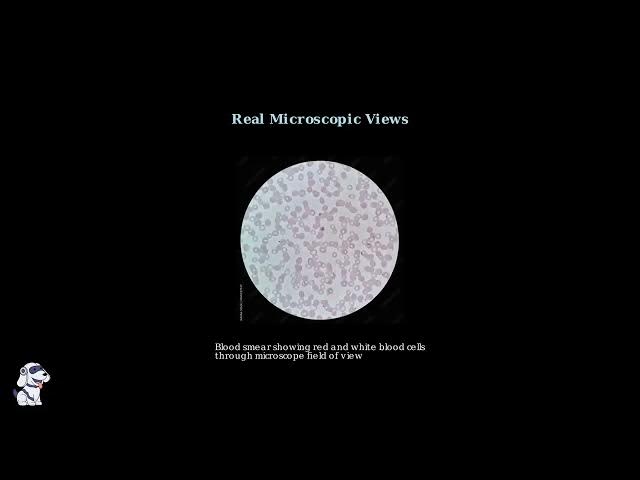
called mezzoids. This second image shows
9:49
a typical blood smear with numerous red
9:51
blood cells and a few white blood cells.
9:54
The circular field of view is what a
9:56
health care professional sees through
9:58
the microscope eyepiece. In this third
10:01
image, you can see red blood cells with
10:03
dark purple crescent-shaped inclusions,
10:05
which are characteristic of certain
10:07
malaria parasite stages. The scale bar
10:10
shows the microscopic size, just 10
10:12
micrometers.
10:14
Microscopy offers several key advantages
10:16
for malaria diagnosis. It is relatively
10:19
inexpensive, provides quick results
10:21
within 30 minutes, and allows health
10:24
care professionals to identify the
10:25
specific parasite species and estimate
10:28
parasite density. The key takeaways are
10:30
that microscopy remains the most common
10:33
diagnostic method for malaria worldwide.
10:35
It requires skilled technicians to
10:37
accurately identify parasites, but when
10:40
performed correctly, it provides
10:41
reliable, fast, and cost-effective
10:44
diagnosis that can save lives. Rapid
10:47
antigen tests provide a quick and
10:49
practical way to diagnose malaria,
10:51
especially in areas where microscopy
10:53
equipment isn't available. These tests
10:56
detect specific proteins produced by
10:58
malaria parasites. Unlike microscopy,
11:01
which looks for the actual parasites,
11:03
rapid antigen tests detect specific
11:05
proteins that malaria parasites produce.
11:08
These tests give results in just 15 to
11:10
20 minutes and don't require any special
11:13
equipment or training.
11:15
Rapid tests detect three main types of
11:17
antigens. HRP2 is specific to
11:20
Palsalaper, the deadliest malaria
11:22
species. PLLDH and Aldase are found in
11:25
all plasmodium species, making them
11:27
useful for detecting any type of malaria
11:29
infection. The test procedure is
11:32
straightforward. First, a small blood
11:34
sample is added to the test well. Then,
11:37
buffer solution is added to help the
11:39
sample flow through the test strip.
11:41
After waiting 15 minutes, the results
11:43
can be read. Here we see actual test
11:46
results. The left strip shows positive
11:49
results for both Palsiparum and P
11:51
Vivvax, while the right strip is
11:53
positive only for Palsiparum. The
11:56
control line must always appear to
11:57
confirm the test worked properly. Rapid
12:00
antigen tests have clear advantages.
12:02
They're quick, don't need special
12:04
equipment, and work well in remote
12:06
settings. However, they're less
12:08
sensitive than microscopy or PCR. can't
12:11
measure parasite levels and may miss
12:13
very low-level infections. Rapid antigen
12:16
tests are most valuable when microscopy
12:18
isn't available or when quick screening
12:21
is needed. They provide a practical
12:23
balance between speed and accuracy for
12:26
malaria diagnosis in many clinical
12:28
settings. When microscopy and rapid
12:30
tests aren't sensitive enough, we turn
12:32
to molecular diagnosis using PCR,
12:34
polymerase chain reaction. This powerful
12:37
technique can detect even the smallest
12:39
amounts of malaria parasite DNA in blood
12:42
samples. PCR stands for polymerase chain
12:45
reaction. It's a laboratory technique
12:48
that makes millions of copies of
12:49
specific DNA sequences, allowing us to
12:52
detect even tiny amounts of parasite
12:54
genetic material. Here's how PCR works
12:57
for malaria diagnosis. We start with a
13:00
blood sample that may contain tiny
13:02
amounts of parasite DNA so small that
13:05
other tests might miss it. Through
13:07
repeated heating and cooling cycles, PCR
13:09
creates millions of copies of the target
13:12
DNA sequence. Each cycle doubles the
13:14
amount of DNA, making even the smallest
13:17
traces detectable.
13:19
PCR is incredibly sensitive compared to
13:21
other diagnostic methods. While
13:24
microscopy needs 50 to 100 parasites per
13:27
microL of blood and rapid tests need 100
13:30
to 200, PCR can detect as few as 1 to
13:33
five parasites per microL.
13:36
PCR is particularly useful in several
13:39
situations when parasite levels are very
13:41
low, for confirming negative results
13:43
from other tests, in research and
13:46
surveillance programs, and for
13:48
identifying specific parasite species.
13:51
Here are the key takeaways about PCR for
13:53
malaria diagnosis. PCR detects parasite
13:57
DNA rather than the parasites
13:58
themselves. It's the most sensitive
14:01
diagnostic method available and can
14:03
detect very low parasite levels.
14:06
However, it takes longer and costs more
14:08
than other tests, making it essential
14:10
primarily for research and surveillance
14:12
programs. PCR represents the gold
14:14
standard for malaria diagnosis when
14:16
maximum sensitivity is required, helping
14:18
us detect infections that other methods
14:20
might miss.
14:23
When someone is diagnosed with malaria,
14:25
the next critical step is treatment with
14:27
antimmalarial drugs. These medications
14:30
are our primary weapons against the
14:32
malaria parasites that have invaded the
14:34
body. Antimalarial
14:36
drugs are classified based on their
14:38
mechanism of action and which stage of
14:41
the parasites life cycle they target.
14:44
Let's examine this classification system
14:46
to understand how different drugs work.
14:48
Blood schizonttoicidal drugs target
14:51
parasites in the blood stage providing
14:53
rapid symptom relief. Tissue
14:55
schizontides work in the liver to
14:57
prevent relapses. Gametocytocidal drugs
15:00
target the sexual forms to prevent
15:02
transmission. To understand how these
15:04
drugs work, let's look at a specific
15:06
example. Chloricquin was once the gold
15:09
standard treatment and its mechanism
15:11
shows us how antimmalarial drugs can
15:13
disrupt parasite survival. The parasite
15:15
digests hemoglobin to get amino acids
15:18
producing toxic hee as a byproduct.
15:20
Normally, the parasite converts this
15:22
heem into harmless hemazone crystals.
15:25
Chloricquin interferes with this process
15:27
causing toxic hee to accumulate and kill
15:29
the parasite. Different antimmalarial
15:32
drugs target parasites at various stages
15:35
of their development. Understanding
15:37
these stages helps doctors choose the
15:40
most effective treatment for each
15:42
patients specific situation. Today,
15:44
artemcanin based combination therapies
15:46
or acts are the gold standard for
15:49
treating falsiper malaria. These combine
15:52
arein derivatives with other
15:54
antimmalarial drugs for maximum
15:56
effectiveness. The choice of
15:57
antimmalarial drug depends on several
15:59
critical factors. Doctors must consider
16:02
the parasite species, infection
16:04
severity, patient age, and health
16:06
status, and local drug resistance
16:08
patterns to select the most appropriate
16:10
treatment.
16:12
Effective antimmalarial treatment
16:14
requires the right drug at the right
16:16
dose for the right duration. This
16:18
personalized approach ensures the best
16:20
outcomes while minimizing the risk of
16:23
treatment failure and drug resistance.
16:25
When treating malaria, doctors must
16:28
first determine whether the patient has
16:30
uncomplicated or complicated malaria, as
16:32
this determines the entire treatment
16:34
approach.
16:36
Uncomplicated malaria occurs when the
16:38
patient is conscious, able to take oral
16:41
medications, and shows no signs of
16:43
severe symptoms or organ damage. For
16:45
uncomplicated malaria, patients can be
16:48
treated at home with oral antimmalarial
16:50
medications, requiring only regular
16:52
monitoring to ensure recovery.
16:55
Complicated malaria is a medical
16:57
emergency characterized by severe
16:59
symptoms like impaired consciousness,
17:01
organ damage, severe anemia or breathing
17:04
difficulties. Complicated malaria
17:06
requires immediate hospitalization with
17:09
intravenous antimmalarial drugs and
17:11
intensive supportive care to prevent
17:13
death.
17:14
This table outlines the key principles
17:17
of malaria treatment showing how the
17:19
type and severity of infection
17:21
determines the therapeutic approach and
17:23
specific drugs used.
17:25
Different classes of antimmalarial drugs
17:27
are available from four aminoquinolines
17:30
like chloroquin to quinolene methanols
17:33
like mephloquin each with specific uses
17:35
depending on the malaria type and
17:37
resistance patterns. The key difference
17:40
is simple. Uncomplicated malaria can be
17:43
treated at home with oral medications,
17:45
while complicated malaria is a medical
17:47
emergency requiring immediate hospital
17:49
care with intravenous drugs and
17:51
intensive monitoring. Early recognition
17:54
and appropriate treatment selection can
17:57
mean the difference between a full
17:58
recovery and a life-threatening
18:00
situation. Drug resistance represents
18:02
one of the most serious threats to
18:04
malaria treatment worldwide. When
18:07
parasites develop the ability to survive
18:09
despite antimmalarial medications, our
18:12
most powerful weapons become less
18:14
effective. Drug resistance occurs when
18:16
malaria parasites change genetically,
18:19
allowing them to survive exposure to
18:21
antimmalarial drugs that would normally
18:23
kill them. This is a natural
18:25
evolutionary process that happens over
18:28
time. When exposed to antimmalarial
18:30
drugs, normal parasites are killed
18:32
effectively. However, resistant
18:34
parasites survive and continue to
18:36
multiply, passing their resistance genes
18:38
to their offspring. To understand where
18:41
resistance develops, we need to look at
18:43
the parasites life cycle in human blood.
18:46
Resistance typically emerges during the
18:48
blood stage when parasites are most
18:50
exposed to antimmalarial drugs. During
18:52
the blood stage, parasites multiply
18:54
rapidly inside red blood cells. This is
18:57
when they encounter antimmalarial drugs
18:59
circulating in the bloodstream.
19:01
Parasites that survive drug exposure can
19:04
develop genetic mutations that make them
19:06
resistant. Drug resistance is not just a
19:09
theoretical problem. It's happening
19:11
right now in real places around the
19:13
world. Southeast Asia has become a major
19:16
hot spot for antimmalarial drug
19:18
resistance. This map shows test sites
19:20
across Myanmar, Thailand, Laos,
19:23
Cambodia, and Vietnam, where researchers
19:25
have documented parasites that take
19:27
longer than 5 hours to clear from
19:29
patients blood. a key indicator of drug
19:32
resistance. Why is drug resistance so
19:34
dangerous? When our current
19:36
antimmalarial drugs stop working, we
19:38
face several serious consequences that
19:40
threaten global malaria control efforts.
19:43
Fortunately, there are strategies we can
19:45
use to combat drug resistance. The key
19:48
is using antimmalarial drugs wisely and
19:51
developing new treatments that can
19:52
overcome resistance. Combination therapy
19:55
uses multiple drugs together, making it
19:57
much harder for parasites to develop
19:59
resistance to all drugs simultaneously.
20:02
Meanwhile, researchers are working on
20:04
new antimmalarial compounds that can
20:06
overcome existing resistance mechanisms.
20:09
The challenge of drug resistance reminds
20:11
us that malaria parasites are constantly
20:14
evolving. Our response must be equally
20:16
dynamic, combining smart drug use,
20:19
continuous research, and global
20:21
cooperation to stay ahead of resistance.
20:24
Vector control is a crucial strategy in
20:26
malaria prevention that focuses on
20:28
controlling mosquito populations rather
20:31
than treating the disease after
20:32
infection. By reducing the number of
20:35
malaria carrying mosquitoes, we can
20:37
significantly decrease transmission
20:39
rates.
20:41
Indoor residual spraying or IRS involves
20:44
applying long lasting insecticides to
20:46
the walls and surfaces inside homes.
20:49
When mosquitoes land on these treated
20:51
surfaces to rest after feeding, they
20:53
absorb the insecticide and die. This
20:56
method provides protection for several
20:58
months and is particularly effective in
21:00
areas with high malaria transmission.
21:04
Eliminating mosquito breeding sites
21:06
targets the aquatic stages of the
21:08
mosquito life cycle. Female mosquitoes
21:11
lay their eggs in standing water where
21:13
they develop through laral and pupil
21:15
stages before becoming adults. By
21:18
removing or treating these water
21:19
sources, we can prevent mosquito
21:21
reproduction and reduce adult
21:23
populations.
21:25
Insecticide treated nets provide a
21:27
physical barrier between people and
21:29
mosquitoes during sleep when most
21:31
malaria transmission occurs. These nets
21:34
are treated with insecticides that kill
21:36
or repel mosquitoes on contact. They are
21:39
the most widely distributed vector
21:41
control tool worldwide and will be
21:43
covered in detail in our next section.
21:46
Vector control is most effective when
21:48
multiple methods are used together in an
21:51
integrated approach. Success depends on
21:54
community participation and regular
21:56
maintenance of control measures. By
21:59
targeting mosquito populations at
22:01
different stages of their life cycle and
22:03
in different environments, we can
22:05
significantly reduce malaria
22:07
transmission and protect communities
22:09
from this deadly disease. Insecticide
22:12
treated nets or ITNs are one of the most
22:15
effective tools we have for preventing
22:17
malaria. These are specially designed
22:20
bed nets that have been treated with
22:22
safe insecticides to provide double
22:24
protection against malaria carrying
22:25
mosquitoes.
22:27
ITNs work through a dual mechanism.
22:30
First, they act as a physical barrier,
22:32
preventing mosquitoes from reaching the
22:34
person sleeping underneath. Second, the
22:37
insecticide treatment kills or repels
22:39
mosquitoes that come into contact with
22:41
the net. Watch what happens when a
22:44
mosquito approaches an insecticide
22:46
treated net. The mosquito is either
22:48
killed on contact or repelled before it
22:50
can bite the sleeping person. Here we
22:54
can see real examples of insecticide
22:56
treated nets in use. Families sleep
22:59
peacefully under these nets protected
23:01
from malaria carrying mosquitoes
23:03
throughout the night. The effectiveness
23:05
of ITNs is well documented. Studies show
23:08
they can reduce malaria cases by up to
23:10
50% and child mortality by 20%.
23:14
To achieve maximum community protection,
23:16
health experts recommend at least 80%
23:19
coverage in malaria endemic areas.
23:22
To summarize, insecticide treated nets
23:25
are a simple yet powerful tool in the
23:27
fight against malaria. They work through
23:29
dual protection, are coste effective,
23:32
and when used communitywide can
23:34
dramatically reduce malaria
23:35
transmission. Remember, nets should be
23:38
replaced every 2 to 3 years to maintain
23:41
their effectiveness. Malaria vaccines
23:43
represent one of the most promising new
23:45
tools in our fight against this deadly
23:47
disease.
23:49
After decades of research, we now have
23:51
vaccines that can help protect people,
23:53
especially children, from malaria
23:55
infection. Unlike traditional prevention
23:58
methods that focus on avoiding mosquito
24:00
bites, malaria vaccines work by training
24:03
your immune system to recognize and
24:05
fight the malaria parasite before it can
24:07
make you sick. The most important
24:10
breakthrough is the RTSS vaccine, also
24:13
known as Mscurix. This is the world's
24:15
first malaria vaccine to be approved for
24:17
widespread use and is specifically
24:19
designed to protect against plasmodium
24:21
falsaparum, the deadliest malaria
24:23
parasite. As of March 2025, malaria
24:27
vaccines have been successfully rolled
24:29
out in childhood immunization programs
24:31
across 18 African countries. This
24:34
represents a major milestone in global
24:36
health with millions of children now
24:39
having access to this life-saving
24:40
protection. Healthare workers across
24:43
Africa are now trained to administer
24:45
these vaccines as part of routine
24:47
childhood immunization programs.
24:50
The vaccine is given in a series of four
24:52
doses starting when children are around
24:55
5 months old. While malaria vaccines are
24:57
a major breakthrough, it's important to
25:00
understand their effectiveness and
25:02
limitations. The RTSS vaccine provides
25:05
about 30 to 40% protection against
25:08
malaria in children, which means it
25:10
significantly reduces risk, but doesn't
25:13
provide complete protection. The future
25:15
of malaria vaccines looks promising.
25:18
Scientists are working on next
25:19
generation vaccines that could provide
25:22
better protection, including mRNA based
25:24
vaccines and combination approaches. The
25:27
goal is to develop vaccines that offer
25:29
longerlasting and more complete
25:31
protection against all forms of malaria.
25:33
Beyond communitywide vector control
25:36
programs and vaccines, there are
25:38
important individual protection measures
25:40
you can take to prevent malaria.
25:43
These personal protective steps focus on
25:45
preventing mosquito bites in the first
25:47
place. The first line of defense is
25:50
using insect repellent. Apply EPA
25:53
approved repellents containing DEE
25:55
picaridin or other active ingredients to
25:57
exposed skin and clothing. These
26:00
chemicals create a barrier that
26:01
mosquitoes find unpleasant significantly
26:04
reducing your chance of being bitten.
26:06
Protective clothing creates a physical
26:08
barrier between you and mosquitoes. Wear
26:11
long-sleeved shirts and long pants,
26:13
especially during peak mosquito activity
26:16
times. Choose light colored, loose-
26:18
fitting clothing as mosquitoes are
26:20
attracted to dark colors and can bite
26:23
through tight fitting clothes.
26:25
Timing matters when it comes to mosquito
26:27
protection. Anophles mosquitoes, which
26:30
transmit malaria, are most active during
26:32
dusk and dawn. Plan your outdoor
26:35
activities accordingly and stay indoors
26:37
during these peak biting times when
26:39
possible.
26:41
These individual protection measures
26:43
work by breaking the transmission cycle.
26:46
Malaria can only be transmitted when an
26:48
infected mosquito successfully bites
26:50
human skin and injects parasites into
26:53
the bloodstream. By repelling
26:54
mosquitoes, creating physical barriers,
26:57
and avoiding peak exposure times, you
26:59
significantly reduce this risk.
27:02
The key takeaway is that individual
27:05
protection measures are most effective
27:07
when used together. Combining insect
27:09
repellent, protective clothing, and
27:12
timing awareness provides the best
27:14
personal protection against malaria.
27:16
These individual measures work alongside
27:19
communitywide vector control and
27:21
vaccination programs to create
27:23
comprehensive malaria prevention.
27:25
Anti-laral measures are a crucial
27:27
strategy in malaria prevention.
27:30
Instead of waiting for mosquitoes to
27:32
become adults, we target them in their
27:34
laral stage when they're still
27:36
developing in water. To understand why
27:38
anti-laral measures work, we need to
27:40
look at the mosquito life cycle.
27:42
Mosquitoes go through four stages. Egg,
27:44
larvae, pupa, and adult. The key insight
27:47
is that the first three stages all
27:49
happen in water.
27:51
By targeting larve in their aquatic
27:53
environment, we can prevent them from
27:55
ever becoming biting adults. The first
27:57
and most important anti-larville measure
28:00
is source reduction, eliminating places
28:02
where mosquitoes can breed by draining
28:04
or removing standing water. Mosquitoes
28:07
can breed in surprisingly small amounts
28:09
of water. Common breeding sites around
28:11
homes include flower pots, buckets,
28:13
tires, clogged gutters, and even bottle
28:16
caps. The solution is simple, but
28:18
requires regular attention. Check your
28:21
property weekly and drain, cover, or
28:24
remove any containers that can hold
28:25
water. When water sources cannot be
28:27
eliminated, we can use larvides, special
28:30
insecticides designed to kill mosquito
28:32
larae without harming other aquatic
28:34
life. Common larvicides include BTI,
28:38
which is a naturally occurring bacteria
28:40
that specifically targets mosquito
28:42
larve, and methoprne, which prevents
28:44
larve from developing into adults. The
28:47
third approach is biological control
28:50
using natural predators to eat mosquito
28:52
larve. This is an environmentally
28:54
friendly method that works with nature's
28:56
own pest control system. Small fish like
28:59
guppies and gamboozia are excellent at
29:01
controlling mosquito larve. Just a few
29:04
fish in a water tank or pond can
29:06
eliminate thousands of larve each day.
29:08
Other biological control agents include
29:11
dragonfly nymphs, water beetles, and
29:13
certain bacteria. These natural
29:15
predators provide long-term control
29:17
without chemicals. Anti-laral measures
29:20
are highly effective because they break
29:22
the mosquito life cycle at its most
29:24
vulnerable stage. By combining source
29:27
reduction, larvicides, and biological
29:29
control, communities can dramatically
29:31
reduce mosquito populations. Remember,
29:34
anti-laral measures work best when
29:36
entire communities participate. Regular
29:39
inspection and maintenance of potential
29:41
breeding sites can significantly reduce
29:44
malaria transmission in your area.
29:46
Integrated malaria control programs
29:48
represent a comprehensive approach to
29:51
fighting malaria by combining multiple
29:53
strategies rather than relying on a
29:56
single method. Instead of using just one
29:59
method to fight malaria, integrated
30:01
programs combine multiple complimentary
30:03
strategies.
30:04
This creates a more powerful and
30:06
effective defense against the disease.
30:09
Integrated malaria control programs
30:11
focus on three main components. First,
30:14
vector control targets the mosquitoes
30:16
that spread malaria. Second, drug
30:18
treatment ensures infected people get
30:20
proper care. Third, health education
30:23
empowers communities with knowledge.
30:26
This diagram shows how vector control
30:28
uses multiple strategies simultaneously.
30:31
Each approach targets mosquitoes in
30:33
different ways, from bed nets and indoor
30:36
spraying to larvides and monitoring
30:38
programs. This comprehensive approach is
30:41
much more effective than any single
30:43
method alone. Here we see three key
30:45
interventions working together.
30:48
Artemisinbased combination therapy
30:50
provides highly effective treatment with
30:52
over 95% cure rates. Insecticide treated
30:56
bed nets protect people while they
30:58
sleep. Indoor residual spraying creates
31:00
protective barriers in homes. When
31:03
combined, these methods create multiple
31:05
layers of protection. Integration works
31:08
better for three key reasons. First, it
31:11
creates multiple barriers that
31:12
mosquitoes and parasites must overcome.
31:15
Second, it targets all stages of the
31:17
malaria life cycle simultaneously.
31:20
Third, it engages entire communities in
31:22
the solution, making everyone part of
31:24
the defense against malaria. However,
31:27
integrated programs face important
31:29
challenges. Coordination between
31:31
multiple agencies and sectors can be
31:34
complex. Sustained funding is needed for
31:36
all components simultaneously and
31:39
monitoring systems must track the
31:40
effectiveness of multiple interventions
31:42
at once. The key takeaways are clear.
31:46
Integrated malaria control programs
31:48
combine vector control, drug treatment,
31:50
and health education for maximum impact.
31:53
Multiple strategies working together
31:55
create a much stronger defense than any
31:57
single approach. Success requires
32:00
careful coordination, sustained funding,
32:03
and active community engagement. These
32:05
integrated programs represent the gold
32:07
standard for effective malaria control
32:09
worldwide. India's national malaria
32:12
control program represents one of the
32:14
world's most comprehensive efforts to
32:16
eliminate malaria. This government
32:19
initiative combines multiple strategies
32:21
to achieve an ambitious goal, zero
32:24
indigenous malaria cases by 2027. To
32:27
understand the scope of India's
32:29
challenge, we need to look at the
32:30
geographic distribution of malaria risk
32:33
across the country. Different regions
32:36
face varying levels of transmission
32:38
requiring tailored control strategies.
32:41
The national malaria control program
32:43
operates on three main pillars. First is
32:46
vector control, managing mosquito
32:48
populations through various methods.
32:51
Second is effective drug treatment for
32:53
all malaria cases. Third is health
32:55
education to empower communities with
32:57
knowledge. Vector control is the
32:59
cornerstone of malaria prevention. India
33:02
employs multiple strategies
33:03
simultaneously from traditional indoor
33:06
spraying to innovative larvicide
33:08
treatments.
33:10
Each method targets different stages of
33:12
the mosquito life cycle. Effective
33:14
treatment protocols are essential for
33:16
saving lives and preventing
33:18
transmission. India follows WHO
33:20
recommended areaninbased combination
33:23
therapies with specific dosing schedules
33:25
for different age groups and parasite
33:27
species. India's malaria control efforts
33:30
have evolved significantly over the past
33:33
two decades from the national health
33:35
policy in 2002 to the establishment of
33:39
specialized vectorbor disease control
33:41
programs. Each milestone has
33:43
strengthened the country's response
33:45
capabilities. India's national malaria
33:47
control program demonstrates how
33:49
comprehensive science-based strategies
33:52
can achieve remarkable results through
33:55
integrated vector control, effective
33:57
treatment protocols and community
33:59
engagement. India is on track to become
34:01
malari free within this decade. The roll
34:04
back malaria initiative represents one
34:06
of the most ambitious global health
34:08
partnerships ever launched. This
34:11
groundbreaking initiative emerged from
34:12
the recognition that malaria was
34:14
claiming far too many lives worldwide.
34:18
In 1998, the roll back malaria
34:21
initiative was launched through
34:23
unprecedented international
34:25
collaboration. This partnership brought
34:27
together governments, international
34:29
organizations, non-governmental
34:31
organizations, and the private sector
34:34
with a shared mission. The initiative
34:37
set an incredibly ambitious goal to
34:39
reduce the global burden of malaria by
34:42
50% by the year 2010. This meant cutting
34:45
malaria cases and deaths in half within
34:47
just 12 years.
34:50
One of the initiative's greatest
34:52
successes was raising global awareness
34:54
about malaria. Through World Malaria Day
34:57
campaigns, public health education, and
34:59
community engagement programs, the
35:01
initiative brought malaria into the
35:03
spotlight like never before.
35:06
The initiative successfully mobilized
35:09
unprecedented resources for malaria
35:11
control. Funding flowed from
35:13
governments, non-governmental
35:14
organizations, the private sector, and
35:17
international organizations into a
35:19
coordinated effort against malaria.
35:22
While the roll back malaria initiative
35:24
made significant progress, it did not
35:26
achieve its original goal of reducing
35:28
the global malaria burden by 50% by
35:32
2010. However, this doesn't diminish the
35:35
initiative's important contributions.
35:39
Despite not reaching its numerical
35:41
target, the roll back malaria initiative
35:43
created a lasting positive impact. It
35:46
raised global awareness, mobilized
35:49
billions in funding, strengthened health
35:51
systems, built crucial international
35:53
partnerships, and laid the groundwork
35:55
for all future malaria control efforts.
35:58
The roll back malaria initiative
36:00
demonstrated that ambitious global
36:02
health goals, even when not fully
36:04
achieved, can catalyze meaningful
36:06
progress and create the foundation for
36:08
continued success in the fight against
36:10
malaria. Despite decades of progress in
36:13
malaria control, we face several
36:15
critical challenges that threaten our
36:17
efforts. The first major challenge is
36:20
antimmalarial drug resistance,
36:22
particularly to areanin based
36:24
treatments. The second major challenge
36:26
is insecticide resistance in mosquitoes.
36:30
As we've used the same insecticides for
36:32
decades, mosquitoes have evolved
36:34
multiple mechanisms to survive these
36:36
chemicals. Current malaria vaccines face
36:38
significant limitations. While we have
36:41
made progress, existing vaccines provide
36:43
only partial protection and work for
36:46
limited age groups. Climate change poses
36:48
a growing threat to malaria control
36:50
efforts. Rising temperatures and
36:52
changing rainfall patterns are altering
36:54
mosquito habitats and expanding malaria
36:57
transmission to new regions.
37:00
Finally, we face critical funding
37:02
shortfalls. The World Health
37:03
Organization warns that current funding
37:05
is insufficient to maintain basic
37:08
malaria services, let alone achieve
37:10
elimination goals. These interconnected
37:13
challenges require urgent coordinated
37:15
action. Success in malaria control
37:17
depends on addressing drug and
37:19
insecticide resistance, improving
37:21
vaccines, adapting to climate change,
37:23
and securing adequate funding for
37:26
comprehensive control programs. Fighting
37:28
malaria effectively requires
37:30
comprehensive prevention strategies. No
37:33
single approach is enough. We need
37:35
multiple layers of protection working
37:37
together to create a strong defense
37:40
against this deadly disease.
37:42
Environmental management is the first
37:44
pillar of comprehensive prevention. This
37:47
involves eliminating mosquito breeding
37:49
sites around our homes and communities.
37:52
Standing water in gutters, containers,
37:54
and neglected areas provides perfect
37:56
breeding grounds for mosquitoes.
37:59
Personal protection measures form the
38:01
second pillar. These include using
38:03
insect repellents containing deep on
38:05
exposed skin and sleeping under
38:07
insecticide treated bed nets every
38:09
night. These create a personal barrier
38:12
against mosquito bites.
38:14
A comprehensive approach works because
38:17
it creates multiple layers of defense.
38:19
Environmental management reduces the
38:22
mosquito population while personal
38:24
protection blocks the remaining
38:25
mosquitoes from biting. Together, they
38:28
provide maximum protection that neither
38:30
strategy could achieve alone. When
38:33
mosquitoes encounter these layered
38:35
defenses, they face multiple obstacles.
38:38
First, fewer breeding sites mean fewer
38:40
mosquitoes. Then, repellants and bed
38:42
nets block those that remain. This
38:45
comprehensive strategy dramatically
38:47
reduces malaria transmission.
38:50
The key takeaways are clear.
38:52
Comprehensive prevention strategies
38:54
combining environmental management with
38:56
personal protection measures provide the
38:58
strongest defense against malaria.
39:00
Consistent application of multiple
39:02
approaches creates layered protection
39:05
that dramatically reduces transmission
39:07
risk for individuals and communities.
39:11
Fight against malaria has reached a
39:13
critical point. Despite decades of
39:15
progress, current tools and strategies
39:17
are not sufficient to achieve
39:19
elimination. We need breakthrough
39:21
innovations to overcome existing
39:23
challenges. Innovation is needed across
39:26
four key areas. First, new antimmalarial
39:29
drugs like triple artsin based
39:31
combination therapies to combat
39:33
resistance. Second, advanced diagnostics
39:36
for rapid and precise detection. Third,
39:38
next generation vaccines using
39:40
cuttingedge technology. And fourth,
39:42
smart vector control solutions.
39:45
mRNA vaccines represent the most
39:47
promising breakthrough in malaria
39:48
prevention.
39:50
Just like CO 19 mRNA vaccines, these use
39:53
messenger RNA to instruct cells to
39:55
produce malaria antigens, triggering a
39:57
strong immune response. mRNA malaria
40:00
vaccines offer several key advantages
40:03
over traditional vaccines. They provide
40:05
improved efficacy, longerlasting
40:07
protection, and greater scalability.
40:10
They can be developed faster, and
40:12
produced more cost effectively than
40:13
conventional vaccines.
40:16
Let's compare current malaria vaccines
40:18
with next generation candidates. The
40:20
RTSS vaccine reduces disease burden in
40:23
children while newer vaccines like PFSPZ
40:26
aim to prevent infection entirely across
40:28
all age groups.
40:30
Vector control is also being
40:32
revolutionized through innovation.
40:34
Traditional methods like bed nets and
40:36
spraying are being enhanced with
40:38
cuttingedge technologies.
40:40
Exciting innovations include genetically
40:42
modified mosquitoes with gene drives,
40:44
smart traps powered by artificial
40:46
intelligence, novel insecticides that
40:49
overcome resistance, sterile insect
40:51
techniques, and biological control
40:54
agents.
40:58
However, innovation alone is not enough.
41:01
Success requires integrating new
41:02
technologies with existing proven
41:04
interventions. We need mRNA vaccines
41:07
combined with bed nets and drug
41:09
treatment, smart diagnostics linked to
41:11
rapid response systems, and novel vector
41:14
control integrated with community
41:16
engagement.
41:17
The equation is clear. Innovation plus
41:20
integration equals elimination. The
41:23
future of malaria control depends on
41:24
breakthrough technologies, smart
41:26
integration strategies, sustained
41:28
investment, and global collaboration.
41:31
With these innovations, malaria
41:33
elimination is within our reach. The
41:35
World Health Organization is calling for
41:37
urgent revitalized efforts to accelerate
41:40
progress toward malaria elimination.
41:42
The fight against malaria has stalled
41:45
and we need renewed commitment at every
41:47
level. The theme for World Malaria Day
41:50
2025 captures this urgency. Malaria ends
41:53
with us. This powerful message reminds
41:56
us that ending malaria requires
41:57
collective action from every person,
42:00
community, and nation. This theme is
42:02
built on three essential pillars. First,
42:05
we must reinvest. Dramatically increase
42:08
funding and financial commitment to
42:09
malaria programs. Current funding falls
42:12
far short of what's needed. Second, we
42:14
must reimagine our approach. This means
42:16
developing innovative strategies, new
42:19
tools, and creative solutions. We need
42:21
next generation vaccines, better
42:23
diagnostics, and novel vector control
42:26
methods. Third, we must reignite
42:28
political will and community engagement.
42:30
Leaders at every level must prioritize
42:33
malaria elimination and communities must
42:36
be empowered to take action.
42:38
The challenge is enormous. In 2023,
42:41
there were 263 million malaria cases and
42:44
597,000
42:46
deaths. 95% of all cases occur in
42:49
Africa, where the disease continues to
42:51
devastate communities and families.
42:54
Ending malaria truly requires everyone.
42:57
Governments must fund comprehensive
42:59
programs. Healthare workers must
43:01
diagnose and treat patients effectively.
43:04
Communities must use prevention tools
43:06
like bed nets and vaccines. Individuals
43:09
must protect themselves and their
43:10
families. Researchers must continue
43:13
developing new tools and strategies.
43:16
Organizations worldwide must support and
43:18
coordinate these efforts. The time for
43:21
action is now. Malaria elimination is
43:24
absolutely possible, but only with
43:26
renewed commitment from every one of us.
43:28
Together, we can ensure that malaria
43:31
truly ends with us.
#Health Conditions
#Infectious Diseases
#Public Health