live_tv
Livestream Starting Soon
00
Hours
:
00
Minutes
:
00
Seconds
Up next in 10


Feedback Mechanisms Explained
Welcome to our detailed exploration of feedback mechanisms! In this video, we aim to clarify what feedback mechanisms are and how they function within various systems. From ecological environments to technological innovations, feedback loops play a crucial role in regulating processes and ensuring balance. We will examine both positive and negative feedback, providing clear examples to illustrate their effects. This video is designed for students, professionals, and anyone interested in understanding the dynamics of feedback in systems. Tune in to enhance your knowledge and engage with us in the comments!
#SystemDynamics #FeedbackLoops #EducationalContent
Website: https://biologynotesonline.com/
Facebook: https://www.facebook.com/biologynotesonline
Instagram: https://www.instagram.com/biologynotesonline/?hl=en
negative feedback,feedback mechanism,positive feedback,negative feedback mechanism,positive feedback mechanism,feedback,negative feedback loop,feedback mechanisms,feedback mechanism class 10,feedback mechanism cbse,positive feedback loop,feedback mechanism mdcat,mdcat feedback mechanism,cortisol feedback loop explained,feedback mechanism nmdcat,nmdcat feedback mechanism,feedback mechanism definition,feedback mechanism mdcat 2022
Show More Show Less View Video Transcript
0:00
welcome to our introduction to feedback mechanisms feedback mechanisms are regulatory systems that respond to
0:06
changes in an environment or process at their core all feedback mechanisms
0:11
follow the same basic pattern they detect a change process the information and then respond accordingly these
0:18
mechanisms operate in a continuous cycle constantly monitoring and adjusting to maintain balance feedback mechanisms are
0:25
found in diverse domains beyond biology including technology economics and social systems these regulatory systems
0:32
are fundamental to maintaining stability enabling essential life processes helping systems adapt to changes and
0:39
preventing system failure in summary feedback mechanisms are essential components of virtually all stable
0:46
functional systems from the human body to complex technological and social structures
0:53
homeostasis is the maintenance of stable internal conditions necessary for an organism's survival this stability of
1:00
internal conditions is crucial even when the external environment underos significant changes the external
1:06
environment constantly changes temperature fluctuates pH levels vary and nutrient availability shifts despite
1:14
these external changes organisms maintain stable internal conditions through feedback mechanisms
1:20
let's look at three key examples of homeostasis in the human body body temperature is maintained around 37° C
1:28
even in varying environmental temperatures blood pH is tightly regulated between 7.35 and 7.45 which is
1:36
critical for enzyme function and oxygen transport blood glucose levels are maintained between 70 and 100 mg per
1:43
deciliter ensuring a constant energy supply to cells homeostasis is vital for
1:49
multiple reasons it ensures proper cell function optimal enzyme activity efficient metabolic processes and
1:56
ultimately survival in changing environments negative feedback is a
2:02
mechanism that counteracts or reverses changes to restore equilibrium in a system when a variable moves away from
2:09
its set point negative feedback works to bring it back negative feedback has several key characteristics that make it
2:16
essential for biological systems a typical negative feedback loop consists of three main components a sensor that
2:23
detects changes a control center that processes the information and anector
2:28
that responds to correct the deviation negative feedback promotes stability and
2:33
is the more common type in biological systems serving as the primary mechanism for maintaining homeostasis in living
2:40
organisms let's examine the process of negative
2:45
feedback which is fundamental to maintaining homeostasis in biological systems negative feedback operates as a
2:52
cycle with four key steps that work together to counteract changes and maintain stability let's break down
2:58
these four steps of the negative feedback process step one a stimulus creates change this occurs when a
3:05
regulated variable deviates from its normal range or set point step two receptors detect this change specialized
3:12
sensory receptors monitor the variable and identify when it moves away from the ideal range step three a control center
3:20
processes this information this could be the brain endocrine glands or other regulatory systems that interpret
3:27
signals from the receptors step four aectors produce a response that counteracts the initial change this
3:33
critical step returns the variable back toward its normal range this completes the negative feedback
3:39
loop the process continues cyclically to maintain homeostasis with the aector
3:44
response reducing the initial stimulus the key characteristic of negative feedback is that it opposes or negates
3:52
changes which is essential for maintaining stable internal
3:57
conditions positive feedback loops amplify changes within a system pushing it away from its initial state the
4:04
process of positive feedback follows four distinct steps step one a stimulus
4:10
creates an initial change in the system step two unlike negative feedback the system responds by amplifying this
4:16
change rather than counteracting it step three the amplified change triggers even
4:21
further amplification intensifying the original deviation step four this cycle
4:27
continues with each iteration increasing the magnitude of the response until an end point or limit is finally reached
4:34
this escalating cycle creates a reinforcing loop pushing the system further and further from its original
4:40
state unlike negative feedback which maintains stability positive feedback amplifies change in the same direction
4:47
as the initial stimulus positive feedback loops can be found in many biological processes including blood
4:54
clotting childirth contractions and fruit ripening an important characteristic of positive feedback is
5:01
that it must have an end point without a stopping mechanism the system would continue to amplify until it overloads
5:08
or breaks down the human body maintains its temperature through a highly effective
5:15
negative feedback system temperature is detected by two types of receptors
5:20
thermo receptors in your skin that sense external temperature changes and receptors in your hypothalamus that
5:27
monitor your internal body temperature this temperature information is sent to the brain specifically the hypothalamus
5:34
which acts as your body's thermostat the hypothalamus compares your current body
5:40
temperature to the normal set point of approximately 37°
5:45
if your body temperature is too high the brain activates cooling mechanisms sweat glands produce sweat to cool the skin
5:52
through evaporation and blood vessels dilate to bring warm blood to the surface where heat can be released
5:59
conversely if your body temperature is too low the brain triggers warming mechanisms muscles rapidly contract
6:06
causing shivering to generate heat and blood vessels constrict to keep warm blood closer to vital organs these
6:13
responses continue until body temperature returns to normal completing the negative feedback loop this
6:20
stabilizing mechanism ensures that your core temperature stays within the narrow range needed for optimal biological
6:28
function body temperature regulation exemplifies the key characteristics of negative feedback systems it counteracts
6:35
deviations from normal is self-limiting and maintains stability through opposing responses this temperature regulation
6:43
system is a perfect example of how negative feedback mechanisms are essential for maintaining homeostasis in
6:49
biological systems blood glucose regulation is a
6:55
critical example of negative feedback in the human body our body maintains blood glucose within a narrow range typically
7:02
between 70 and 99 mg per deciliter when fasting the pancreas is the key organ in
7:09
this regulatory system containing specialized cells that respond to changing glucose levels when blood
7:15
glucose levels rise after a meal beta cells in the pancreas detect this increase in response these cells release
7:22
the hormone insulin into the bloodstream insulin acts as a key allowing cells
7:27
throughout the body to absorb glucose from the blood additionally insulin signals the liver to convert excess
7:34
glucose into glycogen for storage these combined actions reduce blood glucose levels bringing them back to the normal
7:41
range conversely when blood glucose levels fall below normal alpha cells in the pancreas take action these cells
7:49
release a different hormone called glucagon glucagon signals the liver to break down stored glycogen into glucose
7:56
the liver then releases this glucose into the bloodstream this process raises
8:01
blood glucose levels back to the normal range this continuous balance between insulin and glucagon forms a negative
8:08
feedback loop that keeps blood glucose levels stable when this regulatory system fails conditions like diabetes
8:15
can develop in type 1 diabetes the pancreas cannot produce enough insulin
8:20
in type two diabetes cells become resistant to insulin's effects this elegant negative feedback system
8:26
demonstrates how the body maintains homeostasis keeping critical parameters like blood glucose within the narrow
8:32
range necessary for proper cellular function fruit ripening provides an
8:40
excellent example of a positive feedback loop in biological systems as fruit ripens it underos various changes in
8:47
color texture and chemical composition a key component of this process is the production of ethylene gas a plant
8:54
hormone that triggers and accelerates ripening what makes fruit ripening a positive feedback process is that as
9:01
fruit begins to ripen it produces ethylene which triggers even more ripening this creates a circular process
9:08
where more ripening leads to more ethylene production which in turn leads to even more ripening this positive
9:15
feedback mechanism explains the famous saying that one bad apple spoils the bunch when one apple in a group begins
9:22
to overripen it releases large amounts of ethylene gas this ethylene triggers ripening in the surrounding fruit as the
9:29
surrounding apples ripen they too produce more ethylene creating a cascade effect that accelerates ripening
9:36
throughout the entire bunch from an evolutionary perspective this positive feedback system ensures that fruits
9:43
ripen fully and simultaneously which has important benefits for seed dispersal
9:48
when fruit is optimally ripe it becomes more attractive to animals through changes in color sweetness aroma and
9:55
texture animals that eat the ripe fruit help disperse the seeds through their digestive systems depositing them in new
10:02
locations with their droppings the synchronized ripening triggered by the positive feedback loop ensures that
10:08
seeds are dispersed at the optimal time when they're fully developed and ready to germinate in a new
10:15
location fruit ripening is thus a perfect example of how positive feedback mechanisms in nature can serve important
10:22
biological functions in this case ensuring effective seed dispersal and plant reproduction the menstrual cycle
10:29
is regulated by a complex interplay of hormones governed by both positive and negative feedback
10:35
mechanisms the menstrual cycle consists of several phases the menstrual phase
10:41
follicular phase ovulation and ludial phase the menstrual cycle is controlled
10:46
by a hormonal axis involving the hypothalamus pituitary gland and ovaries
10:51
the hypothalamus releases G&R which stimulates the pituitary to produce FSH
10:56
and LH these hormones then act on the ovaries which produce estrogen and progesterone during most of the
11:02
menstrual cycle hormone regulation follows negative feedback loops during the follicular phase as estrogen levels
11:10
rise they inhibit G&R from the hypothalamus and FSH from the pituitary
11:15
this negative feedback prevents excessive follicle development this negative feedback system helps maintain
11:21
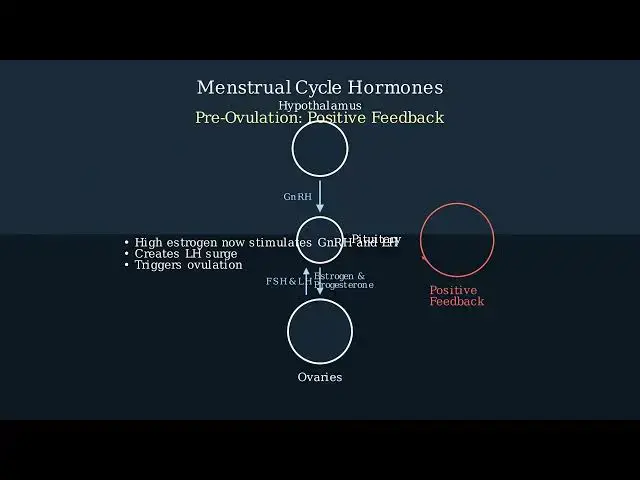
homeostasis throughout most of the cycle however just before ovulation the
11:27
hormonal regulation shifts to a positive feedback loop at this stage high estrogen levels no longer inhibit but
11:34
instead stimulate G&RH release this causes a surge in LH production creating
11:39
a positive feedback loop this rapid increase in LH triggers ovulation releasing the egg from the follicle it's
11:46
a perfect example of a positive feedback mechanism in the human body throughout the menstrual cycle
11:53
hormone levels fluctuate in a coordinated pattern fsh rises early in the cycle to stimulate follicle
11:59
development while estrogen gradually increases peaking just before ovulation the LH surge around day 14 demonstrates
12:07
positive feedback where high estrogen stimulates a rapid LH release triggering ovulation after ovulation progesterone
12:15
becomes dominant during the lutal phase and all hormones return to baseline levels by the end of the cycle if
12:21
pregnancy doesn't occur negative feedback dominates most of the cycle controlling hormone levels and
12:28
preventing excess stimulation the brief period of positive feedback is crucial for triggering ovulation through the LH
12:35
surge the menstrual cycle demonstrates how both feedback types work together in
12:40
biological systems negative feedback maintains stability during most of the
12:45
cycle while a brief positive feedback event triggers the critical process of
12:51
ovulation predator prey relationships represent one of nature's clearest examples of negative feedback mechanisms
12:58
in this relationship two populations predators and prey affect each other's numbers through a continuous
13:06
cycle the cycle begins when prey populations are abundant this abundance
13:11
of food causes predator populations to increase as predators become more numerous they consume more prey causing
13:18
prey populations to decline with less prey available as food predator populations begin to decrease fewer
13:25
predators mean less hunting pressure allowing prey populations to recover and increase with fewer predators in the
13:31
ecosystem prey can reproduce more successfully and the cycle continues as
13:37
prey abundance triggers predator growth once again this relationship can be
13:42
visualized as population cycles over time note how the predator population curve follows the prey population curve
13:49
with a delay the green line represents prey population while the blue line represents predator population high prey
13:56
predators increase prey decreasing predators peak low prey predators decrease prey recovering few predators a
14:04
classic realworld example is the lynx and snowshoe hair cycle in Canada which repeats approximately every 10 years as
14:11
the two populations rise and fall in response to each other this negative feedback relationship helps maintain
14:18
balance in ecosystems over long periods preventing both predator and prey populations from growing
14:25
unchecked let's examine the key differences between negative and positive feedback mechanisms
14:31
negative and positive feedback systems serve fundamentally different purposes in biological
14:37
systems negative feedback creates a circular pattern that restores balance while positive feedback amplifies
14:44
changes in a reinforcing cycle the primary purpose of negative feedback is to maintain stability and homeostasis in
14:52
contrast positive feedback creates rapid change and amplification negative feedback counteracts changes to return
14:58
to a set point while positive feedback amplifies deviations away from the initial state this makes negative
15:05
feedback self-limiting creating stability while positive feedback is self-amplifying creating escalating
15:12
responses common examples of negative feedback include temperature regulation
15:17
and blood glucose control positive feedback is seen in blood clotting and childirth contractions now let's explore
15:24
why negative feedback is more prevalent in biological systems in biological systems negative feedback mechanisms are
15:31
significantly more common representing approximately 75% of feedback systems
15:37
negative feedback dominates biological systems because stability is usually advantageous for survival it maintains
15:44
critical homeostatic parameters and prevents dangerous physiological extremes this creates a stable internal
15:51
environment for cellular functions and buffers organisms against external environmental changes evolution has
15:58
favored negative feedback mechanisms for maintaining the consistent internal conditions needed for complex
16:04
multisellular life the endocrine system relies heavily
16:10
on feedback mechanisms to maintain homeostasis through hormonal regulation the hypothalamus and pituitary gland
16:17
work together to control target glands like the thyroid and adrenal
16:23
glands the thyroid hormone regulation is a classic example of negative feedback
16:28
the hypothalamus releases thyrorotropen releasing hormone or TR which stimulates the pituitary to release thyroid
16:35
stimulating hormone or TSH tsh stimulates the thyroid gland to produce
16:40
thyroid hormones T3 and T4 when thyroid hormone levels rise they inhibit both
16:45
the hypothalamus and pituitary reducing TR and TSH production this negative
16:51
feedback maintains thyroid hormone at optimal levels cortisol regulation occurs
16:58
through the hypothalamic pituitary adrenal axis or HPA axis the hypothalamus secretes corticotropen
17:04
releasing hormone or CR which stimulates the pituitary to release adreninocorticotropic hormone or ACT act
17:12
stimulates the adrenal cortex to produce cortisol rising cortisol levels then inhibit the hypothalamus and pituitary
17:19
reducing CR and ACT production through negative feedback maintaining optimal cortisol
17:27
levels growth hormone regulation involves multiple feedback mechanisms the hypothalamus releases growth hormone
17:34
releasing hormone or GHR which stimulates the pituitary to release growth hormone or GH growth hormone
17:41
stimulates the liver to produce insulin-like growth factor 1 or IGF-1
17:46
rising IGF-1 levels then trigger the hypothalamus to release somatin which inhibits growth hormone
17:56
release to summarize the endocrine system relies heavily on negative feedback loops to maintain hormone
18:02
levels within optimal ranges most hormones inhibit their own production pathways once they reach sufficient
18:08
levels the hypothalamus pituitary axis serves as the control center for most
18:14
endocrine glands ensuring the body maintains
18:20
homeostasis the nervous system uses complex feedback mechanisms to maintain balance and respond to changes the
18:27
nervous system relies on two key feedback mechanisms excitation and inhibition excitatory feedback amplifies
18:34
neural signals increasing activity in a pathway inhibitory feedback reduces neural signals dampening
18:41
activity reflexes represent one of the simplest feedback loops in the nervous system in a reflex arc sensory receptors
18:49
detect a stimulus and send signals through sensory neurons to interneurons in the spinal cord the inter neurons
18:56
relay the signal to motor neurons which activate aector organs like muscles to produce a response this creates a
19:03
negative feedback loop that automatically adjusts the response without conscious
19:08
thought beyond simple reflexes the nervous system uses complex feedback networks for higher
19:15
functions lateral inhibition is a key example of neural feedback when one neuron is activated it inhibits its
19:22
neighbors this creates contrast enhancement in sensory processing sharpening our perception of edges and
19:29
boundaries to summarize neural feedback mechanisms occur at all levels of the nervous
19:35
system from simple reflexes to complex cognitive networks both simple reflexes
19:40
and complex networks rely on feedback for proper functioning this enables the nervous system to adapt learn and
19:47
maintain stability feedback mechanisms are
19:52
fundamental to technological systems adapting principles found in biological systems technological feedback systems
20:00
like their biological counterparts consist of three key components sensors processors and aectors sensors detect
20:07
changes in the environment or system processors analyze this information and make decisions aectors then respond by
20:15
making adjustments to the system a home thermostat is a classic example of
20:20
negative feedback in technology the thermometer constantly monitors room temperature the control circuit compares
20:26
the measured temperature with the desired set point when the temperature deviates from the set point the heating
20:33
or cooling system activates this creates a negative feedback loop as the system works to
20:39
counteract any deviation from the set point maintaining a stable
20:44
temperature cruise control in cars is another example of negative feedback the
20:50
speedometer constantly monitors the vehicle's speed the car's computer compares actual speed with the set speed
20:57
the throttle control then adjusts engine power to maintain the desired speed this
21:02
negative feedback system automatically compensates for hills wind resistance or
21:07
other factors that would otherwise change the car's speed automated manufacturing systems
21:13
incorporate both negative and positive feedback loops quality control systems use negative feedback to detect and
21:20
correct defects meanwhile process optimization systems use positive feedback to identify successful
21:26
operations and amplify them continuously improving efficiency technological feedback
21:33
systems parallel their biological counterparts using similar components to achieve control and stability where
21:40
biological systems use receptors and nerve endings as sensors technological systems employ devices like thermometers
21:47
and cameras the brain and glands process information in biological systems while
21:52
computers and circuits serve this function in technology finally muscles and organs act as biological aectors
22:00
compared to motors and valves in technological systems climate systems involve complex
22:06
feedback loops that can either amplify or mitigate the effects of climate change
22:13
climate feedback loops occur when outputs of a climate system become inputs that further affect the system
22:19
these can either amplify change through positive feedback or dampen it through negative
22:26
feedback ice albido feedback is a positive feedback loop in the climate system as global temperatures rise ice
22:33
melts exposing darker land and water surfaces these darker surfaces absorb more solar radiation than reflective ice
22:41
causing more warming and more ice melt this creates a self-reinforcing cycle that amplifies the initial
22:48
warming the carbon cycle demonstrates a negative feedback loop in climate systems as carbon dioxide levels
22:56
increase in the atmosphere plant growth can be enhanced these plants absorb more
23:01
carbon dioxide through photosynthesis storing carbon in biomass and soil this
23:06
process can partially counteract the increasing atmospheric carbon dioxide demonstrating a negative feedback that
23:12
stabilizes the system understanding feedback loops is essential in climate science these
23:20
systems can lead to tipping points where small changes trigger large scale potentially irreversible shifts in
23:27
climate patterns climate models must incorporate multiple interconnected feedback mechanisms operating
23:33
simultaneously the complexity of these systems means that small changes can cascade and
23:39
amplify through the climate system highlighting the importance of early
23:45
intervention to summarize climate systems contain both positive and negative feedback loops positive
23:52
feedbacks like the ice albido effect amplify changes and can accelerate climate change negative feedbacks like
23:59
certain aspects of the carbon cycle can dampen and stabilize the system the
24:04
balance between these opposing forces is crucial for understanding and predicting future climate
24:13
patterns when feedback mechanisms fail critical biological systems become disregulated in normal feedback systems
24:20
sensors detect changes control centers process information and aectors respond
24:25
appropriately however when feedback mechanisms fail the system breaks down this often occurs at the control center
24:33
or the aector response when feedback mechanisms fail homeostasis is disrupted
24:38
leading to various disease states diabetes is a prime example of feedback failure in normal glucose
24:45
regulation the pancreas detects high blood glucose and releases insulin insulin signals body cells to take up
24:52
glucose from the bloodstream reducing blood glucose levels in a classic negative feedback loop
24:59
in diabetes this feedback loop breaks down there are two main types of diabetes each representing a different
25:06
failure point in the feedback mechanism in type 1 diabetes the pancreas fails to
25:11
produce sufficient insulin the control center itself is damaged often due to autoimmune destruction of insulin
25:18
producing cells in type 2 diabetes the body's cells become resistant to insulin
25:23
signals despite normal or even increased insulin production the aectors fail to
25:28
respond properly both types result in chronically elevated blood glucose causing damage to blood vessels nerves
25:35
and organs over time cancer provides another clear example of feedback
25:40
failure in normal cells multiple checkpoints control cell division these
25:46
checkpoints verify DNA integrity and ensure cells only divide when necessary
25:51
they act as a negative feedback system to prevent excessive proliferation in cancer genetic
25:57
mutations disable these checkpoint systems the negative feedback that normally prevents excessive cell
26:03
division fails without functional checkpoints cells proliferate uncontrollably forming tumors and
26:10
potentially spreading throughout the body understanding how feedback mechanisms
26:16
fail is crucial for developing effective medical treatments for diabetes
26:21
treatment strategies aim to restore proper glucose regulation insulin therapy directly replaces the missing
26:28
feedback signal in type 1 diabetes for cancer modern targeted therapies aim to
26:33
restore cellular growth control by inhibiting specific pathways that have lost their normal regulatory function
26:40
the key principle in treating feedback disorders is to either restore the regulatory mechanisms or compensate for
26:46
their absence with external interventions feedback mechanisms have
26:53
evolved over billions of years becoming increasingly sophisticated as organisms
26:58
adapted to diverse environments early single-sellled organisms developed primitive feedback mechanisms around 4
27:04
billion years ago these simple systems regulated basic cellular processes like
27:10
metabolism as ukareotic cells evolved their compartmentalized structure allowed for more complex multiple
27:17
feedback systems controlling different cellular functions the emergence of multisellular life enabled coordinated
27:23
feedback mechanisms across specialized cells creating system level regulation complex animals developed
27:30
organ systems with dedicated feedback loops these systems could operate independently but also coordinate with
27:37
each other modern mammals have highly integrated feedback networks across multiple systems allowing precise
27:43
regulation in varied environments natural selection plays a critical role in the evolution of
27:50
feedback mechanisms organisms with more effective regulatory systems have better
27:55
survival rates in changing environments feedback mechanisms have increased in complexity through distinct evolutionary
28:02
stages from simple onoff responses to sophisticated predictive systems these
28:08
evolved feedback systems allow organisms to adapt to varied environments more sophisticated regulation enables species
28:15
to colonize new habitats and exploit diverse resources the evolutionary history of feedback mechanisms shows a
28:22
clear trend toward increasing complexity and integration enabling organisms to
28:27
thrive in ever more challenging environments social systems use feedback
28:33
mechanisms to regulate behaviors and maintain social order within groups
28:38
individuals influence each other's behaviors through complex feedback networks
28:44
social reinforcement serves as a feedback mechanism that shapes behavior it involves responses from others that
28:51
influence whether we repeat certain behaviors positive reinforcement includes praise social media likes and
28:58
acceptance into groups while negative reinforcement involves criticism social rejection and group
29:04
ostracism positive feedback in social systems amplifies behaviors often leading to conformity this creates a
29:12
self-reinforcing cycle that strengthens group norms and encourages conformity we
29:17
see examples of positive feedback in fashion trends viral content mob behavior and peer
29:23
pressure negative feedback in social systems detects deviations from norms and implements corrections this creates
29:30
a stabilizing cycle that maintains social order by bringing behaviors back in line with expectations
29:37
examples include social disapproval for norm violations legal punishment parental correction and workplace
29:44
feedback let's compare the different types of social feedback mechanisms positive feedback tends to amplify
29:51
changes creating conformity and trends but can lead to system instability while negative feedback
29:57
reduces change maintaining stability and social order through homeostasis the key
30:03
concept is that healthy social systems require both types of feedback positive
30:08
feedback for innovation and change and negative feedback for stability and
30:14
order engineering feedback systems are artificial control mechanisms that
30:19
monitor and adjust based on system outputs these systems apply concepts from biology to technology helping to
30:26
maintain stability and optimize performance in various applications
30:32
control theory is the mathematical foundation of engineering feedback systems a typical control system has
30:39
four key components a set point that defines the desired state a controller that processes error signals the system
30:46
itself and sensors that measure outputs these systems continuously monitor
30:51
outputs and adjust inputs to maintain the desired state they use mathematical
30:57
models to detect and correct errors forming the basis for all feedback
31:02
control pid controllers are the most widely used feedback controllers in engineering systems pid stands for
31:10
proportional integral and derivative three mathematical operations that work together to achieve precise control the
31:17
proportional component responds to current error the integral component addresses accumulated error over time
31:24
and the derivative component anticipates future error based on rate of change pid
31:29
controllers are essential in many applications including temperature control systems drone flight
31:35
stabilization and precise robotic movements understanding biological
31:41
feedback mechanisms has inspired numerous technological innovations in robotics engineers use feedback systems
31:48
inspired by human balance and movement to create machines that can navigate complex environments artificial
31:55
intelligence systems employ neural networks with feedback mechanisms similar to those in the brain allowing
32:01
them to learn from experience sustainable design incorporates principles from natural
32:07
ecosystems using negative feedback to maintain balance and efficiency these bioinspired technologies have led to
32:15
realworld applications including self-balancing robots based on the human vestibular system machine learning
32:22
algorithms that improve through reinforcement feedback and sustainable building systems that mimic natural
32:30
homeostasis looking to the future engineering feedback systems are evolving toward greater autonomy and
32:36
sophistication engineers are developing self- adaptive systems with minimal human intervention
32:43
more sophisticated bioinspired algorithms and integrated feedback mechanisms that combine multiple control
32:50
strategies perhaps most exciting is the emergence of quantum feedback systems which promise unprecedented precision in
32:57
controlling complex processes understanding the balance
33:03
between feedback mechanisms is crucial for biological systems balanced feedback
33:08
systems incorporate both negative and positive feedback mechanisms this balance is critical for optimal
33:16
functioning systems need both stability through negative feedback and adaptability through positive feedback
33:22
stability maintains consistent functioning while adaptability enables necessary changes when conditions demand
33:29
it understanding feedback balance helps us comprehend predict and potentially
33:35
control complex systems in biology technology and society this knowledge
33:40
allows us to design more effective systems and anticipate their behaviors
33:45
remember balance is the key to effective feedback systems neither type alone is
33:50
sufficient for optimal functioning
#Science