live_tv
Livestream Starting Soon
00
Hours
:
00
Minutes
:
00
Seconds
Up next in 10



“An equation, perhaps no more than one inch long, that would allow us to, quote, 'Read the mind of God.'”
Show More Show Less View Video Transcript
0:00
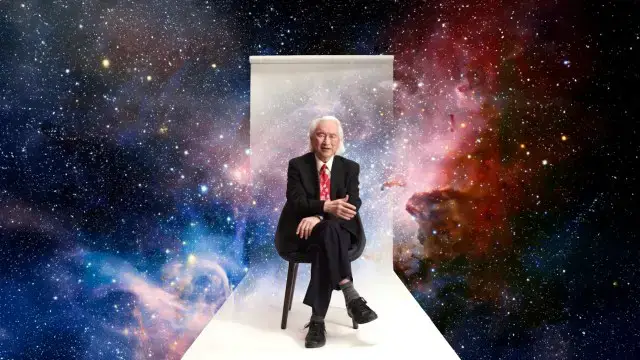
I'm Dr. Michio Kaku, professor of theoretical physics at the City University of New York
0:06
and author of a new book entitled Quantum Supremacy, about the rise of quantum computers
0:17
Well, some people ask me, why are you interested in physics? And my answer is, how can you not be interested in physics
0:30
I mean, we're only talking about the universe. We're only talking about the fundamental laws that drive the entire universe
0:38
So for me, it's hard to understand how people are not fascinated by stars and galaxies and
0:45
black holes, how people cannot be fascinated by the way the universe is put together
0:51
I first became interested in physics when I was eight years old
0:57
I still remember that all the newspapers were stating that a great scientist had just died
1:03
but on his desk was the unfinished manuscript of his greatest theory
1:09
Well, I was fascinated. What could possibly be so fantastic that a great scientist could not finish that book
1:18
I had to know what was in that book. I went to the library and I found out this man's name was Albert Einstein
1:28
That book, which he could not finish, was to be the theory of everything
1:34
an equation perhaps no more than one inch long that would allow us to, quote
1:39
read the mind of God. Well, I was hooked. I had to know what was in that book and can I contribute
1:49
Well, today the leading candidate for this theory of everything is called string theory
1:54
And I'm the founder of string field theory, one of the main branches of string theory
1:59
in an attempt to find this fabled equation. And the key may be quantum computers
2:07
As a physicist, I work in trying to complete Einstein's dream of a theory of everything
2:14
an equation perhaps no more than one inch long that would allow us to, quote
2:18
read the mind of God. But that requires enormous computer power in order to solve this fabulous
2:26
equation, and that's what drew me into quantum computers. Only quantum computers are powerful
2:32
enough to perhaps one day settle the question of, is there a theory of everything? We all know
2:40
that digital computers have changed the entire landscape. Nations which can use digital computers
2:47
are rich. They are powerful. They can communicate. They can revamp the economy. However, we're now
2:55
at the initial stages of the next revolution. The next revolution will be quantum computers
3:02
that will make the digital computer look like an abacus. In other words, the future of digital
3:09
computers is to wind up in the garbage can. We're talking about a new generation of computers
3:16
the ultimate computer, a computer that computes on atoms, the ultimate constituents of matter
3:23
itself. Quantum computers have the capability of changing every aspect of our life. The economy
3:32
health, transportation, everything could be changed by quantum computers. Take a look
3:39
for example, of food supply. We rely upon fertilizers. There was a green revolution
3:45
that took place that allows us to feed the population of the world. But that green revolution
3:51
is slowly coming to an end. We need a second green revolution, being able to take nitrogen from the
3:58
air and combine it to make ammonia and fertilizer. And already we're trying to use quantum computers
4:05
to unlock the secret of how to make fertilizer from nitrogen. Also, take a look at energy
4:13
Fusion power could one day give us unlimited energy almost for free
4:19
We're talking about an energy source where the basic fuel is seawater
4:25
Fusion plants burn seawater, the hydrogen of seawater, to create fabulous amounts of
4:30
energy without nuclear waste, without the threat of a meltdown. and quantum computers may be essential to stabilize the vacuum and hydrogen
4:42
so that they don't cause an accident or they don't fall apart
4:48
So in other words, quantum computers can affect the economy in basic ways
4:53
not to mention medicine. We create medicines by trial and error. We create hundreds of chemicals and test them one by one in a Petri dish
5:04
this is old-fashioned, slow, but that's all there is. That's all we can do
5:11
In the future, we'll be able to model diseases at the molecular level
5:17
We'll be able to do molecular experiments in the memory of a computer
5:22
rather than in a Petri dish trying to look at hundreds of chemicals
5:27
to find out which one is medically relevant. In other words, we're talking about turning medicine upside down
5:37
The question is, who's involved in this race to perfect quantum computers
5:42
And the answer is everyone. If you're not part of the race, you could be irrelevant in the future
5:50
All the big names of the computer industry, Google, IBM, Honeywell, they're all in the game
5:57
because they realize that you could become irrelevant. Wall Street is always looking for the next big investment
6:05
And this could be it. All of a sudden, we have companies that just started a few years ago
6:11
becoming multi-billion dollar companies as they try to put their flag on the mountain of quantum computers
6:19
This is now big business. This is one of the hottest stocks that are available on the stock market now
6:26
In other words, it's a race. All the big players in Silicon Valley are part of this race
6:33
because if they're not, Silicon Valley could become the next Rust Belt
6:39
We have something called Moore's Law, which says that computer power doubles every 18 months
6:46
We take it for granted. Every Christmas, your computers are twice as powerful as the previous Christmas
6:53
The economy is based on that. but Moore's Law is falling apart
6:59
Moore's Law is getting slower and slower. Finally, it'll flatten out. And let me ask you a question
7:06
Would you upgrade your computer knowing that it's just as powerful as the last few generations of computers
7:14
No. This could cause a depression in the computer industry. We physicists called attention to this decades ago
7:23
but we said that, well, we still have a few more decades left but it coming It coming because transistors are getting smaller and smaller A transistor today could be let say 20 atoms across When you start to hit five atoms across
7:39
then electrons can then hop across and create short circuits, and Moore's Law comes to an end
7:47
We're now gradually approaching that limit. When you look at the curve of the exponential
7:54
growth of computer power is quite remarkable. This is where modern technology has taken a leap
8:01
but now we're beginning to level off, just like we predicted because of the quantum theory
8:09
Electrons are not dots. Electrons are waves, waves of probability, and they're unstable
8:15
if you start to get electrons and yze them at the level of an atom. So in other words
8:23
Silicon Valley has to confront the fact that Moore's Law will eventually collapse
8:29
So for all these reasons, we have to go beyond digital computers to atomic computers, computers
8:37
that compute on atoms rather than on transistors. Right now, anyone who's interested in security is interested in quantum computers, because
8:49
quantum computers, in principle, have the power to crack any digital code. Think about that for a
8:56
moment. All the data that is sent on the internet is coded. National secrets of nations are encoded
9:03
in these codes, which often require you to factorize very large numbers. But that's what
9:10
quantum computers can do. They can factorize very large numbers and thereby crack almost any code
9:19
that is based on digital technology. That's why the FBI, the CIA
9:24
and all national governments interested in computer security are following this very closely
9:33
So, for example, let's say you want to have a secret that's encoded
9:38
You put a code on it, and the code says you have to factorize
9:42
a digit that is, let's say, 50 digits long. It would take perhaps a few hundred years for a digital computer to factorize a number that is 50 digits long
9:54
A quantum computer may be able to do that almost instantly. And so you see the anxiety that this is being created for people involved with computer security
10:08
You're not talking about being able to break into any other computer on the earth that is based on digital technology
10:17
Now, we're not there yet, so you don't have to worry that someone's going to steal all your secrets tomorrow
10:24
But it will come. And when it comes, we're going to have to have a major revision of how we code our most treasured national secrets
10:33
ordinary digital computers compute on zeros and ones zeros and ones but if you take a look at medicine
10:43
you take a look at energy you take a look at molecules
10:47
they're not based on zeros and ones zeros and ones they're based on electrons
10:53
and electrons can be smooth not zeros and ones zeros and ones
10:58
and these electrons how come they have so much computational power because they could be in two places at the same time
11:07
Now at this point, you may say to yourself, that's ridiculous. That's stupid
11:12
How can you be two places at the same time? But that's exactly what electrons do
11:19
Electrons can be multiple places simultaneously at the same time. That's what gives quantum computers their power
11:28
They compute on parallel universes. Not just one universe, the universe that we're accustomed to, but an infinite number of parallel universes
11:40
Now this sounds like something from Marvel Comics. But then the question is, where did Marvel Comics get this idea
11:48
Marvel Comics got this idea from quantum physics, because the fundamental basis of quantum physics
11:54
relies upon the fact that the electron can be in multiple places simultaneously at the
12:01
same time. One of the big goals of quantum computers, not just creating new forms of energy, new
12:08
products, new forms of transportation, but perhaps unlocking the secret of life itself
12:16
You realize that life is based on molecules, not zeros and ones, zeros and ones
12:22
Molecules that in turn can create Alzheimer's disease, Parkinson's disease, cancer. These diseases are beyond the reach of digital computers
12:33
But hey, this is what quantum computers do. They work with molecules
12:37
They work with atoms. They work with electrons. And that's why we hope that one day we'll be able to cure the incurable using quantum computers
12:48
Now, some people say, won't that put doctors, chemists, and biologists out of a job
12:55
Won't they be on the unemployment line because we don't need them anymore? No
12:59
In the future, the people on the unemployment line will be chemists and biologists who do
13:05
not use quantum computers. The winners of this game will be biologists, chemists, mathematicians who use quantum computers
13:15
in the same way that a carpenter uses a hammer. A hammer does not replace the carpenter
13:23
The hammer simply increases the power of the carpenter. And that's what quantum computers will do for medicine, transportation, energy, you name it, quantum computers will be there
13:37
If you look at life itself, life itself is driven by at least two types of molecules
13:44
One, of course, is proteins, proteins that make our muscles, make our body
13:49
And the second is DNA that has the instructions by which to create new forms of life
13:56
Quantum computers operate at the molecular level. They allow you to predict different kinds of proteins
14:04
how DNA is going to interact. Without actually building a DNA molecule
14:10
you could do it in the memory of a computer. Now, what can digital computers do for this
14:17
The answer is almost nothing. Digital computers can only count. Zeros and ones
14:23
Zeros and ones. they cannot simulate the motion of molecules inside DNA and inside a protein molecule
14:33
That's where quantum computers come in. Life is quantum mechanical. Life is not based on zeros and ones, zeros and ones
14:45
So how long will it take for a digital computer to simulate life
14:51
And the answer is forever. You can do it You cannot simulate the basic chemistry of DNA and proteins on a digital computer That where quantum computers come in because life itself is based on atoms and the quantum
15:11
principle. Computers go all the way back to prehistory because we had to count things
15:18
As we primitive peoples became more prosperous, we had to count how many cows we had
15:24
how much grain could be harvested. We had to count these things
15:28
and that began the beginning of og computers. og computers could be based on sticks
15:35
bones, levers, gears, pulleys, whatever it took to count, to count how many cows you had
15:44
to count how much profit you made. So this went on for thousands of years
15:49
until finally we reached the work of Charles Babbage. He creates the ultimate og computer with hundreds of gears and levers and pulleys
16:00
And by turning the crank, you could then calculate longitude, latitude for ships
16:07
You could calculate interest rates. It was very valuable to have an instrument like that for the banking industry, for commerce
16:16
But then World War II comes along. And at that point, we realized that Babbage's machine is simply too primitive to defeat the Germans
16:26
The Germans, of course, had their own secret code, and we had to break it in order to win
16:33
World War II. So the job was given to mathematicians like Alan Turing
16:40
Alan Turing was the one who codified a lot of the laws of computation into what is called
16:46
a Turing machine. He basically introduced the power of logic and mathematics to reduce computation to a
16:54
simple series of manipulations. Every computer on the earth, every digital computer, is a Turing machine
17:03
And of course, it's digital. It operates on zeros and ones, zeros and ones
17:09
But then we went into the quantum era with Richard Feynman. Richard Feynman was a Nobel Prize winner, but he was also a practical joker
17:20
as well as one of the founders of quantum electrodynamics. For example, he worked on the atomic bomb
17:28
But as a prank, he got a sheet of paper and wrote something like
17:33
Guess who? question mark on that sheet of paper, put it in the safe and sealed it up
17:40
Well, the next day, the authorities opened that safe and found the message, guess who
17:49
There was panic at Los Alamos. Some spy had gotten the secret of the atomic bomb
17:55
and was basically toying with the authorities. Well, that's Richard Feynman, practical joker
18:03
but also a visionary. And he asked himself a simple question, How small can you make a transistor
18:13
That's a simple statement, right? Transistors control the flow of electricity. They're either off or on, open or closed
18:23
That's called the transistor. And then he said, how small can you make a transistor
18:31
And he realized that the ultimate transistor is an atom. One atom that could control the flow of electricity
18:42
not just on or off, but everything in between. As we mentioned, if this is an atom, it can spin north pole
18:53
or it can flip in the south pole. This is how transistors work
18:58
Transistors are either open or closed to electric current. But atoms can spin in any direction
19:07
any direction simultaneously. That's the power of quantum computers. They compute not on zeros and ones
19:17
but everything in between simultaneously. That is incredible. For example, let's take a mouse
19:26
and put a mouse in a maze and let a digital computer calculate
19:32
what happens when a mouse is in a maze. Every time the mouse hits a joint, a juncture
19:39
it has to decide left or right, left or right. And then it goes to the next juncture
19:46
and has to decide left or right. Very tedious, very slow. But that's how a digital computer yzes a mouse
19:57
inside a maze. Now, how does a quantum computer yze it? It looks at all possible left-rights
20:06
all possible paths of the mouse, simultaneously, instantly, yzes all of them all at once
20:17
So how much faster is a quantum computer over a digital computer
20:21
In principle, infinitely faster. Think about that. We're talking about a new revolution in counting
20:30
able to count hundreds, thousands, millions of paths instantly at the speed of light
20:38
Something which our bodies do, we call that biology, medicine. Our atoms, our hormones, our proteins do that all the time
20:49
But we, using digital computers, calculate with zeros and ones, zeros and ones, zeros and ones
20:56
a tedious, slow process that Mother Nature does not use at all
21:02
Mother Nature is smarter than us. So you would think that after World War II
21:08
he would be heralded as the hero that saved the lives of hundreds of thousands of people
21:14
that helped to defeat the Nazis. Nope. His work was classified. It was considered too sensitive to be released to the public
21:24
And it's a very sad story. One day, somebody burglarized his house
21:31
He called the police. The police investigated his belongings and realized that he was gay
21:39
As a consequence, he was arrested, and he was tried and sentenced
21:45
For punishment, he was injected with hormones, hormones that made him grow breasts and feminized him
21:54
changed his whole body. Of course, Alan Turing was very much mentally destabilized by this
22:02
And one day, they found his lifeless body because apparently he committed suicide
22:09
And next to him was an apple, an apple laced with cyanide poison
22:15
an apple that he ate to commit suicide. And so some people think that the symbol
22:20
of Apple computers is that apple. the Apple that we all have on our laptops and our Apple hardware could be a memory of what Alan Turing did to the field of artificial intelligence and the digital computer He saved the lives
22:41
of hundreds of thousands of people, and yet he was totally unknown to the British people
22:47
Well, Alan Turing also pioneered artificial intelligence. He said that people who work with artificial intelligence are barking up the wrong tree
22:59
There's no definition of artificial intelligence. So he came up with a test rather than a definition
23:06
You put a human in a box. You put a robot in a second box
23:11
and you are allowed to ask any question you want to see which box contains the human
23:17
and which box contains the robot. This is the Turing test. It's been done many times
23:24
and so far, every time, the Turing test has not been able to fool a human
23:33
Every time this test has been done, eventually humans can ask a question
23:37
that will trip up the robot and we say, aha! There's a robot there
23:43
But Turing said that it's only a matter of time before one day a robot passes the Turing test
23:50
and becomes indistinguishable from a human being. Well, we'll wait and see
23:58
It's a tragedy of history that the father of artificial intelligence and the father of the electronic digital computer
24:05
is pretty much unknown. We celebrate, of course, the people who built the atomic bomb
24:12
But what about the man who pioneered the digital computer and artificial intelligence, Alan Turing
24:20
Well, that's why I was pleased when the movie came out, The Imitation Game
24:24
the first Hollywood movie that allows people to understand the tears, the sweat, the toil
24:32
that went into creating the computer revolution. We tend to think that an advanced computer is a modern technology because, of course
24:44
it involves so many calculations, so intricate. But that's not true. 2,000 years ago, there was a shipwreck
24:53
And in the boat that sank was a device that was encrusted with coral and dirt
25:00
But when you brushed away the dirt and debris, you began to realize that it was a machine
25:06
A machine of incredible complexity. It was, in fact, a computer. This amazed the work of archaeologists around the world
25:17
It was the world's first og computer, and it was designed to map the motion of the moon, the sun, and the planets
25:28
to map the motion of the known universe. Now, Charles Babbage is sometimes called the father of the computer, because he built this
25:39
gigantic machine that, when assembled, actually weighed several tons. You turned the crank and allowed you to make enormous calculations, longitude, latitude
25:51
interest rates, things like that. But somebody went one step beyond that
25:57
Lady Lovelace was a member of the aristocracy. she had a background in mathematics
26:04
And she was curious about this machine that was being built by Charles Babbage
26:09
And she realized that a machine of this complexity, you have to have instructions for it
26:15
Because you don't want to just calculate one number. You want to calculate a series of numbers
26:20
that give you the answer to a problem. For that, you have to have instructions
26:27
These instructions are called a program. And so in some sense, Ms. Lovelace was the first programmer programming an og computer
26:37
to crank out not just one number, but as many numbers as you want by following the rules
26:45
of a program. So she was the world's first programmer. Now, the digital revolution is based on transistors
26:55
So what is a transistor? A transistor is a valve. When you turn the valve, then you allow electrons to flow in a pipe
27:05
Think of the water in plumbing to be electricity and the transistor to be a valve
27:12
With a little bit of turning the valve, you can shut off the water completely or leave it open
27:19
The valve can give you zeros or one. One means water can flow
27:26
zero means you turn the valve, you shut off the pipe, and water doesn't flow at all
27:34
So that's how plumbing and transistors are very similar. Plumbing allows you to control the flow
27:41
of water in a well-structured way. That's why transistors are so powerful. But transistors
27:50
are based on zeros and one. Zeros and one. Reality is not
27:56
Reality is based on electrons and particles. And these particles in turn
28:01
act like waves. So you have to have a new set of mathematics
28:06
to discuss the waves that make up a molecule. And that's where
28:13
quantum computers come in. Because quantum computers are not just off and on
28:18
off and on. We're talking about electrons that can spin in any orientation simultaneously. That's why quantum computers
28:28
can simulate quantum devices. And the most intricate quantum device is you. You are the
28:37
byproduct of quantum mechanics. If you turned off quantum mechanics, what would happen to your body
28:44
It would dissolve. It would dissolve into a bunch of random subatomic particles
28:50
What holds these particles together? The quantum principle. Quantum mechanics holds your atoms together
28:57
It holds your body together. It allows your atoms to interact with other atoms
29:02
to create catalysts, to create DNA and proteins. So what has quantum mechanics done for you lately
29:09
The answer is everything. At the fundamental level, quantum mechanics can be reduced down to a cat, Schrodinger's cat
29:21
Schrodinger was one of the founders of quantum mechanics, even though he hated this new
29:27
interpretation of quantum mechanics based on probability. Let's take a box. In the box, you put a cat with a gun
29:38
The gun is aimed at the cat. And the question is, is the cat dead or alive
29:43
Well, until you open the box, you don't know. The cat could either be dead or alive simultaneously
29:52
Before you open the box, you don't know if the cat is dead or alive
29:57
But if the gun is dead or alive, goes off, then of course the cat can be killed. You open the box and the cat is dead. But there's
30:07
also a probability that the cat is not killed by the bullet. You open the box and the cat is alive
30:15
So then the question is, and this is the question that split the physics community for decades
30:21
what is the cat like before you open the box? And the answer is, it's in a superposition of two
30:29
states. It is alive and dead simultaneously. In other words, the universe has split in half
30:39
In one half of the universe, the cat is alive. In the other universe, the cat is dead. Now that
30:44
sounds crazy, but hey, get used to it. That's the basis of the quantum theory, that until you make
30:53
a measurement. The cat can exist in both states simultaneously. In fact, in any number of states
31:01
simultaneously. Now, when you take a philosophy course, you learn the famous paradox of when a
31:08
tree falls in a forest and there's no one there to listen to the tree fall, then the question is
31:14
did the tree fall at all? Well, this is even worse because before you open the box
31:22
The cat could be dead, alive, playing, jumping, sideways, sick, any number of states before you open the box
31:32
Now why am I mentioning this? Because this summarizes the power of quantum computers
31:38
Quantum computers compute on parallel universes. That's why they are so powerful
31:46
Because the cat is not just in one state. The cat is in all these parallel states simultaneously
31:54
Now, Steven Weinberg, one of the founders of modern quantum theory, explained it in this way
32:02
When you go into a room with a radio, your radio can pick up all sorts of frequencies
32:08
but your radio is tuned to one frequency. Your radio is coherent with one frequency, just one
32:17
and that's what you hear on the radio. Now, that room that you're sitting in is made out of electrons
32:25
Electrons are also waves. Waves of everything. Waves of pirates. Waves of dinosaurs
32:33
Waves of UFOs and Martians. All of that, all these waves inside the room
32:40
But you are only tuned to one frequency. You can only see one reality
32:48
You cannot see the dinosaurs. You cannot see the pirates, but they're there
32:54
But you cannot interact with them anymore. So this is how we physicists explain the cat problem
33:02
The fact that, yes, the cat in some sense can exist in all these different universes
33:07
but you only vibrate in one frequency. Therefore, you cannot see the dinosaurs in your bedroom
33:15
When quantum computers were first theorized by physicists like Richard Feynman, people
33:22
thought that, well, it's an academic exercise. Atoms are so small, the slightest vibration can upset the whole calculation, so it's
33:32
an academic question whether or not quantum computers exist or not. Well, we don't think like that anymore, because now we make quantum computers
33:42
This is reality, that we cannot play with quantum computers. In fact, you can even download a quantum computer on your laptop
33:50
You can actually connect your laptop to a quantum computer created by IBM and Google
33:57
And so, it's real. So, what is quantum supremacy? Quantum supremacy is the point at which a quantum computer can outrace and outperform
34:10
a digital computer on a certain task. We passed that several years ago
34:16
We are already in the realm where, for certain specific tasks, a quantum computer can outrace the world's fastest digital supercomputer
34:28
We're now in an entirely different realm, a realm where we're actually creating these things
34:34
This is no longer a question of speculation. It's a question of a race
34:38
a race between the Chinese and many U.S. companies that are jumping into the quantum computer game
34:49
When we talk about digital computers, we can measure their power in terms of bits
34:55
For example, spin up, spin down, zeros and one, would constitute one bit
35:02
And for a large digital computer, we're now talking about billions of bits
35:08
that are modeled by transistors. So the number of bits on a digital computer
35:14
allows you to calculate how powerful it is. The same thing for quantum computers
35:20
except now quantum computers talk not just about spin up or spin down, but everything in between
35:28
That's called a qubit. A qubit is not just up or down
35:33
One qubit represents all the possibilities of an object spinning between up and down
35:42
The question is, where are we today? Already, we're talking about hundreds of qubits that can be modeled by a quantum computer
35:51
Very soon, it'll be a few thousand qubits. And just remember that when quantum computers first emerged, the first calculation was 3 times 5 is 15
36:06
Now, a child knows that, but 3 times 5 is 15 was done on atoms
36:13
That was a huge breakthrough. Now we're talking about thousands. Thousands of qubits can now be modeled with the latest generation of quantum computers
36:26
Eventually, we hope to hit a million. And so we're talking about exceeding the power of ordinary digital computers
36:35
On specific problems, we've already done that. But we want a general machine, a machine that could exceed the power of any digital computer
36:44
We're not there yet, but we're very close to it. There are several ogies that explain the power of quantum computers
36:53
Think of a digital computer, and think of a room full of accountants
36:59
Each accountant does one calculation and passes it to the next, then does another calculation, passes it to the next accountant
37:07
A very slow process, but hey, that's what digital computers do. Now, take a look at a quantum computer
37:15
In a quantum computer, all the accountants are working simultaneously, not one by one
37:24
but simultaneously and therefore you know the power of a quantum computer Digital computers will take an almost infinite amount of time to do what a quantum computer can do almost instantly
37:40
because it computes simultaneously on many qubits, not just one after the next after the next
37:48
That shows you the power of quantum computers. Another problem with quantum computers is the question of decoherence
37:59
In other words, everything is based on particles like electrons, and electrons have waves associated
38:05
with them. When these waves are vibrating in unison, it's called coherence
38:11
And then you can do calculations of a quantum mechanical nature. But if you fall out of coherence, then everything vibrates at a different frequency
38:21
And what is that called? Noise. So that's the number one problem facing quantum computers
38:29
You have to reduce the temperature down to near absolute zero, so everything is pretty
38:37
much vibrating slowly in unison. That's difficult, because you need to have super cool liquids and different kinds of
38:49
technologies to bring down the temperature so that everything is coherent. Now, nature solves this problem
38:59
Photosynthesis, for example, is a quantum mechanical process. We still don't understand photosynthesis
39:06
It is the basis of all life on the earth. and it's a quantum mechanical property
39:13
And we still don't know quite how it works. But Mother Nature can create coherence at room temperature
39:21
Amazing. A flower can do calculations that our most advanced quantum computer cannot
39:29
So Mother Nature has solved the problem. We have not. We have to use liquid helium
39:35
and different kinds of supercooled substances to bring down the temperature to near absolute zero
39:43
Mother Nature does it with sunlight. Mother Nature is still smarter than us
39:48
when it comes to the quantum theory. Some people ask the question
39:52
well, how will I as a person interact with quantum computers? Well, we have a cell phone
39:59
and that cell phone allows you to contact a whole bank of supercomputers to carry out your wishes
40:07
So in other words, in the future, you're not going to have a quantum computer inside your
40:11
cell phone. Your cell phone will allow you to communicate with a series of quantum computers in the cloud
40:20
So supercomputation will be done in the cloud, and you'll be able to access that knowledge
40:25
in your cell phone. My personal hope for quantum computers is that we'll be able to create a theory of the
40:34
entire universe. I work in something called string theory, which we think is the ultimate theory
40:41
The theory that eluded Einstein. The theory that would explain black holes and supernovas and galactic evolution
40:49
A theory of cosmology of the entire universe. But the equations are so complicated, no one's been able to crack them
40:57
Perhaps a quantum computer would be able to extract real numbers from string theory
41:04
so that we could then compare it with what we see in the laboratory
41:09
And so that would clinch it. So then we would say, aha, this is, in fact, the theory of everything
41:15
and here's how to prove it. Chapter 2, String Theory Albert Einstein spent the last 30 years of his life
41:28
chasing after a theory of everything. an equation, perhaps no more than one inch long
41:36
that would allow us to summarize all the great laws of the universe
41:40
In other words, to quote, read the mind of God. These are Einstein's words
41:46
And he failed. He failed because, well, the universe is much more complex than Einstein thought
41:53
We have all these subatomic particles now, hundreds of subatomic particles. How are we going to make sense out of the vast diversity of matter we see around us
42:05
Well, the leading candidate right now is called String Theory. String Theory first bursts on the scene around 1968
42:13
The Vietnam War was at its height at that point. I remember when that theory first came out because I was in the Army
42:20
And there I was, dodging machine gun bullets, going through a maze of grenades and fields of explosives in them
42:29
And I was learning string theory for the first time. And I was amazed at its simplicity, its power
42:36
But there I was in the army. When I got out of the army, then I started to publish in this field
42:42
because of the promise that it was the theory that eluded Einstein
42:47
for the last 30 years of his life. String theory is based on music
42:52
So in other words, all these subatomic particles are nothing but musical notes on a tiny vibrating string
43:00
So this would be an electron. This would be a quark. This would be a Yang-Mills particle
43:07
Different vibrations give you different particles. And that would explain why we have so many subatomic particles
43:14
What is physics? Physics is the harmonies. The harmonies we can make on these vibrating strings
43:22
What are subatomic particles? Each vibration is a subatomic particle. So what is chemistry
43:30
Chemistry is the molecules that you can create when strings bump into other strings
43:37
That's called chemistry. So then what is the universe? The universe is a symphony of strings
43:45
And then what is the mind of God? The mind of God is cosmic music resonating through hyperspace
43:55
That would be the mind of God. Now, some people come up to me and say
43:59
Professor, maybe I don't like string theory. Give me an alternative. Well, for you industrious people out there in the audience
44:09
there are three criteria for the theory of everything. If you can find an equation that satisfies three criteria
44:17
you will be heralded as the next Albert Einstein. What are these three criteria
44:24
First, your theory would have to include all of the theory of gravity of Albert Einstein
44:31
Statement number two, it would have to explain why we have so many subatomic particles
44:37
hundreds of subatomic particles. Your theory must explain all these subatomic particles
44:43
Third, your theory must be free of mathematical anomalies, inconsistencies, divergences. In other words it must be mathematically usable testable against the reality that we see around us If you can come up with a theory that obeys these three criteria what should you do
45:09
You should call me first, and we'll publish together, and we'll share the Nobel Prize
45:15
money together, you and me. A Nobel Prize waiting, if you can find a theory that satisfies just three criteria
45:24
has to explain Einstein's theory of gravity, it has to explain why we have so many subatomic particles
45:30
and the theory must be mathematically consistent. If you can get it, you will be heralded as the next Einstein
45:38
So what is the leading candidate to rival string theory? Well, the leading candidate right now is called loop quantum gravity
45:49
But loop quantum gravity has problems. First of all, it does contain Einstein's theory of gravity
45:57
but it says nothing about particles. There's no electron. There's no proton
46:04
There's no neutron. Matter as we know it is not there. Loop quantum gravity is a theory of pure gravity with no particles
46:16
Therefore, it cannot describe the universe as we see it because the universe as we see it has subatomic particles
46:24
like the electron, like the atom. What are we made of? And so in that sense, string theory is the only theory
46:33
that combines Einstein's theory of gravity with a theory of particles. What are particles
46:40
Vibrations on a vibrating string. Every once in a while, the newspapers herald the coming of a new theory
46:49
Perhaps this is the theory that eluded Einstein. But then you read the fine print
46:55
And then nine times out of ten, the theory that's being proposed is a theory of pure gravity
47:01
No electrons, no protons. And that's what kills lupontum gravity. But here we are made out of atoms
47:09
Atoms have to be part of your theory. And so most of the theories that you see in the papers that claim to be a theory of everything
47:18
all you have to do is ask a simple question. Where is the electron in your theory
47:26
And you'll find out, whoops, none of these theories have electrons in them
47:31
In other words, they don't work. One day, a famous physicist, Wolfgang Pauly
47:36
gave a talk at Columbia University advertising his version of the theory of everything
47:43
Well, Niels Bohr, one of the founders of the quantum theory, was in the audience
47:48
Niels Bohr stood up and he said, Professor, we in the back are convinced that your theory is crazy
47:58
But what divides us is whether your theory is crazy enough. In other words, the theory of everything has to be fantastic
48:10
It has to be incredible. It has to be crazy. Why does it have to be crazy
48:15
because all the easy problems were picked off. All the easy stuff was shown to be inconsistent
48:22
mathematically or physically. The theory of everything has to be crazy, totally different from anything ever proposed
48:31
And that's where string theory comes in. The string theory is crazy
48:35
Everyone who's looked at the theory says, oh my God, this is a crazy theory
48:40
so crazy that it may be correct. The main criticism, which has to be taken seriously, the main criticism of string theory
48:50
is, well, where's the beef? Where are these particles that are predicted by string theory
48:57
String theory predicts the electron, it predicts the proton, it predicts the world that we
49:02
see around us. But, and it's a huge but, it also predicts other particles
49:09
Particles heavier than what you see around us. So where are those particles predicted by string theory
49:17
One idea is that these particles make up dark matter. Dark matter is relatively new
49:26
We now realize that when you look at the stars, you look at the galaxies in the universe
49:31
we see more than just hydrogen and helium. We see a new form of matter called dark matter
49:38
which is invisible, but there it is in outer space. We think that the next octave
49:45
the next octave of the string is dark matter. But we can't prove it yet
49:53
because we don't have dark matter in a bottle. One day we'll have dark matter in a bottle
49:58
created by our particle accelerators and then we'll test it to see whether or not dark matter
50:04
is the same thing as was predicted by string theory. So that's the weakest link
50:09
And that's one way to prove the theory is correct, by looking for dark matter, an invisible
50:16
matter that holds the galaxy together. And we're clueless to understand what it's made of
50:24
But when we look at the proton and we say to ourselves, what is a proton made of
50:30
It's made out of three quarks. Three quarks make up a proton
50:35
It seems to fit the data. However, when you try to calculate with quarks
50:45
no one has ever been able to extract out a proton out of three quarks, mathematically speaking
50:53
How do we do it in reality then? We do it by computers
50:58
Now, can you do it mathematically without a computer? We've tried. So far, nobody has been able to extract a proton by combining three quarks together
51:10
Now, it may turn out that subatomic particles are so complicated that no human can mathematically solve string theory completely
51:23
It may have to be done by computers. And that's where quantum computers come in
51:29
quantum computers may ultimately settle the question, is there a theory of everything
51:35
And if so, is it string theory? Now, let me quote from a science fiction novel
51:41
The Restaurant at the End of the Galaxy. In that novel, a race of extraterrestrials decide to calculate the theory of everything
51:52
So they create a supercomputer that chugs and chugs and chugs to calculate the theory of everything
51:59
Well, after many eons of working on this problem, the computer announces that it's finished
52:06
It has finally found the meaning of the universe. And the meaning of the universe is 42
52:15
Well, you can imagine the disappointment. Is that all there is? Well, that's a danger
52:22
The danger is that maybe we do find the theory of everything but it not what we thought it was Well I think it should be incredible fantastic The culmination of all our work aiming toward a theory of everything
52:38
it should be fantastic. String theory is already fantastic, but maybe the next layer beyond string theory
52:45
is an explanation for dark matter, black holes, and the universe that we see around us
52:53
just waiting for a young, enterprising physicist to figure it all out
53:03
Chapter 3. Are We in a Simulation? Ever since ancient times, people have asked the question
53:11
is the world a dream? Is everything around us an illusion created by some god to test us
53:19
Well, the modern version of that is this. Is the universe a computer game
53:26
Are we just dancing puppets in a computer game, obeying the laws of some computer someplace out there in the universe
53:35
Is everything basically a fake? Well, that theory got a tremendous boost with the Matrix series
53:43
Because in the Matrix, what we thought was real was actually a computer simulation
53:49
Is that possible? Well, the answer is probably no, but for a very sophisticated reason
53:57
If you want to simulate the weather, for example, you have to simulate the motion of trillions
54:03
upon trillions of atoms. No computer is that powerful that it can simulate the motion of trillions and trillions of atoms
54:13
that just make up the atoms in this room. You can't do it
54:18
and atoms are quantum mechanical. Atoms obey the quantum principle so you don't really know where they are at any given point
54:28
So there's an infinite number of universes that are possible right in your room
54:33
It is mathematically not possible to create a fictional universe out of atoms in a fictional way
54:43
So, sorry about that. the universe is not an illusion. Now, some people ask another question
54:52
What if the universe is an almost simulation? That's possible. Maybe you cannot simulate trillions and trillions of atoms
55:00
because of something called the butterfly effect. Now, what's the butterfly effect
55:06
The butterfly effect is that when a butterfly flaps its wings, there's a certain small probability
55:12
that the waves created by the butterfly will be magnified as it progresses
55:18
and eventually it becomes a storm. The point I'm raising is no computer is powerful enough to do that computation
55:28
The amount of information necessary to simulate atoms is absolutely staggering. You're talking about 10 to the, let's say, 25
55:38
One with 25 zeros after it. just to model the atoms inside a goldfish bowl
55:45
So we're talking about a fabulous amount of information necessary to create a model of a dream
55:54
So in other words, chances are we do not live in a computer simulation
55:59
Sorry about that. If you're a fan of the movies, you know that almost all the Marvel Comics movies are based in a parallel universe
56:09
And if you watch the Oscars, you find that the number one movie in the Oscars
56:15
is also based on parallel universes. And the question is, where did all this interest come from
56:22
It came from the quantum theory and string theory. This is one example of where advances in pure physics
56:30
have helped to fertilize the entertainment industry. Because the hottest thing in Hollywood today
56:37
is the multiverse. So if you watch the Oscar-winning movie Everything, Everywhere, All at Once
56:46
you have to realize that where did the idea come from? The idea comes from physics
56:52
And even today, we theoretical physicists are debating the question, how real are these parallel universes
57:07
What computers need is data, data by which we can draw conclusions
57:13
And when we talk about intelligence in outer space, we have to be open to the idea that
57:18
their intelligence may be quite different, quite different from our intelligence. And therefore, the question is, how do we tell
57:26
How do we tell where real intelligence is, given the fact that it could be more than
57:30
one type of intelligence? Well, let me give you an example. For the Science Channel, they once put me in a swimming pool with dolphins
57:42
Sensors picked up the squeals and chirps from the dolphins as I was swimming next to the dolphins
57:49
and then they ran it through a computer. The computer looked for regularities in the chirps and squeals of dolphins
57:59
realizing that they speak a totally different language than humans, and their criteria for intelligence would be different from our criteria of intelligence
58:10
So, for example, the letter E is the most common letter in the English alphabet
58:16
And you can rank the frequency with which certain letters are used to pinpoint who wrote the article
58:25
For example, who wrote Shakespeare? Many people have claimed that other writers wrote Shakespearean plays, not Shakespeare himself
58:33
but you can run the set of information of Shakespeare's plays through a computer
58:41
And sure enough, the signature can be shown to be that of Shakespeare
58:46
The frequency of the letter E, the frequency of the letter I, and so on and so forth
58:52
allows you to pinpoint who wrote that article. So when you run the videotapes
58:58
and the audiotapes of the dolphins through a computer, you find bingo
59:05
Yes, they are intelligent. Yes, there's a pattern, a regularity to their chirps
59:12
and so on and so forth. And then you go down the evolutionary scale
59:17
You go down to dogs, cats, rabbits, mice, insects. By the time you reach insects, it's pretty much nonsense
59:28
They have a communication system, but very little intelligence, other than to alert themselves for food, danger, and stuff like that
59:37
And so it is possible to rank intelligence using computers that look for an algorithm that allows you to see where intelligence lies
59:50
We'll do that in outer space now. We physicists have often wondered, are there signs of intelligent life in the galaxy
59:59
And if so, how advanced might they be? So we categorize these alien civilizations on the basis of energy, energy consumption
1:00:10
Type 1 would be planetary. They control the weather. They control earthquakes, volcanoes, anything planetary they control because they have the
1:00:21
energy, the energy of a planet. Then there's type 2. A Type II civilization has exhausted the power of their planet
1:00:30
and they use the sun. They basically take the energy from their sun to power their machines
1:00:38
sort of like the Federation of Planets in Star Trek. Star Trek would be a Type II civilization
1:00:45
Then there's Type III, Galactic. They roam the galactic space lanes. They play with black holes
1:00:51
sort of like the empire of Empire Strikes Back. That would be a type 3 civilization
1:00:59
And then the question is, what are we? We are type 0
1:01:05
We get our energy from dead plants, oil and coal. We don't even rate on this scale
1:01:11
We have not attained planetary energy at all. That would be type 1
1:01:16
We're stuck at type 0. But what would it take to move between universes
1:01:23
What would it take to enter a black hole? What would it take to break the light barrier
1:01:28
You would have to reach the energy of type 3. And the energy of type 3 is called the Planck energy
1:01:35
The Planck energy is the energy of the Big Bang. It's the energy of a black hole
1:01:41
It's the energy, the greatest energy in the universe. And that is the Planck energy
1:01:48
How long before we can attain the Planck energy and move between universes
1:01:53
Well, a modest calculation shows that you would have to be about maybe 100,000 years
1:01:59
more advanced than us in order to go between universes to harness the Planck energy to leave our universe So chances are if one day we meet an intelligent civilization they would be maybe a hundred thousand years more advanced than us Then the next question is
1:02:20
how would we know of a type three or type two civilization if we were to bump into one
1:02:27
Let's say that scanning the heavens, we see evidence of a type two, type three civilization
1:02:33
How would we know? Well, we've looked. We've looked for Type II, because Type II civilizations give off an energy
1:02:41
a characteristic black body radiation that we can measure. So far, we find none
1:02:48
Now, that doesn't mean that there aren't these civilizations out there. It just means that our devices are so primitive
1:02:54
that we have not yet been able to conclusively show that they exist
1:03:00
But if they can break the light barrier, if they can go faster than the speed of light
1:03:06
then it's possible they may have the energy of a wormhole. And at that point, they would be type 3
1:03:12
They would have the energy, the Planck energy, to create universes or to move between universes
1:03:21
Historically, when physicists were asked about flying saucers and UAPs and extraterrestrial civilizations
1:03:28
the bottom line is data. You have to have data. You just can't say that
1:03:35
gee, I saw something going across the sky last night. Maybe you did. Maybe you didn't
1:03:41
But now we finally have data. The United States Navy has admitted that, yes
1:03:47
there are hours of videotapes, videotapes that can be yzed to calculate the characteristics of these things
1:03:55
We now realize that these objects, whatever they are, can travel up to Mach 20
1:04:00
20 times the speed of sound. And they can accelerate from Mach 5 to Mach 20
1:04:06
very, very rapidly. And they can even fly underwater, believe it or not
1:04:13
underwater in the air into outer space And they zigzag When you calculate the centrifugal force inside the rocket ship you realize that any living thing would be crushed
1:04:28
Crushed by the zigzagging of these objects, whatever they are. We're talking about a new law of engineering
1:04:36
beyond anything that we can muster here on the planet Earth. The ability to fly up at Mach 20
1:04:44
the ability to fly underwater, the ability to zigzag. These things require technology
1:04:52
beyond anything we have. So we now have the data. Is it an optical illusion
1:04:59
Or is it extraterrestrial? We don't know until we yze the data
1:05:04
And now we have physicists looking frame by frame and perhaps coming up with a conclusion
1:05:09
as to where these objects come from. Well, about 90% of these sightings can be explained using natural phenomenon, or weather
1:05:23
balloons, or weather anomalies, or meteorites. Most of them can be explained
1:05:31
10% of them seem to defy the known laws of engineering, so we have to look at them very carefully
1:05:39
And some of them have multiple sightings by multiple modes. That's the gold standard
1:05:46
We met that gold standard on several occasions. Back in the 1980s, there was a JAL flight going across Alaska
1:05:56
and all of a sudden they found two objects flying next to it
1:06:02
These two objects were then tracked by radar, tracked visually. So there was multiple sightings using multiple modes
1:06:11
And then a third flying saucer came up next to it. So there were three objects now flying next to this JAL flight
1:06:21
Well afterwards when the flight landed the pilots made the announcement that they saw a flying saucer But then what happened Very important At that point the pilots were given desk jobs basically demoted And that sent a chill throughout the
1:06:40
industry, because if you say that you saw something unusual in your airplane, you would be given a
1:06:48
desk job, and you wouldn't fly again. So in other words, keep your mouth shut. As a consequence
1:06:56
no data, very little data, has been collected until recently. And that's what we physicists need
1:07:05
Data, so that we can make objective statements about what these things are. Now the burden of
1:07:12
proof has shifted. The burden of proof is on the military now to prove that these things aren't
1:07:19
extraterrestrial. And that's a sea change. Now we realize that we're sitting on hours
1:07:26
of videotapes. We're sitting on a mountain of data. The data has to be yzed frame
1:07:33
by frame to figure out what these objects are, what their flight characteristics are
1:07:39
and who is behind them. So things have changed now. Now we have access to videotapes, and
1:07:47
Now the burden of proof is to prove that these things aren't extraterrestrial
1:07:52
What happened was, citizens' pressure put pressure on certain politicians. These politicians, in turn, put pressure on the military to declassify some of this information
1:08:05
So that's how it happened. that is the FOIA Act, the Freedom of Information Act
1:08:11
that allows citizens to gain access to some classified information. But it's a long, torturous process, but some of it is now reaching the press
1:08:22
That yes, the military is owning up to the fact that it's sitting in a gold mine of data that has to be yzed frame by frame
1:08:33
Want to support the channel? join the Big Think members community where you get access to videos early ad free
#Engineering & Technology
#Physics