Up next in 10

Addictions and habits, explained by a neuroscientist, a psychologist, and a journalist
Oct 15, 2025


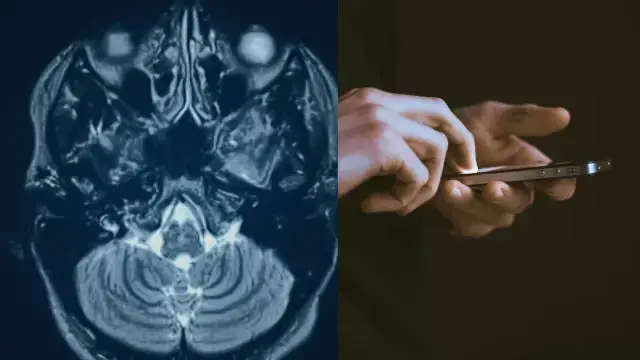
Daily habits can help you thrive or quietly turn into addictions. The difference is how your brain handles cues, routines, and rewards. Three experts explain how to work with your wiring instead of against it.
Show More Show Less View Video Transcript
0:00
So here's the thing to recognize about your bad habit
0:05
You cannot eradicate your bad habit. You have to trick your neurology
0:21
We are living through this huge evolution in our understanding of habits
0:26
and it's being driven primarily by understanding the neurology of where habits come from
0:32
I thought that drugs were the source of the problems that we were seeing in our community
0:38
Turns out, not only was I wrong, society was wrong. Basically, we tend to develop addictions when we have a psychological need
0:49
At those moments, smartphones tend to be great vehicles for providing the hits that you need when you need them
0:55
I think that there is this interior sense when a bad habit strikes that people know that they have a bad habit
1:01
It just seems like a lot of people, even the most successful people, don't necessarily know where to start at changing it
1:14
The ability to form habits is one of the most important and amazing evolutionary tactics that the human race has come up with
1:22
and all primates, and almost all animals for that matter. When you form a habit, you can execute a fairly complex series of behaviors without having to think really, really hard about it
1:33
And what that means is that it lets us think about other things. But the downside of a habit is that you stop thinking while you doing a habit So as a result you become less aware of the negative consequences of that behavior There is a woman named Wendy Wood who did a study when she was at Duke
1:50
And what she found was that about 45% of all the behaviors that someone did in a day was habit
1:57
It wasn't decision-making. And this gets to sort of the way that habits work, which is that there's this thing called the habit loop
2:03
There's three parts to it. There's first a cue, which is a trigger for a behavior. And then the behavior itself, which we usually refer to as a routine
2:11
And then there's the reward. And the reward is actually why the habit happens in the first place
2:14
It's how your brain sort of decides, should I remember this pattern for the future or not
2:19
And the cue and the reward become neurologically intertwined until a sense of craving emerges
2:24
that drives your behavior. If you take this framework and sort of apply it and look at the behaviors that you do
2:29
for instance, backing your car out of a driveway, or why you suddenly feel hungry
2:34
when you see a donut box on the counter at work, but you weren't hungry five minutes earlier
2:39
you can find these cues and rewards that kind of explain the behaviors
2:44
So it's enormously important. Between 1990 and 2000, that is deemed the decade of the brain
2:56
There was a lot of money into studying brain illnesses, brain disease
3:00
There was a lot of money in terms of learning about the brain. And during that time, we are looking for some neural footprint of addiction
3:10
And we thought that once cocaine interacted with these dopamine neurons, it just had this almost magical power over the person's behavior
3:20
We learned that that not necessarily the case So when we think of drug addiction it important for the lay audience to keep the focus on the person behavior
3:34
Are they not showing up for work? Are they not meeting their obligations at home
3:41
Are they not meeting their obligations in school? All of these are important indicators of whether someone is drug addicted or not
3:51
And notice, I didn't look at anyone's brain. I'm really looking at the person's behavior
4:06
Behavioral addiction is a lot like substance addiction in a lot of ways
4:11
Basically, what has to happen is that there's a behavior that you enjoy doing in the short term
4:14
that you do compulsively, so you keep returning to it over and over again
4:18
but that in the long term harms your well-being, and it can harm your well-being in lots of different respects
4:23
And it's much newer. It's a much more recent phenomenon. And I think the reason why we've got these new forms of addiction
4:30
there are two main reasons. The first one is that technology is much more sophisticated and advanced than it was even 20 years ago
4:36
you're able to deliver the kinds of rewards that you need for a system to be addictive
4:42
So basically what people are looking for is unpredictability and the rapid feedback of
4:46
either rewards or if it's negative, then negative experiences. And you actually need that mix of
4:51
positive and negative feedback. Just as for example, when you post something online
4:56
sometimes you're going to get a lot of hits, sometimes you aren't. And it's that unpredictability
5:01
that we find so compelling. Whenever we bored whenever we feeling a little bit lonely whenever we not really sure what to do with ourselves next whenever we don feel particularly efficacious like we having an effect on the
5:13
world that we'd like to be having. Those are the moments when you're looking for what some people
5:17
call the adult pacifier. And smartphones tend to be a great adult pacifier because at those moments
5:23
you turn on your screen, you swipe, and you feel relaxed again. If you just try and say
5:30
I'm going to use willpower to make this behavior go away, it's not going to work
5:36
And we know this from study after study. Every scientist who works on habits will tell you
5:40
once the neurology of that habit is set, it's always there in some form or another
5:45
So what you need to do is instead of thinking about eradicating this bad habit
5:50
or just using willpower to sort of blast your way through ignoring it
5:54
is to change it. And there's this thing that's known as the golden rule of habit change
5:58
which is if a habit is made up of a cue, a routine, and a reward
6:02
you can't change all three parts at once. In fact, you shouldn't even try
6:07
What you really want to change is you want to change the routine, the behavior
6:11
And to do that, you need to keep the same cue and deliver the same reward
6:16
And you'll be able to shoehorn that new behavior into your daily pattern. You can't change everything overnight
6:23
You can't suddenly say, I want a brand new habit tomorrow and expect it to be easy and effortless
6:29
It's something you have to give yourself permission to take a little bit of time to practice
6:34
because you're building up neural pathways associated with a certain behavior. And those neural pathways just build up over time
6:41
You can't speed up that process any more than is natural
Health
Mental Health
Substance Abuse