Up next in 10

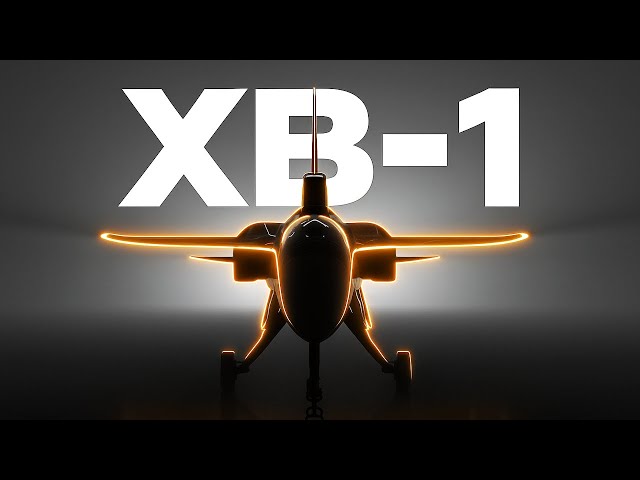
The sonic boom used to be supersonic flight's biggest problem. Not anymore. Dive into the incredible Boom XB-1, the technology demonstrator that just silenced the sound barrier! See how this revolutionary jet achieved "Boomless Cruise," proving quiet supersonic flight is real. The XB-1 is the crucial testbed for Boom Supersonic's Overture airliner, paving the way for a new era of high-speed, silent travel. Don't miss this aviation breakthrough!
Keywords Covered:
Boom XB-1, supersonic flight, sonic boom, quiet supersonic, Boom Supersonic, Overture, aviation, technology demonstrator, flight test, future of travel, aerospace.
#BoomXB1 #SupersonicFlight #SonicBoom #QuietSupersonic #BoomSupersonic #Overture #Aviation #FutureOfTravel #Aerospace #Breakthrough
Show More Show Less View Video Transcript
0:00
For decades, the dream of supersonic
0:02
passenger travel seemed like a relic of
0:04
the past. The Concord, once a symbol of
0:07
speed and engineering brilliance, was
0:10
ultimately grounded due to high
0:12
operating costs, environmental concerns,
0:14
and perhaps most infamously, the
0:17
thunderous sonic boom that made flying
0:19
over land almost impossible. Since its
0:22
retirement in 2003, the aviation
0:25
industry has longed for a second chance.
0:28
One that combines speed with
0:30
sustainability, innovation, and silence.
0:33
And now, that future may have finally
0:36
arrived. Not with a bang, but with a
0:39
whisper. Enter the XB1, Boom
0:42
Supersonic's sleek, needle-nosed
0:44
demonstrator aircraft, affectionately
0:46
known as Baby Boom.
0:49
This isn't a prototype for show. It's a
0:52
flying laboratory designed to test and
0:54
validate the technologies that will
0:56
power the next generation of high-speed
0:58
commercial air travel. At just 62 ft
1:01
long, the XB1 is 1/3 the size of its
1:05
future sibling, the Boom Overture, a
1:08
passenger jet in development that aims
1:10
to carry 64 to 80 people at speeds of
1:13
Mach 1.7. But don't let its size fool
1:16
you. The XB1 is packed with advanced
1:19
features that push the boundaries of
1:21
what's possible in modern aviation.
1:24
Every inch of the XB1 has been
1:26
engineered for performance. Constructed
1:28
almost entirely from lightweight carbon
1:31
fiber composits, it's both durable and
1:33
agile. Its aerodynamic shape was
1:36
fine-tuned through thousands of hours of
1:38
digital simulation. It's powered by
1:41
three General Electric J85 engines.
1:44
Compact battle tested turbo jets that
1:47
offer the thrust needed for supersonic
1:49
flight. But one of the most fascinating
1:51
features isn't found under the hood.
1:54
It's in the cockpit. Supersonic aircraft
1:56
typically have long, slender noses for
1:58
aerodynamics, which can block the
2:00
pilot's view during takeoff and landing.
2:03
Instead of a drooping nose like the
2:05
Concord, Boom has developed an advanced
2:08
augmented reality vision system that
2:10
overlays realtime visuals and flight
2:12
data onto a highresolution display,
2:15
giving the pilot a perfect view of the
2:17
runway. It's smart, elegant, and a
2:21
perfect example of how modern tech can
2:23
solve old school problems. The XB1's
2:26
journey began with its first successful
2:28
flight on March 22nd, 2024 at Mojave Air
2:32
and Spaceport in California.
2:35
Piloted by test pilot Bill Doc
2:37
Shoemaker, the aircraft took off, flew,
2:40
and landed exactly as planned. It marked
2:43
the start of a rigorous 13-flight test
2:46
campaign. Each mission was designed to
2:49
incrementally push the jet's performance
2:50
limits from basic subsonic handling
2:53
tests to high alitude high-speed runs.
2:56
By January 2025, the XB1 had already
3:00
proven it could safely fly near Mach 1.
3:03
But the real breakthrough came on
3:05
January 28th, 2025. On that historic
3:09
day, the XB1 reached Mach 1.122
3:13
while cruising at over 35,000 ft. It
3:17
wasn't just a one-time achievement,
3:18
either. The aircraft broke the sound
3:21
barrier not once, but three times in a
3:23
single flight. But what made this truly
3:26
groundbreaking was what you didn't hear.
3:29
Despite the XB1 going supersonic, there
3:32
was no audible sonic boom on the ground.
3:34
This isn't science fiction. It's
3:37
science. Boom. Supersonic employed a
3:40
phenomenon called mock cutff where shock
3:43
waves created by supersonic flight are
3:46
directed upward into the atmosphere
3:48
instead of down toward the earth. When
3:50
done at the right altitude and angle,
3:52
those waves dissipate harmlessly,
3:54
leaving the ground in silence. And yes,
3:57
this was verified using groundbased
4:00
microphone arrays and imaging systems
4:02
provided by NASA. No boom, just speed. A
4:06
final supersonic demonstration flight
4:08
occurred on February 10th, 2025 with
4:11
Boom's chief test pilot Tristan Gapetto
4:14
Brandenburgg at the controls. Once
4:17
again, the XB1 broke through Mach 1
4:20
multiple times without disturbing a
4:22
single neighborhood below. With that,
4:25
the 13 flight test program came to a
4:27
close. Mission accomplished. The XB1 had
4:31
not only demonstrated supersonic flight,
4:33
but had also proven that such flight
4:36
could be achieved without the disruptive
4:38
noise that doomed its predecessors. Even
4:40
those who once flew the legendary
4:42
Concord are calling this a turning
4:44
point. Former Concord chief pilot Mike
4:47
Banister shared his excitement following
4:50
XB1's supersonic breakthrough. He said,
4:53
"I've been waiting over 20 years for an
4:56
environmentally friendly successor to
4:58
Concord, and XB1's supersonic flight is
5:01
a major landmark toward that dream
5:04
becoming reality. When I last flew
5:06
Concord in 2003, I knew this day would
5:09
come." Banister called the XB1's
5:12
achievement a vital step toward making
5:14
sustainable high-speed air travel a
5:17
reality once again and he's personally
5:19
backing the Boom overture as his top
5:21
choice to carry on the Concord's legacy.
5:24
He even added that he's now eagerly
5:26
awaiting the next big milestone, the
5:29
first running of Boom's in-house
5:31
symphony engine expected later this
5:33
year. And in a nod to the pilot behind
5:36
the flight, Banister offered heartfelt
5:39
praise. Congratulations to Blake Scho,
5:42
the team at Boom, and especially to
5:45
Tristan Gapetto Brandenburgg, the pilot.
5:48
Having been Concord's chief pilot, I can
5:51
honestly say I envy his role in this
5:54
thrilling return to mainstream
5:55
supersonic flight. But the XB1 is more
5:58
than just a successful demonstrator.
6:01
It's the first major step toward
6:02
bringing the boom overture to life. This
6:05
future airliner, currently under
6:07
development, will fly at nearly twice
6:09
the speed of current commercial jets,
6:12
cutting flight times in half. New York
6:14
to London in just over 3 hours. That's
6:17
the goal. And with the mock cutoff
6:19
method now proven, flights over land may
6:22
finally become viable. Ending a decadesl
6:25
long ban on supersonic routes over
6:27
populated areas. Of course, challenges
6:30
remain. Scaling up from a one- seat
6:32
demonstrator to a full-size passenger
6:34
jet requires massive engineering,
6:37
certification, and financial investment.
6:40
Supersonic aircraft must also meet
6:42
strict safety, fuel efficiency, and
6:45
noise standards. But for the first time
6:47
in decades, real progress is being made,
6:50
and it's being made fast. What Boom has
6:53
achieved with the XB1 is not just a
6:56
technological milestone, but a cultural
6:58
one. It's proof that humanity still
7:01
dares to dream beyond the limitations of
7:03
the past. The XB1 didn't just break the
7:06
sound barrier. It shattered the silence
7:09
that surrounded supersonic aviation for
7:11
years. And with that silence came a
7:14
message. The future of flight isn't just
7:17
about speed. It's about smart speed.
7:20
responsible speed, quiet, efficient, and
7:25
breathtakingly fast travel may no longer
7:27
be something reserved for science
7:29
fiction. It's being built right now, and
7:32
the XB1 is leading the charge. So, what
7:35
do you think? Are we ready to board
7:38
supersonic planes once again, but this
7:40
time without the Boom? Could the boom
7:43
overture become the Concord of the 21st
7:46
century, but better, quieter, and more
7:49
accessible? Let us know your thoughts in
7:52
the comments below. If you enjoyed this
7:55
deep dive into the future of flight,
7:57
don't forget to like the video,
7:59
subscribe to the channel, and hit that
8:01
bell icon so you don't miss our next
8:04
story from the skies. Thanks for
8:06
watching, and we'll see you at Mach 1.7.
8:11
Heat.
8:14
[Music]
8:19
Heat.
#Travel & Transportation