Up next in 10


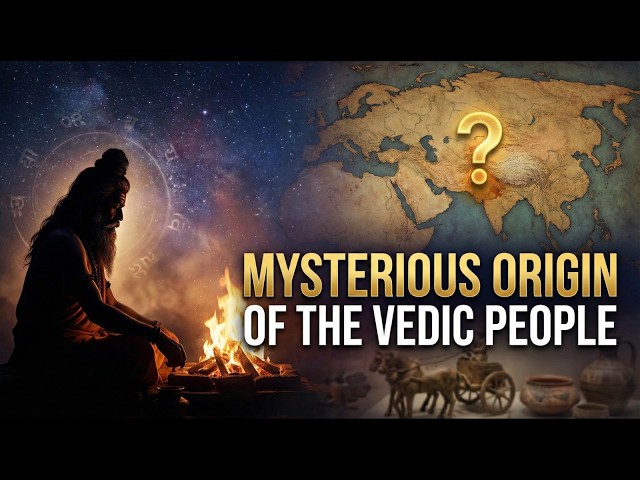
The true origin of the Vedic people is one of history's most heated debates, generally split into two main perspectives:
Supported by modern genetics and linguistics, this view suggests that Indo-Aryan speakers migrated from the Eurasian Steppe. They brought horse-drawn chariots and early Sanskrit, eventually blending with the indigenous post-Harappan populations of the Indus region.
Many traditional scholars argue for deep cultural continuity, asserting that the Vedic and Indus Valley civilizations are the same. This perspective relies on Puranic timelines, continuous architectural and religious motifs, and the geological dating of the dried-up Saraswati River to place Vedic culture in India long before any migration.
Modern scientific consensus points toward a biological and cultural synthesis rather than a pure invasion or strictly local development:
Ancient DNA reveals that modern South Asians carry varying degrees of "Steppe ancestry." This DNA, largely introduced by mobile male pastoralists, mixed with the local "Indus Periphery" populations between 1900 and 1500 BCE.
Vedic Sanskrit is firmly rooted in the Indo-European family. However, it underwent physical changes—like "retroflexion" sounds—proving it absorbed elements from local indigenous languages through close contact.
The appearance of domestic horse bones, the transition to Painted Grey Ware pottery, and the presence of wattle-and-daub settlements align neatly with the timelines and descriptions found in early Vedic texts.
Early hymns like the Rigveda map a clear journey starting from the rivers of the northwest (like the Indus and the now-dry Saraswati) and moving gradually eastward into the "Middle Country."
The introduction of iron tools was a turning point. Iron axes and ploughs allowed the Vedic people to clear the dense forests of the Gangetic plains and turn heavy soil, fundamentally shifting their economy from nomadic cattle-herding to settled agriculture.
As the Vedic people transitioned into a settled agrarian society, their social structures became much more rigid:
The society evolved from egalitarian tribal bands led by chieftains to autocratic, territorial kingdoms validated by grand religious rituals.
Early flexible roles hardened into the rigid, hereditary four-tier Varna (caste) system, giving ritual supremacy to priests and excluding laborers from sacred rites.
Women initially enjoyed high status, attending assemblies and composing hymns. Over time, society shifted into a strict patriarchy where women lost their political and religious rights and were confined to domestic roles.
Their diet was rich in grains, dairy, and the sacred ritual drink, Soma. Clothing was simple and unstitched, and early evidence of glassmaking shows a rising technological sophistication.
Ultimately, the Vedic age was the crucible of classical Indian civilization—a dynamic fusion of mobile Central Asian Steppe culture and the settled, agrarian legacy of the Indus Valley.
Show More Show Less View Video Transcript
0:04
The Vadic people were essentially the
0:06
founding fathers of early Indian culture
0:08
representing a unique blend of rugged
0:10
outdoorsmen and deep spiritual thinkers.
0:13
They were pastoral tribes and farmers
0:15
who were not only fierce warriors but
0:17
also philosophers who laid the bedrock
0:19
of Indian civilization. Their lifestyle
0:22
was a fascinating mix of the practical
0:24
and the spiritual. While they managed
0:26
the land and cattle, they also sought to
0:28
balance the cosmic order through
0:29
elaborate fire rituals and poetic
0:31
wisdom. This dual nature established the
0:34
early social structures known as the VA
0:36
system and a profound philosophical
0:38
legacy that eventually evolved into
0:40
modern Hinduism.
0:42
One of the most heated debates in
0:44
history revolves around where these
0:45
people actually came from largely
0:48
because the answer ties deeply into
0:50
religious and cultural identity.
0:52
Historians are generally split between
0:54
two main theories. Either the Vadic
0:56
civilization was the result of an
0:58
indigenous development within India or
1:00
it emerged from an Indo-Aryan migration
1:02
from elsewhere. This question remains
1:04
contested because it challenges how we
1:06
understand the very roots of the
1:08
region's history. To understand who they
1:10
were, historians have to act like
1:12
detectives because the Vadic people
1:14
didn't leave behind standard history
1:15
books. The primary clues come from the
1:18
Vaders, a massive library of orally
1:20
preserved texts composed roughly between
1:22
1500 B.CE and 500 B.CE. Combined with
1:26
hard evidence from archaeology,
1:28
linguistics, and genetics.
1:31
Linguistic evidence places Vadic
1:33
Sanskrit firmly within the Indo-Uropean
1:35
family, suggesting a historical
1:37
connection to the Eurasian step. Recent
1:40
advances in ancient DNA and archaeology
1:42
have revolutionized this understanding
1:44
indicating that the Vic people were
1:46
likely not a single biological group but
1:48
a complex fusion of incoming step
1:50
pastoralists and the existing post
1:51
Harapan populations of the indis region.
1:54
This synthesis drove major changes
1:56
including the spread of the Sanskrit
1:58
language, the shift towards settled
2:00
agriculture and technological leaps like
2:03
the introduction of iron and the horse.
2:05
Language acts as a living map of this
2:07
journey. Researchers traced the path of
2:09
Indo-Aryan speakers from the southern
2:11
Eural mountains around 2,100 B.CE,
2:14
noting a split from Persian ancestors
2:17
around 1,800 B.CE, a time when their
2:20
cultures were so similar that their
2:22
sacred texts, the Rigveda and the
2:24
Avesta, read like dialects of the same
2:27
tongue. A key piece of evidence comes
2:29
from far away Syria and Iraq in the
2:32
Matani documents of 1380 B.CE de which
2:35
list Vic deities like Indra and Varuna.
2:38
This proves that while one group moved
2:40
toward India, another branch was active
2:42
in the near east, confirming that these
2:45
speakers were migrating across central
2:46
and western Asia during this era. As
2:49
these groups crossed the Hindu Kush into
2:50
the Punjab, their language physically
2:53
changed through a process called
2:54
retroflection, where the tongue curls
2:57
back to make specific sounds common in
2:59
local South Asian languages but absent
3:01
in European ones. This linguistic shift
3:04
is a smoking gun for cultural blending,
3:07
proving that incoming groups lived in
3:08
close contact with indigenous Dravidian
3:10
and Munda speakers. Furthermore, the
3:13
adoption of local words for plow and
3:15
rice highlights their transition from
3:18
nomadic herders to settled farmers,
3:20
showing that Vadic culture was not just
3:22
an import but the result of centuries of
3:24
deep interaction with the diverse
3:26
peoples of ancient India. While
3:28
linguistics acts as a map for how
3:30
culture traveled, genetics provides a
3:32
map for how people actually moved.
3:34
Recent breakthroughs in ancient DNA
3:36
research have finally provided a
3:38
highresolution history of South and
3:40
Central Asia, helping to resolve old
3:42
debates about the biological origins of
3:44
the Vadic people. The most definitive
3:47
discovery is a specific genetic marker
3:49
known as middle to late Bronze Age step
3:52
ancestry. This signature is found
3:54
everywhere in the ancient Yamnia and
3:56
cordedware cultures of Eastern Europe
3:58
and is strongly linked to the spread of
4:00
Indo-Uropean languages across Eurasia.
4:02
In the context of South Asia, this step
4:05
ancestry is completely missing from the
4:07
Indis Valley civilization before 2,000
4:09
B.CE. It only appears between 1900 and
4:13
1500 B.CE which perfectly matches the
4:16
time when the Indis Valley civilization
4:17
was declining and the Indo-Aryans are
4:20
estimated to have arrived. Today modern
4:23
South Asians carry varying amounts of
4:24
this ancestry. The ancestral North
4:27
Indian group is essentially a mix of
4:29
local induce [music] periphery people
4:31
and this step ancestry with the step DNA
4:34
being significantly more common among
4:36
upperccast groups in northern India. The
4:39
spread of this step ancestry was largely
4:41
driven by men, a fact revealed by the Y
4:43
chromosome. A specific lineage known as
4:46
Hapler group R1A is dominant in ancient
4:49
step fossils but is rare or absent in
4:51
earlier Indian samples. This suggests a
4:54
migration of mobile male-dominated
4:56
groups of pastoralists who moved in and
4:58
integrated with the local population.
5:00
Therefore, the Vadic people were not a
5:02
pure group of migrants but a genetically
5:05
admixed population.
5:07
To understand who they mixed with,
5:09
scientists identified a genetic group
5:11
called the Indis [music]
5:12
Periphery Klein found at sites like
5:14
Shardi Sa and Gonorep. These individuals
5:18
represent the genetic profile of the
5:19
Harapen civilization. They are modeled
5:22
as a mix of Iranian agriculturalist
5:24
ancestry about 60 to 80% and ancient
5:27
ancestral south Indian ancestry about 14
5:30
to 42%. [music]
5:31
The vadic gene pool was formed when the
5:34
incoming step groups mixed with the
5:35
indis [music] periphery population. This
5:38
mixing likely started in the mountain
5:40
corridors of inner Asia and intensified
5:42
as they reached the Punjab.
5:44
Interestingly, the genetic [music] data
5:46
show that the step groups did not pass
5:47
through the main population of the
5:49
Bactria Marjana archaeological complex
5:51
to reach India. The people of the
5:53
Bactrim Arjana archaeological complex
5:55
lacked step ancestry which suggests the
5:58
step groups likely bypassed these urban
6:00
centers or just skirted the edges before
6:02
moving south to mix directly with the
6:04
post harapan people. We find the most
6:06
direct proof of this early vidic society
6:08
in the swat valley of northern Pakistan
6:10
dating to the iron age roughly 1200 B.CE
6:13
to 1 CE. Ancient DNA from the Gandara
6:17
grave culture shows people who had
6:18
significant step ancestry about 22%
6:21
mixed with the local Indis DNA. These
6:24
individuals act as a missing link
6:26
between the ancient step and modern
6:28
South Asians. Their culture using horses
6:31
practicing cremation and burying their
6:33
dead align perfectly with descriptions
6:36
found in early Vic texts confirming that
6:38
the biological fusion of Vadic society
6:41
had already happened in the northwest by
6:43
1200 B.CE. The geography described in
6:46
the Vic text supports this scientific
6:48
timeline. The texts aren't just stories.
6:51
They are a moving record of a
6:52
civilization shifting its center from
6:55
west to east. By tracking the landmarks
6:58
mentioned in the hymns, historians can
7:00
reconstruct the movement of Vadic
7:01
tribes. The earliest parts of the
7:03
Rigveda focus on a region called the
7:05
Sapa Synindu or seven rivers which
7:08
covers modern eastern Afghanistan,
7:10
northern Pakistan and the Punjab. These
7:13
hymns show a deep familiarity with the
7:15
rugged mountains and river valleys of
7:17
the Indo-aranian borderlands,
7:19
establishing this area as the starting
7:21
point for their life in the
7:22
subcontinent.
7:24
One of the most fascinating geographical
7:26
records from the ancient era is the
7:28
Nadisuti Sukta, a hymn found in the Rig
7:31
Va that effectively serves as a spoken
7:34
map of the world as the Vadic people
7:35
knew it. The poet lists the major rivers
7:38
in a specific order from east to west
7:40
starting with the Ganga and Yamuna which
7:42
were then just the distant eastern edges
7:44
of their known world and moving toward
7:46
the Synindu Indus and its western
7:49
tributaries in Afghanistan such as the
7:51
Kuba Kbell and Gumati Gal. This specific
7:55
geographic sequence offers historians a
7:57
vital clue, confirming that the early
7:59
vadic tribes likely began their journey
8:01
in the highlands across the indis before
8:03
descending into the fertile plains of
8:05
the Punjab. Central to this sacred
8:08
landscape was the Saraswati river which
8:10
early hymns praise as a mighty stream
8:12
that flowed from the mountains all the
8:14
way to the ocean. Although the Saraswati
8:16
is a dry rift bed today, scholars
8:19
identify it with the Gaga Hakra river
8:21
system, an identification supported by
8:23
the Nadi Stuti Sukta, placing it
8:25
precisely between the Yamuna and the Sut
8:27
ledge. Modern satellite imagery has
8:29
confirmed the existence of a massive
8:31
ancient channel here that would have
8:33
been a roaring perennial river during
8:35
the height of the earlier Harapan
8:36
civilization. Its drying up provides a
8:39
crucial chronological link as tectonic
8:42
shifts diverted the Sutled to the Indus
8:44
and the Yamuna to the Ganga. The
8:46
Saraswati slowly disappeared. Later
8:49
texts describe it vanishing into the
8:51
sands at a place called Vinishana. A
8:53
transformation that perfectly matches
8:55
the ecological drying of the region at
8:57
the end of the second millennium before
8:59
common era. As the environment changed,
9:02
the population moved. Later vdic texts
9:05
like the yajuveda, ava and prammanas
9:09
document the migration of the vdic
9:10
people from the punjab sapindu into the
9:13
middle country Madyadesha which included
9:16
the gangauna dwab and kurukhetra.
9:19
This expansion is vividly mythologized
9:21
in the legend of Vidha Matava who
9:24
follows the fire god Agny as he burns
9:25
his way eastward from the Saraswati only
9:28
stopping at the Saturn River modern
9:30
Gandak in Bihar because it was too wet
9:33
to burn. This story symbolizes the
9:36
arduous task of clearing the dense
9:37
monsoon forests of the eastern Gangetic
9:40
plains. A feat likely made possible by
9:42
the introduction of iron technology
9:44
known as Shmaas which allowed for the
9:47
deforestation and plowing of the
9:48
region's heavy soil. Matching this
9:50
ancient poetry with physical archaeology
9:52
is complex but distinct cultures in
9:55
northern India provide a striking
9:56
overlap with the Vetic timeline. After
9:59
the collapse of the Indis Valley
10:00
civilization around 1900 before common
10:03
[music] era, the region entered a dark
10:05
age corresponding to the early vadic era
10:08
characterized by a non-urban pastoral
10:10
lifestyle centered on cattle. While the
10:12
texts mention forts, archaeology
10:15
suggests these were temporary earthworks
10:17
or wooden cattle pens rather than brick
10:19
cities. Interestingly, the texts refer
10:22
to ruins armaka which scholars believe
10:25
were the abandoned remains of Harapan
10:27
cities that the Vadic people encountered
10:29
but avoided possibly viewing them as
10:31
haunted or foreign. The most significant
10:34
archaeological match for the middle and
10:36
later Vadic periods [music] is the
10:37
painted greywear culture which
10:39
flourished between 1200 and 500 before
10:42
common era. Concentrated in the Gaga
10:45
Valley and the upper Ganges region,
10:47
painted greywear sites align perfectly
10:49
with the geography of the later Vadic
10:51
kingdoms. This culture is defined by
10:53
sophisticated thinwalled gray pottery
10:56
decorated with black geometric patterns,
10:58
indicating a society with specialized
11:00
craftsmen and a rising elite.
11:03
Excavations at sites like Hastinaura
11:05
reveal a transition from simple villages
11:08
to organized settlements, including
11:10
evidence of a massive flood that,
11:12
according to ancient legends, eventually
11:14
forced the capital to be relocated.
11:18
A major turning point in this material
11:20
history was the introduction of iron,
11:22
referred to in later texts as Sharma
11:24
ayas or the black metal. While the early
11:27
Rigida only knew of copper and bronze,
11:30
archaeological layers from around 1,000
11:32
BC at sites like Jakira show a sudden
11:35
explosion of iron tools, including
11:37
arrowheads, spears, and eventually
11:40
farming equipment.
11:42
This iron age transition was
11:44
revolutionary. Iron axes allowed the
11:46
Vadic people to clear the dense,
11:48
stubborn forests of the Gangetic plains
11:50
while iron plows turned the heavy soil.
11:53
This technological leap created the food
11:55
surpluses necessary to support the rise
11:57
of the first true cities and powerful
11:59
kingdoms of ancient India.
12:03
Finally, the presence of the horse ashva
12:05
serves as a definitive link between the
12:07
texts in the earth. The horse was
12:09
central to Vadic life used for chariot
12:12
warfare and sacred rituals. Yet, it is
12:14
almost entirely absent from earlier
12:16
Indas Valley sites. However, in the
12:18
later PGW levels in the Gandara grave
12:21
culture, domestic horse bones appear
12:23
clearly in the archaeological record.
12:26
This arrival of the horse alongside the
12:27
chariot and iron technology completes
12:30
the picture of a mobile pastoral people
12:32
settling down and transforming into a
12:34
powerful agricultural civilization in
12:37
the heart of South Asia. Societal
12:39
transformation from pastoral tribes to
12:42
territorial states.
12:45
The biological and material fusion was
12:47
accompanied by a radical restructuring
12:49
of society. The Vadic period witnessed
12:51
the evolution from egalitarian tribal
12:53
bands to stratified monarchical states.
12:57
Many Indian scholars believe that the
12:58
Vadic people did not come from outside
13:00
but were native to the Indian
13:02
subcontinent. This view argues that the
13:04
Indis Valley civilization and the Vadic
13:07
civilization were actually the same
13:08
thing. often referred to as the Synindu
13:11
Saraswati civilization. Proponents point
13:14
to the Rigved's mention of the mighty
13:15
Saraswati River, which geological data
13:18
suggests dried up around 1900 B.CE. They
13:21
argue that if the Vaders describe the
13:23
river in its prime, the text must be
13:25
much older than the 1500 B.CE date
13:28
suggested by Western historians, placing
13:30
the Vic people in India long before any
13:32
supposed migration. There is a strong
13:34
cultural sentiment in parrot that the
13:36
original Aryan invasion theory was a
13:39
colonial tool used by British historians
13:41
to divide Indians into invading Aryans
13:44
and indigenous Dravidians.
13:48
While modern science has replaced
13:50
invasion with migration, a slower
13:52
movement of people, many in India remain
13:54
skeptical. They argue that there is no
13:57
archaeological evidence of a massive war
13:59
or a sudden arrival of foreigners.
14:01
Instead, they see a cultural continuity
14:03
in India, pottery, religious symbols
14:06
like the swastika or Shivaike figures
14:08
and town planning that they believe has
14:10
remained unbroken for thousands of
14:12
years. Recent DNA studies, specifically
14:15
the 2019 analysis of a 4,500y old
14:19
skeleton from Rakiari, an Indis Valley
14:22
site, have become a focal point of the
14:24
discussion. Some Indian researchers
14:26
interpreted the lack of step DNA in this
14:29
specific skeleton as proof that the
14:31
Harapan people were indigenous and that
14:33
Vdic culture developed locally. However,
14:35
other scientists point out that step DNA
14:38
does appear in modern Indian
14:39
populations, suggesting that while the
14:41
Harapans were indigenous, a later
14:43
migration from Central Asia still
14:45
occurred and mixed with the local
14:47
population to form the ancestral North
14:49
Indian lineage. For many who follow
14:52
traditional Hindu perspectives, the
14:54
Puranas, ancient historical texts,
14:56
provide a timeline that goes back much
14:58
further than Western historical models.
15:01
This puranic chronology places the Vadic
15:03
age and the events of the Mahabarata
15:05
thousands of years earlier around 3,100
15:08
B.CE. From this viewpoint, the idea of
15:12
an external origin is rejected because
15:14
the Sanskrit language and vadic rituals
15:16
are seen as the foundational soul of
15:18
parat evolving naturally within its
15:20
borders rather than being imported from
15:21
the Eurasian step. In the early vadic
15:24
period, politics was tribal. The Janna
15:27
tribe followed a rajan chieftain whose
15:30
main job was protecting cattle, the
15:32
era's primary wealth. His power was
15:34
limited by the Saba elders and Samiti
15:37
general assembly. However, as tribes
15:40
settled during the later Vadic period,
15:42
the Janna territorial state emerged,
15:45
kings became autocratic using grand
15:47
rituals like the Ashvida, horse
15:49
sacrifice to claim divine authority
15:52
while popular assemblies faded. Society
15:55
also shifted from flexible roles to a
15:57
rigid hierarchy.
15:59
The early distinction was mostly
16:00
cultural, Arya versus Dasa, but the
16:03
Parusha hymn introduced a religious
16:06
blueprint for the four vanas. Brahmans,
16:08
priests, chhatrias, warriors, vicas,
16:12
producers and sudras laborers. By the
16:16
later vadic era, these classes hardened
16:18
into hereditary casts. Brahinss claimed
16:21
ritual supremacy while sudrus were
16:23
systematically excluded from education
16:25
and sacred rights. Gender dynamics saw a
16:28
similar decline. Rigvetic women enjoyed
16:30
high status attending assemblies and
16:33
even composing sacred hymns. But in the
16:35
later Vic period, society became
16:37
strictly patriarchal. Women lost their
16:39
rights to political participation and
16:41
religious initiation. Upanayana
16:43
authority was consolidated in the gria
16:46
party male head of household and women
16:48
were increasingly restricted to domestic
16:50
roles. The Vadic economy evolved from
16:52
nomadic hering to advanced farming.
16:55
While the early vadic people valued
16:57
cattle above all and grew only barley
16:59
yava, the later vadic period saw a green
17:02
revolution with the adoption of rice vhi
17:05
and wheat godhuma. This was fueled by
17:08
the iron plowshare which allowed farmers
17:10
to clear the dense jungle of the Ganges
17:12
Valley. The vadic diet was rich in dairy
17:15
and grains. Common meals included a
17:18
pooper, honey rice cakes, yavag, barley
17:20
grl, and kamba grain porridge with kurd.
17:24
Central to their religion was soma, a
17:26
ritual drink pressed from mountain
17:28
plants and mixed with milk, believed to
17:30
grant immortality and divine energy to
17:32
warriors and priests alike. Clothing was
17:35
simple and unstitched, consisting of a
17:37
lower wrap, vases, an upper mantle,
17:40
adivasa, and a tucked knot, navy. While
17:44
wool was popular in the cooler
17:45
Northwest, cotton and even silk appeared
17:48
later. Jewelry was a status symbol for
17:51
everyone. Gold neckllets called nishka
17:53
were so highly valued they even served
17:55
as an early form of currency before
17:57
coins were minted.
18:00
Archaeology confirms the humble nature
18:01
of Vadic settlements compared to the
18:03
Harapan cities. Houses were typically
18:06
made of wle and dorb bamboo screens
18:09
plastered with mud on wooden posts. Post
18:12
holes found at
18:14
Jakera delineate circular and
18:16
rectangular huts. Domestic hearths or
18:20
chillers found at these sites resemble
18:22
those used in rural India today
18:24
indicating a continuity of domestic
18:26
culture. A surprising sophistication is
18:29
seen in the production of glass. Glass
18:32
bangles and beads colored with iron
18:34
salts found at PGW levels in Hastinapura
18:37
indicate advanced pyrochnology
18:40
likely a byproduct of the intense focus
18:42
on fire rituals or agy. The Vic people
18:46
were not a static entity that entered
18:48
history fully formed. They were the
18:50
dynamic result of a collision and
18:52
subsequent fusion between two distinct
18:54
worlds. The mobile pastoral horse-c
18:57
centered culture of the central Asian
18:59
step and the settled agrarian urban
19:01
legacy culture of the Indis [music]
19:03
Valley. The integration of linguistic
19:05
evidence, genomic data, stepped mixture
19:08
with Indis periphery and archaeological
19:10
findings provides a coherent narrative.
19:14
The Aryans arrived in the posth harapen
19:16
vacuum, bringing with them the
19:17
Indo-Aryan language, the horsedrawn
19:19
chariot, and a fire ccentric ideology.
19:22
Over the course of a millennium, they
19:23
assimilated the local populations,
19:26
adopted indigenous agriculture, and
19:28
cleared the Gangetic forests with iron.
19:31
This process transformed them from the
19:32
nomadic janna of the rigveda into the
19:35
territorial janipartas of the iron age
19:37
laying the socopolitical and religious
19:39
foundations cast dharma and statethood
19:42
that would define the classical Indian
19:44
civilization. The vadic age was thus not
19:47
merely a period of migration but the
19:49
crucible of Indian civilization
19:51
synthesis.
19:54
[music]