Up next in 10


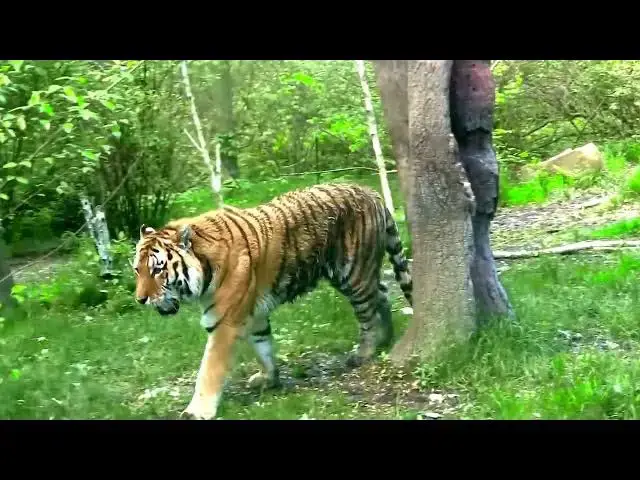
How Tiger Movement Varies by Gender and Territory
Show More Show Less View Video Transcript
0:00
tiger movement patterns how gender and
0:03
territory shape
0:04
Behavior Tigers The Majestic big cats of
0:09
Asia are known for their power and
0:12
stealth but did you know that their
0:14
movement patterns very significantly
0:17
based on gender and
0:19
territory this fascinating aspect of
0:22
tiger Behavior offers insights into
0:26
their ecology and conservation needs
0:30
male and female tigers exhibit distinct
0:34
differences in their movement
0:36
patterns male tigers generally cover
0:39
larger areas and move greater distances
0:42
compared to
0:44
females this is primarily due to their
0:47
need to patrol and defend larger
0:51
territories a male tiger might Roman
0:54
area up to 100 square km or more
0:57
depending on the habitat quality and pre
1:01
availability female tigers on the other
1:03
hand tend to have smaller home
1:06
ranges their movement is often more
1:09
concentrated especially when they have
1:12
Cubs a female tiger with young typically
1:15
restricts her movements to areas close
1:17
to her Den focusing on hunting and
1:20
caring for her
1:21
Offspring her territory might be around
1:24
20 to 40 square km significantly smaller
1:28
than that of a male territory plays a
1:31
crucial role in shaping tiger movement
1:34
patterns in areas with abundant prey and
1:38
suitable habitat Tigers may have smaller
1:40
territories and move
1:43
less conversely in regions with scarce
1:46
resources Tigers need to cover larger
1:48
areas to find food and
1:51
mates this can lead to increased
1:53
movement and larger home
1:56
ranges human activities and habitat
1:59
fragmentation also influence tiger
2:02
movement in areas where human
2:04
settlements encroach on tiger habitat
2:07
these big cats May alter their movement
2:09
patterns to avoid
2:11
conflict they might become more
2:13
nocturnal moving primarily at night when
2:16
human activity is
2:18
lower research has shown that tigers in
2:21
protected areas with minimal human
2:23
disturbance exhibit more natural
2:26
movement
2:27
patterns they are able to move freely
2:30
within their territories following prey
2:32
movements and natural
2:35
cycles in contrast tigers in highly
2:38
fragmented or disturbed habitats may
2:41
show more erratic movement patterns as
2:44
they navigate through a patchwork of
2:46
suitable and unsuitable
2:48
areas interestingly seasonal changes can
2:52
also affect tiger
2:53
movement during mating season both male
2:57
and female tigers may increase their
3:00
movements as they search for potential
3:03
Ms males in particular May travel long
3:06
distances and cross multiple territories
3:10
in their quest to find a receptive
3:13
female understanding these variations in
3:15
Tiger movement is crucial for
3:17
conservation
3:19
efforts by recognizing how gender and
3:22
territory influence tiger Behavior
3:24
Wildlife managers can design more
3:27
effective protected areas and corridors
3:30
this knowledge also helps in mitigating
3:33
human tiger Conflict by predicting where
3:36
tigers are likely to move and
3:38
implementing appropriate
3:40
measures the complex interplay between
3:44
gender territory and tiger movement
3:47
highlights the intricate nature of these
3:50
magnificent
3:52
creatures as we continue to study and
3:54
understand their behavior we gain
3:56
valuable insights that can help ensure
3:59
the surviv of tigers in the wild for
4:02
generations to come
#Pets & Animals
#Reptiles & Amphibians
#Wildlife
#Wildlife
#Biological Sciences
#Ecology & Environment
#Hunting & Shooting