Up next in 10


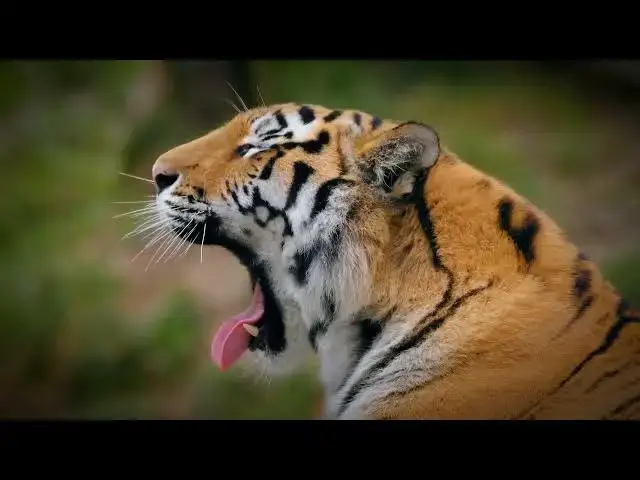
Discover how tiger skeletons differ from other big cats. Learn about their elongated skulls, flexible spines, robust limbs, and specialized paws that make tigers exceptional hunters and swimmers. This video explores the evolutionary adaptations that set tigers apart in the animal kingdom.
Show More Show Less View Video Transcript
0:00
tiger skeletons unique features of
0:02
Nature's perfect
0:04
Predator tigers with their striking
0:07
orange and black stripes are among the
0:10
most recognizable big cats in the
0:12
world but beneath that iconic coat lies
0:16
a skeleton that sets them apart from
0:18
their feline
0:20
cousins how exactly do tiger skeletons
0:23
differ from those of other big
0:26
cats let's explore the unique features
0:28
that make tigers stand out in the animal
0:31
kingdom Tigers belong to the panther
0:34
genus which includes other big cats like
0:38
lions Jaguars and
0:41
leopards while they share many
0:43
similarities with their relatives tiger
0:45
skeletons have evolved distinct
0:47
characteristics that contribute to their
0:50
power agility and hunting
0:53
prowess one of the most notable
0:55
differences is in the skull
0:58
structure tigers have longer skulls
1:01
compared to other big cats with a more
1:04
elongated
1:06
snout this adaptation allows for a
1:10
larger nasal cavity enhancing their
1:12
sense of
1:14
smell additionally tiger skulls have
1:17
larger eye sockets providing space for
1:19
their Keen eyesight crucial for hunting
1:22
in various light
1:24
conditions moving down to the spine
1:27
Tigers possess a unique flexibility
1:31
their vertebrae are specially adapted to
1:33
allow for greater rotational movement
1:36
particularly in the lower back this
1:40
increased spinal Mobility enables Tigers
1:43
to make sharp turns while chasing prey
1:46
and AIDS in their powerful swimming
1:49
abilities setting them apart from other
1:51
big
1:52
cats the shoulder blades of tigers are
1:55
also
1:57
distinctive they have a more rectangular
1:59
shape and are positioned at a slightly
2:02
different angle compared to other big
2:05
cats this configuration allows for a
2:09
wider range of motion in the front limbs
2:12
contributing to the Tiger's Incredible
2:15
strength and Agility when climbing or
2:19
taking down large prey in the limbs
2:22
tiger leg bones are proportionally
2:25
longer and more robust than those of
2:28
other big cats
2:30
this adaptation provides tigers with the
2:33
ability to cover greater distances in a
2:36
single bound and delivers more force in
2:40
their
2:40
pmses The increased bone density also
2:44
supports their larger body mass as
2:46
tigers are often the heaviest of the big
2:49
cats tiger pores are equipped with
2:52
specialized toe bones that allow for
2:55
silent
2:56
movement the last bone in each toe is UN
2:59
uniquely shaped to hold the retractable
3:02
claws at a specific
3:05
angle this design enables Tigers to walk
3:08
silently by Distributing their weight
3:11
evenly across soft por pads giving them
3:14
a stealthy advantage in
3:15
hunting the tailbones of tigers are also
3:19
worth
3:19
noting they have more vertebrae in their
3:22
tails compared to other big cats
3:25
providing enhanced balance and
3:28
maneuverability this extra length and
3:31
flexibility in the tail acts as a
3:34
counterbalance during quick turns and
3:37
jumps essential for a predator that
3:40
often hunts in dense forest
3:43
environments these skeletal adaptations
3:46
work in harmony to make Tigers the
3:49
formidable Predators they are the
3:52
combination of a powerful flexible spine
3:56
robust Limbs and specialized skulls
3:59
structure allows Tigers to excel in
4:02
various habitats from dense jungles to
4:05
snowy
4:07
terrains understanding these unique
4:10
skeletal features not only highlights
4:13
The evolutionary marvels of tigers but
4:15
also underscores the importance of
4:18
preserving these magnificent creatures
4:20
and their diverse
4:22
habitats the tiger skeleton is a
4:25
testament to Nature's Ingenuity
4:27
perfectly adapted for survival in
4:30
challenging environments
#Pets & Animals
#Wildlife
#Biological Sciences
#Ecology & Environment