Up next in 10

WARNING Dont Make This Tire Pressure Mistake That Wrecks Tires
Feb 21, 2026

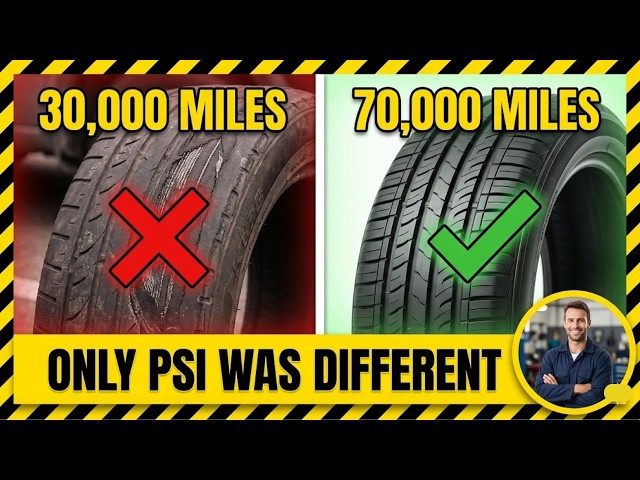
Are your tires wearing out at 30,000 miles instead of 60,000? Stop guessing your tire pressure! Discover the truth about the 32 PSI door jamb sticker, how to read dangerous tire wear patterns, and the exact PSI you need to maximize tire life and fuel economy.
👇 Read more for the ultimate tire pressure guide & timestamps!
🚗 THE TIRE PRESSURE MISTAKE COSTING YOU THOUSANDS
There is a ton of conflicting advice online telling you to run your tires at max pressure to save gas. The truth? Overinflating your tires causes premature center wear, ruining a $800 set of tires just to save $20 a year on fuel. In this video from YourMotorCare, we break down exactly what your vehicle's engineers actually want you to do.
🔧 WHAT YOU WILL LEARN IN THIS VIDEO:
✅ Why underinflation causes edge wear (and loses you 1-2 PSI a month naturally)
✅ Why the "Max Pressure" on your tire sidewall is NOT your recommended driving pressure
✅ How heavy loads and winter temperature drops completely change your required PSI
✅ Why relying on your dashboard TPMS light means your tires are already taking damage
🎯 YOURMOTORCARE'S RECOMMENDED MAINTENANCE:
Check your driver’s side door jamb for the baseline cold PSI.
Buy an ANSI-certified digital tire pressure gauge.
Check all four tires on the 1st of every month BEFORE driving (cold tires).
Add 3-5 PSI only when hauling heavy loads or packing the car for a road trip.
Check alignment if you see one-sided tire wear!
Show More Show Less View Video Transcript
0:00
There's a lot of confusion about tire
0:02
pressure right now. I've had dozens of
0:04
customers this month alone asking me
0:06
questions like, "Should I ignore my door
0:09
jam sticker and run higher pressure? Am
0:11
I destroying my tires? Is there a secret
0:14
trick to get better fuel economy?"
0:16
Here's what's happening. People are
0:17
seeing their tires wear out early, maybe
0:20
at 30,000 mi instead of 60,000. They're
0:23
wondering if it's a pressure issue or
0:25
they're looking for ways to save money
0:26
on gas and heard that tire pressure is
0:29
the key. The problem is there's a lot of
0:31
conflicting advice out there and it's
0:33
hard to know what's actually true. So
0:35
today I'm going to clear up the
0:37
confusion once and for all. What does
0:39
that door jam number actually mean? When
0:42
should you follow it exactly? When
0:43
should you adjust it? How do you know if
0:45
you're doing it right? And most
0:47
importantly, how do you avoid making
0:49
expensive mistakes? By the end of this
0:51
video, you'll have a clear, simple
0:53
system for maintaining your tire
0:55
pressure that maximizes tire life, keeps
0:57
you safe, and optimizes your fuel
0:59
economy. No gimmicks, no confusion, just
1:02
straightforward answers. Let's dive in.
1:04
What the door jam number really means.
1:07
Let's start with the basics. That tire
1:09
pressure sticker on your driver's door
1:11
jamb, sometimes in your glove box or
1:14
fuel door, shows your vehicle
1:16
manufacturer's recommended tire
1:18
pressure. This isn't a random number.
1:20
It's the result of extensive testing
1:22
where engineers balanced ride comfort,
1:24
handling, tire wear, fuel economy, and
1:27
safety for your specific vehicle. They
1:30
tested different weights, speeds, and
1:32
road conditions. They work directly with
1:34
tire manufacturers. Then they gave you
1:36
this number. It's designed for normal
1:39
driving conditions, daily commuting,
1:41
errands, highway trips with typical
1:43
passenger loads, not towing heavy
1:46
trailers, or constantly hauling maximum
1:48
cargo, just regular everyday use. You'll
1:51
notice it often shows different numbers
1:53
for front and rear tires. That's because
1:55
your engine sits over the front wheels,
1:58
so they carry more weight. The pressures
2:00
account for this weight distribution.
2:02
One critical detail, this is for cold
2:04
tires. Cold means the car has been
2:06
sitting at least 3 hours or you've
2:09
driven less than a mile. After driving,
2:11
tires heat up and pressure increases by
2:14
3 to 5 PSI. That's normal and expected.
2:17
The three tire wear patterns you need to
2:19
know. Your tread tells you a story.
2:21
Here's how to read it. Edge wear both
2:23
sides. When both outer edges wear faster
2:26
than the center, that's under inflation.
2:28
The tire can't maintain its proper shape
2:31
under the vehicle's weight. The
2:32
sidewalls flex too much. The contact
2:35
patch gets wider and the edges bear most
2:37
of the load. This is the most common
2:39
wear pattern I see in my shop. And
2:41
here's why. Tires naturally lose about 1
2:44
to 2 PSI per month just from air slowly
2:47
permeating through the rubber. If you
2:49
set your pressure to 35 PSI and don't
2:52
check for 6 months, you could be down to
2:54
29 or 30 PSI. That's when edge wear
2:57
accelerates. The fix is simple. Check
3:00
monthly and maintain the recommended
3:02
pressure. If you catch it early, you can
3:04
stop the damage. If you wait until the
3:05
edges are bald, you've already lost
3:08
thousands of miles of tire life. Center
3:10
wear. If the center wears faster than
3:12
the edges, that's over inflation. When
3:14
you put too much air in a tire, it can't
3:17
flex properly. The tire balloons outward
3:19
in the middle and the center of the
3:21
tread makes more contact with the road
3:23
than the edges. This often happens when
3:25
people hear about running higher
3:27
pressure for fuel economy and go too
3:29
far. Yes, a couple PSI higher might help
3:32
slightly, but 8 to 10 PSI over the
3:35
recommendation causes this problem. You
3:38
save a few dollars on gas, but lose
3:40
hundreds on premature tire replacement.
3:42
Not a good trade. One side wear, one
3:45
edge wearing significantly faster.
3:47
That's not a pressure issue. Your
3:49
alignment is off. Get it checked
3:50
immediately. Even wear the goal.
3:53
Consistent tread depth across the entire
3:55
width means your pressure is right, your
3:57
alignment is good, and you're rotating
3:59
regularly. This is how you get 60,000 mi
4:02
from good tires. When to adjust your
4:05
tire pressure? The door jam number is
4:07
your baseline, but there are legitimate
4:09
times to adjust it. Heavy loads, road
4:11
trip with four adults and full luggage,
4:14
hauling building materials or furniture.
4:16
This is when you need to increase your
4:18
tire pressure. Here's why. That door jam
4:20
number assumes typical loads. Maybe you
4:23
and one passenger with some groceries.
4:25
When you add significantly more weight,
4:27
you're compressing the tires more.
4:29
Without additional pressure, the tires
4:31
will flex excessively, run hot, and
4:33
could even fail on a long highway trip.
4:36
Add 3 to 5 PSI to the recommended
4:39
pressure when heavily loaded. Some
4:40
vehicles show a maximum load pressure on
4:43
the door jamb. Use that number when
4:45
you're maxing out your vehicle's
4:46
capacity. Just remember to reduce
4:48
pressure back to normal after you
4:50
unload. I see people forget this step
4:52
all the time and then they're running
4:54
around with overinflated tires when
4:56
they're driving solo again. Temperature
4:58
changes. For every 10° Fahrenheit
5:01
temperature change, your tire pressure
5:03
changes about 1 PSI. Set your tires to
5:06
35 PSI and fall at 70° F. When winter
5:09
hits at 30° F, you're down to 31 PSI
5:13
even though no air escaped. to check and
5:15
adjust when seasons change. You might
5:17
need to add 3 to 4 PSI in winter to
5:20
maintain proper pressure. Long highway
5:23
trips, extended highway driving,
5:25
especially in summer heat, can benefit
5:27
from adding 2 to 3 PSI. Highway speeds
5:30
generate more heat, which increases
5:32
pressure. Starting slightly higher when
5:34
cold, compensates for this heat. The
5:36
TMMS warning light myth. Many drivers
5:39
think the TMMS light tells them when
5:41
pressure is even slightly off. It
5:44
doesn't. By law, TMMS only has to warn
5:46
you when pressure drops 25% below the
5:50
recommendation. If you should be at 35
5:52
PSI, that light won't trigger until you
5:54
hit 26 PSI. At 26 PSI, you're
5:58
dangerously under inflated. Your tire is
6:00
flexing excessively, running hot, and
6:03
wearing rapidly. The TMMS is an
6:05
emergency warning, not a maintenance
6:07
tool. Don't wait for the light. Check
6:09
manually every month. How to check tire
6:11
pressure correctly. Get a quality gauge.
6:14
Skip those pencil style gauges at gas
6:16
stations. They're often off by 3 to 5
6:19
PSI. Invest 15 to $25 in a quality
6:23
digital gauge with ANZY certification.
6:25
Accurate within.5 PSI. It's a one-time
6:29
purchase that lasts 10 years plus. Check
6:31
when cold, first thing in the morning
6:33
before driving or after the car has been
6:36
sitting 3 hours. Pressure increases 3 to
6:38
5 PSI after driving. So, hot readings
6:41
will be higher than they should be when
6:43
cold. Check all four tires monthly.
6:46
Remove the valve cap. Press the gauge
6:48
firmly onto the valve stem. Read the
6:50
number and compare to your door jam
6:52
sticker. Front and rear might be
6:54
different. If you're low, add air. If
6:56
you're high, press the center pin to
6:58
release some. Set a monthly reminder on
7:00
your phone right now. First of every
7:02
month, check your tires. 5 minutes of
7:04
check-in can save you hundreds in
7:06
premature tire replacement. Common myths
7:09
about tire pressure. Myth number one,
7:11
higher pressure always means better fuel
7:13
economy. Reality, yes, higher pressure
7:16
reduces rolling resistance, but we're
7:18
talking 1 to2% improvement for most
7:21
vehicles. That's $30 to $50 per year,
7:23
but you risk premature center wear,
7:26
harsh ride, and reduced grip. The small
7:28
fuel savings isn't worth the trade-offs.
7:30
Myth number two, the maximum pressure on
7:33
the tire sidewall is what you should
7:35
run. In reality, that's the maximum safe
7:38
pressure, not the recommended operating
7:40
pressure. Most passenger car tires show
7:42
44 to 51 PSI maximum. Your actual target
7:46
is the door jam number, which is
7:48
typically 30 to 36 PSI. Myth number
7:51
three, you only need to check when the
7:53
TMMS light comes on. Reality, by the
7:56
time that light illuminates, you're
7:58
already 25% low and damaging your tires.
8:01
Check manually every month, regardless
8:04
of warning lights. the real costs and
8:06
benefits. Let's talk about actual
8:08
numbers so you understand what's at
8:10
stake. A good set of four tires costs
8:12
600 to $1,000 installed. With proper
8:16
maintenance and correct tire pressure,
8:17
you should get 50 to 70,000 mi from good
8:20
tires. That's 6 to 8 years for the
8:23
average driver. But if you consistently
8:25
run too low, even just 5 to 7 PSI under
8:28
the recommendation, you might only get
8:30
35 to 40,000 mi before the edges are
8:33
shot. You've just lost $250 to $400
8:37
worth of tire life. That's real money.
8:39
Now, what about the fuel economy claims?
8:41
Yes, properly inflated tires do improve
8:44
fuel economy compared to underinflated
8:46
ones. If you're running at 28 PSI when
8:49
you should be at 35, fixing that could
8:52
improve your fuel economy by 2 to 3% for
8:55
someone driving 12,000 mi at 25 MPG with
8:58
$3.50 gas. That's about $70 per year
9:02
saved. But here's the important part.
9:05
Running significantly above the
9:06
recommendation for that extra 1 to2%
9:09
fuel economy gain, you might save $15 to
9:12
$25 per year in fuel, but you risk
9:15
premature center wear that could cost
9:17
you hundreds. The math doesn't work out.
9:20
The sweet spot is simple. Maintain the
9:22
manufacturer's recommended pressure. You
9:24
get optimal tire life, proper safety,
9:27
good handling, and you're not leaving
9:29
significant fuel savings on the table.
9:31
What to do right now. Step one, find
9:34
your door jamb sticker and take a photo
9:37
with your phone. Can't find it? Check
9:40
your owner's manual or glove box. Step
9:43
two, buy a quality digital tire gauge
9:46
this week. $20 investment that pays for
9:49
itself immediately. Step three, check
9:52
your tire pressure tomorrow morning
9:55
before you drive. See where you actually
9:58
stand. Step four, adjust to the door jam
10:02
recommendation for normal driving. Only
10:05
deviate when you have heavy loads,
10:07
temperature extremes, or long highway
10:10
trips. Step five, set a monthly reminder
10:14
on your phone right now. First of every
10:16
month, check your tires. Step six, next
10:20
time you rotate your tires, inspect the
10:22
wear pattern. Even wear means you're
10:25
doing it right. Unusual wear means it's
10:28
time to investigate why. Tire pressure
10:31
doesn't have to be complicated. Your
10:34
car's manufacturer did the engineering
10:37
work for you. They gave you a number
10:39
that balances safety, tire life,
10:42
comfort, and efficiency. Follow that
10:44
number for normal driving. Adjust
10:47
intelligently when you have heavy loads,
10:50
temperature changes, or special
10:52
circumstances. Check monthly with a
10:54
quality gauge. Read your tire wear
10:57
patterns to confirm you're doing it
10:59
right. Do this consistently and you'll
11:01
get maximum tire life. 60,000 plus miles
11:05
from good tires. You'll maintain optimal
11:08
fuel economy. You'll have proper
11:10
handling and safety. And you'll have
11:13
peace of mind knowing your tires are in
11:15
good shape. That's it. No secrets, no
11:18
tricks, just proper maintenance. If this
11:21
helped clear up the confusion, hit that
11:23
like button and subscribe for more
11:26
straightforward automotive advice. Drop
11:28
a comment and let me know when's the
11:31
last time you checked your tire
11:32
pressure. I'm betting at least one of
11:35
your tires is low right now. Thanks for
11:37
watching. Now go check those tires.
#Autos & Vehicles
#Vehicle Repair & Maintenance