Up next in 10


The U.S. government has already passed a law that could change the way you drive forever.
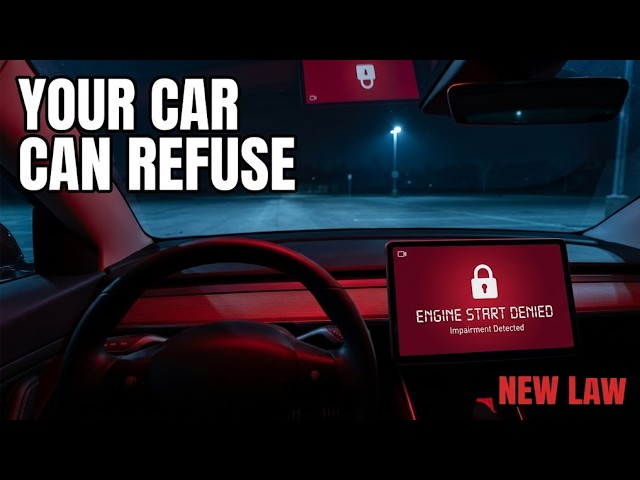
Buried inside the Infrastructure Investment and Jobs Act is a mandate requiring future vehicles to include technology capable of detecting driver impairment and potentially preventing vehicle operation. That means cameras monitoring your eyes, sensors reading your hands, and AI systems analyzing your behavior before your car even moves.
But here's the shocking part: the government's own reports have acknowledged that current technology may not yet meet the reliability standards required for such a system.
In this video, we break down:
• The 2021 law most drivers have never heard about
• How driver monitoring systems actually work
• Why NHTSA says false positives are inevitable
• The cameras and sensors being developed by automakers
• The privacy concerns surrounding biometric and driving data
• What this could mean for future Toyota, Ford, GM, Honda, and other vehicles
• The timeline leading up to the 2027 implementation deadline
If you're planning to buy a new car in the next few years, this is information you need to know.
Subscribe to YourMotorCare for in-depth automotive insights, vehicle technology updates, maintenance tips, and industry news that affects every driver.
#CarTechnology #DriverMonitoring #AICars #CarNews #AutomotiveNews #FutureCars #YourMotorCare
Show More Show Less View Video Transcript
0:00
The government just admitted the
0:01
technology does not work. So why is it
0:04
still being built into your next car?
0:06
Here is what is happening right now.
0:08
With the next generation of vehicles now
0:10
being developed, a camera will watch
0:12
your eyes. Sensors will read your hands.
0:15
Software will decide in under a second
0:17
whether you are allowed to drive. Not a
0:19
police officer making that call. Not a
0:21
judge, not a doctor, an algorithm. This
0:24
is already law. Signed in 2021, still
0:26
funded. and the last serious attempt to
0:29
stop it failed 4 months ago by just 28
0:32
votes. What I found while researching
0:34
this story genuinely changed how I think
0:36
about buying a new car. Stay with me.
0:39
Part one, the law nobody told you about.
0:42
In November 20 to 21, President Biden
0:44
signed what became known as the
0:46
Infrastructure Investment and Jobs Act.
0:49
2,700 pages long. Roads, bridges,
0:52
broadband, electric charging stations.
0:55
The kind of bill that gets passed
0:56
because the headline sounds reasonable
0:58
and almost nobody reads past it. Buried
1:00
on page 404, a single section, section
1:03
2420. Here's what it actually requires.
1:06
Every new passenger vehicle sold in the
1:08
United States. Every single one must
1:11
carry technology capable of, and I am
1:13
reading directly from the statute here,
1:15
preventing or limiting motor vehicle
1:17
operation if the system detects that the
1:20
driver may be impaired. Read that again
1:22
slowly. Not a breathalyzer you blow
1:24
into. Not a test you take, a passive
1:26
system running constantly, watching you
1:28
and making a decision about whether you
1:30
are allowed to drive with no officer
1:32
reviewing it. No human being in the loop
1:34
at all. Now, here is where this gets
1:36
complicated because the government
1:38
already knows what happens when that
1:39
system gets the call wrong. Part two,
1:41
the admission. Before I get to the
1:43
numbers, I want you to meet someone. It
1:45
is 2 in the morning. A nurse just
1:47
finished a 12-hour shift. Exhausted,
1:50
completely sober, she walks to her F-150
1:53
in the hospital parking lot, gets in,
1:55
presses start, nothing. The camera near
1:57
the steering column read her drooping
1:59
eyes. The system flagged her as a
2:01
potential impairment risk. She has not
2:03
had a drink in 3 days, but the software
2:05
made its call in under a second. No
2:08
override, no appeal, no human being
2:10
anywhere in that chain who she can reach
2:12
and say, "You have this wrong." I want
2:14
to tell you where that scenario comes
2:16
from because it is not something I
2:18
invented. The National Highway Traffic
2:20
Safety Administration, the agency
2:22
responsible for making this law work,
2:24
raised it themselves in their official
2:26
rulemaking documents. They did not
2:28
describe it as unlikely. They called
2:30
false positives like this their word
2:32
inevitable. And that word came out of a
2:34
report they submitted to Congress in
2:36
March 2026. a report where they also
2:39
wrote in plain language that no
2:41
technology currently available meets the
2:44
accuracy and reliability standards this
2:47
mandate requires. They called current
2:49
systems demonstrating unacceptable error
2:52
rates, the same government that signed
2:54
this law, saying the technology to
2:56
enforce it does not work yet. But here
2:58
is what floored me most. They ran the
3:01
math on what 99.9%
3:03
accuracy would actually look like across
3:06
227 billion annual driving trips in
3:09
America. 99.9%.
3:11
That sounds almost impossibly precise.
3:14
At that level, the system would still
3:16
incorrectly flag millions of completely
3:18
sober drivers every single year. And
3:21
then Representative Thomas Massie stood
3:23
up in Congress, heard all of this
3:25
testimony, and said seven words. This is
3:27
a wish, not a plan. The mandate is still
3:30
active. Part three, what is actually
3:32
inside your next car? So, what does this
3:35
technology physically look like? Under
3:37
the law, automakers can choose from
3:39
several approaches. And this is where it
3:42
gets more unsettling than most people
3:43
realize. The most common option is a
3:46
camera, typically mounted near the
3:47
steering column or on the dashboard,
3:49
that monitors your eye movement, your
3:51
blink rate, your head position
3:53
constantly on every drive. The second
3:56
option is a steering wheel sensor, pads
3:58
woven directly into the surface of the
4:00
wheel, designed to detect alcohol
4:02
concentration through your skin the
4:03
moment you grip it. The third is
4:05
behavioral software, an AI system
4:08
analyzing your steering inputs, your
4:10
braking pattern, your lane position,
4:12
building a real-time picture of whether
4:14
your driving looks normal. Now, and this
4:16
is the part I keep coming back to, the
4:18
law does not limit any of this to
4:20
alcohol. It covers any impairment,
4:22
fatigue, prescription medication,
4:24
distraction, emotional stress. A 2023
4:28
Insurance Institute study found that
4:30
some eyetracking systems already flag a
4:32
routine mirror check as a distraction
4:34
event. Checking your mirror flag and the
4:37
law as written contain zero provisions
4:40
for what happens when the system gets it
4:42
wrong. These systems do not determine
4:44
guilt. They calculate probability and
4:46
based on that probability, they may
4:48
limit whether the vehicle can operate.
4:50
Part 4. 30. Seconds before you move an
4:53
inch. Most people imagine a
4:54
breathalyzer, a tube. You blow into a
4:57
number on a screen. Something that feels
4:58
like a test. That is not what this looks
5:00
like. Here is what the process may
5:02
actually feel like inside a vehicle
5:04
equipped with this system. You reach for
5:05
the door handle. In some concepts being
5:07
developed, the assessment has already
5:09
begun. Sensors reading how you approach
5:11
the car, how you grip the handle. You
5:13
sit down. The infrared camera near your
5:15
steering column activates. It is not
5:17
visible to you. There is no light, no
5:19
indicator. It simply begins. Your eyes
5:22
are being tracked. Blink rate, pupil
5:24
size, how steadily your gaze holds. The
5:27
system is building a baseline, comparing
5:29
what it sees right now against what a
5:31
normal, unimpaired driver looks like.
5:33
You grip the steering wheel. In vehicles
5:35
with skin sensors, the pads in the wheel
5:37
surface begin reading through your
5:38
palms. No button, no prompt. Contact
5:41
alone is enough. You press start.
5:43
Somewhere in the vehicle's computer, a
5:45
risk score is being generated. Not a
5:47
verdict, not a certainty, a probability.
5:50
And in the fraction of a second before
5:52
the engine fully engages, that score is
5:55
compared against a threshold. What
5:56
surprised me most about this process is
5:59
how invisible it is designed to be. No
6:01
countdown, no warning light, no moment
6:04
where you are told you are being
6:05
evaluated. The system is not waiting for
6:08
you to do something wrong. It is simply
6:10
watching, deciding, and if the score
6:12
crosses the line, the car does not
6:15
start. Part five, what the automakers
6:17
are already building. Here is something
6:18
that does not get mentioned enough in
6:20
the coverage of this story. The
6:22
automakers are not sitting around
6:23
waiting for the rules to land. They are
6:25
already in development. General Motors
6:28
has explored systems that may begin
6:30
assessing a driver before they even sit
6:32
down, reading movement patterns as
6:34
someone approaches the vehicle. Ford has
6:37
explored patents involving facial
6:39
analysis and physiological monitoring
6:41
using machine learning to assess driver
6:44
state before the car moves an inch.
6:46
Toyota has researched steering wheel
6:49
technology that could detect alcohol
6:51
concentration through skin contact the
6:54
moment a driver grips a new Camry or
6:57
Corolla. Now, I want to be precise here
6:59
because precision matters with a story
7:01
like this. Patents are not products.
7:03
Research is not a finished system. What
7:06
makes this significant is not that these
7:08
technologies exist yet. It is that every
7:10
major automaker is already moving in
7:12
this direction toward a technical
7:14
standard that the government has not
7:16
actually defined yet. They are building
7:18
toward a target nobody has officially
7:21
set. Which means the first generation of
7:23
drivers who buy cars with these systems
7:26
installed. They are the ones who will
7:28
discover where the edges of this
7:29
technology actually are, not in a lab on
7:32
their morning commute. Part six, your
7:34
car is already selling you. At this
7:36
point in my research, I thought I had
7:38
the full picture. Then I found something
7:40
that reframed the entire story. A
7:42
February 2026 CNN investigation revealed
7:46
that roughly 90% of new cars on the road
7:49
today already collect data on how you
7:51
drive, every 3 seconds. Speed, braking
7:54
patterns, location, phone use, every 3
7:58
seconds. And many automakers are selling
8:00
that data. A US Senate investigation led
8:03
by Senator Ron Weiden found that Honda
8:06
had sold driving data from 97,000
8:09
vehicles to a data broker for 26 cents
8:12
per car. 26 cents. General Motors
8:14
recently settled claims related to how
8:16
it collected and distributed driver data
8:19
without customers fully understanding
8:20
what they had agreed to. The settlement
8:22
$12.75
8:24
million. Now take all of that and layer
8:27
the new mandate directly on top of it.
8:29
Add cameras watching your eyes on every
8:32
trip. Sensors reading your hands every
8:34
time you grip the wheel. Behavioral
8:36
software logging every input you make
8:39
behind the wheel. And then ask yourself
8:41
the question that nobody in the showroom
8:43
will ever bring up. Your smartphone
8:45
already knows a lot about you. Your car
8:48
is about to know everything that happens
8:50
between point A and point B. where you
8:53
work, where you sleep, where you
8:54
worship, where your children go to
8:56
school, and exactly how often you visit
8:58
each of those places. Right now, there
9:00
is no federal law requiring automakers
9:02
to delete any of that data. No rule
9:05
limiting who they can share it with. No
9:07
opt- out provision written into the
9:09
mandate itself. The car will be sitting
9:12
in your driveway before anyone has
9:14
figured out who legally owns what it
9:16
knows about you. Part seven, the part I
9:19
think about most. I want to be honest
9:20
with you here because I think this story
9:22
deserves it. Drunk driving is not a
9:24
manufactured problem. In 2023, 12,429
9:30
people died in alcohol impaired crashes
9:33
in the United States. One person every
9:35
42 minutes, every single day. The people
9:37
who wrote this law were not making up a
9:39
crisis. The deaths are real. The grief
9:42
is real. The urgency behind this is
9:44
real. But here's the question I cannot
9:46
stop sitting with. is passive
9:48
surveillance software. Making instant
9:50
unilateral decisions about your right to
9:52
operate a vehicle with no human review
9:55
built to a technical standard that does
9:57
not yet exist. Collecting biometric data
10:00
under privacy frameworks that have not
10:02
been written. Is that actually the right
10:04
solution? The government's own safety
10:06
agency looked at the evidence and said
10:07
the technology is not ready. Congress
10:09
looked at that finding and kept the
10:11
mandate funded anyway. that gap between
10:14
this does not work yet and we are
10:16
putting it in every car regardless. That
10:18
is the gap every driver in America is
10:20
currently standing in. So here is where
10:22
everything actually stands right now.
10:24
The law is real. It is active. It is
10:27
funded. The last serious attempt to
10:29
defund it failed in January 2026. NHTSA
10:34
has not finalized the technical rules
10:36
yet. Enforcement is set to begin no
10:38
later than September 2027. Once the
10:41
rules land, automakers typically get 2
10:43
to 3 years to comply. Your current car
10:45
is not affected by any of this. But if
10:47
you are planning to buy new in the next
10:49
2 or 3 years, these systems may be part
10:51
of the transaction. Cameras, skin
10:53
sensors, behavioral AI collecting data
10:56
under rules that may still be unwritten
10:58
when you sign the purchase agreement.
11:00
And the first time your car will not
11:01
start, it will not be because something
11:03
broke. It will be because software made
11:06
a decision about you. Not a mechanic,
11:08
not a police officer, not a judge.
11:10
Software running on a standard nobody
11:12
has finished writing. Collecting data
11:14
nobody has figured out how to protect.
11:16
Built into a vehicle that an act of
11:19
Congress already decided you should
11:21
have. If this gave you something you did
11:23
not have before, share this video with
11:25
someone who is buying a car this year.
11:27
Because most people walking into a
11:29
dealership right now have no idea this
11:31
is already part of the deal. Subscribe
11:33
to your motor care and tell me in the
11:35
comments, would you buy a vehicle that
11:37
can decide whether you are allowed to
11:39
drive it? Because that is no longer a
11:41
hypothetical question. It has a
11:43
deadline.
#Autos & Vehicles