Up next in 10


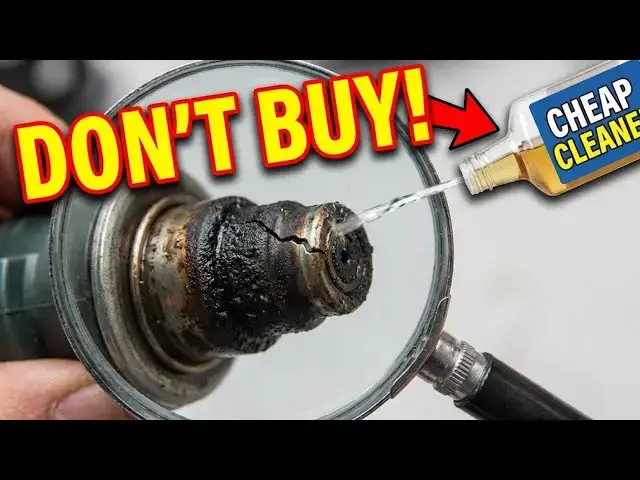
Are you pouring "Snake Oil" into your gas tank? Over 60% of fuel injector cleaners on the market are mostly kerosene, alcohol, or diesel fuel—chemicals that can damage your modern engine, melt seals, and clog catalytic converters.
In this video, I perform a forensic analysis of the most popular fuel additives to expose the "Dirty 9" you should NEVER use. We dive deep into the science of Polyetheramine (PEA) vs. cheap solvents and reveal the only 5 products that actually clean your fuel system.
🛑 Products Exposed: We analyze ingredients found in common brands like [Insert generic names if you want to be safe, or specific ones like Sea Foam, Lucas, etc. based on your risk tolerance].
✅ The "Fab 5" Recommendations:
Red Line SI-1 (Best Overall): [https://amzn.to/3Ypucsb]
Chevron Techron (OEM Approved): [https://amzn.to/4o0C8vy]
Gumout Regane (Best Budget): [https://amzn.to/45BkHtB]
Royal Purple Max Clean: [https://amzn.to/4q9R62K]
Lucas Deep Clean: [https://amzn.to/4sBjk8r]
🛠️ Recommended Tools:
✅ Anti-seize compound (https://amzn.to/3J8to6O)
Show More Show Less View Video Transcript
0:00
Over 60% of the fuel injector cleaners
0:02
sitting on the shelf right now aren't
0:04
just scams. They are silent engine
0:06
killers. I have spent the last few weeks
0:09
analyzing safety data sheets,
0:11
peer-reviewed engineering literature,
0:13
and independent mechanical tests to find
0:15
the truth, and what I found is
0:17
disturbing. The automotive aftermarket
0:19
is flooded with chemical disparities. On
0:22
one side, you have scientifically
0:23
formulated detergents designed to cleave
0:26
carbon bonds in the intense heat of a
0:28
combustion chamber. On the other side,
0:30
you have a proliferation of what can
0:32
only be described as snake oil, solvents
0:35
based on cheap kerosene, alcohols, and
0:37
napa that fundamentally fail to address
0:39
the hardness of modern carbon deposits.
0:42
To understand why this matters, you have
0:44
to look at how engines have changed. 50
0:47
years ago, we had simple carburetors
0:49
pushing fuel at just 5 psi. Today we
0:52
have high precision gasoline direct
0:54
injection or GDI systems operating at
0:58
over 2900 PSI. The engineering
1:01
tolerances have tightened to the point
1:02
where the engine's tolerance for
1:04
contamination has plummeted. In the
1:06
past, gums and varnishes were a
1:08
nuisance. Today, they are a critical
1:11
failure mode. The problem is that the
1:14
bad products on the market, which I will
1:16
expose in this video, are still using
1:18
chemistry from the 1950s. They rely on
1:21
light hydrocarbons and alcohols. While
1:24
these substances are flammable and can
1:26
clean wet sludge, they lack the surface
1:28
active chemistry required to penetrate
1:30
and lift hard carbon in the fraction of
1:33
a second they reside in your combustion
1:34
chamber. We need to talk about the
1:37
thermodynamics of deposit formation. You
1:40
see, deposits in your fuel system aren't
1:42
all the same. In the fuel rail, you get
1:44
soft deposits from oxidized fuel. These
1:47
are easy to clean, but the deposits that
1:50
actually destroy your performance, the
1:52
ones on the injector nozzle tip in the
1:54
piston crown, are hard deposits. These
1:57
are formed through pyrolysis. Fuel and
1:59
oil vapors hit hot metal surfaces and
2:02
bake into a graphitic polymerized carbon
2:04
matrix. This is essentially a ceramic
2:07
layer. It is chemically inert to mild
2:10
solvents. In a GDI engine, fuel has to
2:13
vaporize in milliseconds. If that
2:15
injector tip has hard carbon buildup,
2:18
the spray pattern gets distorted. This
2:20
leads to fuel wall wetting, oil
2:22
dilution, and the creation of soot,
2:24
which just accelerates the problem.
2:26
Against this backdrop of hardened
2:28
polymerized carbon, the cheap solvents
2:30
I'm about to list are completely
2:32
useless. Worse, they're dangerous.
2:35
Unlike the heavy iron block engines of
2:37
the past, your modern aluminum engine
2:39
with low tension piston rings and
2:41
sensitive catalytic converters is highly
2:44
susceptible to chemical damage. The
2:46
wrong additive can degrade your fuel
2:48
seals, corrode your high-pressure fuel
2:50
pump, and even dislodge chunks of carbon
2:53
that can mechanically block your
2:54
catalytic converter. Category one, the
2:57
diesel deception. Let's start with the
3:00
most dangerous category, the hydrocarbon
3:03
deceivers. A significant portion of the
3:05
bargain bin cleaners, often priced under
3:08
$4, rely on simple petroleum
3:10
distillates. If you look at the safety
3:12
data sheets for products like Abro
3:14
injector Cleaner or various generic
3:17
store brands, you will often see number
3:19
two gas oil listed as the primary
3:21
ingredient. That is just a technical
3:23
term for diesel fuel. Introducing diesel
3:26
or kerosene into a gasoline engine
3:28
presents a thermodynamic contradiction.
3:31
Gasoline engines are designed to run on
3:33
fuel with a high octane rating to resist
3:36
auto ignition. Kerosene and diesel have
3:39
very low octane ratings, typically
3:41
between 15 and 25. When you pour a
3:44
bottle of this into your tank, you are
3:46
effectively diluting the octane rating
3:48
of your gasoline. In a high compression
3:50
modern engine, this drop in octane
3:52
reduces the fuel's resistance to
3:54
pre-ignition. As the piston moves up,
3:57
the heat and pressure can cause this
3:58
mixture to ignite spontaneously before
4:01
the spark plug fires. This is known as
4:03
knock or pinging. Sustained knock sends
4:06
a cypress shock wave through the
4:08
cylinder that hammers the piston crown
4:10
and connecting rod bearings. It is
4:12
capable of cracking ring lands. While
4:15
your car's computer might try to adjust
4:17
the timing to save the engine, the
4:19
result is a massive loss of power and
4:21
efficiency. the exact opposite of what
4:23
the bottle promised you. Furthermore,
4:26
because diesel burns slower than
4:27
gasoline, it leads to incomplete
4:30
combustion, increasing suit production
4:32
and fouling the very injectors you are
4:34
trying to clean. Specific analysis of
4:36
products like Abro reveals they are
4:38
essentially diesel fuel in a disguise.
4:41
Diesel acts as a lubricant, which might
4:43
temporarily quiet a noisy fuel pump,
4:46
giving you a placebo effect of
4:48
smoothness. But diesel lacks the
4:50
detergency to remove hard carbon.
4:52
Instead, its oily nature attracts more
4:55
particulate matter, creating a sticky
4:57
matrix that traps dust and soap. The
4:59
most insidious risk here is the landmine
5:02
effect. Because these heavy oils don't
5:04
dissolve hard carbon, they merely loosen
5:07
softer surface gum. These loosened
5:09
accumulations can detach in large
5:11
flakes. In the microscopic tolerances of
5:14
an injector filter basket, these chunks
5:16
act as debris blockages, instantly
5:18
clogging an injector that was previously
5:20
only partially restricted. You are
5:22
turning a maintenance issue into a dead
5:24
cylinder. Category two, the hyroscopic
5:28
hazard. Ethanol and alcohol-based
5:30
formulations. Next, we have the
5:32
hyroscopic hazard. Ethanol and
5:35
alcohol-based formulations. Products
5:37
that rely on high concentrations of
5:39
isopropyl alcohol or ethanol are
5:42
incredibly risky. Both are hyroscopic,
5:45
meaning they have a strong chemical
5:46
affinity for water and will absorb
5:49
moisture from the surrounding
5:50
atmosphere. When you add an
5:52
alcohol-heavy cleaner to a tank that
5:54
likely already contains E10 pump gas,
5:56
you spike the total alcohol
5:58
concentration. This increases the fuel's
6:01
capacity to hold water. If the water
6:03
saturation point is exceeded, phase
6:05
separation occurs. The water alcohol
6:07
mixture separates from the gasoline and
6:10
sinks to the bottom of the tank, right
6:12
where your fuel pump pickup is. Your
6:14
engine then tries to run on this
6:16
incombustible mixture, leading to
6:18
stalling, potential hydrolock risks, and
6:20
rapid corrosion of the fuel system. But
6:23
the long-term damage is even worse.
6:25
Alcohol acts as an extracting agent on
6:27
your rubber seals. Modern seals are made
6:30
of elastors like vyon. High
6:32
concentrations of alcohol, particularly
6:35
methanol and isopropanol, leech the
6:37
plasticizers out of the rubber matrix.
6:39
Plasticizers are what keep the rubber
6:41
flexible. Once extracted, the rubber
6:44
shrinks, hardens, and becomes brittle.
6:46
If an injector O-ring cracks due to
6:48
alcohol exposure, highly pressurized
6:51
fuel can leak onto the hot engine block,
6:53
presenting a catastrophic fire hazard.
6:56
Additionally, a vacuum leak at the
6:58
intake manifold seal will cause a lean
7:00
run condition, further stressing the
7:02
engine. Category three, the legends that
7:05
don't clean. Then there are the legends
7:08
that don't live up to the hype. Marvel
7:10
Mystery Oil and Seafoam. Let's talk
7:12
about Marvel Mystery Oil first. It is
7:15
essentially a light viscosity mineral
7:17
oil with a mild solvent and a
7:19
chlorinated anti-wear additive. It is a
7:21
legacy product from the era of
7:23
carbureted engines and leaded fuel. In a
7:25
modern injector, the mineral oil
7:27
provides lubricity which may extend the
7:30
life of the fuel pump, but it has zero
7:32
efficacy against hard carbon. The
7:34
solvent component is too weak to
7:36
dissolve baked-on coke. Using MMO to
7:39
clean a clogged injector is chemically
7:41
feudal. The carbon remains while the oil
7:43
simply burns off. It is a lubricant, not
7:46
a detergent. Seafoam is another product
7:48
that misleads consumers. It lacks poly
7:51
etheramine at all. It relies on napa and
7:54
pale oil. The famous white smoke you see
7:57
when using seafoam isn't carbon leaving
7:59
your engine. It's simply the pale oil
8:01
inside the bottle burning off. It's a
8:04
visual placebo. While it might dissolve
8:06
soft sludge, because it lacks a
8:08
dispersant, it tends to loosen sludge in
8:11
large globs rather than breaking it down
8:13
molecularly. in the crank case or fuel
8:15
system. This relocated mess can clog oil
8:19
pickup screens or injector filter
8:20
basket. And finally, in the do not use
8:24
category, we have the harsh solvent
8:26
cocktails containing acetone and xylene.
8:29
Often sold as race formulas or octane
8:31
boosters. These are dangerous. Acetone
8:34
attacks polymers. Unlike alcohols which
8:37
shrink rubber, acetone causes
8:39
elastimemers to absorb the solvent and
8:41
swell uncontrollably, sometimes up to
8:44
70% after just one week of exposure. A
8:47
swollen O-ring is just as dangerous as a
8:49
shrunken one. Swelling can extrude the
8:51
seal out of its seated groove, leading
8:54
to rupture and leakage. Even worse, the
8:56
combustion of high concentrations of
8:58
xylene and acetone produces exhaust gas
9:01
temperatures that can exceed the design
9:02
parameters of your catalytic converter.
9:05
The ceramic honeycomb structure of a
9:07
catalytic converter is coated with
9:09
precious metals. If the exhaust gas is
9:11
too hot or if unburned solvents enter
9:14
the converter and ignite, the ceramic
9:16
substrate can reach its point. When the
9:18
substrate centers, it melts and
9:20
collapses, physically blocking the
9:22
exhaust flow, creating immense back
9:25
pressure, choking the engine and causing
9:27
a severe loss of power. You could be
9:29
looking at a repair exceeding $2,000 all
9:32
because of a $10 bottle of harsh
9:34
solvents. So, if solvents, alcohols, and
9:38
oils are the problem, what is the
9:40
solution? The answer lies in detergency,
9:43
specifically a chemical called
9:44
polytheramine or PA. PA is the active
9:48
ingredient that distinguishes a cleaner
9:50
from a solvent. PA molecules are
9:53
surfacants. They don't just dissolve
9:55
dirt, they chemically interact with it.
9:57
The polar nitrogen head of the pea
9:59
molecule bonds to the deposit precursors
10:02
and existing carbon deposits. The
10:04
non-polar polyethther tail extends into
10:06
the fuel stream. This structure creates
10:09
a mel around the deposit particle,
10:11
lifting it from the metal surface and
10:13
keeping it suspended in the fuel
10:15
droplets until it can be combusted.
10:17
Critically, pea does not burn off
10:19
immediately. It survives the compression
10:22
stroke and the initial flame frunk. This
10:24
allows it to deposit on the cylinder
10:26
walls, piston tops, and intake valves
10:28
where it continues to clean during the
10:30
combustion process. It effectively steam
10:33
cleans the combustion chamber, removing
10:35
the carbon hot spots that cause engine
10:37
knock. Based on my research, here are
10:39
the Fab Five, the only products verified
10:42
to contain effective concentrations of
10:44
PE. Number five is Lucas Deep Clean.
10:48
Note that I am talking about the deep
10:49
clean version, not their standard Lucas
10:52
fuel treatment. The standard treatment
10:54
is just oil. Deep clean, however,
10:56
contains pea mixed with a heavy dose of
10:59
lubricants. This combination makes it
11:02
excellent for preventative maintenance.
11:04
It focuses on lubricating the fuel pump
11:06
and injectors, which is crucial for
11:08
diesels and GDI pumps running on low
11:11
sulfur, low lubricity fuels. Number four
11:14
is Royal Purple Max Clean. This product
11:17
contains PEA alongside a proprietary
11:20
fuel stabilizer. This makes it the ideal
11:23
choice for vehicles that sit idle for
11:25
long periods like motorcycles, boats, or
11:28
classic cars. The stabilizer prevents
11:31
the oxidation that creates varnish in
11:33
the first place while the pea handles
11:35
any existing deposits. Number three is
11:38
gumout regain high mileage. It is
11:41
crucial you buy the regain line as
11:44
standard gumout is mostly kerosene. The
11:47
high mileage regain version explicitly
11:49
contains PEA and is formulated with a
11:52
higher concentration to tackle stubborn
11:54
deposits in older engines. It also uses
11:57
pea combined with a corrosion inhibitor
12:00
to fight ethanol damage. It is
12:02
significantly cheaper than red line or
12:04
tecron but still provides the essential
12:06
chemistry required for effective
12:08
cleaning. Number two is Chevron Techron
12:11
concentrate plus. Chevron actually
12:13
patented the original pea chemistry.
12:16
While their exact percentage is a trade
12:18
secret, Techcron is the product
12:20
rebranded by major automakers like BMW,
12:23
GM, Hyundai, and Toyota as their
12:26
official dealer service cleaner. It is
12:28
the benchmark for safety and
12:30
consistency. It will not harm sensitive
12:33
emissions equipment or degrade your oil.
12:35
It is the safest choice for warranty
12:37
compliance and regular maintenance. And
12:39
finally, the number one recommendation
12:42
for neglected engines, Redline SI1.
12:45
Historically, this product has the
12:47
highest concentration of polyethylamine
12:50
on the market with data showing ranges
12:52
of 30 to 50%. It is capable of a one
12:56
tank cleanup. Its concentration is high
12:58
enough to clean GDI injector tips and
13:01
reduce octane requirements by removing
13:03
combustion chamber deposits that hold
13:06
heat. It also contains a synthetic upper
13:09
cylinder lubricant that is stable at
13:11
combustion temperatures unlike the
13:13
mineral oil in Marvel mystery oil. If
13:16
you need restoration, this is the bottle
13:18
to buy. Important note, the GDI
13:21
limitation. Before I end, I need to
13:23
address a critical nuance often missed
13:25
in general advice. The difference
13:28
between port fuel injection, PFI, and
13:30
gasoline direct injection, GDI. In PFI
13:34
engines, the fuel washes over the intake
13:37
valve. So, pea additives are extremely
13:40
effective at removing intake valve
13:42
deposits. However, in GDI engines, the
13:45
injector sprays fuel directly into the
13:48
cylinder, bypassing the intake valves
13:50
entirely. This means the intake valves
13:53
in a GDI engine are dry and suffer from
13:56
carbon buildup caused by PCV vapors.
13:59
Poor intank cleaners cannot clean the
14:01
intake valves of a GDI engine because
14:03
the chemical never touches them. For GDI
14:06
intake valves, the only solution is
14:09
manual cleaning like walnut blasting or
14:11
using aerosol cleaners introduced
14:13
through the intake manifold. However,
14:16
tank additives are still vital for
14:18
cleaning the GDI injector tip itself,
14:20
which is located in the hellish
14:22
environment of the combustion chamber.
14:24
The disparity between a solvent and a
14:26
detergent is the difference between
14:28
maintenance and damage. The bad products
14:31
rely on chemistries, kerosene, alcohol,
14:33
and simple solvents that act as
14:35
contaminants that degrade seals, dilute
14:38
oil, and poison catalysts. The data
14:41
supports a singular conclusion.
14:43
Polyethylamine PEA is the non-negotiable
14:47
requirement for a fuel system cleaner.
14:49
Don't let a $3 bottle of kerosene ruin
14:52
your high-pressure fuel system. Stick to
14:54
the Fab 5.
#Autos & Vehicles
#Vehicle Parts & Services
#Vehicle Repair & Maintenance