0:00
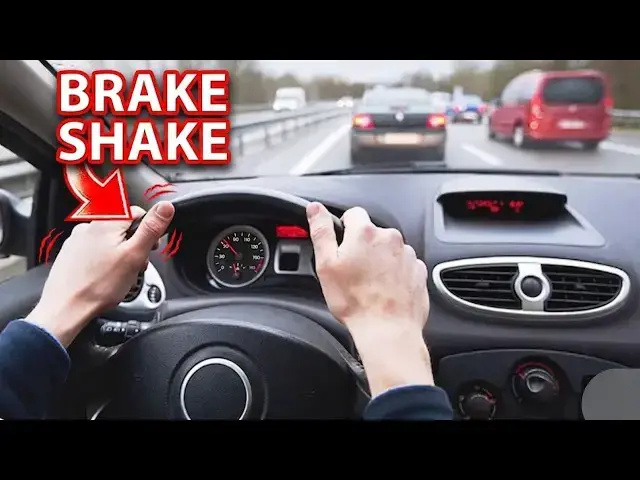
At 70 mph, you press the brake pedal.
0:02
The steering wheel shakes. And here is
0:04
the expensive part. Four common problems
0:07
can cause that exact symptom. And
0:09
replacing the wrong one first can cost
0:12
you hundreds of dollars before you ever
0:14
fix the real problem. You have been
0:16
driving like this for 3 weeks because
0:18
nothing else feels wrong. The car starts
0:20
fine. It drives fine. It only does it
0:22
when you brake at speed. Here is what
0:24
you need to understand. That shake at
0:26
highway speed is not a minor
0:28
inconvenience. [music] It is your
0:30
braking system telling you something
0:32
specific. And the faster you are going
0:34
when it happens, the more important
0:35
[music] that message is. Brake vibration
0:38
at highway speeds indicates [music] your
0:40
braking system is dealing with forces
0:43
that become significantly more dangerous
0:45
during emergency stops. The same issue
0:47
causing mild vibration at 35 mph can
0:51
behave very differently when maximum
0:54
stopping power is needed at 70. By the
0:56
end of this, you will know how to tell
0:57
all four apart before you hand anyone
1:00
your keys. Why highway speed changes
1:03
everything. At low speed, [music]
1:05
pulling out of a parking lot, stopping
1:07
at a traffic light, your brakes generate
1:09
a manageable amount of heat and force.
1:11
Small imperfections in the braking
1:14
system are barely noticeable. At highway
1:16
speed, the energy your brakes have to
1:18
absorb is significantly higher. Any
1:21
irregularity in the braking surface
1:23
becomes amplified into a noticeable
1:25
shake. Vibrations that only occur when
1:27
braking at highway speeds are a hallmark
1:30
of specific braking system issues.
1:32
[music] The effect may be too small to
1:34
notice when traveling at a lower rate of
1:36
speed. This is why some drivers go
1:38
months without knowing their brakes have
1:40
a problem. Cause one, [music] rotor
1:42
issues. What it is. Your brake rotors
1:45
are the large metal discs behind each
1:48
wheel. When you press the pedal, the
1:49
brake pads clamp against both sides of
1:52
these discs. For smooth braking, the
1:54
rotor surface needs to be consistent and
1:56
flat all the way around. When it is not,
1:58
whether from thickness variation,
2:01
lateral runout, or uneven friction
2:03
material deposits on the surface,
2:05
braking becomes uneven. What drivers
2:07
usually call warped rotors is often
2:10
related to disc thickness variation,
2:12
lateral runout, or uneven friction
2:15
material deposits that build up over
2:17
time. All of these produce the same
2:19
result, a surface the brake pads cannot
2:22
clamp against evenly, [music]
2:24
which translates directly into the pulse
2:26
you feel. What it feels like at highway
2:28
speed, those small surface
2:30
irregularities can become a noticeable
2:32
pulse through the steering wheel. A
2:34
steering wheel that shakes during
2:35
braking [music] generally means the
2:37
problem exists at the front of the
2:39
vehicle. Front rotors in most cases
2:41
because vibrations transfer more easily
2:43
through the steering system from the
2:44
front wheels. If the shake comes through
2:47
the seat instead, rear rotors are more
2:49
likely involved. What causes it? Braking
2:51
at highway speeds generate significant
2:54
heat. Repeated hard stops followed by
2:56
release allow the rotor to cool
2:59
unevenly. That uneven cooling, combined
3:01
with brake pad deposits over time,
3:03
creates the surface inconsistencies that
3:06
produce the pulsing feel. Quick clue,
3:09
look through the wheel spokes at the
3:10
rotor surface. Blue or dark heat
3:13
discoloration can be a clue that the
3:15
rotor has experienced excessive heat,
3:17
though discoloration alone does not
3:19
diagnose the cause. Grooves or scoring
3:22
visible to the naked eye suggest the
3:24
surface is no longer consistent. Typical
3:26
repair cost, a full brake job replacing
3:29
pads and rotors, typically ranges from
3:31
$400 to $900 per axle. Rotor resurfacing
3:36
combined with new pads runs $300 to $700
3:40
per axle. The honest [music] note, many
3:42
modern rotors are too thin by design to
3:45
handle resurfacing. Manufacturers build
3:47
them lighter to reduce vehicle [music]
3:49
weight. In many cases, replacement is
3:51
the only responsible option. But here is
3:53
where drivers and shops both go wrong
3:56
because rotor issues are not the only
3:58
cause of this exact symptom. And the
4:00
most expensive misdiagnosis happens when
4:03
the wrong part gets replaced first.
4:05
Cause two, sticking or seized brake
4:07
caliper. What it is, the brake caliper
4:10
is the hydraulic clamp that squeezes the
4:12
brake pads against the rotor. When
4:14
everything is working correctly, the
4:16
caliper applies pressure when you press
4:18
the pedal and releases completely when
4:20
you let go. When a caliper sticks, the
4:22
brake pad stays partially clamped
4:25
against the rotor even when you are not
4:27
braking. What it feels like, the shake
4:28
from a sticking caliper has a
4:30
distinctive character. It tends to come
4:32
with a pull. The car veers toward the
4:34
side with the stuck caliper during
4:36
braking. A less obvious but telling
4:38
symptom is a noticeable drop in fuel
4:40
economy because the dragging pad creates
4:43
constant resistance even at [music]
4:45
highway cruise speed. What causes it?
4:47
Sticking calipers become more common as
4:49
vehicles age, especially where corrosion
4:52
and moisture are factors. Moisture
4:54
infiltration into brake fluid is a
4:56
primary cause of piston corrosion, which
4:58
can make the piston seize [music]
4:59
in its bore rather than retracting
5:01
normally. Corroded slide pins are the
5:03
other common failure mode. They restrict
5:06
caliper movement and cause unequal
5:08
clamping force on the rotor. Quick clue,
5:10
after a short highway drive where the
5:12
shake appeared, carefully approach each
5:15
front wheel. A wheel that is noticeably
5:18
hotter than the others points toward a
5:20
caliper that is not fully releasing on
5:23
that side. Typical repair cost, caliper
5:26
replacement runs $200
5:30
depending on the vehicle. A seized
5:32
caliper left unaddressed accelerates pad
5:35
wear, generates enough heat to further
5:37
damage the rotor it is [music] dragging
5:39
against, and creates brake fade at
5:42
exactly the moment when stopping power
5:45
is most needed. Cause three, [music]
5:46
wheel bearing wear. What it is, a wheel
5:49
bearing is a precision set of steel
5:51
balls or rollers inside the wheel hub
5:54
that allows the wheel to spin freely
5:57
with minimal friction. As bearings wear,
5:59
they develop play allowing the wheel to
6:01
move slightly in ways it should not.
6:03
What it feels like, the classic wheel
6:05
bearing symptom is a humming or growling
6:07
sound that changes pitch when you steer
6:10
slightly left or right at [music]
6:12
highway speed. But the brake specific
6:14
symptom is less recognized. A worn
6:16
bearing's lateral play allows the rotor
6:19
to move slightly as the pads clamp
6:21
creating a pulsing feel similar to a
6:23
rotor problem in the same location at
6:26
the same speeds. This is one reason a
6:28
worn bearing can sometimes be mistaken
6:31
for a rotor problem. The symptoms can
6:33
overlap closely enough that replacing
6:35
the rotors first seems like the logical
6:37
step. What causes it? Normal wear over
6:40
mileage, exposure to water and road
6:42
contamination, and heavy loading all
6:45
accelerate bearing wear. ABS warning
6:47
lights can appear alongside the
6:49
vibration because many modern wheel
6:51
bearings have integrated ABS sensors
6:53
that degrade as the bearing wears. Quick
6:56
clue, with the vehicle safely lifted and
6:58
properly supported, grasp [music] the
7:00
tire at the 12:00 and 6:00 positions and
7:02
check for noticeable play. Any abnormal
7:05
movement should be inspected by a
7:07
qualified technician. What counts as
7:09
abnormal varies by vehicle design and
7:11
bearing type. Typical repair cost, wheel
7:14
bearing [music] replacement typically
7:15
costs between $300 and $800 per wheel
7:20
including parts and labor. If one
7:21
bearing has failed, ask the shop to
7:24
inspect the opposite side as well, but
7:26
replace it only if inspection shows it
7:28
actually needs it. Cause four, tire
7:31
imbalance or flat spot. What it is,
7:33
every tire and wheel assembly has slight
7:36
variations in weight distribution. Wheel
7:38
balancing adds small weights to the rim
7:40
to compensate. When balance is lost, a
7:42
weight falls off, a tire wears unevenly,
7:45
or a flat spot develops from extended
7:47
parking, the assembly no longer rotates
7:49
evenly. What it feels like,
7:51
out-of-balance vibration is speed
7:53
dependent. It appears at specific speeds
7:55
and may smooth out above or below a
7:57
certain threshold. Flat spotting from a
8:00
parked vehicle creates a thump that
8:02
worsens under braking when tire flex
8:04
changes. [music] Rotor surface rust from
8:06
extended parking can behave similarly.
8:09
Rust accumulates on the rotor surface
8:11
under the brake pad, creating an uneven
8:13
braking surface on the first several
8:15
[music] stops after the vehicle has been
8:17
parked for days. What causes it? Lost
8:20
wheel weights are the most common
8:21
trigger. A curb impact, a car wash, or
8:24
simply vibration over time can dislodge
8:27
balance weights. Uneven tire wear from
8:29
alignment issues or low inflation
8:31
creates the same result. Quick clue,
8:34
does the vibration feel identical every
8:36
time you brake or does it vary between
8:38
stops? Tire imbalance tends to be more
8:41
consistent at the same speeds. Rotor
8:43
variation tends to worsen after hard
8:45
stops as the rotor heats up. Typical
8:48
repair cost, tire balance at $15 to $40
8:51
per wheel. This is the cheapest
8:52
diagnostic step available and eliminates
8:55
one possibility entirely before spending
8:57
money on brake components. If the shake
9:00
disappears after balancing, tire or
9:02
wheel imbalance was likely a major
9:04
contributor, though multiple problems
9:06
can coexist, so a brake inspection
9:08
remains worth doing. The one observation
9:10
before anything else, before calling a
9:12
shop, before ordering parts, before
9:15
spending anything, do this. After a
9:16
short highway drive where the shake
9:18
appeared, park the car and carefully
9:21
approach each wheel from a distance.
9:23
>> Do not touch the wheel, rotor, caliper,
9:25
or anything near it. Brake components
9:28
can reach temperatures that cause
9:29
serious burns. If [music] you see smoke
9:32
coming from a wheel, smell strong
9:34
burning near one corner, or suspect a
9:36
brake is dragging badly, do not continue
9:38
driving. Have the vehicle inspected
9:40
before your next trip. In the absence of
9:42
those warning signs, check whether one
9:44
wheel area smells noticeably different
9:47
from the others. A burning smell near
9:48
one specific corner, or visible heat
9:51
rising from one wheel more than the
9:53
others, can help narrow the
9:54
possibilities, and tell you where to
9:56
look next. A hot corner shifts suspicion
9:59
toward a caliper, while even heat across
10:02
both front wheels shifts suspicion
10:05
toward rotors or tires. This is not a
10:07
diagnosis. It is a 30-second observation
10:09
that costs nothing and gives your
10:11
mechanic a more useful starting point.
10:14
The diagnostic shortcut. Read your own
10:16
symptoms. Here is the fastest way to
10:18
narrow it down before talking to anyone.
10:21
Steering wheel shakes during braking.
10:23
Front brake or rotor issue most likely.
10:25
Vibration comes through the seat, not
10:27
the steering wheel. Rear brakes more
10:29
likely involved. Car pulls to one side
10:31
when braking, combined with a hot wheel
10:33
at one corner. Caliper [music] sticking
10:35
on that side. Humming or growling sound
10:37
that changes when you steer slightly at
10:39
highway speed, combined with brake
10:41
pulsing. Bearing worth inspecting.
10:43
[music] Vibration appears at a specific
10:45
speed and smooths out above or below it.
10:48
Tire balance or flat spot. Check this
10:50
first because it is the cheapest fix.
10:52
Two symptoms pointing at the same corner
10:55
tell you more than either one alone.
10:57
Take that information into the shop with
10:59
you. When it does not work, the honest
11:02
limits. [music] If you have addressed
11:03
the rotors, confirmed
11:05
no abnormal bearing play, and balanced
11:08
the tires, and the shake is still
11:10
present, the remaining causes move into
11:12
suspension territory. Worn suspension
11:15
components, including struts, shocks,
11:18
and control arms, can cause [music]
11:20
brake vibration at high speeds by
11:22
allowing excessive wheel movement that
11:24
the suspension is supposed to control.
11:26
Suspension repair in these cases
11:28
typically runs $400 to $1,200.
11:33
The other honest limit, if the shake
11:35
appears suddenly after recent brake
11:37
work, call the shop that did the work
11:39
first. New pads on new rotors require a
11:42
break-in period. Aggressive braking
11:45
before that process completes can create
11:47
surface irregularities that produce the
11:50
exact shake the new components were
11:52
meant to prevent. Here is what to take
11:54
from this. Brake shake at highway speed
11:56
[music] most commonly comes from four
11:58
places. Rotor surface issues, a sticking
12:01
caliper, a worn wheel bearing, or tire
12:03
imbalance. Each one has a distinct
12:06
character. [music] Use the symptoms to
12:08
guide the diagnosis. Steering wheel
12:10
shake points to the front, seat
12:12
vibration points to the rear. A pull
12:14
during braking with a hot corner point
12:17
toward the caliper. A hum that changes
12:19
with steering points toward the bearing.
12:20
[music] Speed-dependent vibration that
12:23
is consistent between stops points
12:25
toward the tires. Start with the
12:27
cheapest step, tire balance at $15 to
12:30
$40 per wheel eliminates one cause
12:34
completely. The hot wheel observation
12:36
eliminates another. What remains is a
12:38
shorter list and a more accurate repair
12:40
estimate. Rotor work with pads runs $400
12:44
to $900 per axle. Wheel bearing
12:47
replacement runs $300 to $800 per wheel.
12:51
Caliper replacement adds $200 to $1,000
12:56
depending on the vehicle. Getting the
12:57
wrong one replaced first means paying
13:00
again for the right one. The shake is
13:02
telling you something specific. Now you
13:04
know how to read it. If this helped you
13:06
narrow down what your car is actually
13:08
doing, that is worth a like because that
13:11
information is worth real money the next
13:13
time someone hands you a repair
13:15
estimate. Subscribe to
13:17
exactly this kind of breakdown every
13:19
week. Symptoms explained, causes ranked,
13:22
and the honest cost of each so you walk
13:24
into any shop already knowing what the
13:26
conversation should look like. And drop
13:28
a comment with this. Where do you feel
13:30
the shake, steering wheel or seat? And
13:33
does the car pull to one side when it
13:35
happens? Those two details tell us which
13:38
cause is most likely on your vehicle.