Up next in 10


Right now, five fluids inside your car are either
contaminated, burnt, or so far past their service life
that the damage has already started — and none of them
have a warning light.
Shops count on this. A customer who skipped a $35 fluid
change is a customer who now needs a $4,000 rebuild.
In this video, we go through the 5 most neglected car
fluids — what each one does, what it costs when it fails,
how to check it yourself in under 2 minutes, and exactly
how to change it before the damage becomes irreversible.
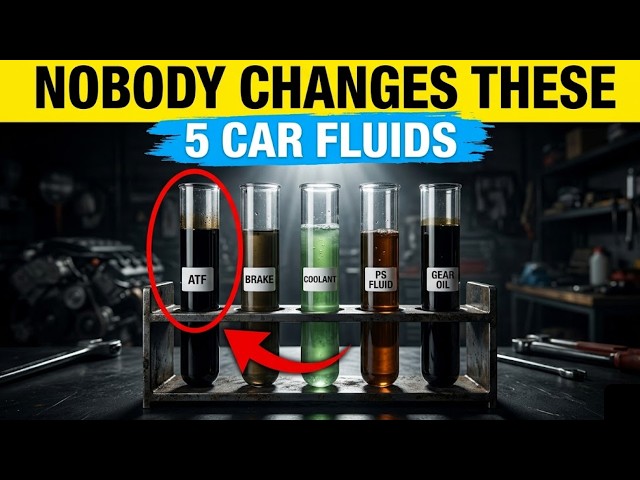
⚠️ FLUIDS COVERED IN THIS VIDEO:
✅ Transmission Fluid — the most expensive fluid to ignore
✅ Brake Fluid — the one that affects your safety directly
✅ Coolant / Antifreeze — why most head gaskets fail years
before any overheating symptom appears
✅ Power Steering Fluid — what happens when the pump dies
mid-turn
Show More Show Less View Video Transcript
0:00
Right now, five fluids inside your car
0:02
are either contaminated, burnt, or so
0:04
far past their service life that the
0:07
damage has already started. None of them
0:09
have a warning light. None of them will
0:11
throw a check engine code. They just
0:12
break down until the part they were
0:14
protecting fails completely. And when
0:16
that happens, the repair is not $50. It
0:18
is $1,800
0:20
to $9,000 depending on which fluid you
0:23
ignored and for how long. Shops see this
0:25
every single week. And here is the
0:27
thing, they count on it. Because a
0:29
customer who skipped a $35 fluid change
0:33
is a customer who now needs a $4,000
0:36
rebuild. Today, we are covering five
0:38
fluids that cause the most expensive
0:41
preventable repairs in automotive. For
0:43
each one, I will show you exactly what
0:44
it does, what happens when it breaks
0:46
down, how to check it yourself in under
0:48
2 minutes, and how to change it before
0:50
the damage becomes irreversible. Stay
0:52
until the end. The last fluid is the one
0:55
almost nobody knows exists and it is
0:57
responsible for the single most
0:59
expensive repair on this entire list.
1:02
Fluid one, transmission fluid. Let's
1:05
start with the one that generates the
1:06
highest repair bill when it fails. Your
1:08
transmission fluid does three jobs at
1:10
the same time. It lubricates every gear,
1:13
clutch pack, and bearing inside the
1:16
transmission. It acts as hydraulic fluid
1:18
actually shifting the gears through
1:20
pressure and it carries heat away from
1:22
the internal components. Lose any one of
1:24
those three functions and the
1:26
transmission starts destroying itself
1:28
from the inside. Here is what most
1:30
drivers do not know. Transmission fluid
1:32
does not just get low, it degrades.
1:34
Every heat cycle weakens it slowly,
1:37
invisibly. The fluid loses viscosity.
1:39
Its ability to create a protective film
1:42
between moving metal surfaces. It stops
1:44
holding pressure correctly. Shifts start
1:46
slipping. Internal temperatures climb.
1:49
You cannot feel any of this happening.
1:51
The car shifts fine until one day it
1:54
does not. And when that day arrives, a
1:56
rebuilt automatic transmission runs
1:58
$2,500
2:00
to $4,500
2:02
at an independent shop. At a dealership,
2:05
that number moves to $4,000 to $8,000.
2:08
There is no cheap version of a failed
2:10
transmission. There is only the bill.
2:12
Now, here's the part that should
2:14
genuinely make you uncomfortable. Most
2:16
manufacturers list transmission fluid as
2:19
a lifetime fluid. No change interval
2:22
ever. That is a marketing position, not
2:24
a mechanical reality. Lifetime means the
2:26
lifetime of the warranty, not the
2:28
lifetime of the transmission. At 60,000
2:30
to 80,000 mi, that fluid is burnt.
2:33
Independent transmission specialists
2:35
know this because they rebuild the
2:37
failed units every single week. Dark,
2:39
burnt, metallic smelling fluid inside
2:41
everyone, almost without exception. How
2:43
to check it yourself. Automatic engine
2:46
warm and running. Find the transmission
2:48
dipstick, usually a red or yellow handle
2:50
toward the rear of the engine bay. Pull
2:52
it. Wipe clean. Reinsert fully. Pull
2:54
again. Fresh fluid is pink to light red
2:57
and translucent. Brown or dark red means
2:59
it needs changing. Black with a burnt
3:01
smell means damage may already be
3:04
happening. Manual, no dipstick. You
3:06
locate the fill plug on the side of the
3:08
gearbox and remove it. If fluid runs out
3:10
when the plug comes out, the level is
3:11
fine. Color should be amber to light
3:14
brown. Dark brown or metallic particles
3:16
means it is overdue. How to change it.
3:18
Warm the fluid first. 10 minutes of city
3:21
driving. On an automatic, place a drain
3:23
pan. Remove the drain plug or drop the
3:25
pan. Let it drain completely. If the pan
3:28
has a filter, replace it. Clean the pan
3:30
magnet. Metallic fuzz is normal. Chunks
3:32
or shavings mean inspect further. Refill
3:35
with the manufacturer specified fluid
3:38
type. Do not mix fluid types under any
3:40
circumstances. On a manual drain plug
3:42
out, old fluid drains completely.
3:44
Reinstall drain plug. Pump new fluid in
3:47
through the fill port until it reaches
3:49
the opening level. Change interval every
3:51
30,000 to 60,000 mi, regardless of what
3:54
the owner's manual says. A customer
3:56
brought in a 2018 Honda CRV with 95,000
4:01
mi. Transmission slipping between second
4:03
and third. Dealer quoted a transmission
4:06
replacement. $6,200.
4:09
I dropped the pan. Fluid was black and
4:11
smelled burnt. Metallic debris on the
4:13
magnet, but no catastrophic shavings.
4:15
The clutch packs had not failed yet.
4:18
Flushed and refilled with Honda specific
4:20
DW1 fluid. Slipping reduced by 80%
4:24
within 2 days of driving. 3 months
4:26
later, shifts perfectly. He avoided
4:28
$6,200
4:30
because the fluid change happened before
4:32
the point of no return. By the time
4:34
transmission fluid tells you something
4:36
is wrong, it is usually already past
4:39
that point. Fluid two, brake fluid. This
4:42
one is different from every other fluid
4:43
on this list. Every other neglected
4:45
fluid costs you money. This one can cost
4:48
you something that cannot be replaced.
4:50
Brake fluid is hyroscopic, meaning it
4:52
actively absorbs moisture from the
4:54
atmosphere through microscopic
4:56
permeation in the brake lines and
4:58
reservoir. This is not a possibility. It
5:01
is a constant ongoing process. Every day
5:04
the car sits, moisture content in the
5:07
brake fluid increases. Here is why that
5:09
matters. Fresh brake fluid boils at
5:12
around 400 to 500° F depending on the
5:16
specification. Moisture contaminated
5:18
brake fluid can boil at 250 degrees or
5:21
lower. When brake fluid boils, it
5:23
vaporizes. Vapor is compressible. Liquid
5:26
is not. You press the pedal and instead
5:28
of hydraulic pressure transferring to
5:30
the calipers, you compress vapor. The
5:32
pedal goes to the floor. The car does
5:34
not stop. That is brake fade. And it
5:36
does not announce itself until you are
5:37
already in the exact situation where you
5:40
need your brakes most. Downhill,
5:42
emergency stop, highway speed, beyond
5:44
safety, contaminated fluid. corrods
5:47
brake calipers from the inside out.
5:49
Caliper replacement runs $150 to $400
5:53
each. A BS module corrosion from
5:55
long-term fluid contamination runs $800
5:59
to $1,500
6:02
and requires specialized tools to bleed
6:04
correctly afterward. How to check it
6:06
yourself. Moisture test strips are
6:09
available at any auto parts store for
6:11
under $10. Dip one in the reservoir for
6:14
2 seconds. Above 2% moisture, change it
6:16
now. Above 3%, it is overdue and caliper
6:20
inspection is warranted. Visually, fresh
6:22
brake fluid is clear to very light
6:24
yellow. Dark brown or black fluid is
6:26
dangerously past its service life. How
6:29
to change it? Starting from the caliper
6:31
farthest from the master cylinder and
6:33
working toward the nearest, open each
6:35
bleeder screw, push old fluid through
6:37
with a hand vacuum pump or gravity
6:40
bleeder. Close when new clear fluid runs
6:43
through cleanly. Refill the reservoir
6:45
throughout the process. Never let it run
6:48
dry or air enters the system. Change
6:50
interval every 2 years or 30,000 mi,
6:54
whichever comes first. Do not skip this
6:56
one. Fluid three, coolant. Coolant has
6:58
one job most people understand. Keep the
7:00
engine from overheating. The job most
7:03
people miss is the second one. It
7:05
protects metal. And here is the line
7:06
that should change how you think about
7:08
coolant permanently. Most head gasket
7:10
failures do not begin with overheating.
7:12
They begin years earlier with coolant
7:14
that nobody tested and nobody changed.
7:16
Coolant contains corrosion inhibitors
7:19
that coat the inside of the entire
7:21
cooling system, the aluminum radiator,
7:24
the steel water pump, the aluminum
7:26
cylinder head passages. Those inhibitors
7:28
deplete over time. Once they are gone,
7:31
electrolytic corrosion begins quietly
7:34
inside every metal surface the coolant
7:36
touches. The symptoms appear slowly.
7:39
Running slightly hot, heater not quite
7:41
as warm, small coolant loss with no
7:43
visible puddle beneath the car. By the
7:45
time those symptoms are obvious, the
7:47
damage inside is already significant.
7:49
Then one day, cracked head gasket. The
7:52
repair runs $1,200
7:54
to $2,500 minimum. On some engines,
7:57
considerably more. A warped cylinder
7:59
head from sustained overheating adds
8:01
machining costs on top of that. All of
8:03
it traces back to coolant that looked
8:05
fine in the reservoir but had zero
8:08
corrosion inhibitor left. How to check
8:09
it yourself. Cold engine only. Never
8:12
open the radiator cap on a warm engine.
8:14
Coolant level should sit between the m
8:17
and max marks on the overflow reservoir.
8:20
Color matters. Bright green should look
8:22
vibrant, not muddy or brown. Orange and
8:24
pink. Extended life coolants should look
8:27
clean, not faded. Test strips check pH
8:30
and freeze point simultaneously. Below 7
8:33
pH means the corrosion inhibitors are
8:35
depleted, even if the color still looks
8:37
acceptable. How to change it? Drain the
8:39
radiator through the petcock at the
8:41
bottom. Flush with distilled water. Run
8:44
the engine briefly. Drain again. Refill
8:46
with the correct coolant type for your
8:48
specific vehicle mixed 50/50 with
8:50
distilled water or use premixed. Run the
8:53
engine with the heat set to maximum and
8:55
the reservoir cap off until the
8:57
thermostat opens and coolant circulates.
8:59
This removes air pockets. Never use tap
9:02
water. Mineral deposits from tap water
9:05
accelerate the exact internal corrosion
9:07
the coolant is meant to prevent. Change
9:09
interval every 5 years or 100,000 mi for
9:13
long life coolant. Every 2 to 3 years
9:16
for conventional green coolant. Fluid 4,
9:19
power steering fluid. Power steering
9:21
fluid fails without drama right up until
9:24
the moment it does not. The fluid
9:26
lubricates the pump and provides
9:27
hydraulic pressure to the rack. Over
9:29
time, it oxidizes, darkens, loses
9:32
viscosity. The pump starts working
9:34
harder to build the same pressure. A
9:37
wine develops on full lock turns. Then
9:40
stiffness at low speed. Then the wine
9:42
becomes constant. When the pump finally
9:44
gives out, steering suddenly feels twice
9:46
as heavy at parking lot speeds. In
9:48
traffic, mid turn in a tight space,
9:51
exactly when you cannot afford it. Power
9:53
steering pump replacement runs $200 to
9:55
$600. Rack and pinion replacement. If
9:58
the degraded fluid reached further runs
10:01
$600 to $1,500,
10:03
most people replace the pump, refill
10:05
with old fluid, and the new pump fails
10:07
ahead of schedule. Then they replace the
10:09
rack. All of it preventable with fluid
10:11
that costs $12 a quart. How to check it
10:14
yourself? Locate the reservoir with the
10:16
steering wheel icon on the cap. Level
10:18
between min and max. Color should be
10:20
amber to light red. Brown or black means
10:22
overdue. Foam on the dipstick means air
10:25
in the system. Address it immediately.
10:27
How to change it? Turkey baster out as
10:29
much old fluid as possible. Refill with
10:32
fresh. Start the engine. Turn wheel lock
10:34
to lock five times. Repeat extraction
10:37
and refill twice more. This removes 70
10:39
to 80% of degraded fluid without
10:42
touching a single line. Change interval
10:44
every 50,000 mi or when fluid is visibly
10:46
dark. Fluid 5, differential fluid. This
10:49
is the one. Most car owners have never
10:51
heard of it. Most service advisors do
10:53
not mention it unless you specifically
10:55
ask. And when it fails, the repair is
10:58
the one nobody has budgeted for. The
11:00
differential is the gearbox that splits
11:02
and distributes power to your wheels.
11:04
Every vehicle has at least one.
11:06
Rearwheel drive vehicles have a rear
11:08
differential. Four-wheel and all-wheel
11:10
drive vehicles have front and rear
11:12
differentials and often a transfer case
11:14
between them. Each one filled with its
11:16
own fluid. Inside each unit, hypoid
11:19
gears running under extreme pressure,
11:21
spinning at high speed, generating more
11:23
heat per square inch than almost any
11:26
other component in the drivetrain.
11:27
Differential fluid lubricates those
11:29
gears. It also contains extreme pressure
11:32
additives specifically formulated for
11:34
hypoid gear contact. Regular motor oil
11:37
or standard gear oil without those
11:39
additives will cause gear failure within
11:41
hours of operation. Here is what the
11:43
failure costs. Ring and pinion
11:45
replacement runs $800 to $2,000 in parts
11:49
alone, not including labor. A complete
11:51
differential rebuild or replacement,
11:53
$1,500 to $4,000 depending on the
11:56
vehicle. On a full-time AWD vehicle with
11:59
three fluid fil units, the cost
12:01
compounds significantly. And here is
12:03
what makes it worse than every other
12:05
fluid on this list. There is no warning
12:07
light, no temperature gauge, no check
12:09
engine code. The fluid degrades
12:11
completely in silence. And the first
12:13
symptom is a wine from the axle that
12:15
most people misdiagnose as a wheel
12:17
bearing. Shops replace the bearing. Wine
12:19
comes back. Then the differential needs
12:21
a rebuild. How to check it yourself?
12:23
Locate the differential. The round
12:25
housing at the center of the rear axle
12:27
on rearwheel drive vehicles. Find the
12:29
fill plug on the side. It takes a 3/8 in
12:32
square drive or hex key depending on the
12:34
vehicle. Remove it. Fluid should be at
12:36
the bottom edge of the fill hole. Stick
12:38
a clean finger in and you should feel
12:40
fluid immediately. If your finger finds
12:43
nothing, the level is dangerously low.
12:45
Color: fresh differential fluid is amber
12:47
to light brown. Dark brown to black with
12:50
a sulfur smell means the extreme
12:51
pressure additives are completely
12:53
depleted. How to change it? Two plugs on
12:55
each differential. Drain at the bottom.
12:58
Fill on the side. Warm the fluid first
13:00
with 10 minutes of driving. Remove the
13:02
drain plug. Let it drain completely into
13:04
a catch pan. Inspect the drain plug
13:06
magnet carefully. Small metallic fuzz
13:08
coating the magnet is normal wear.
13:10
Chunks, flakes, or shavings mean
13:12
internal damage has already started. A
13:14
differential specialist needs to inspect
13:16
it before you reassemble. Clean both
13:18
plugs. Reinstall the drain plug with a
13:20
new crush washer or thread sealant. Pump
13:23
new fluid in through the fill hole until
13:25
it reaches the fill port opening level.
13:26
Reinstall the fill plug. Use the exact
13:29
correct specification. Most open
13:31
differentials require 75W90
13:34
gear oil with a GL5 rating. Limited slip
13:37
differentials require a specific
13:39
friction modifier additive. Without it,
13:41
you will develop a shutter on tight
13:43
turns that confirms the clutch pack is
13:45
being damaged with every turn. Check the
13:47
axle tag or owner's manual for your
13:50
specific vehicle. Change interval every
13:52
30,000 to 50,000 mi. Every 15,000 mi on
13:56
vehicles used for towing or off-road
13:58
use. A customer came in with a 2015
14:01
Toyota 4ERunner. wine from the rear that
14:03
had started quietly and was now constant
14:05
at highway speed. Three separate shops
14:07
had told him wheelbearing. $380 spent
14:10
across those three visits. Wine returned
14:13
every time. I pulled the differential
14:15
fill plug dry. No fluid at all. The
14:17
drain plug had been weeping a slow leak
14:20
for months. Slow enough that no visible
14:22
puddle formed under the car. Fast enough
14:24
that the differential had been running
14:25
metal to metal. Ring and pinion damage
14:27
confirmed on inspection. Rebuild cost
14:30
$2,200.
14:32
At any one of those three shop visits,
14:34
any technician who checked the fill plug
14:36
would have caught it. The fluid level
14:38
check takes 30 seconds. The rebuild
14:40
takes a week and costs $2,200.
14:44
Every dollar of that was preventable.
14:45
Five fluids, none of them monitored by a
14:48
warning light. All of them capable of
14:49
generating repairs that most car owners
14:52
are completely unprepared for.
14:53
Transmission fluid. Change it every
14:55
30,000 to 60,000 mi, regardless of what
14:59
the owner's manual says. A rebuilt
15:01
transmission costs more than most people
15:03
carry in savings. The fluid that
15:05
prevents it costs $30. Brake fluid. Test
15:09
it every 2 years. Moisture contamination
15:11
drops the boiling point, and a fade
15:13
event at the wrong moment does not offer
15:15
a second chance. Coolant. Check the pH,
15:18
not just the level. Depleted inhibitors
15:20
corrode internally with no external
15:23
symptoms until the head gasket fails.
15:25
Power steering fluid. Dark fluid means
15:27
an accelerating pump. The wine you hear
15:29
is money leaving your account. The wine
15:31
after that is the rack going with it.
15:33
Differential fluid. Check the fill plug.
15:35
If there is nothing there, you are
15:37
already past the early warning stage.
15:39
None of these checks take more than 2
15:41
minutes each. All five together take
15:43
under 15. Every dollar you spend on
15:45
these fluids before they fail is a
15:47
dollar that does not become a $4,000
15:51
repair authorization at a dealership.
15:53
Drop your vehicle make, model, and
15:56
current mileage in the comments right
15:57
now. Tell me which of these five you
15:59
have never changed, and I will tell you
16:01
which one to prioritize first. If this
16:03
video saved you money today, subscribe.
16:06
Next week, we are going through the
16:07
parts shops replace first on a check
16:10
engine light that almost never actually
16:12
need replacing. You do not want to miss
16:13
that one.
#Autos & Vehicles