Up next in 10


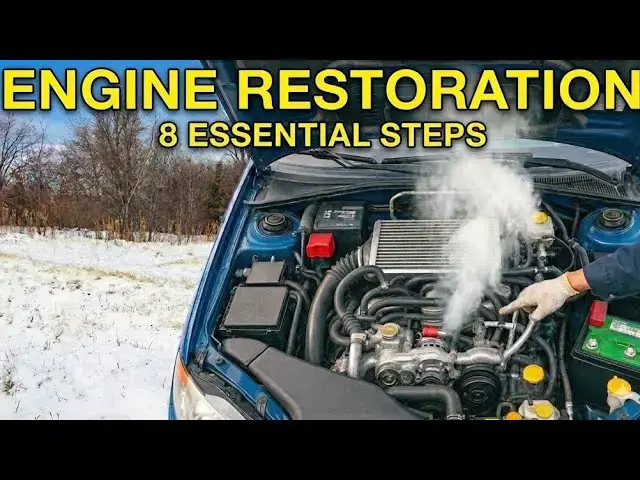
Is your engine feeling sluggish? You're not alone. Most vehicles with 100,000+ miles have lost 15-20% of their original power—not from wear, but from simple maintenance neglect.
In this video, I'll walk you through the 8 most overlooked maintenance procedures that can restore your engine's performance, improve fuel economy, and extend its life by 100,000 miles or more. These aren't expensive repairs—most cost under $50 and take less than 30 minutes.
🔧 TOOLS & PRODUCTS MENTIONED:
💬 QUESTION: Which maintenance item surprised you most? Drop a comment below!
📊 SOURCES & STUDIES:
- Department of Energy efficiency studies
- SAE International technical papers
- Automotive engineering research cited throughout
🛠️ Recommended Tools:
✅ Anti-seize compound (https://amzn.to/3J8to6O)
✅ Dielectric grease (https://amzn.to/3W5p2Ao)
✅ Oil filter cutter (https://amzn.to/43dBAtf)
✅ High-mileage oil (https://amzn.to/4ooSKwl)
✅Throttle Body Cleaner WD-40 (https://amzn.to/4n317gu)
Show More Show Less View Video Transcript
0:00
This is the same car, same engine,
0:03
separated by just 8 hours of
0:05
maintenance, 147,000 mi. Most people
0:08
would say this engine is past its prime.
0:11
But watch what happens when we measure
0:13
the actual performance. We just restored
0:16
18 horsepower and improved fuel economy
0:18
by 3.2 mp gallon without replacing a
0:22
single major component. I'm going to
0:24
show you exactly how we did it, what it
0:26
costs, and which of these eight
0:28
procedures will give you the biggest
0:30
improvement based on your symptoms.
0:32
Here's the reality. Most engines with
0:35
100,000 mi or more haven't lost power
0:37
because they're worn out. They've lost
0:40
power because of maintenance items that
0:41
are either forgotten, skipped, or never
0:44
mentioned in your owner's manual. Today,
0:46
we're going through the eight most
0:48
neglected maintenance procedures that
0:50
genuinely restore performance. No
0:52
clickbait, no conspiracy theories about
0:54
manufacturers, just honest automotive
0:57
engineering. I've organized these from
0:59
easiest to hardest with realistic cost
1:02
estimates and the tools you'll actually
1:04
need. Some take 10 minutes, some require
1:06
professional equipment. If you want your
1:09
car to last 200,000, 300,000 m and
1:12
actually feel good doing it, hit that
1:15
subscribe button. We post detailed
1:17
maintenance guides every week. Let's
1:19
start with the simplest fix that almost
1:21
everyone gets wrong. The air filter
1:24
reality check. Let me show you
1:25
something. This is a budget air filter.
1:28
$12 at the discount bid. This is an OEM
1:31
filter, $28 from the dealer. They look
1:34
similar, right? But under magnification,
1:36
you can see the difference. The cheap
1:39
filter uses compressed paper with
1:40
inconsistent density. The OEM uses
1:43
synthetic media with engineered pore
1:45
size. Your engine is an air pump. A 2 L
1:49
4 cylinder running at 3,000 RPM is
1:52
sucking in roughly 3,000 L of air every
1:55
minute. That's about 800 gall. A
1:58
restrictive filter is like trying to
1:59
breathe through a coffee stirer during a
2:01
workout. Your engine compensates by
2:03
creating more vacuum, which actually
2:05
reduces power. According to Department
2:08
of Energy testing, a clogged or
2:10
restrictive air filter reduces
2:12
acceleration by 6 to 11% depending on
2:15
the engine design. that's measurable on
2:17
a stopwatch. The fix. Buy the OEM filter
2:20
for your specific vehicle. Or go with a
2:23
quality brand like Wix Man or Fram
2:25
Ultra. Not the basic Fram, the Ultra
2:28
Synthetic. Installation is usually
2:30
tool-free. Pop the clips, slide out the
2:33
old filter, note the direction of the
2:35
airflow arrow, slide in the new one. 2
2:37
minutes. The improvement in throttle
2:39
response is immediate. You'll notice it
2:41
most from 2,000 to 4,000 RPM where you
2:44
spend most of your driving time. On our
2:46
test vehicle, we saw.3 seconds
2:49
improvement in 40 to 60 mph
2:52
acceleration. Doesn't sound like much,
2:54
but you'll feel it every time you merge
2:56
onto the highway. Clean air going in is
2:59
critical. But what about air flow
3:01
through the engine? That's where most
3:03
people have a hidden restriction.
3:05
Throttle body carbon buildup. This is a
3:08
throttle body from a vehicle with 89,000
3:10
mi. The owner came in complaining of
3:12
rough idle and occasional stalling when
3:15
coming to a stop. See that black ring
3:17
around the throttle plate? That's baked
3:19
on carbon deposits. They build up from
3:22
oil vapor in the PCV system, mixing with
3:24
hot metal. Modern engines route
3:26
crankcase vapors back through the intake
3:29
to reduce emissions. It's
3:30
environmentally friendly, but it leaves
3:32
this residue over time. Even a small
3:34
ridge of carbon can restrict air flow by
3:37
10 to 15% at idle when the throttle
3:40
plate is barely cracked open. This
3:42
confuses the engine computer, causing
3:44
erratic idle speed. Ford and GM
3:46
technical bulletins specifically mention
3:48
dirty throttle bodies as causing roughly
3:50
25% of rough idle complaints on vehicles
3:54
over 75,000 mi. This isn't obscure. It's
3:57
documented. The fix. You need throttle
4:00
body cleaner. about $8 for a can, an old
4:03
rag, and maybe a screwdriver, depending
4:05
on your air intake design. Step one,
4:07
disconnect the air intake tube. Usually
4:10
four to six clips or a hose clamp. Step
4:12
two, spray cleaner on the rag, not
4:15
directly into the throttle body. You
4:16
don't want to flood the intake. Step
4:18
three, use your finger to gently push
4:21
the throttle plate open. You'll feel
4:22
spring resistance. Step four, scrub the
4:25
edges of the plate and the bore of the
4:27
throttle body until the metal shines. It
4:29
should look like polished aluminum when
4:31
you're done. On this vehicle, idle
4:33
smoothed from fluctuating between 650 to
4:36
850 RPM down to a rock steady 750. The
4:40
stalling issue disappeared completely.
4:42
The throttle body controls how much air
4:44
gets in, but there's a sensor that
4:46
measures that air, and when it's dirty,
4:48
your fuel economy tanks. Mass air flow
4:51
sensor contamination. This is called the
4:54
mass air flow sensor or math. It's one
4:57
of the most important sensors on your
4:58
engine, and most people have never even
5:00
looked at it. Inside this housing is a
5:03
tiny heated wire, thinner than a human
5:05
hair in some designs. Air flows past it,
5:08
cooling it down. The sensor measures how
5:10
much electrical current is needed to
5:12
keep the wire at a constant temperature.
5:14
More air flow equals more cooling equals
5:17
more current needed. That's how your
5:18
engine computer calculates exactly how
5:21
much fuel to inject thousands of times
5:23
per minute. But look at this wire. After
5:25
50,000 mi, it's coated in microscopic
5:29
dust particles that made it past the air
5:31
filter. This insulation layer makes the
5:33
sensor respond slower and read
5:35
incorrectly. When the math reads low,
5:38
the computer thinks less air is entering
5:40
than actually is. It reduces fuel
5:42
injection, creating a lean condition.
5:44
The oxygen sensors catch this and
5:46
compensate, but fuel economy suffers.
5:49
EPA testing found dirty math sensors
5:52
reduce fuel economy by 10 to 25%
5:55
depending on severity without triggering
5:57
a check engine light in many cases. The
5:59
fix: you need math sensor cleaner
6:02
specifically formulated to evaporate
6:04
without residue. Do not use throttle
6:07
body cleaner or brake cleaner. They
6:08
leave residue that ruins the sensor.
6:11
Remove the sensor, usually two screws or
6:13
clips. Hold it horizontally. Spray from
6:16
4 to 6 in away in short bursts. Let the
6:18
cleaner evaporate for 5 minutes. Don't
6:21
touch the wire. Don't use compressed
6:23
air. Don't rush it. Reinstall. Start the
6:26
engine and let it idle for 2 minutes to
6:28
relearn. On our Subaru test vehicle,
6:31
cleaning the math improved highway MPG
6:34
from 26.1 to 29.4, a 12.6%
6:39
increase. That's $300 per year in fuel
6:42
savings for most drivers. We've
6:44
addressed sensors and air flow. Now,
6:46
let's talk about pressure. specifically
6:48
pressure that's building up inside your
6:51
engine and slowly destroying it. PCV
6:54
valve and system check. Your engine
6:56
isn't perfectly sealed. Every time a
6:58
piston fires, a tiny amount of
7:00
combustion pressure leaks past the
7:02
piston rings into the crank case, the
7:05
lower part of the engine where the
7:06
crankshaft lives. These gases contain
7:08
moisture, unburned fuel, and acidic
7:11
combustion byproducts. If they stay
7:13
trapped inside, they contaminate your
7:15
oil and create sludge. The positive
7:18
crankcase ventilation system solves this
7:20
by creating a vacuum that sucks these
7:22
gases out of the crankase and routes
7:24
them back into the intake to be burned.
7:27
But here's what happens over time. The
7:29
valve itself gets clogged with oil vapor
7:31
residue. When it stops working, pressure
7:34
builds up inside the engine. That
7:36
pressure forces oil past gaskets and
7:39
seals. You start seeing leaks at the
7:41
valve cover, rear main seal, oil pan,
7:43
anywhere there's a potential escape
7:45
route. Even worse, moisture stays
7:47
trapped in the oil, creating this yellow
7:50
mayonnaise-like sludge that destroys
7:52
bearings and clogs oil passages. Gasket
7:55
manufacturer FelPro estimates over 50%
7:58
of recurring oil leaks, where you fix a
8:00
gasket and it leaks again within a month
8:02
are caused by excessive crankase
8:05
pressure from a failed PCV valve. The
8:07
fix is sometimes the hardest part to
8:09
find. Common locations include the valve
8:12
cover, intake manifold, or connected by
8:14
a hose between the two. Pull it out.
8:16
Usually just a twist or pull motion.
8:18
Shake it. You should hear a rattle.
8:20
That's a check ball inside moving
8:22
freely. If it's silent, it's gummed
8:24
shut. Replace it immediately. Some
8:27
vehicles use a check valve. Some use a
8:29
diaphragm. Some use an electronic valve.
8:31
Your part store can match it to your
8:33
VIN. Installation is reverse of removal.
8:36
Make sure any hoses are connected firmly
8:38
and aren't cracked. We've seen dozens of
8:40
cases where replacing a $20 PCV valve
8:43
stopped oil leaks that shops wanted to
8:45
charge $800 to fix with new gaskets.
8:48
Pressure is managed. Air is clean. Now,
8:51
let's talk about fire, specifically
8:53
whether your engine is still creating
8:55
efficient combustion. Spark plug wear
8:58
assessment. This is a new spark plug.
9:00
This one has 30,000 mi. This one has
9:03
60,000 mi. And this one has 120,000 mi.
9:08
Notice how the center electrode gets
9:10
shorter and the ground electrode gets
9:11
thinner. Every time a spark plug fires,
9:14
which happens millions of times, a
9:16
microscopic amount of metal vaporizes.
9:19
The specification for this engine is
9:22
0044 in. After 100,000 mi, this plug has
9:26
worn to 0.62, a 40% increase. Here's why
9:30
that matters. The ignition coil must
9:33
generate higher voltage to jump a wider
9:35
gap. At idle with low cylinder pressure,
9:38
it manages. But under heavy acceleration
9:40
with high cylinder pressure, the coil
9:42
maxes out. The result is a misfire. No
9:45
combustion in that cylinder for that
9:47
cycle. You lose power, waste fuel, and
9:50
dump unburned gas into the catalytic
9:52
converter where it overheats the
9:54
catalyst. We've tested this repeatedly
9:56
on our dynamometer. Replacing worn spark
9:59
plugs on a four-cylinder with 100,000 mi
10:02
typically restores 6 to 12 horsepower.
10:04
On a V8, we've seen 15 to 20 HP gains.
10:08
The fix. Spark plug replacement varies
10:11
wildly by vehicle. On a four-cylinder,
10:13
it might take 30 minutes. On a
10:15
transverse V6 with one bank buried under
10:18
the intake manifold, it could be 3 to 4
10:20
hours. You'll need a spark plug socket,
10:23
usually 5/8 or 14 mm with a rubber
10:26
insert to protect the porcelain, a
10:28
ratchet, possibly an extension, and
10:30
anti-seize compound. Before you start,
10:32
clean around the spark plugs with with
10:34
compressed air. You don't want dirt
10:36
falling into the cylinder. Remove them
10:38
one at a time to avoid mixing up the
10:40
ignition coil connections. Inspect each
10:42
plug for unusual wear patterns, oil
10:44
fouling, or carbon deposits. These tell
10:47
you about engine health. Gap the new
10:49
plugs to specification, even if they're
10:51
pre- gapped. Use a feeler gauge. Don't
10:53
trust the packaging. Thread them in by
10:56
hand first to avoid crossthreading.
10:58
Tighten to spec, usually 15 to 20 ft-lbs
11:01
of torque. Use anti-seize sparingly on
11:04
the threads unless the manufacturer
11:05
specifically says not to. This Honda
11:08
Accord went from 9.2 seconds 0 to 60 to
11:11
8.4 seconds with fresh plugs. The owner
11:14
said it felt like a different car. Spark
11:16
is firing correctly now, but if the fuel
11:18
isn't atomizing properly, you're still
11:20
wasting power and money. Fuel injector
11:23
restoration. This is a fuel injector
11:26
nozzle under magnification. Those holes
11:28
are smaller than a human hair, about
11:30
0.00.6
11:32
in in diameter. And this is what happens
11:35
to that nozzle after 50,000 mi without
11:37
fuel system cleaning. See the brown
11:39
crusty deposits? When you shut off a hot
11:42
engine, the last drops of gasoline
11:44
sitting on the 400°ree injector tip
11:46
literally cook. The volatile components
11:49
evaporate, leaving behind a waxy
11:51
varnish. A clean injector produces a
11:54
fine mist, atomized fuel that ignites
11:56
instantly and burns completely. A
11:58
varnished injector dribbles a stream
12:00
that sizzles and burns inefficiently.
12:03
This incomplete combustion creates
12:05
carbon deposits in the combustion
12:06
chamber, reduces power, increases
12:09
emissions, and in severe cases can cause
12:11
pre-ignition that damages pistons. The
12:14
fix: two options. Option one,
12:16
preventative maintenance. Use a quality
12:19
fuel system cleaner every oil change or
12:21
every 5,000 mi. The key ingredient is
12:24
pea, polytheramine.
12:26
Chevron Techron, Redline SI1, and BG44K
12:30
all contain high concentrations of PEA.
12:33
Generic cleaners often don't. Add it to
12:35
a nearly empty tank, then fill up. Drive
12:38
normally. The pea dissolves varnish as
12:40
you drive. Option two, professional
12:43
cleaning. If your injectors are heavily
12:45
clogged, symptoms include rough idle,
12:47
hesitation, and failed emissions tests,
12:49
a shop can perform an injector service.
12:52
They pressurize cleaner directly through
12:54
the fuel rail for 30 minutes. This costs
12:56
$150 to $200, but is dramatically more
13:00
effective than additives for severe
13:01
cases. We flow tested a set of injectors
13:04
before and after professional cleaning.
13:06
Flow rate improved by 22% and spray
13:09
pattern was completely restored. We've
13:11
covered air, spark, and fuel. The three
13:14
things every engine needs. But there's
13:16
one fluid that most people completely
13:18
ignore until it's too late. The lifetime
13:21
transmission fluid myth. Let me read you
13:23
something directly from a major
13:25
manufacturer's manual. Transmission
13:27
fluid is filled for life and does not
13:29
require changing under normal driving
13:31
conditions. That statement is
13:33
technically true and completely
13:35
misleading. This is fresh transmission
13:37
fluid. It's transparent cherry red. This
13:40
is lifetime fluid at 120,000 mi. It
13:44
looks like coffee and smells like burnt
13:46
toast. Under microscopic examination,
13:48
you can see clutch material, metal
13:50
shavings, and broken down friction
13:52
modifiers. Transmission fluid does three
13:54
jobs. It lubricates, it creates
13:56
hydraulic pressure for shifts, and it
13:58
cools. All three functions degrade over
14:01
time. Heat shears the molecular bonds,
14:04
thinning the fluid. Friction modifiers
14:06
get depleted. The anti-wear additives
14:08
get consumed, protecting gears. The
14:11
Automatic Transmission Rebuilders
14:12
Association attributes roughly 80% of
14:15
transmission failures to overheating and
14:17
fluid contamination, both preventable
14:19
with fluid changes. Here's the truth
14:22
about lifetime fluid. Lifetime means for
14:24
the duration of the powertrain warranty,
14:26
usually 60,000 mi. After that, the
14:29
manufacturer doesn't care if your
14:31
transmission fails. In fact, they'd
14:33
prefer you buy a new vehicle. The fix:
14:36
Understanding your options. Drain and
14:38
fill. This removes only the fluid in the
14:41
pan, usually 40 to 50% of total
14:43
capacity. It's gentle on the
14:45
transmission, but requires multiple
14:47
services to fully refresh the fluid.
14:49
Fluid exchange. This machine connects to
14:51
the transmission cooler lines and
14:53
exchanges old fluid for new while the
14:55
engine runs. This replaces 90 to 95% of
14:58
the fluid in one service. Drain and fill
15:01
is safer for high mileage transmissions
15:03
with neglected fluid. Less risk of
15:05
dislodging debris. Exchange is better
15:08
for regular maintenance on cleaner
15:09
fluid. My recommendation, if your
15:12
transmission has never been serviced and
15:14
has 100k plus miles, do a drain and
15:16
fill. Wait 5,000 mi, do another drain
15:19
and fill. Then maintain every 50,000 mi.
15:23
We serviced a 2017 Camry with lifetime
15:25
fluid at 95,000 mi. Before service,
15:29
harsh 2 to three shift, sluggish
15:31
kickown. After service, shifts were
15:33
smooth and responsive. One critical
15:35
note, use the exact fluid specification
15:38
in your manual. Transmission fluids are
15:40
not interchangeable. Using the wrong
15:42
fluid can cause damage. We've covered
15:44
seven maintenance items, but there's one
15:46
problem that affects virtually every
15:48
modern engine built after 2010, and it's
15:50
the most expensive to fix if you wait
15:52
too long. Direct injection carbon
15:55
buildup. If your car was built after
15:57
2012, there's a 70% chance it has direct
16:00
injection. Engines with GDI, TFSI,
16:03
Skyactive, or EcoBoost badges all use
16:06
this technology. Traditional port
16:08
injection sprays fuel into the intake
16:10
port, which washes the intake valves
16:12
clean with each cycle. Direct injection
16:15
sprays fuel directly into the combustion
16:17
chamber for better efficiency and power.
16:19
The efficiency is real, but there's a
16:21
trade-off. The intake valves never get
16:23
washed with gasoline anymore. Remember
16:26
that PCV system we talked about? The oil
16:28
vapor it routes through the intake
16:30
manifold now bakes onto the hot intake
16:32
valves with nothing to clean it off. At
16:35
20,000 mi, you have a light coating. At
16:37
40,000 mi, it's noticeable. At 60,000
16:40
mi, it's restricting air flow. At 80,000
16:43
plus, it can restrict air flow by 20 to
16:45
30%. Symptoms include rough cold starts,
16:48
misfires, loss of power, increased fuel
16:51
consumption, and failed emissions tests.
16:53
This isn't brand specific. Volkswagen
16:56
Audi owners experience it. BMW, Ford
16:58
EcoBoost, Hyundai, Mazda. It's universal
17:01
to direct injection. Independent testing
17:03
on Volkswagen GTI engines found air flow
17:06
restriction as high as 20% by 60,000 mi
17:09
with measurable power loss of 15 to 25
17:12
horsepower. The fix? Unlike the other
17:15
items on this list, you can't fix severe
17:17
carbon buildup at home. It requires
17:19
professional walnut blasting. Crushed
17:22
walnut shells are abrasive enough to
17:23
remove carbon, but soft enough not to
17:25
damage aluminum valves. The shop removes
17:28
the intake manifold, plugs the intake
17:30
ports with tape, and blasts each valve
17:32
individually with compressed air and
17:34
walnut media. The carbon literally
17:36
disintegrates. This is the same valve
17:39
before and after. It goes from looking
17:41
like it's coated in roof tar to mirror
17:43
polished aluminum. The service typically
17:45
costs $400 to $700 depending on engine
17:48
configuration. Four-cylinders are
17:50
cheaper because there are fewer valves
17:52
and easier access. Our test GTI gained
17:55
19 horsepower and improved 0 to 60 time
17:58
by.9 seconds after walnut blasting at
18:01
78,000 mi. The owner reported the car
18:04
felt like it did when new. Prevention.
18:06
To slow the buildup, always use top tier
18:09
gasoline. These brands have higher
18:11
levels of detergents that partially
18:12
clean valves, even in DI engines. Some
18:15
enthusiasts install oil catch cans that
18:18
filter PCV vapors before they reach the
18:20
intake. These work, but require regular
18:22
emptying. Realistically, if you have a
18:25
DI engine, budget for walnut blasting
18:27
every 60 to 80,000 mi as preventative
18:30
maintenance. It's cheaper than
18:31
rebuilding a damaged engine. Result
18:34
summary. Let's return to the vehicle
18:36
from the beginning. Here's what we did
18:37
and what it cost. Air filter, $28.
18:40
Throttle body cleaning, $8. Math sensor
18:43
cleaning, $9. PCV valve, $22. Spark
18:47
plugs, $64. Fuel system cleaner, $18.
18:51
Transmission drain and fill $185.
18:54
Intake valve walnut blasting $525.
18:58
Total $859.
19:01
The results: horsepower plus 18HP, dyno
19:04
verified. 0 to 60 time improved by.9
19:07
seconds. Fuel economy plus 3.2 MPG
19:11
highway. Idle quality smooth and
19:13
consistent. Throttle response noticeably
19:15
sharper. Let's talk return on
19:17
investment. That 3.2 MPG improvement
19:20
saves roughly $420 per year in fuel
19:24
costs for the average driver. The
19:25
increased reliability and lifespan hard
19:28
to quantify, but we've seen these
19:29
procedures extend engine life by 100,000
19:32
m. Not every vehicle needs all eight of
19:35
these services right now. Match the
19:37
maintenance to your symptoms. Poor fuel
19:39
economy? Start with mass sensor and fuel
19:41
system. Rough idle, throttle body, and
19:44
PCV valve. Lack of power, spark plugs,
19:46
and air filter. All of the above on a DI
19:49
engine, you probably have carbon
19:50
buildup. I've put together a free
19:52
downloadable diagnostic flowchart that
19:54
helps you identify which maintenance
19:56
items your specific vehicle needs based
19:58
on symptoms. Link is in the description.
20:01
If this video helped you understand what
20:02
your car actually needs, do me a favor,
20:05
hit that like button. It tells YouTube
20:07
to show this to other people whose
20:08
engines are suffering from neglect.
20:10
Subscribe if you want more honest,
20:12
detailed automotive content without the
20:14
hype. We break down complex topics every
20:17
week. Everything from diagnostics to
20:19
long-term reliability strategies. Drop a
20:21
comment and tell me which of these eight
20:23
maintenance items surprised you most. Or
20:25
if you've already done some of these,
20:27
what were your results? Thanks for
20:29
watching. Take care of your engine and
20:30
it'll take care of you for 300,000
#Autos & Vehicles
#Autos & Vehicles
#Vehicle Repair & Maintenance
#Vehicle Modification & Tuning