Up next in 10



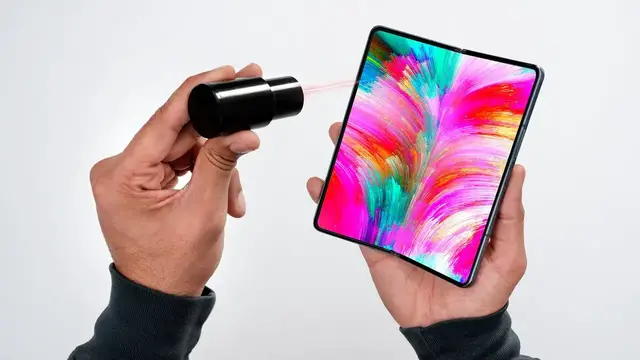
The Samsung Galaxy Z Fold 4 is a unique folding smartphone. Here's what makes the folding display so special. Sponsored by Samsung Display: https://oledera.samsungdisplay.com
Monaco Motors: https://www.monacomotorcars.com/
FOLLOW ME IN THESE PLACES FOR UPDATES
Twitter - http://twitter.com/unboxtherapy
Facebook - http://facebook.com/lewis.hilsenteger
Instagram - http://instagram.com/unboxtherapy
Show More Show Less View Video Transcript
0:00
you're rolling everywhere lovely so today we're going to be doing a little bit of a science project
0:10
well not exactly we're going to be doing some scientific semi-scientific things with the new
0:16
z-fold 4 which is the device that has been in my pocket since it arrived here in studio i'm into
0:23
the folding thing i admit it but i noticed right away that there were some differences between the
0:28
z fold 4 and the z fold 3 the display brightness the appearance of it in general so samsung
0:38
reached out and they said why don't we do a video on the actual display technology hey why is that
0:44
display so bright so vivid what's going on with these folding displays because when you boost that
0:50
brightness on the z fold 4 you are blown away so what are we going to do today in order to figure
0:55
this all out well first things first i ordered this screen luminance meter this thing is supposedly
1:01
going to tell us look at that how bright the display is maybe we'll use this in future videos
1:06
and i've also got this kind of like a macro effect a loop it's called a loop a magnifying device so
1:12
that we can examine the sub pixels these gadgets are going to help us inspect why that's the case
1:18
First major technology in these OLED displays, EcoSquare OLED Plus. This is Samsung's display technology that removes the polarizer film from the OLED
1:31
This reduces reflections from external light and then integrates its functionality into the panel layer
1:37
So new for this device in 2022, it features an even more advanced light transmittance technology
1:44
and displays brighter images and they're claiming a 68% transmittance rate, which is a significant improvement over a conventional OLED
1:54
where the transmittance amount is more like 43%. Now, the other thing about the displays is that they are designed
2:00
based on how the human eye perceives colors and images. See, human eyes are more sensitive to green light compared to red and blue
2:08
The new technology selectively increases the transmittance of red and blue subpixels
2:14
Then it blocks reflections of the bottom electrode compared to conventional display
2:19
So by increasing the transmittance of the colors that our eyes are less sensitive to
2:25
we're able to see a more vibrant representation. There's a big aspect here which has to do with battery conservation, energy efficiency
2:33
It'll reduce power consumption in some cases by up to 37%. Max out your screen brightness or use it at a brighter level than you normally would
2:42
without the same impact or hit to battery life. So normally you would have some sort of a notch
2:47
or something for the front-facing camera. Then we move to hole punches, punch holes
2:52
and this is the latest technology, which is hiding it right underneath the display
2:57
and pixels that are capable of being turned off. It's an uninterrupted display hiding the camera
3:02
right underneath the OLED panel. An uninterrupted display. You have less distraction
3:06
You have fewer things in the way of the content that you're trying to look at. And this does create a situation
3:12
where it just fades away a little bit more. It's not that it's completely invisible
3:16
but you just don notice it as much But on the latest generation the Z Fold 4 it been upgraded First generation UPC technology has multiple pixel clusters that behave like a single large pixel resulting in a
3:28
lower perceived resolution. So essentially what this means for your perception or your perceived
3:33
resolution is more dots and more dots makes things look sharper. Previously, it might have looked a
3:40
little bit like, I don't know, a digital clock or something with giant block like pixels. The
3:45
Perception now is much finer dots, which allows it to blend into the display better
3:50
Now, the last thing worth talking about with folding displays, one of the big apprehensions is around durability
3:55
384, 385, 386, 387, 388. The new one has been tested in a number of extreme circumstances
4:04
Samsung display has now received certification that guarantees folding more than 200,000 times
4:10
at room temperature and 150,000 times at high temperature, which is very high based on their testing they said 60 degrees celsius
4:19
sounds like kuwait the temperature is above 40c 165 days per year as of 2021 no concerns here i'll
4:28
be folding 200 000 times if you're a heavy user and you fold fold and unfold 200 times per day
4:33
that's equivalent to 150 000 times in 4.5 years in kuwait i don't think i even do do it 200 times
4:40
I don't think I'd do it 200 times. You know what? Everyone always underestimates this
4:46
100 open and close max would be my guess. 417, 418, 419
4:53
But it's just a guess. Now, what about extreme cold? Don't want to leave the cold out
4:58
They do have a study facility in Antarctica. There's just cold places, all right
5:03
So this foldable display is certified for 30,000 times at extreme cold, minus 20 Celsius
5:09
Minus 20 is... You got guys like Jack that was living in Winnipeg
5:13
for a minute. Shout out Winnipeg. All right, so we've already done an unboxing of this
5:17
because obviously it's in my pocket and obviously it's my daily driver
5:21
and I've been driving it. We do, however, have a fresh one. I'm just going, going, going, going, going
5:28
Blam, it turns orange. And then you know you're in business. I knew, my retinas knew that something had changed
5:35
And so I bought this in order to maybe, hopefully, put a number to that
5:40
Okay, okay, okay, okay, okay, okay, okay. All right, so I did a little bit of research here
5:53
This thing is measuring in CD slash M squared. Some people measure in nits or talk about nits
6:00
when they're discussing brightness. Here's the premise. Samsung doesn't want a folding display
6:06
to be a huge compromise when compared to a traditional OLED. Measurements for brightness are out there
6:13
I learned a few things upon reading some of those measurements. If you wanna get a maximum brightness reading
6:19
On this phone, if you go into settings, obviously you have your brightness meter
6:24
you have an adaptive brightness button, which I'm gonna turn off, but then you have an extra brightness button
6:29
after adaptive brightness is turned off. However, most smartphones that I've tested
6:36
have actually exhibited even more brightness if they in adaptive mode and exposed to sunlight Indoors you normally don even get this extra brightness setting but Samsung gives it to you Now when you toggle the extra brightness setting
6:50
by the way, luminance meter pointed at the table, CD slash M2 squared zero
6:55
I put it on the display, 745, with that extra brightness toggle
7:02
However, if I was to take this outdoors in adaptive mode and let it automatically adjust
7:08
then I could get a maximum reading close to 1,000. You might be saying
7:13
what do I need to know about maximum brightness here? What is the advantage when you're competing
7:17
with a bunch of natural light? That's one thing. But also when you're competing with reflections and glare
7:23
and I don't know, when you're watching a movie and you want that really vibrant contrast
7:29
and saturation with colors and so forth. How does this compare to other flagships
7:34
Well, we do have some readings that have been recorded. One of the brightest flagships out there in maximum auto
7:41
isn't all that different than this folding display. And that also comes from Samsung themselves
7:47
the S22 Ultra, which in a max auto type scenario, in adaptive exposed to sunlight
7:53
can get around 1200 CD slash M squared. In this setting here
7:59
you can see we can measure around 750. However, depending on the backdrop and the scenario
8:05
So this setting here can get around 800. One of the reasons that manufacturers
8:09
have things split up in this way is obviously to do with battery consumption
8:14
and also the fact that you probably just don't need that kind of insane brightness
8:19
when you're in a dark environment. So you have to go to adaptive, can sense the surroundings
8:23
but it's good to know because some people prefer to have manual brightness settings
8:28
But if you're out in direct sunlight with manual brightness settings, you're actually not using as much brightness
8:34
as your device is capable of. Now, what about me? What about the guy who was using the Z Fold 3
8:40
for an extended period of time and enjoying it? And I don't know, I'm sort of feeling like a convert at this point
8:46
I don't have that extra brightness setting. I only have my toggle or the adaptive mode
8:52
And my toggle does go into the orange section of extra bright
8:56
It is set to vivid. Okay, this is not exactly a fair test
9:00
because we have that extra toggle on the newer software over here
9:06
Manually, this is pretty much as bright as we can get, which is actually not far off
9:09
from the suggested reading of 489. But the Z Fold 3 is capable
9:15
of getting quite bright in sunlight on the auto adaptive mode. It can reach around 920 CD slash M squared
9:24
But nonetheless, Samsung continues to iterate and improve on their technologies with each generation
9:30
And if there was apprehension for you around the performance of a folding OLED from Samsung
9:36
there really shouldn't be from a brightness perspective because of the fact
9:40
that you've got flagship characteristics and you have readings for brightness that are very similar to traditional OLED
9:48
even though in this case, we're capable of folding it. Okay, now next up
9:52
let's see if we can examine these subpixels in order to see that representation
9:57
of red and blue subpixels. Oh baby there we go The blue dots in the subpixels the blue dots are much bigger the layout is kind of interesting i assuming that mo going to be able to get a shot of this although
10:13
it's difficult because you're gonna have to look through the loop so if you've never stared at a
10:19
display with a loop then you have no idea what i'm looking at but mo's gonna try to show you
10:24
it will showcase the sub pixel pattern on the display including those large blue segments and
10:30
those quad green sections. Very vibrant. You get a whole different appreciation. Like it's a white
10:35
display that appears to be, well, obviously so much more complex. So hopefully what you can see
10:42
through this magnification with the loop is the increased brightness of red and blue. It's funny
10:48
they have an example here of a green exit sign on a highway. And it seems that they're implying
10:53
that the reason they're green is because they're easier for us to see. Let's talk UPC real quick
10:58
I am not a huge selfie guy. The old tech, which is not that old
11:03
we're talking one generation ago, you would have something that looks like
11:07
perceived resolution that's low. The new one has a much higher perceived resolution
11:12
which blends with the display in a greater way. So during normal daily operation
11:19
this section is going to blend and sort of fade away. And the previous generation kind of did the same thing
11:27
but alongside the perception of a lower resolution section of screen. Either way, this tech makes the front-facing camera
11:36
less of an obstruction. And the thing to remember with these folding devices
11:40
is you still have your external display and your front-facing camera that lives over there
11:45
So that's obviously a focus on some of Samsung's latest display tech
11:50
Sometimes there's things going on under the hood that you might not necessarily know about
11:54
You might look at it and say, wow, that's really impressive, or that's a nice looking screen, but you might not really know
12:01
why that's the case or what's going on to make it that way. Brightness is a thing that most of us
12:07
can perceive, but we don't often have a chance to compare it to other devices that are on the market
12:12
or to know how much of an improvement has been made. Battery life is something that everybody
12:17
wants, so any technology that can increase light transmittance and therefore limit battery
12:23
consumption is something that people are going to want across all smartphones. And then lastly
12:28
this improvement in UPC or cameras that are hidden underneath the OLED display. This is an area that
12:37
many were skeptical about, but it also continues to improve with each generation. And my guess is
12:44
eventually all front facing cameras use some version of this technology because there's obvious
12:49
disadvantages when you're viewing multimedia and it doesn't have to act as a distraction
12:55
All right, so there you have it. Samsung display tech. There's a reason that Samsung is a leader
12:59
in the space. It's because they continue to innovate around these technologies, even though
13:04
you might not notice it. Each generation has something new or has some type of improvement
13:10
whether that's in a Samsung phone or some other phone brand that happens to use Samsung displays
13:19
Thank you
Computers & Electronics
Engineering & Technology
Technology News