Up next in 10

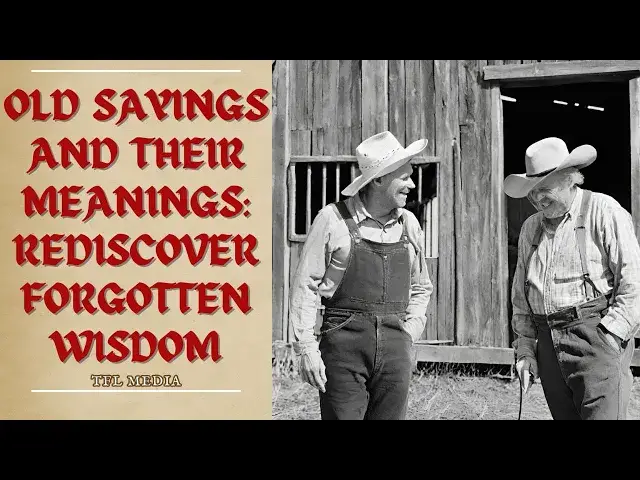
Ever heard an old phrase and wondered where it came from? These old sayings are catchy and full of wisdom.
Show More Show Less View Video Transcript
0:00
Every year a catchy saying and wonder where it came from
0:03
There are some unique and very old sayings that we just don't hear as often anymore
0:07
Do you know the meaning of these old sayings? I guess being shafted on the job has been around for a long time
0:15
This old saying suggests that it's best to agree upon a price for the job and
0:19
if possible, get a down payment beforehand. Having livestock on the loose or broken down fences reflected poorly on a farmer
0:29
It suggested that they were unable to maintain their farm or properly care for their animals
0:34
In some areas of the old country, if your livestock damaged someone's property
0:38
they could claim it as their own. The idea was to keep the fences high enough that a horse couldn't jump over them
0:45
strong enough that a bull couldn't bust them down, and tight enough that pigs couldn't push through them
0:51
Large stumps were difficult to remove when clearing land by hand. Farmers would often plow around them to finish the bigger job of planting crops
1:00
Then, as time allowed, they'd return and work on removing the stump
1:05
This is used in life to recognize that there are some things we must let go of
1:09
and not waste time and energy on. As you grow in experience and wisdom
1:14
you can return to the problem or situation and deal with it effectively
1:19
I was surprised to learn that this meant not accepting a gift without questioning it
1:24
I always thought it meant being thankful no matter where it comes from. Much like the term strings attached
1:30
which originally referred to the suspicion that comes with receiving a gift without any apparent
1:34
reason, it implies that the person giving the gift may expect something in return later
1:40
Another old meaning of this saying is, if someone gives you something, don't look too closely at it or question it
1:46
receive it with gratitude. The fox is a sneaky creature and has to work for his food
1:52
This goes together with another of the old sayings, the sleeping fox will catch no chicken
1:58
These two mean a person who doesn't work doesn't eat. A lesson many in our society should learn from
2:04
No, I don't mean those who can't work to provide, I mean those who can and won't
2:09
There's an interesting story to this saying. Back then, piglets sold in open markets were placed in burlap bags to keep them from getting away
2:18
Crooked merchants would put large cats in the bags instead of piglets. If the buyer didn't check the bag before he left the merchant, he was stuck holding the bag
2:27
another old saying, and was without recourse. He could not prove he didn't swap them once he left the market
2:34
A wise buyer would open the bag to look before paying the merchant and let the cat out of the
2:39
bag. Today, it means to keep a secret. This old saying has a simple yet profound meaning
2:47
Applied to many areas of life, it simply means diversifying yourself, your time, energy, and money
2:54
Learn everything you can, take care of your whole being, invest yourself in relationships
2:58
don't overextend your resources, and don't hyper-focus on any one money-making adventure
3:04
This is a truly southern saying among old farmer sayings. It means someone is so lazy they wouldn't try to hit a snake away with a stick
3:13
This would be considered the polite way of saying someone is lying. It stems from the deep south, where coon hunting dogs were, and in some areas still are, prized
3:23
If a dog trailed a rabbit instead of a coon, it was said to be the lion dog
3:28
If it was a pattern, it was considered no good for hunting or suitable for nothing liar
3:33
Any horseman knows that riding a horse too hard can damage it. A horse that's been allowed to run so hard it becomes lathered must be cooled down slowly
3:42
brushed, and dried before being put in a stall to rest. Not doing so could result in the death of the horse and, in the least, could cause pneumonia
3:52
I'm sure we're all familiar with this one. It simply means not getting ahead of yourself in any circumstance
3:58
but doing things in the proper order. This is another old saying used in many different ways
4:04
One member of the TFL community said his grandmother used to sing about her gramophone
4:10
It had no volume control, so she would tell them to put a sock in it to turn down the
4:14
volume of the speaker's horn. Its general use is a polite way of saying shut up or stop speaking
4:21
If you've kept chickens, you know when a hen sets hard, she is easily flustered and generally nasty
4:27
It also means upset quickly. This old saying emphasizes the value of being proactive and diligent
4:35
In farming, getting up early allows one to start chores and work before the day's heat sets in
4:41
increasing productivity. Similarly, those who act promptly and seize opportunities are more likely to succeed
4:49
Jim Dandy is one of those old sayings that roll off the tongue, right
4:54
Now, when you hear someone say Jim Dandy, they're talking about something outstanding, top-notch, or just plain excellent
5:02
Another old saying from the beloved Ma Ingalls, who gave sage advice to her daughter Laura during a pivotal time
5:08
Ma Ingalls shared this sentiment as Laura faced the news of her expectancy with Rose
5:13
This saying emphasizes the importance of accountability and facing the results of one's
5:18
actions. Whether it's a literal payment or the repercussions of a decision
5:22
there's a cost associated with every choice made. So, before indulging in any endeavor, consider the price to be paid
5:30
for in life's stance, the fiddler always awaits their due. This old saying comes from a medieval law stating peasants could use branches of any
5:38
tree for firewood with one condition. They had to reach the branch using a shepherd's crook or a billhook
5:45
Using one or both of these tools, they could get wood for heating and cooking
5:49
In our day, it's come to mean something will be done one way or another
5:54
In the old days, there were many religious rules about what could and could not be done on Sunday
6:00
This made the day seem long, especially for children. So, of course, this phrase is used to indicate a long, slow period
6:10
Snatch your own copy of Old Sayings and their meanings, rediscover forgotten wisdom
6:16
Plus, the Old Sayings Party Game. Click the link in the comments to download your book and party game today
#Hobbies & Leisure
#People & Society
#People & Society
#Social Issues & Advocacy
#Other