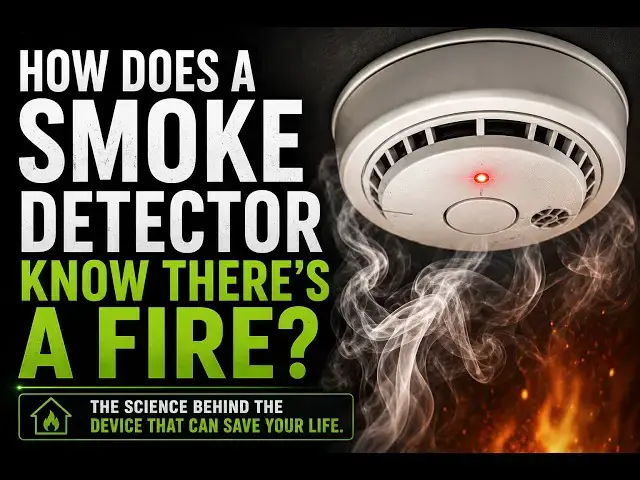

How does a smoke detector know there is a fire?
Aug 30, 2026

How does a smoke detector know there’s a fire?
A smoke detector can’t actually see flames or determine whether your house is burning. Instead, it detects tiny airborne particles produced by smoke—and the technology inside is surprisingly clever.
In this video, we break down how the two major types of smoke detectors work. You’ll see how photoelectric smoke detectors use light to detect smoke particles, how ionization detectors monitor a tiny electrical current, and why some smoke detectors contain a small amount of radioactive americium-241.
We’ll also explain why cooking can accidentally trigger your smoke alarm, why photoelectric and ionization detectors respond differently to certain types of fires, and what actually happens inside the detector when the alarm sounds.
The surprising answer is that a smoke detector never really knows there’s a fire. It simply detects the physical changes that smoke creates inside its sensing chamber.
Take Rate Research explains the hidden systems behind ordinary life—one interesting question and one clear, satisfying answer at a time.
#SmokeDetector #HowItWorks #FireSafety #Engineering #TakeRateResearch
Show More Show Less #Jobs & Education