
Türkiye: Excavations at ancient city of Kaunos in Türkiye enter new season after 6 decades.
May 6, 2026
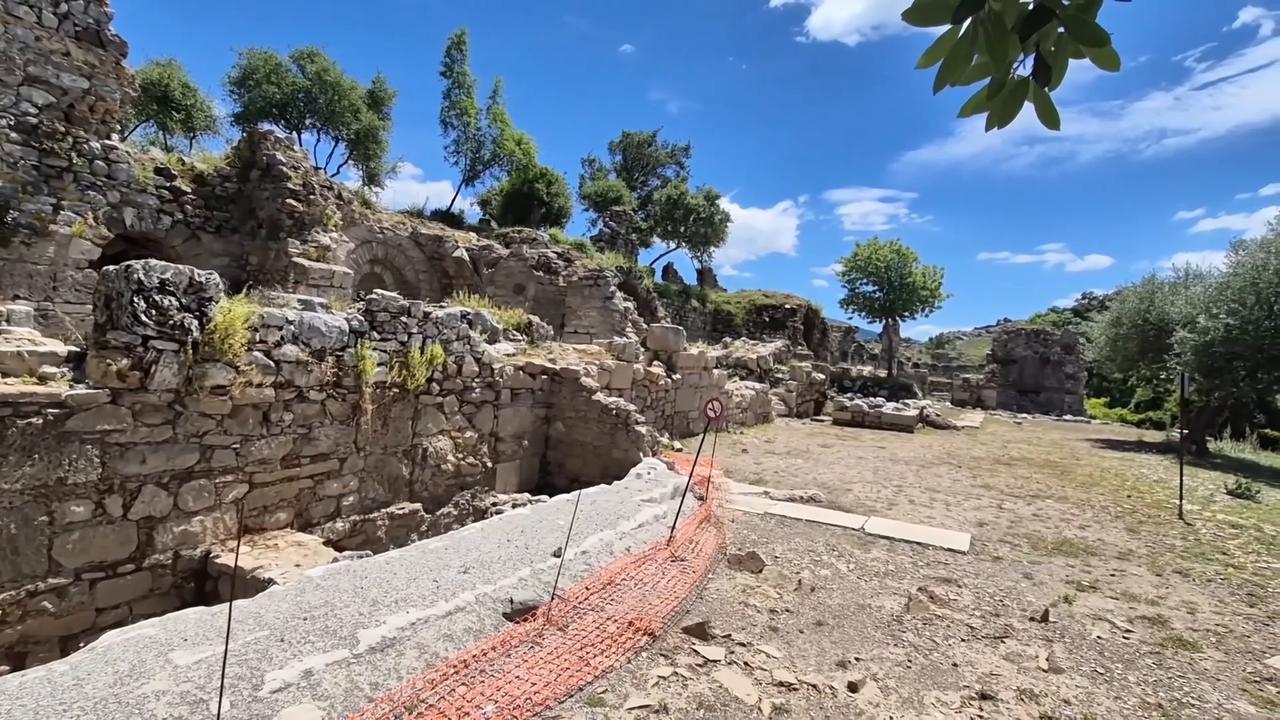
SHOTLIST MUGLA, TÜRKIYE (MAY 4, 2026) 1. VARIOUS DRONE SHOTS OF KAUNOS ANCIENT CITY 2. WORKERS BRUSHING STONES AT ANCIENT CITY (2 SHOTS) 3. CLOSE-UP OF SIGN 4. WIDE SHOT OF DALYAN STREAM NEAR ANCIENT CITY 5. VARIOUS OF KAUNOS ANCIENT CITY 6. (SOUNDBITE) (Turkish) PROF. DR. UFUK CORTUK, SAYING: “I’m talking about an excavation that has continued uninterrupted for 60 years. Of course, it is easy to say.” 7. SIGN ON STONE BLOCK 8. (SOUNDBITE) (Turkish) PROF. DR. UFUK CORTUK, SAYING: “Our 2026 excavations are planned to continue in the Manastir sector of the archaic walled city, where we have been working for the past three years. The data obtained there has provided valuable information about both the city’s early history and its final phase of use.” 9. SIGN ON ANCIENT WALL WITH COLUMNS IN BACKGROUND 10. (SOUNDBITE) (Turkish) PROF. DR. UFUK CORTUK, SAYING: “Let’s see what 2026 will reveal from beneath the soil. We are excited to begin the excavation season and look forward to discovering valuable archaeological findings.” 11. MEDIUM SHOT OF RUINS AND MARBLE COLUMNS MUGLA, TÜRKIYE - MAY 4: The ancient city of Kaunos in Türkiye’s southwestern Mugla province is marking the 60th anniversary of uninterrupted excavations at the 3,000-year-old site. The excavation project began in 1966 under Prof. Dr. Baki Ogun and has continued for six decades, a rare achievement in archaeology. Located in the Koycegiz district, Kaunos is on UNESCO’s Tentative List of World Heritage Sites. The site is known for its rock tombs, 5,000-seat theater, basilica, baths, agora and sacred areas dedicated to Demeter, Apollo and Artemis. Assoc. Prof. Dr. Ufuk Cortuk, who became head of the excavation in 2021, said he is committed to carrying forward the legacy of his predecessors. “This year marks the 60th anniversary of the Kaunos excavations,” Cortuk told Anadolu on Monday, May 4. “I am talking about an excavation that has been continuing uninterrupted for 60 years — of course, it is easy to say.” Cortuk said this year’s work will focus on the monastery area inside the archaic walls, where earlier studies revealed cisterns, vaulted spaces, multi-room buildings and narrow streets. Excavations will also continue in the Manastir sector, where the team has worked for the past three years. “The data we obtained there has provided valuable information about both the city’s early history and its final phase of use,” Cortuk said. Once a port city, Kaunos now lies inland due to the formation of the Dalyan delta over the centuries. Reporting by Durmus Genc, Omer Kundakci Writing by Sibel Uygun
Show More Show Less #news