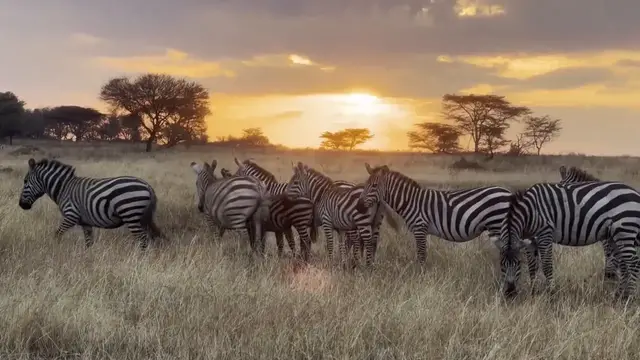

Tanzania: Wildebeest herds surge through Serengeti as great migration enters peak river-crossing season.
Aug 3, 2026
Shotlist Serengeti National Park, Tanzania - Recent (CCTV - No access Chinese mainland) 1. Various of wildebeests migrating, crossing river 2. SOUNDBITE (English) Jeremiah, guide, Serengeti National Park (full name not given) (starting with shot 1/ending with shot 3): "In nature, it's survival for the fittest. Only the strongest will survive there in the wild. So those obstacles can ensure the gene which is strong can continue to survive in nature." 3. Wildebeests crossing river 4. Various of zebras, gazelles, wildebeests migrating 5. Crocodile biting wildebeest 6. Various of wildebeests migrating, crossing river 7. Various of tourists in off-road vehicle, wildebeest Storyline Millions of wildebeest are pushing northward through Tanzania's Serengeti National Park, braving crocodile-infested rivers and exhausting treks as the annual great migration reaches its most dramatic phase. Rather than a short, seasonal spectacle, the Great Migration functions as a closed, year-round mobile ecosystem. Each June and July, vast columns of wildebeest reach the Grumeti River region. After resting and grazing in the area, the herds continue their northward push toward the Mara River in July, keeping the migration in constant motion throughout the year. Local guides in the park map out the steady annual rhythm of the herds’ movement. Jeremiah, a Serengeti National Park guide, explains that from December to January, wildebeest gather in the southern Serengeti, a period that coincides with the species’ annual calving season. Between April and June, the herds drift westward across the park. After June, they move into the Grumeti River zone, and from approximately August to October, the mass of animals travels north to cross the Mara River into Kenya. According to Jeremiah, the migration route spans roughly 1,500 square kilometers, looping endlessly between the southern Serengeti and the Masai Mara. The journey, however, is shaped by unpredictable forces. Weather patterns, predator activity, and grazing conditions all influence when and where the herds will cross, making each crossing a unique and uncertain spectacle. Wildebeest are far from the only protagonists in this epic journey. Zebras and gazelles travel alongside them, forming a cooperative foraging alliance in which each species plays a distinct role in feeding and vigilance. While river crossings are often portrayed as deadly encounters with crocodiles, the reality on the ground tells a different story. Trampling and sheer physical exhaustion claim far more lives during the crossings than any predator. "In nature, it's survival for the fittest. Only the strongest will survive there in the wild. So those obstacles can ensure the gene which is strong can continue to survive in nature," said Jeremiah, a guide with Serengeti National Park. With no fixed timetable and no guaranteed spectacle, the great migration remains one of nature's most awe-inspiring displays, a reminder that every glimpse of the herds thundering across the plains is a rare and unrepeatable gift from the wild.
Show More Show Less