
Peru: Thousands in Peru’s capital protest April election results.
May 7, 2026
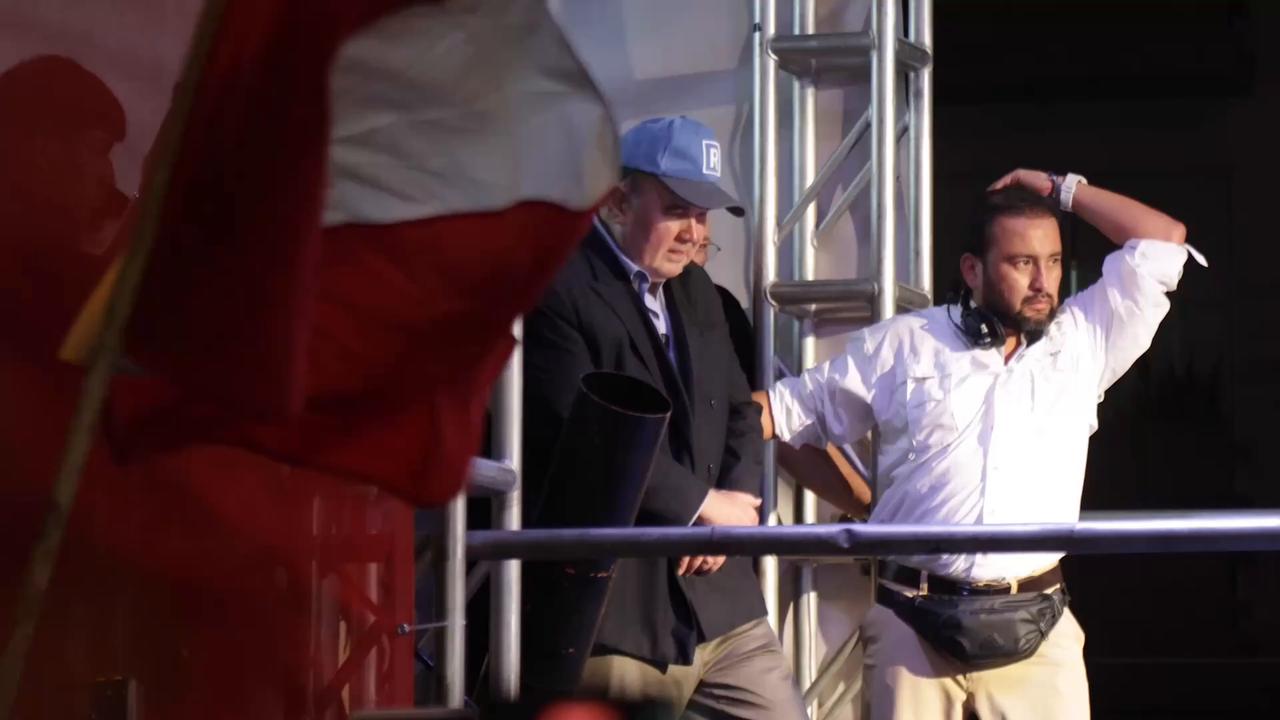
SHOTLIST: LIMA, PERU (MAY 6, 2026) 1. DRONE SHOTS OF PEOPLE CARRYING LARGE PERUVIAN FLAG (TWO SHOTS) 2. PROTESTORS WAVING LARGE FLAG (TWO SHOTS) 3. MAN WITH TRUMP MASK AND MAGA HAT DANCING 4. VARIOUS PROTESTERS SINGING NATIONAL ANTHEM 5. VARIOUS OF RIGHT WITH PRESIDENTIAL CANDIDATE RAFEL LOPEZ ALIAGA MARCHING WITH PROTESTERS 6. ALIAGA ADDRESSING PEOPLE 7. PERUVIAN WOMAN SPEAKING TO REPORTER (Spanish) 8. PERUVIAN MAN SPEAKING TO REPORTER (Spanish)LIMA, PERU - MAY 6, 2026: Thousands of people marched in Peru’s capital Lima on Wednesday, May 6, to protest the results of the April presidential election. Protesters carried banners and chanted slogans as they moved through parts of the capital. Demonstrators joined right-wing presidential candidate Rafael Lopez Aliaga in expressing criticism toward the National Jury of Elections and the National Office of Electoral Processes. Speaking during the protest, Aliaga questioned the legitimacy of the ongoing electoral process amid allegations of irregularities and called for new elections. On April 12, millions of citizens cast their ballots to elect a new president from a record-breaking field of 35 candidates. The election marked a pivotal moment for a nation seeking to end a decade of unprecedented political volatility. The race was defined by extreme fragmentation and the lack of a clear frontrunner. Polling stations were scheduled to open at 7 am, but many locations, particularly in the capital city of Lima, saw delays of up to three hours. The interruptions were primarily caused by the late arrival of electoral materials and a significant absence of volunteer poll workers. The delays sparked criticism, leading some sectors to raise allegations of irregularities. In response, authorities extended the voting window for the roughly 27 million eligible voters to ensure participation. While some citizens were still unable to cast their ballots before the new deadline, the government announced that they would be exempt from the standard fines usually levied for failing to vote. The first projections indicated a razor-thin margin among the top seven candidates, none of whom were expected to exceed 15% of the total vote. This fragmentation made a June 7 runoff election virtually certain, as no contender was poised to reach the 50% threshold required for an outright victory.
Show More Show Less #news