
China: Fresh fruits thrive on world's highest plateau with modern tech.
May 21, 2026
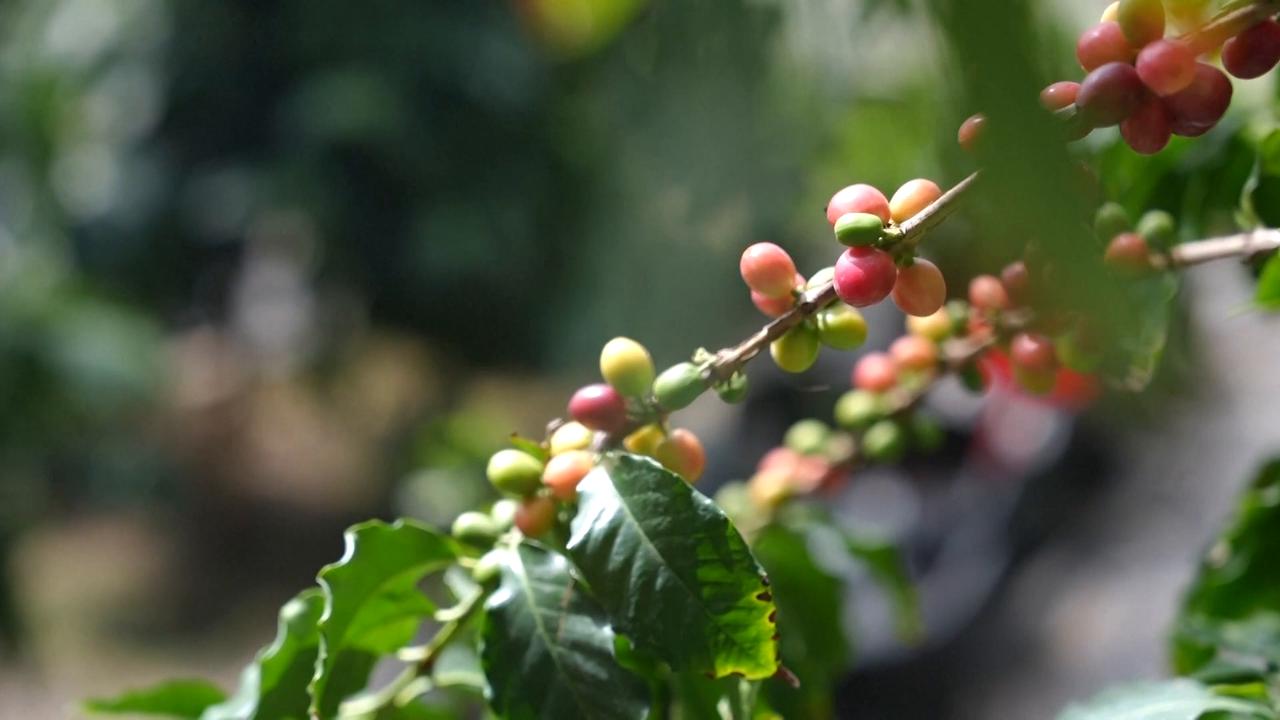
Shotlist Lhasa City, Xizang Autonomous Region, southwest China - Recent (CGTN - No access Chinese mainland) 1. Various of mountains, buildings 2. Greenhouses 3. Various of grapes growing in greenhouse 4. Various of researcher Zhang Kai checking plants 5. SOUNDBITE (Chinese, dubbed in English) Zhang Kai, agricultural researcher, Xizang Academy of Agricultural and Animal Sciences: "The strong sunlight and big temperature swings here make our grapes sweeter." 6. Various of coffee plants growing in greenhouse 7. SOUNDBITE (Chinese, dubbed in English) Laba Zhuoma, agricultural researcher, Xizang Academy of Agricultural and Animal Sciences (ending with shot 8): "We use shade netting and raise the humidity inside the greenhouse to help protect the coffee beans." 8. Greenhouse roof 9. Various of coffee plants growing in greenhouse 10. Laba Zhuoma chatting with reporter 11. Various of fruits growing in greenhouse 12. Various of fish in ponds Storyline Researchers in southwest China's Xizang Autonomous Region are using modern technologies to push the limits of agriculture, cultivating a wide range of fruits that were not commonly seen on the Qinghai-Xizang Plateau, the world's highest plateau. In the autonomous region's capital Lhasa, where altitude reaches 3,600 meters above sea level, the Xizang Academy of Agricultural and Animal Sciences has built up greenhouses and tested 60 grape varieties here, and six were finally found to be suitable for the harsh climate. "The strong sunlight and big temperature swings here make our grapes sweeter," said Zhang Kai, an agricultural researcher at the academy. With appropriate modifications, even subtropical coffee plants can grow on the plateau. "We use shade netting and raise the humidity inside the greenhouse to help protect the coffee beans," said Laba Zhuoma, another agricultural researcher at the institute. When freezing temperatures arrive at night, the greenhouses are covered with an extra layer of insulation to keep the temperature above eight degrees Celsius, according to academy staff. Researchers also said that they are planning to work with local companies to expand production to allow local people to enjoy fresh fruits, and even fresh fish, without the high transportation costs.
Show More Show Less #news