
China: AI helps bridge healthcare gap in rural China.
Jul 16, 2026
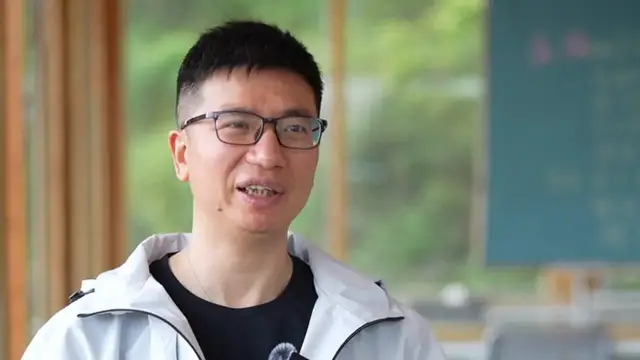
Shotlist Pu'an County, Qianxinan Buyei and Miao Autonomous Prefecture, Guizhou Province, southwest China - Recent (CCTV - No access Chinese mainland) 1. Village doctor helping patient enter clinic 2. Various of village doctor treating patients 3. SOUNDBITE (Chinese) Peng Xiandan, director, Pu'an County Health Promotion Center (starting with shot 2, partially overlaid with shot 4): "During a survey, we noticed that some young village doctors would tell villagers to travel several kilometers or even dozens of kilometers to the county hospital or larger hospitals when they were unsure about the diagnosis." ++SHOT OVERLAYING SOUNDBITE++ 4. Various of residents waiting for bus ++SHOT OVERLAYING SOUNDBITE++ 5. Slogan of grassroots public health services 6. Various of village doctor, patients in clinic 7. SOUNDBITE (Chinese) Peng Xiandan, director, Pu'an County Health Promotion Center (starting with shot 6, partially overlaid with shot 8, ending with shot 9): "In terms of incorporating AI, we have the AI digital twins of over 1,000 renowned doctors on top of the 300,000 plus doctors online to assist village doctors in prescribing medications accurately, which also helps reduce unnecessary trips for our residents." ++SHOT OVERLAYING SOUNDBITE++ 8. Various of village doctor working in clinic ++SHOT OVERLAYING SOUNDBITE++ 9. Various of village doctor conducting medical consultation with help of AI 10. SOUNDBITE (Chinese) Wu Hao, deputy head, Pu'an County Rural Work Leading Group (starting with shot 9, partially overlaid with shots 11-12): "With access to cutting-edge medical advancements, village doctors can now handle almost all minor illnesses within the village, and we hope to expand the scope of minor illnesses to a wider range." ++SHOTS OVERLAYING SOUNDBITE++ 11. Village doctor measuring blood pressure of patient 12. Wu in meeting with village doctors ++SHOTS OVERLAYING SOUNDBITE++ 13. Various of meeting in progress 14. Various of village doctor walking 15. Various of village clinic 16. SOUNDBITE (Chinese) Zhang Qifang, village doctor (starting with shot 15, partially overlaid with shots 17-18): "In 2015, the government proposed to raise the physician-to-patient ratio in rural areas to above one physician per 1,000 people. As our village has more than 2,000 residents, an additional village doctor came, which, combined with the application of AI this year, has greatly eased our work pressure." ++SHOTS OVERLAYING SOUNDBITE++ 17. Various of people waiting, pharmacist working at pharmacy 18. Street view ++SHOTS OVERLAYING SOUNDBITE++ 19. Various of village doctors walking, talking with villager 20. SOUNDBITE (Chinese) Zheng Dengdiao, villager (partially overlaid with shot 21): "Village doctors often come to check on us in the fields. We can seek their help whenever we are in need. For minor issues, we get treated in local hospitals. Only serious cases require a trip to the county hospital." ++SHOT OVERLAYING SOUNDBITE++ 21. Various of villagers talking with village doctors ++SHOT OVERLAYING SOUNDBITE++ 22. Various of mountains, cattle 23. Village buildings 24. Aerial shot of rural landscape Storyline Artificial intelligence (AI) is transforming healthcare in China’s rural areas, enabling village doctors to diagnose, treat and manage patients with greater accuracy and efficiency. In Pu'an County, southwest China's Guizhou Province, residents in mountainous villages once had to travel for hours to larger hospitals due to the limited capabilities of grassroots physicians, especially less experienced ones. "During a survey, we noticed that some young village doctors would tell villages to travel several kilometers or even dozens of kilometers to the county hospital or larger hospitals when they feel unsure about the diagnosis," said Peng Xiandan, director of the Health Promotion Center of Pu'an. The intelligent solution arrived in February, when Pu'an County launched an AI skills training program for village doctors. The medical large language model of the mobile application introduced to the country was trained on more than 36 million academic papers, with a network of AI "digital twins" built by six academicians and more than 1,000 leading physicians to help village doctors. With an accuracy of over 95 percent in interpreting medical examination reports, the software has effectively kept minor illness treatment to grassroots levels, making it easier for both doctors and patients. "In terms of incorporating AI, we have the AI digital twins of over 1,000 renowned doctors on top of the 300,000 plus doctors online to assist village doctors in prescribing medications accurately, which also helps reduce unnecessary trips for our residents," Peng said. "With access to cutting-edge medical advancements, village doctors can now handle almost all minor illnesses within the village, and we hope to expand the scope of
Show More Show Less #news