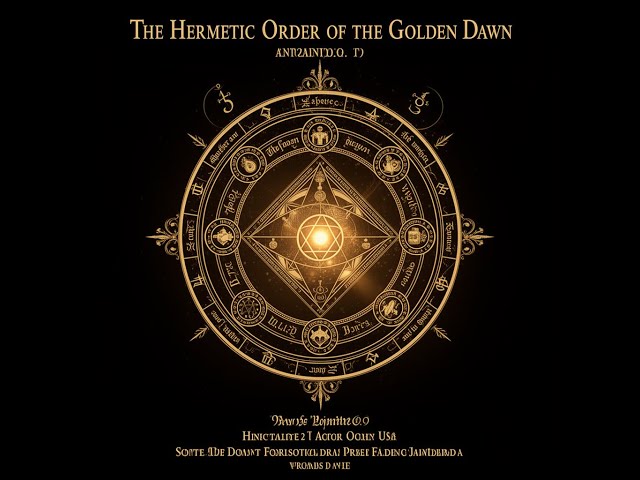

The Hermetic Order of the Golden Dawn
Jan 28, 2026
The Hermetic Order of the Golden Dawn was a secretive occult society founded in London in 1888. It blended mysticism, magic, and esoteric traditions to guide members toward spiritual enlightenment through structured rituals and study.
Founding
Three Freemasons—William Wynn Westcott, Samuel Liddell MacGregor Mathers, and William Robert Woodman—established the group after Westcott acquired cryptic manuscripts. They claimed guidance from "Secret Chiefs," advanced spiritual beings, and opened the Isis-Urania Temple, admitting women equally with men unlike many Masonic orders.
Structure
The order divided into an Outer Order for basic teachings on Kabbalah, astrology, tarot, and alchemy, and an Inner Order (Ordo Rosae Rubeae et Aureae Crucis) for advanced adepts starting in 1892. Progression involved initiations across ten grades linked to the Kabbalistic Tree of Life, with temples worldwide by the early 1900s.
Practices
Members performed ceremonial magic, including invocations, banishing rituals like the Lesser Banishing Ritual of the Pentagram, and meditations. Early focus stayed philosophical until the Inner Order introduced practical magic drawn from Hermeticism, Rosicrucianism, and Egyptian influences.
Decline
Infighting escalated after Woodman's 1891 death, fueled by Mathers' authoritarianism and scandals like the Horos fraud trial. Aleister Crowley's 1900 rebellion and temple secessions splintered the group by 1903 into factions like the Alpha et Omega and Waite's Holy Order of the Golden Dawn.
Influence
Notable members included W.B. Yeats, Annie Horniman, and later Crowley, whose systems shaped modern Wicca, Thelema, and occultism. Surviving lineages persist today, preserving its rituals and cosmology.
Show More Show Less