Up next in 10



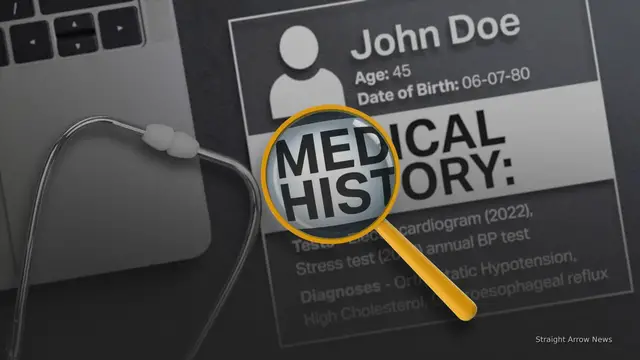
Straight Arrow News investigates how both doctor and patient data are collected, sold and utilized through a little-known $9B industry.
Show More Show Less View Video Transcript
0:00
In this video, we're going to explain how Big Pharma buys your health care data
0:04
and uses it to target doctors who don't prescribe their drugs. It sounds like a HIPAA violation. Insurance companies are selling your health care information
0:15
to pharmaceutical companies so they can target your doctor. It's legal because they remove your
0:21
name and replace it with a number. They know your age, your sex, your medications
0:26
your hospitalizations, your illnesses, and the zip code where you live. But as long as your name isn't attached to that information
0:35
but you're identified by a number, that's considered anonymized, patient-level information, and that is compliant with HIPAA laws
0:45
The prescription data sold by pharmacies de-identifies patient information and replaces doctors' names with their license numbers
0:52
But here's the key. The American Medical Association sells access to its Physician Master File
0:59
which contains the license information for nearly every doctor in America. This gives drug companies everything they need to connect doctors to their prescriptions
1:08
They know exactly what they're prescribing, and they also know what they're prescribing it for
1:15
because your insurance company sells your health information to these health information organizations as well
1:23
There's a $9 billion industry called Healthcare Commercial Intelligence that buys all this information from insurance companies and pharmacies and puts it together in one easy-to-use database
1:35
Drug companies subscribe to these databases and use the information to make inroads either in a new market or with a new drug
1:43
Definitive Healthcare, for example, sells itself as having all the answers to pharmaceutical companies' most important questions
1:49
How do you find the physicians who can prescribe your drug? Who are the key decision makers at your target account
1:56
How big is the market for your new device? Definitive has profiles on more than 2.6 million physicians, nurses, and other healthcare professionals
2:06
as well as billions of insurance claims on hundreds of millions of patients
2:11
The company updates its database daily. The physician profiles include clinical activity level, prescription activity level
2:18
and their propensity to prescribe brand name over generic drugs So when a drug rep walks into a doctor office they have the doctor profile in hand and a custom sales pitch based on their patients data
2:31
I started practicing 30 years ago, and even back then the pharmaceutical companies
2:35
could buy vendor data, they knew what your prescribing practices were, and they would use that to target, you know
2:43
specific medications, specific physicians based on prescribing patterns. Dr. Ami Bera has a unique perspective as a medical doctor and as a member of Congress
2:53
It could be used for good if you're not using the medications correctly or it seems like you're an outlier in those medications
3:00
I'm going to guess most of the time it's used to market those medications and try to get you to switch from one, let's say, antihypertensive to a different one
3:08
According to a 2022 report from the cloud software company Viva, 60% of health care providers meet with drug reps
3:15
Dr. John Dombrowski, an anesthesiologist based in Washington, D.C., counts himself among that crowd
3:21
How does that make you feel knowing that the drug rep knows exactly what you've been doing lately
3:26
I mean, that makes me a little uncomfortable. It seems like big brothers. I did not consent to that
3:31
I did nothing about this. This is all kind of being vacuumed up. It's very sad that, you know, the American Medical Association is then making profit off my data
3:40
that I didn't consent to, that they can then sell to big pharma. And what are you trying to get out of a drug rep and your interaction with a drug rep
3:47
What are you hoping to learn? Basically, I learn as much as I can. Obviously, I go to meetings
3:51
I have journal club. But maybe there's a new medication out there that I may not know about that I would certainly listen to them
3:58
They can leave a leave behind. Obviously, I know from a drug representative, they're here to push a product
4:03
I know what they're selling, and you should always be aware of that. But just because there's a new product out there doesn't mean it's good or bad
4:10
It means I should take a look at it to see maybe there's something I'm missing
4:13
And that's appropriate. Pharmaceutical companies spend billions of dollars a year on what's called prescriber detailing, which is face-to-face sales meetings
4:22
One of the most popular ways to do that is with a meal. Drug reps take doctors out to dinner or deliver lunch to their office
4:29
In exchange, the doctor listens to the sales pitch while they eat
4:33
Some doctors have become so fed up with drug reps that they either won't meet with them or have time limits
4:39
Some hospital systems have banned them entirely. Did you ever have an interaction with a drug rep where it seemed like they might have been pressuring you You know I never felt pressure But again I think they doing their job which is selling their medication I think we have to do our job and I think we could do a better job
4:55
educating medical students in residency to understand what the real world is going to be
5:00
like. So our job is to push back, ask questions, gather information, but then make the most cost
5:06
effective decisions. This is all allowed under the Health Insurance Portability and Accountability
5:12
Act of 1996, or HIPAA, which was written to protect private health information
5:18
HIPAA works by saying to the doctors and the hospitals and the health insurers
5:22
here's a bunch of rules that you have to follow about this data, no matter what the patient says
5:26
The patient gets these rights just by existing. They don't have to agree to anything
5:31
HIPAA only applies to personally identifiable information, so insurance companies can legally
5:37
de-identify information and sell it. There are two ways to de-identify data, the expert method
5:42
and the safe harbor method. The expert method is pretty simple. An expert must examine the data to
5:48
ensure there is a very small risk a company could figure out who it is. The safe harbor method
5:53
requires the removal of 18 identifiers, including name, zip code, telephone numbers, email addresses
6:00
and social security numbers. According to the Department of Health and Human Services
6:04
de-identified health information created following these methods is no longer protected by HIPAA
6:10
But they wrote it and said, if you go through this de-identification process
6:14
essentially, as long as it's still de-identified, you can do whatever you want with the data
6:17
So nobody in that chain knows that you were one of the 400 patients that the doctor prescribed
6:23
for any drug. So the patient data isn't a part of this
6:29
Insurance companies spell out exactly what they do in their disclosures. It's just so few people
6:34
read them. Take Cigna as an example. Their notice of privacy practices states, in some circumstances
6:40
we may use your protected health information to generate aggregate data or summarize data that
6:45
does not identify you, to study outcomes, costs, and provider profiles, and to suggest benefit
6:50
designs for your employer or health plan. These studies generate aggregate data that we may sell
6:56
or disclose to other companies or organizations. United has a very similar disclosure. Their notice
7:01
of privacy practices states, we may collect, use, and disclose health information
7:06
needed to operate and manage our business activities related to providing and managing your healthcare coverage We may also de health information in accordance with applicable laws After that information is de the information is no longer subject to this notice
7:20
and we may use the information for any lawful purpose. Is that a sufficient disclosure in your
7:26
mind? I mean, that almost exactly word for word tracks the rules, pretty much. SAN reached out to
7:31
the major insurance companies, health care commercial intelligence providers, and the nation's largest pharmacy chains. Despite multiple inquiries, these household names
7:40
including United, Cigna, and CVS, never returned our calls or emails. But one of the nation's
7:45
leading privacy and cybersecurity attorneys pushed back on the idea that selling data is
7:50
inherently bad. This idea that your privacy is being violated because your data in an anonymous
7:57
de-identified format is being used for other purposes, there's a disconnect there. I mean
8:03
And it's a little hard to frame what your privacy interest is in having data that none of the recipients know is about you
8:11
Nara explained how this practice could help lead to better care for patients
8:15
because it helps all health care professionals track what works and what doesn't
8:20
You want to be able to follow a patient across a journey
8:24
I don't care that it's you. I just need to know that it's the same patient who had this diagnosis on this day
8:30
this test, this procedure, this, you know, whatever they're going to do, and had that result
8:36
I need to know that it's the same person in order to evaluate whether it's working and whether you're doing that across the healthcare system
8:42
I've practiced in 150 specialty medical group. We would want to have the information to get a sense of how are doctors prescribing, what are they prescribing
8:51
how are they using their medications, so that we could actually take that feedback and give it back to our doctors
8:58
compare them to a panel of their peers and see where they're at
9:03
That, I think, is all valuable information, but that's not the pharmaceutical company
9:07
That's the medical group. That's the hospital system, per se. Interactions between drug reps and medical professionals have changed since the turn of the century
9:16
In 2002, the Pharmaceutical Research and Manufacturers of America created a code to police interactions between reps and healthcare professionals
9:24
The self-imposed rules were updated in 2009, further restricting gifts and meals
9:30
For more coverage of the health care industry, head to san.com or download the Straight Arrow News app and search health care
#Pharmaceuticals & Biotech
#Pharmacy
#Public Health
#news