Up next in 10



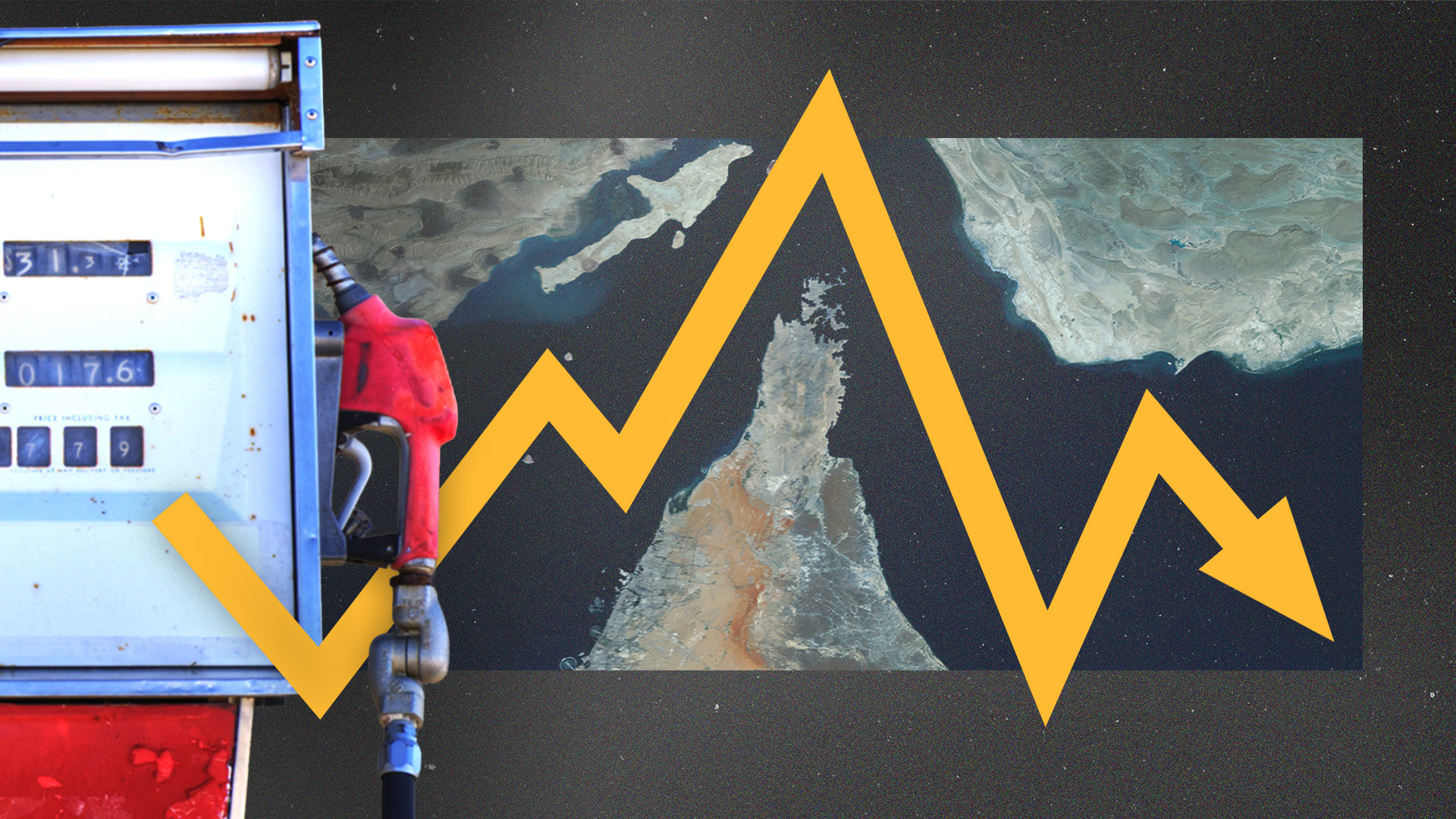
Prices swing on world events, and Iran is only one example. In a new video, Straight Arrow News walks through 50 years of gasoline prices.
Show More Show Less View Video Transcript
0:00
When gas prices climb, we feel the difference in our wallets. But price spikes have a long history
0:09
Global events often hit drivers fast, while prices at the pump settle back over time
0:14
Here is the average price of a gallon of regular gasoline over the last 50 years
0:20
Let's first adjust for inflation and walk through the history of price swings beginning with the 1970s
0:26
In 1973, OPEC nations declared an embargo against the U.S. and other countries that had supported Israel during the Yom Kippur War
0:36
The Nixon administration capped gas prices, forcing never-before-seen lines at the gas pump
0:42
However, it's the Iranian revolution that creates the first true spike in our chart
0:47
It brought about 7% of global oil supply offline and heightened tensions in several oil-producing states
0:55
It was more of a concern that not just with Iran cutting off oil to the global market
1:01
but that others would as well, that the hostage crisis would explode into a regional conflict
1:08
exactly like we're facing today. By early 1980, the price topped $5 per gallon in today's terms
1:16
But gasoline prices dropped the following year as tensions subsided and oil production picked up
1:21
The rest of the 80s and 90s were marked by relative stability in oil markets and affordable gasoline prices, especially from 1986 onward
1:31
New oil producers outside of OPEC entered the global oil market and energy conservation efforts were fostered as a result of the oil price spikes
1:44
The highest gasoline price during this period was per gallon in October of 1990 after Iraq invasion of Kuwait At the turn of the century a new dynamic took hold
1:58
sending gasoline prices on an upward swing from the end of 2001 through 2008
2:04
We saw a significant growth in the demand for oil, mostly coming from emerging Asia, China in particular
2:13
which outpaced supply, which was stagnant over that period. That demand reached new heights in 2008
2:24
The Summer Olympics in Beijing meant China was stockpiling supply. China knew that its atmosphere in Beijing and other cities
2:32
which would be hosting the Olympics, was very toxic to athletes. And so they arranged to shut down their coal-fired power plants
2:40
and switch to fuel oil power plants. And they did this, but this required a huge amount of fuel
2:46
They bumped up demand by about two million barrels a day running up to the Olympics
2:51
And the market didn't quite see this in time. In July 2008, while oil jumped to $147 per barrel, the inflation adjusted gasoline price in the U.S. hit $6.12 per gallon
3:05
A few months later, prices tumbled. The collapse of oil prices in 2008 is indeed the direct result of the financial crisis
3:13
So there was a steep drop in oil consumption in anticipation of a major global recession
3:19
Gas prices fell to $2.62 in December 2008. But the dip was short-lived
3:27
The 2010s saw the longest sustained period of gas prices above $4 per gallon
3:33
Global oil demand continued to rise and the decade brought a new set of world events that shook oil markets It was actually a combination of robust demand from emerging markets in Asia
3:46
together with a number of geopolitical tensions, first some supply disruptions from the Arab Spring in 2011
3:57
further tensions with Iran in 2012, which kept prices elevated over a substantial period of time
4:08
At the same time, a new technique to drill for oil and gas, known as hydraulic fracturing or fracking, took off in the U.S
4:16
It made previously overlooked oil patches in places like Texas and North Dakota profitable, but only at higher global prices
4:24
The price of crude at $100 a barrel made most of these plays very economical
4:31
and they expanded. OPEC cut oil production in the first few years of the decade
4:38
which kept prices high. But the high price incentivized more production, both domestically and abroad
4:45
We say in the oil patch, the cure for high prices is high prices
4:50
In November 2014, declining prices accelerated when OPEC reversed course on oil production cuts
4:57
In the following years, U.S. gasoline prices stayed well below $4 per gallon
5:03
When COVID-19 lockdowns hit, gas prices dipped to their lowest point in 20 years
5:09
when adjusted for inflation. Oil briefly traded in the negative. That means storage facilities were full as demand sputtered to a halt
5:18
and the companies holding the oil had to pay other companies to take it off their hands
5:24
U shale drillers they got heavily burned during COVID a lot of shale companies went under The companies that survived adapted cutting risk slowing investment in new wells
5:37
and prioritizing shareholder returns as the economy rebounded in 2021 and 2022
5:44
That also pushed prices higher. Then came Russia's invasion of Ukraine. The US and European countries stopped importing Russian oil and capped the price Russia could
5:54
sell it for elsewhere. Europe and the U.S. forced Russia to find new export markets
6:00
and that led to a reshuffling of global oil flows. That reshuffling squeezed global oil supply
6:06
and brought U.S. gasoline prices to $5.62 per gallon, the third highest in 50 years
6:15
That brings us to 2026, when Iran blocked the Strait of Hormuz and Americans felt the effects
6:22
It is without a doubt the largest supply disruption in the history of global oil markets
6:27
About 20 percent of the world's oil typically flows through the strait
6:32
Some was redirected to pipelines and releases from petroleum reserves blunted the impact slightly
6:38
But about 10 percent of the world's oil supply was stuck on the wrong side of the strait
6:44
The severity of this event is not fully reflected in prices yet
6:48
So oil supplies are much tighter than what the market price currently suggests
6:56
With each dollar spent per barrel, Baumeister says gasoline prices usually go up by two and a half cents
7:03
The longer oil markets are disrupted, the higher that price can go
7:07
For Straight Arrow News, I'm Keaton Peters. For more on this story, download the Straight Arrow mobile app today or go to san.com
#news