Up next in 10



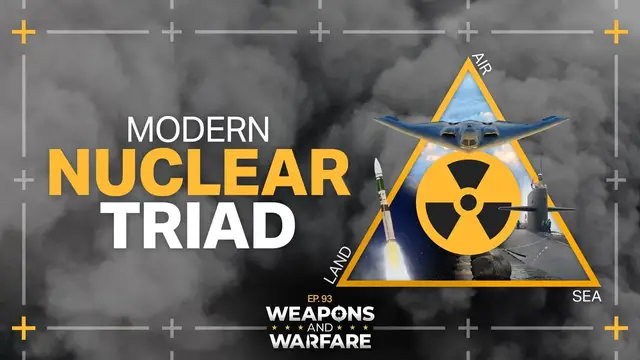
This week, Weapons and Warfare dives into the modernization of the nuclear triad and Ukrainian company Toloka.
Show More Show Less View Video Transcript
0:00
If diplomacy keeps failing, could Tomahawk missiles and a green light from the White House
0:05
change the course of the war for Ukraine and help it finally end Russia's illegal invasion
0:13
Plus, North Korea flexes its muscles, test-firing an ICBM in advance of a presidential visit to the Korean peninsula
0:21
And NASA's new ride takes flight, what the X-59 could mean for the future of supersonic air travel
0:30
Hello and welcome to Weapons and Warfare, a show made for people who want to know more about our national defense
0:40
Our goal is to help you have an informed conversation about what's happening with America's military
0:46
For Straight Arrow News, I'm your host, Ryan Robertson, and we start this week with the nuclear triad
0:52
Originally conceived in the 1950s and implemented in the 1960s, The triad was created to guarantee the U.S. could carry out a second-strike nuclear attack
1:03
even if some of its nuclear capabilities were lost in an initial strike
1:09
But like every branch of the Department of Defense, the nuclear triad is in need of modernization
1:16
And that's the subject of this week's debrief. Oh, it's thought just being ready is the point
1:25
It keeps the villain check. Keeps the world straight. They see how prepared we are
1:35
No one starts a nuclear war. The recently released Netflix thriller, A House of Dynamite, plays out a scenario people have worried about since the dawn of the nuclear age
1:48
a missile armed with the ability to kill millions headed towards the United States
1:54
with no clear picture of who launched it. Now, Netflix definitely took some artistic liberties with the movie
2:03
following an established Hollywood pattern when it comes to movies like this
2:07
but the actual threat remains very real. So much so that at this year's Air, Space, and Cyber Conference
2:16
the Air Force Association gathered three generals and a senior executive from the defense industry
2:22
to talk about what, in their opinions, the modernization of the nuclear triad needs to look like
2:28
Our triad is what our nation needs to assure allies and deter potential aggressors that would
2:35
threaten our own land. And it's proven. It's proven over five decades that it works. Now we
2:42
need to modernize it. Quick recap, in case you're wondering what is the triad, it's America's nuclear
2:48
deterrent. It's composed of land-based intercontinental ballistic missiles, or ICBMs, submarine-launched ballistic missiles, SLBMs, and long-range strategic bombers. Land, sea
3:03
and air, the backbone of America's national defense since the days of the Cold War
3:08
The Cold War, to us, contextually, what we're facing now is vastly different
3:14
A lot of it is the mindset, but certainly it sets the stage so that you can maintain strategic advantage
3:22
And so, you know, we see a lot of promise both in the programs of record, but also in the legacy systems that we have existing today
3:33
Those programs of record, General Parker mentioned, are pretty significant. First up, the Northrop Grumman B-21 Raider, the eventual successor of the B-2 Spirit
3:44
With a buy of at least 100 aircraft, this long-range stealth bomber can deliver both conventional and nuclear munitions
3:53
We know that, you know, the capabilities that the B-21 will bring into the mix
3:58
especially as we talk about the more advanced defensive systems that we're seeing
4:03
we're really looking forward to this capability. And so at the end of the day, for General Cotton, he has to provide a range of options to the president in order to preserve the decision space for the president
4:19
And so the triad, in our view, remains the most effective, the best way to do that
4:24
We now not just have one, but two aircraft in the test program. And if you think about it, very advanced aircraft, very complicated aircraft built to production processes
4:35
performing exactly how we expected them to, which is really a testament to all the great work that was done in the model environment
4:40
before we actually built those aircraft. When it comes to the land-based element of the triad, some might be thinking, what's wrong with the Minutemen 3
4:49
Unlike bombers and submarines, it's never actually been used. Why can't it keep doing the job
4:55
On the flip side of that argument, some might say the fact it's only ever been fired in testing
5:01
is proof that it's done the job, providing deterrence for more than 55 years
5:07
And as Brigadier General William Buck Rogers points out, it's not just about what the Department of Defense is doing
5:15
The adversary gets a vote. With this world changing, the requirements for an ICBM fleet may look different in the future
5:23
and do look different. And that's where Sentinel comes in, right? We have to be more responsive to the threats
5:29
when it comes to the land leg. So we need, and that doesn't include
5:33
just head-on kinetic type threats. That includes things like cyber. So Sentinel, a core part of Sentinel
5:40
is actually making sure that we are cyber secure, making sure that we bake cyber into that system
5:46
and that we can defend it from not just, like I said, the traditional kinetic type of attack
5:50
but also cyber and non-Kinnetica tax. So when can taxpayers expect to see these next-gen ICBMs online and ready for duty
6:00
If a report from the Government Accountability Office is any indication sometime in the 2050s Various delays and cost overruns have plagued the program since the contract was awarded to Northrop Grumman in 2020
6:14
Despite the setbacks, though, Northrop Grumman's Ben Davies said things are moving along
6:20
We've now had the opportunity to prototype and test every stage of the missile
6:25
and they very much performed as we expect them to, which gives us confidence as we push forward on the path to get that program into flight test
6:31
Finally, the sea-based leg of the triad. While it's not exactly in their wheelhouse, the assembled Air Force flag officers all seemed to understand its importance
6:42
The sea-based leg of the triad, right? It's the most survivable. Okay, and as we transition from Ohio class to Columbia class, we'll be guaranteed that advantage well for decades to come
6:57
The new Columbia-class submarines, formerly known as the Ohio Replacement Submarine, is the U.S. Navy's next generation of nuclear-powered ballistic missile subs
7:08
The first of 12 anticipated Columbias is expected to be delivered in 2028 or 2029 and should be ready for service by 2031
7:21
Time now for some headlines you may have missed. I'm joined now by senior producer and Air Force veteran Brett Baker
7:27
Brett, we just got done hearing about the modernization of the nuclear triad
7:32
You know, I know a lot of folks have a lot of positions, but those nuclear weapons have provided the U.S. and our allies with relative peace for the last 60 plus years or so
7:43
Absolutely. And just like anything, there's a time for change and it's going to cost
7:50
It's not going to be a cheap process, but it's something that definitely probably needs to happen sooner rather than later
7:58
You bet. All right, let's get to those headlines. It looks like Ukraine's war against Russia's illegal invasion is destined to enter a fourth year
8:09
And talk is growing about what it could mean for the cause if President Trump approved the delivery and use of Tomahawk missiles
8:16
Back in September, Ukrainian President Volodymyr Zelensky asked the U.S. to sell tomahawks to European nations who would then in turn sell them to Ukraine or give them to Ukraine
8:28
Matthew Seville, the director of military sciences at the Royal United Services Institute, says that green light would be a welcome sign by NATO and Ukraine's European allies
8:39
It's very much a material contribution that runs against some of the ways that the president has been talking about supporting Ukraine
8:49
I mean, he has made more U.S. military equipment available to buy by European countries to give to Ukraine
8:57
But a donation like this would be actually the first major military support agreed by the Trump administration
9:05
as opposed to delivering weapons that had been previously approved by the Biden administration
9:09
To this point, the president has denied Ukraine's requests for use of the long range missiles
9:15
but is also growing frustrated with Russian President Vladimir Putin's refusal to reach a peace deal
9:23
Brett, Tomahawks would be a powerful weapon in Ukraine, no doubt. This whole conversation, though, reminds me of the talks around Abrams, F-16s
9:32
and these other deep strike weapons under the Biden administration. Well, everything is a bargaining chip, and then depending on which way the wind is blowing that week
9:41
It's hard to know what the president is thinking in regards to what kind of help he wants to give Ukraine or not
9:50
But definitely those would be, and we joke about the use of this word, a game changer for Ukraine
9:59
So I hope that that's kind of something because this thing needs to end at some point
10:05
And someone needs to make a move that's going to be decisive enough to force the other one's hand
10:10
And I hope it's Ukraine. That's what, you know, I think the majority of the free world wants
10:18
And I certainly know it's what Europe wants. So it would be nice to see some action on that front for sure
10:25
You bet. Every time the U.S. has deployed tomahawks, it's always been a decisive move
10:33
we saw tomahawks being deployed part of the strike against the Iranian nuclear sites
10:39
there was a bunch of tomahawks deployed from submarines in that strike and so submarines from Ukraine
10:45
would be able to strike pretty much anything in Russia and there's enough mass there
10:51
like Ukrainians can make some deep strike weapons of their own and they are but they don't have the mass yet
10:57
because pretty much everything that they make as soon as it comes off the line it's being shot so to your point
11:02
Hopefully the Ukrainians get that extra piece of the puzzle to tip the scales in their favor
11:10
All right. Speaking of missiles, in advance of President Trump's visit to South Korea last month
11:16
their neighbors to the north said they recently conducted successful cruise missile tests
11:21
the latest display of its military capabilities. North Korea's official news agency said the sea-to-surface missiles flew for more than two hours
11:30
before accurately striking targets in its western waters. Brett, Rocketman is going to Rocketman, I suppose
11:39
Absolutely. You know, one of the real kind of like intel I can bring to this is my experience
11:46
I was stationed at Osan Air Base in South Korea, 1990 to 91
11:51
And back then, his father was in charge. But we called it saber rattling
11:56
It's a lot of just making noise to make noise so that they don't forget you're there, I suppose
12:05
I don't think any of us... Yes, they are to be taken seriously
12:10
How serious is the threat I have to think that they know that they may have the upper hand in anything if they were to strike first but that would not last long So it not in their best interest to actually do anything
12:28
But making noise and making people, well, what are they up to now, does seem to be their game
12:35
Right, right. I mean, it's kind of what they do, right? To your point, South Korea, they've always had this enemy at the North
12:44
They've been prepared constantly, fight tonight kind of mentality across the country
12:51
So yeah, to your point, North Koreans might be able to – yes, you've got to take them seriously
12:57
They are a nuclear-armed country. But any kind of opening volley would be probably North Korea's only volley if you game it out
13:10
All right, finally, NASA's X-59, a supersonic but quiet jet, soared over the Southern California desert in late October in the first test flight of the experimental aircraft
13:22
The X-59 was built and designed by Lockheed Martin to break the sound barrier with little noise
13:28
possibly paving the way for faster commercial air travel. The sleek-looking jet, and it does look very sleek
13:38
took off from a runway at Lockheed's Skunk Works facility in Palmdale, California
13:43
about 60 miles north of Los Angeles. The X-59 is designed to break the sound barrier with a sonic thump rather than a boom
13:53
It's touted to be able to cruise at Mach 1.4 at an altitude of 55,000 feet
14:00
And, Brett, might make the hop over the pond a little quicker. I got to imagine the price of fuel for that thing, though
14:07
It's going to be ridiculous. So quicker flight, probably not a cheaper flight
14:12
That is most doubly a fact. I think the real interesting application, kind of the reason why I picked that story is
14:19
eventually that's going to find its way into the military. I have to believe if this is a successful venture
14:28
obviously it would be great for, because, you know, for the most part
14:33
a supersonic flight over the U S is largely banned. But I have to think that at some point, if it works
14:41
that's going to be something that comes towards the military's way. Sure
14:45
I want to know at what level does a thump become a boom? Is there like an
14:52
intermediary, right? Like the sonic thump? Is there a sonic crack in between thump and boom
14:58
A sonic slap? I don't know. I'm going to have to find
15:03
a supersonic, hypersonic engineer and talk about that. Alright, Brett. Really appreciate it
15:10
as always. We'll see you next week. See you next week. Just like UAVs and UGVs come in all different shapes and sizes, so do UUVs, unmanned underwater vehicles
15:23
And I'm going to talk a little bit more about this Toloka 1000 behind me with a gentleman from the company
15:28
We're not going to show his face for security reasons, but just want to say thank you so much for joining us today
15:33
Oh, thank you. It's a great opportunity. Thank you. So the Toloka 1000, it looks like a submarine, basically just one giant unmanned torpedo
15:42
Well, it's actually more like a sort of unmanned submarine, so there is no crew, but it can do all the stuff that submarine does
15:51
It has even diesel engine on it, so it's like old-style diesel electric submarine, but high autonomous
15:59
It can connect to the Internet while it's on the surface and send all the data it has acquired during the mission
16:05
and can perform long-term missions up to three months or even a half a year
16:11
depending on the fuel capacity and the battery capacity. Okay, so that's good clarification there
16:18
It's not necessarily a strike vehicle. It can be a strike vehicle, but it also can be a reconnaissance vehicle
16:24
It can perform demining operations, mining operations, service, sleeping mine. You know, when it detects acoustically someone, it can go right to the target
16:36
It has optical, thermal, and acoustic targeting systems. We have a sort of Shazam for ships where we can measure by yzing the acoustic signature
16:50
define what type of ship it is, and even in some cases define what model of ship it is
16:56
Shazam for ships, that's a good term. that's a good term. As far as where it's made and stuff, built here in Ukraine
17:02
Yeah, it's built in Ukraine, but we use companies from all over the world, components
17:08
You bet. In this show, I mean, obviously we're trying to attract some international investment
17:13
maybe some international customers. Have you had any folks from outside of Ukraine stop by and
17:18
kind of question you guys about what you got? Yeah, it's quite prominent here. Everybody sees
17:24
a big sub and wants to know something about it. And we talked to some companies that are also in
17:30
naval field. We also talked to military officers of European countries and also in the US
17:40
So there are plenty of interest for low cost underwater sea factors. And what we do in Ukraine
17:47
is basically low-cost, low-tech, but highly effective. So we are good in implementing software
17:59
but the hardware is not so sophisticated. Makes sense. Augmented low-tech. Now, this is the Toloka 1000. How long is it
18:10
It's exactly to fit in a standard 20-foot container. But you also make different varieties of unmanned underwater vehicles
18:21
Yeah we have three base models One is something like 1 to 2 meters fully electric with a range up to 100 kilometers
18:31
and the payload up to 15 kilos. The other one is the middle one with a payload up to 500 kilos
18:38
and the range up to 1,000, 1,200 kilometers. And this one has a range up to 2,000 kilometers and a payload up to 5 tons
18:48
All right. Thank you so much for joining us today. Really appreciate your time. You're welcome. Thank you
18:56
All right, for our comp check this week, we are checking back in with our friends over at RedCat
19:00
to find out, you know, what's going on with their Black Widow drone. Here to talk a little bit more about that is Stan Nowak with RedCat
19:08
talking about the Black Widow. Stan, thank you so much for joining us. We really appreciate it
19:12
So last year we kind of introduced our audience to the Black Widow and its mission sets
19:17
Kind of, you know, fill us in on what's happened since then. Well, what's interesting is that we've been able to not only be the program winner for the short-range accountants program for the U.S. Army
19:26
but now we are actually in the NSPA catalog for the European Union and NATO
19:30
And that's a huge deal for us. That opens up a lot of doors to work with those frontline forces that are essentially going up against Russia as well along the Ukrainian border
19:39
So we're here for our allied partners. We're here for our coalition partners. And Black Widow really is going to be the program of choice for a lot of those countries over there
19:46
And it seems like it's kind of opened up some doors for you in some other areas as well
19:51
And really, you know, the last year, Black Cat's really expanded in other domains beside the air
19:57
There were some USVs that you're also rolling out. Can I talk about that as well? Sure, yeah. I mean, so when I was brought on board on Red Cat about three years ago
20:04
our mission was to become an all-domain company. That's exactly why I was positioning it for the last three years
20:09
And we've now done that, right? We've just unveiled a new division called Blue Ops, which is our maritime division
20:14
solely focused on uncrewed surface vessels. But really, the thread to pull for all the main operations is that all these things are going to be integrated together
20:21
So imagine swarms of boats holding swarms of our aerial assets. When you're starting to look at the next great conflict, which is going to be a completely different battlefield environment than Ukraine
20:30
we're talking about island chains, we're talking about hundreds of miles, you need delivery systems for these small drones because they're very limiting factors, right, from range and endurance
20:39
Well, let's get them close to the fight. Let's use larger fixed-wing aircraft and do marsupial deployment as well as uncrewed surface vessels to actually get these things closer to the fight
20:48
And I wanted to bring up the marsupial development, so I'm glad that you did. You just mentioned fixed-wing aircraft dropping stuff, but there's also unmanned surface vehicles that can be marsupial because they're going to launch other things
21:00
Can I talk about how you're trying to really develop out this marsupial drone inside of a drone concept
21:07
Well, so we've been working with a hive company for a while called Sentient Robotics
21:11
And that started, again, give us these ideas of deploying a massive amount of aerial assets from uncrewed surface vessels and, again, from the fixed-wing assets as well
21:21
When you start to look at even the U.S. Army, you know, we are in the SRR echelon
21:25
But if you're looking at MRR and LRR, the fact that we have an advantage because we're the smaller stuff, we can actually be integrated into those larger systems
21:32
And that's really where all this is going is all these echelons starting to work together so that the U.S. Army and other coalition forces can take advantage of these integrated systems and deploying these small drones for much larger drones
21:44
The same for the uncrewed surface vessels, right? It's how far can I go? Let's just say I'm getting towards a beachhead
21:49
I need to form a control point in an area. Well, I can send these drones as opposed to people and keep people out of harm's way
21:55
And everything's being operated from the rear. So that's really where it's all headed. And that's how you're integrating into the Army's MRR program
22:02
the medium range reconnaissance, is through that kind of integration. Is that correct? Yeah, yeah
22:06
So you're going to start to look at the other echelons actually holding our Black Widow systems or our FANG systems
22:11
and being able to then be deployed from under wing. Again, being able to go a lot further than we can go just under our average drones
22:18
and then being deployed. But they're all retrievable. That's what's great. They can be a tridable, but they can also be retrievable
22:24
Really appreciate your time today, Stan. Thanks so much for joining us. Thanks so much. Yep. All opinions expressed in this segment are solely the opinions of the contributors
22:34
All right, folks, that's going to do it for us this week on Weapons and Warfare
22:38
But before we bug out, I want to highlight a hero from Mississippi
22:43
Jessica Bond was sleeping at her home with her two kids in the house
22:47
when her son woke to the sound of their dogs barking at something in the yard
22:53
Her son tried to grab video of the animal, but... He said, I can't get a clip shot
22:58
He said, but mine, it's the monkey. So I said, oh, snap, let me get my phone and let me get my gun and let me call the police and stuff
23:07
The monkey she's referring to was part of a lab experiment at Tulane University's research center
23:13
The 40-pound primate was described as aggressive and escaped after the semi-truck carrying it crashed on the interstate
23:20
I'm not going to take my chances with my baby versus an infected animal
23:27
So, I did what any mother would do. And I got out and I shot at the monkey
23:36
That's right, Bond. Jessica Bond wasn't going to wait around and see what this escaped, dangerous animal would do
23:44
She embraced her Second Amendment rights and took out an immediate threat to her family
23:49
As a former farm kid from Nebraska who had to grab a gun a time or two to protect myself and our property
23:57
I just have to say bravo Zulu, Miss Bond. Your kids are lucky to have a mom like you
24:04
And that's going to do it for us this week on Weapons and Warfare. As always, if you like what you saw and or heard
24:10
please like and subscribe to our social media feeds and download the Straight Arrow News app today
24:16
That really is the best way to get all of the great content that SAN puts out
24:21
So until next time, for senior producer Brett Baker, video editor Brian Spencer, and motion artist Dakota Patio
24:28
I'm Ryan Robertson for Straight Arrow News, signing off
#Military
#news