Up next in 10

Power play: Our ultimate energy bracket picks most affordable electricity source
Mar 17, 2026


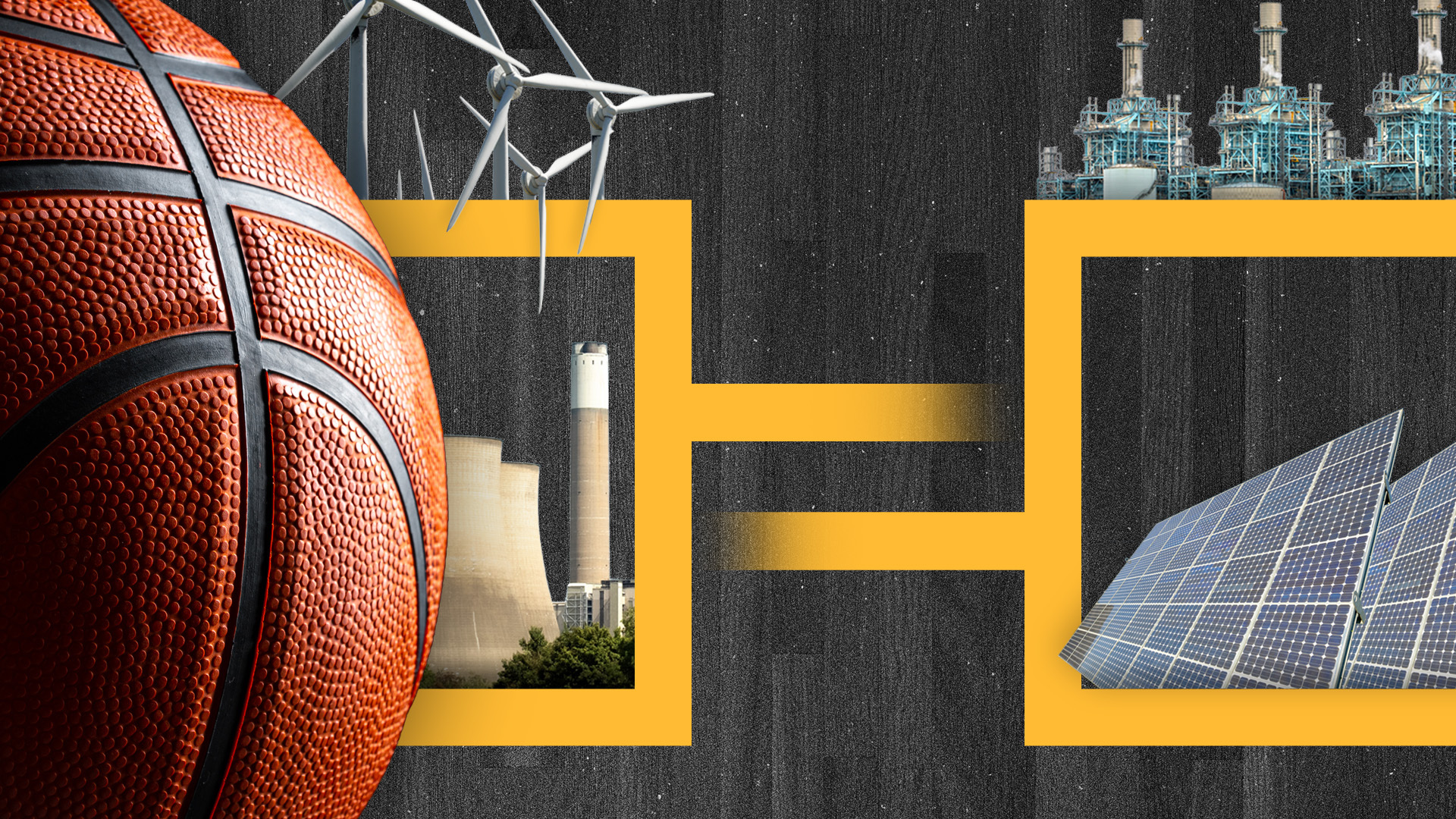
In the spirit of the NCAA tournament, SAN sent a bracket of 16 power-generation options to two dozen experts on energy economics.
Show More Show Less View Video Transcript
0:00
Politicians tell us, big tech tells us, and researchers tell us why
0:04
America needs more power on its electric grid. That they all agree on
0:09
But where to draft that power from, that's where politics divides. The Republican team generally wants to keep coal around and build more gas power plants
0:18
Democrats largely want to shut down coal and rely on renewables like wind and solar
0:23
But when the grid is running on over time, most Americans aren't thinking about where the power comes from
0:28
They just want it to stay on through the final buzzer. I'm Keaton Peters, an energy reporter with Straight Arrow News
0:43
And we're stripping away the party politics to find out from an economic perspective
0:48
what is the most effective source of power in 2026? And since energy technologies are already pitted against each other like longstanding sports rivalries
0:58
we figured, why not have a little fun with it? Straight Arrow News created a bracket with 16 types of power generating technologies and fuels
1:06
We sent it to dozens of experts on energy economics and the power grid
1:11
to have them pick winners in head-to-head matchups. I'm here for a University of Texas Longhorn's NCAA game
1:18
so that I can really get into the competitive spirit. Let's start off our tournament with a minigame called Decoding the Power Grid in 30 Seconds
1:34
the length of the NCAA shot clock. Close to 80% of electricity in the U.S. comes from
1:40
conventional power plants fueled by gas, coal, and nuclear. More than 20% comes from renewables
1:45
including wind, hydropower, and solar. Over the past decade, coal's been slipping, replaced by gas
1:51
wind and most recently the rise of solar and batteries Because of those AI data centers you keep hearing about electricity demand is expected to increase by about 4 through 2027 That a ton of power
2:03
with little time to bring in new recruits. I mean, resources. The brackets are in. Many of the experts
2:09
I spoke with were a little skeptical. They told me the grid is too complicated to pick just one
2:14
resource. We'll come back to the reasons why, but for now, here are the results. On the right side
2:20
we've got conventional power plants and modern versions of them. Nuclear never made it past round two
2:27
Existing nuclear plants might have low operating costs, but they're just too expensive to build
2:32
The track record of conventional nuclear in recent years has been pretty dismal
2:37
You know, it's tremendous cost overruns, tremendous delays. It's very hard to make it work in term financial terms
2:45
And modern designs for scaled-back nuclear plants that can be manufactured instead of custom-built each time, aka small modular reactors, SMRs
2:55
those aren't significantly more affordable yet, nor have they been commercially proven
3:00
Oil and diesel power plants are expensive and more of a niche market these days. Biomass
3:06
those are power plants that burn dead vegetation and other organic materials, they don't make sense
3:12
on a large scale either. No one picked these past round two. That leaves gas, coal, and
3:18
geothermal power. That's where the Earth's natural heat is harnessed to generate steam and spin a
3:23
turbine. Coal versus geothermal was an inevitable quarterfinals matchup, and this one split both
3:29
ways. But most experts picked geothermal to advance to the final four. People are betting on
3:35
so-called enhanced or thinking about in the future about enhanced geothermal technologies, which are
3:41
using hydraulic fracturing and horizontal drilling that's been used in the oil and gas industry
3:45
and perfect it but then also perfecting it to drill into different types of rocks for geothermal heat extraction That reflects a bet on a growing technology that could play a bigger role in the future even if it expensive to build right now as opposed to coal where even existing plants
4:03
with low marginal costs struggle to compete against other resources. Now to the left side of the bracket
4:09
where we have technologies that rely on wind, water, or sunlight. Every source contacted by SAN picked solar PV
4:16
that's your classic solar panel, along with onshore wind, hydropower, and solar plus batteries to advance to the second round
4:25
That's where the competition gets heated. Up until a few years ago, wind was much more affordable than solar
4:32
And some cost yses still show that's the case. Solar is growing faster right now, but the grid has more wind as an overall share of electricity production
4:42
Our sources were split. This one's a toss-up, but solar PV had a slight edge
4:47
In the solar plus storage versus hydropower matchup, everyone agreed. I'm a big believer in solar
4:54
I think it's really the fastest growing technology that we have these days
4:58
But combining in with storage helps deal with a lot of the problem with solar
5:03
The obvious problem with solar is that it doesn't generate anything when there's no sun
5:07
So you need to have some backup and storage can provide at least some part of that backup
5:12
We've reached the final four, going head-to-head for the championship, according to our experts
5:18
our combined cycle gas power plants versus geothermal, and solar plus storage versus
5:23
standalone solar panels. Out of these, one emerged as the clear winner on nearly all of the brackets
5:30
solar plus storage. So that's what power companies should build to efficiently run the grid, right
5:37
Well, not so fast. Properly or well-functioning grids have a mix of technologies
5:42
just like a basketball team has a mix of different types of players on the team
5:48
Instead of looking at energy resources like competing teams trying to beat one another it better to look at them like individual athletes For utilities power companies and lawmakers think of them as the team general
6:00
manager, the challenge is crafting the best roster to build an affordable and reliable grid
6:05
Storage and solar are coming along to, you know, fill out the team that was already competitive
6:10
but maybe not winning the championship. Each technology has different characteristics. Solar is like a streaky three-point shooter
6:19
When it gets hot, it's unstoppable. But if it's cold, you can't depend on it to win the game
6:27
Add storage, and it's a player that can rebound the ball to get you extra possessions to win the game
6:34
Combined cycle gas plants are like a super efficient player you can count on to get you through the season
6:39
providing a majority of your bulk power. But they're known for having an attitude that pollutes the atmosphere in the locker room
6:45
If a team can afford to pay higher salaries, maybe they'll pick nuclear instead
6:49
Then there are the role players. Gas peeker plants that turn on quickly and fill in the gaps
6:56
That's who you bring off the bench for a quick burst of energy when another player gets hurt
7:02
Coal and hydropower are the veteran players who consistently contribute to the team
7:07
but they're on minutes restrictions without much room to grow. Then there's the young, freshly recruited talent
7:13
Geothermal, offshore wind, small modular reactors. Each of these has potential. But the costs have to come down, and the technology has more to prove
7:23
before putting the ball in their hands as the clock ticks down. Until then, a seasoned coach will likely drop a play that gets everyone involved
7:31
But they'll lean on the players they know can deliver for the final shot
7:39
For Straight Arrow News, I'm Keaton Peters. For more on this story, download the Straight Arrow News mobile app today or go to san.com
#news