Up next in 10



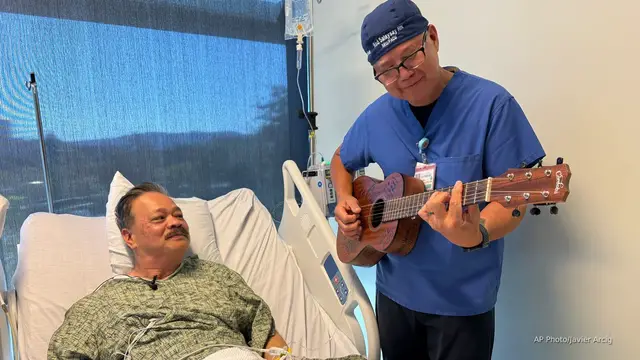
Integrating live music into patient care, alongside traditional medication, helps people's recovery, studies show.
Show More Show Less View Video Transcript
0:00
Hold the pain meds. Don't be surprised if your recovery nurse grabs a ukulele instead of a
0:11
Tylenol. For the last 16 years that I played music, I probably played for about 2,000 patients
0:19
already. I've been counting on my finger how many weeks and how many patients a week
0:25
about 2,000 patients. That's a lot. Rod Selesai is a nurse in the recovery unit
0:31
at University of California San Diego Health. While following medical protocol with medication dosages
0:36
he is also known to honor a musical request or two. I always find that music and pain medication works side by side
0:46
to achieve a really good level of comfort. Once they got some pain medication
0:54
they started to relax, and then when you instill some music in between
1:00
then it's actually a different level of comfort that they experience. One recent study shows that music not only affects pain tolerance
1:10
the genre of music may also play a significant role. However, as researchers dug further, they found the genre is more about personal preference
1:18
If a patient is calmed by classic rock, then classic rock is the genre that helps with pain
1:22
With all music proven to be positive, what's important is that the patient enjoys it
1:27
Patient Richard Huang welcomed the music therapy I was expecting a typical nurse that just comes in and do his or her job and that it And Rod came in here with a whole different attitude and atmosphere
1:44
It kind of stunned me a little bit, but it actually helped me not think about the pain
1:53
but more focus on how to recover. Studies show when patients choose the music and listen intently, acute pain begins to dull
2:03
Acute pain is felt when pain receptors in a certain part of the body send signals to the brain
2:07
When you play music and they start to tap their hands, maybe move their foot to the beat
2:16
and then they kind of adjust their position into the pillow, So you know that it's working because they're kind of trying to find a position where they could feel more comfortable and let the music sink in
2:30
And that for me, including the changes that you see on the monitor about the patient's heart rate and blood pressure
2:39
and the fact that, okay, their breathing is also slowing down. Actually, those are the physiological signs that tell me that this type of therapy is working
2:52
The exact reasoning between the correlation is still unknown. Some researchers say it may be due to familiar songs activating more memories and emotions
3:01
For Straight Arrow News, I'm Jack Henry
#Music & Audio
#Health Conditions
#Pain Management
#news