Up next in 10



President Trump’s NASA nominee wants humans on the moon before the end of the Trump administration and while prioritizing the Mars mission.
Show More Show Less View Video Transcript
0:00
It's the moon and Mars, not the moon or Mars
0:03
President Trump's nominee to lead NASA told Congress he wants humans on the moon
0:07
before the end of the Trump administration while prioritizing the Mars mission
0:12
which has a target date in the 2030s. We don't have to make a binary decision of moon versus Mars
0:18
or moon has to come first versus Mars. I think we could be paralleling these efforts
0:23
There's an ongoing moon race between the United States and China. Under the Artemis program, the United States is scheduled to have a crewed lunar flyby in April 2026 and crewed surface landing in mid-2027
0:35
China is scheduled to have multiple lunar lander missions in the same time frame
0:40
but astronauts from the country aren't scheduled to touch down until 2030 and could build a lunar base with Russia by 2035
0:47
We certainly cannot lose. If we do not lead the way and we're following, we may be following forever and the consequence of which could be extraordinary
0:57
I mean, even if you're talking about things that have maybe even a low probability, let's say, for example, on the lunar surface, helium three becomes a new source of fusion power
1:07
It could shift the balance of power here on Earth. I don't think we can afford to find that out the hard way
1:12
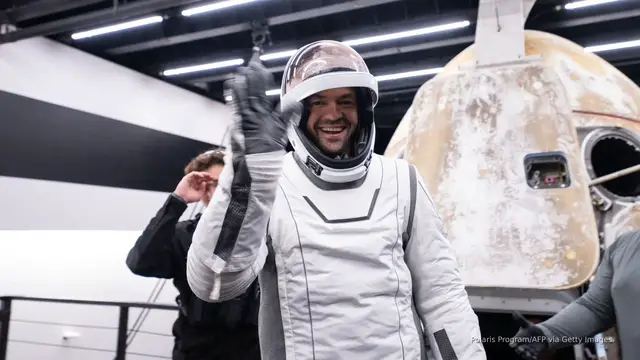
Commander Jared Isaacman Jared Isaacman is a billionaire entrepreneur who has been to space twice He was part of the SpaceX crew that performed the first non astronaut spacewalk
1:23
His relationship with SpaceX was a concern for multiple reasons. For one, owner Elon Musk wants to go to Mars
1:30
and lawmakers believe Isaacson may prioritize that, not the ongoing effort to get back to the moon
1:36
In addition, NASA has a $25 billion annual budget, and over the last decade, it has awarded SpaceX $17 billion in contracts
1:46
I believe NASA should be working, again, per my prepared remarks, on the near impossible, what no one else is capable of doing
1:53
and when they figure it out, commercial industry takes over and brings the rest of the world to follow
1:57
As Isaacson explained, since 1989, the United States has spent more than $100 billion
2:02
to get astronauts back on the moon and on Mars. We've done neither
2:07
So when asked if the current Artemis program and Orion spacecraft is the best way to go..
2:12
I don't think it's the long-term way to get to and from the moon and to Mars with great frequency
2:17
but this is the plan we have now. In Greek mythology, Artemis was the goddess of wild animals and the hunt
2:23
When America finally lands back on the moon, it's NASA's mission to make sure a woman takes the first step
2:29
I'm Ray Bogan for Straight Arrow News. For more reporting, download the SAN app
news
Politics