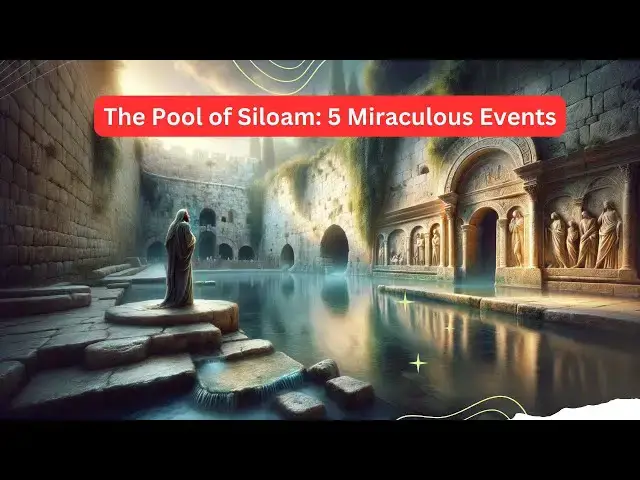

The Pool of Siloam: 6 Miraculous Events
May 30, 2024
The Pool of Siloam is a significant site in Christian and Jewish history, mentioned in the Old and New Testaments of the Bible. It is located in Jerusalem and has been associated with several miraculous events, especially in Christian tradition. Here are six notable events related to the Pool of Siloam, drawing from both historical and biblical accounts:
Visit: https://scripturalthinking.com
or subscribe my YouTube channel https://www.youtube.com/@scripturalthinking
Healing of a Blind Man (New Testament): The most famous miracle associated with the Pool of Siloam is recounted in the Gospel of John (John 9:1-11). Jesus healed a man who had been blind from birth by making mud with saliva, anointing the man's eyes with it, and then instructing him to wash in the Pool of Siloam. The man did as Jesus commanded and came back able to see. This miracle is significant for Christians as a sign of Jesus' divine authority and power to heal.
Water Supply During the Siege (Old Testament): In preparation for a siege by the Assyrians, King Hezekiah of Judah constructed a tunnel to bring water from the Gihon Spring to the Pool of Siloam inside the city walls (2 Kings 20:20, 2 Chronicles 32:2-4, 30). This engineering feat provided Jerusalem with a crucial water supply during the siege, allowing the city to withstand the Assyrian attack.
Celebration of the Feast of Tabernacles: The Pool of Siloam played a central role in the Jewish celebration of the Feast of Tabernacles (Sukkot). During the festival, priests would draw water from the pool and carry it to the Temple in a joyful procession, commemorating the water provided to the Israelites in the wilderness (although this specific practice is not detailed in the biblical text, it is described in later Jewish sources like the Talmud).
Symbolic Washing and Purification: The pool was also used for ritual washing and purification, as suggested by its New Testament mention and archaeological findings. Pilgrims coming to Jerusalem for festivals would use the pool for this purpose, underscoring its importance in religious practices of the time.
Prophetic Acts and Messages: The Old Testament does not specifically mention miracles at the Pool of Siloam, but the waters of Siloam are mentioned in a prophetic context in Isaiah 8:6. The prophet Isaiah uses the waters of Siloam, which flow gently, as a symbol in his message to King Ahaz, contrasting the people's rejection of God's gentle guidance with the impending devastation by the Assyrians.
Archaeological Discoveries: While not a miraculous event in the traditional sense, the discovery and excavation of the Pool of Siloam and Hezekiah's Tunnel in modern times have been seen by many as a form of validation of biblical narratives. These findings provide tangible links to the events described in the Scriptures and have deepened understanding of the historical and cultural context of the Bible.
Each of these events associated with the Pool of Siloam highlights its significance across different periods and traditions, contributing to its importance as a historical and religious site in Jerusalem.
Show More Show Less #Reference