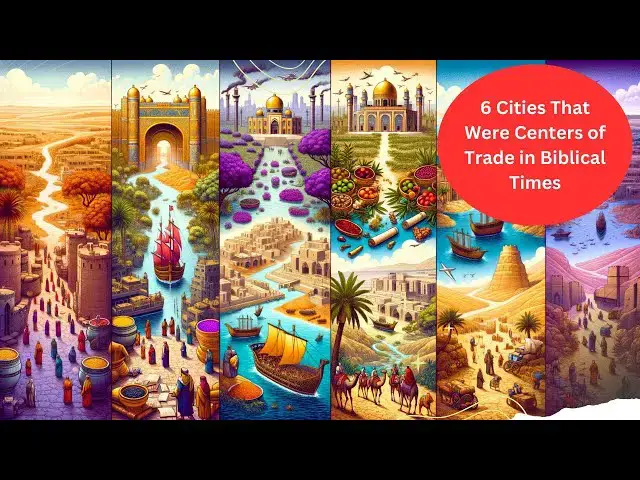

6 Cities That Were Centers of Trade in Biblical Times
Apr 16, 2024
The ancient world, especially during biblical times, was interconnected through complex trade networks that spanned continents. Trade routes facilitated the exchange of goods, culture, and ideas, significantly influencing the development of civilizations. Among the many cities that thrived as centers of trade during these times, six stand out for their historical and biblical significance:
Visit: https://scripturalthinking.com
or subscribe my YouTube channel https://www.youtube.com/@scripturalthinking
Jerusalem (Israel): Jerusalem was not only a spiritual center but also a pivotal trade hub due to its strategic location between the Mediterranean Sea and the Dead Sea. It was a meeting point for trade routes that connected Egypt with Mesopotamia and beyond. The city traded in olive oil, wine, and spices, and it was renowned for its craftsmanship in pottery and metalwork.
Tyre (Lebanon): Tyre was an ancient Phoenician city known for its production and trade of the highly sought-after Tyrian purple dye, made from the murex shellfish. This dye was worth more than its weight in gold in ancient times, making Tyre incredibly wealthy. Tyre's skilled sailors and merchants helped establish it as a dominant trading power in the Mediterranean, dealing in goods such as glass, timber, and precious metals.
Babylon (Iraq): Located along the Euphrates River, Babylon was a key commercial and cultural center in ancient Mesopotamia. Its strategic position allowed it to control trade routes across the region, facilitating the exchange of textiles, grains, and crafts. Babylon was also famous for its impressive architectural achievements, including the Hanging Gardens, one of the Seven Wonders of the Ancient World.
Damascus (Syria): Often cited as one of the oldest continuously inhabited cities in the world, Damascus was crucial in the trade routes from Mesopotamia to the Mediterranean. It was known for trading in goods such as frankincense, myrrh, and spices, and it was especially famed for its production of Damascene steel, a highly valued material in ancient warfare.
Alexandria (Egypt): Founded by Alexander the Great in 331 BC, Alexandria quickly became the foremost center of commerce and Hellenistic culture. Situated on the Mediterranean coast, Alexandria was the endpoint for the trade route that led through Egypt and down the Nile from sub-Saharan Africa, facilitating trade in ivory, gold, and exotic animals. It was also home to the legendary Lighthouse of Alexandria and the ancient world's largest library.
Petra (Jordan): Petra was the capital of the Nabatean Kingdom and is famous for its rock-cut architecture and water conduit system. Its wealth came from its position on the incense and spice trade routes that linked China, India, Egypt, Greece, and Rome. The Nabateans were skilled in water management, which allowed Petra to flourish in the desert and become a vital oasis for traders.
These cities were not only commercial powerhouses of their time but also melting pots of culture and innovation, contributing significantly to the legacy of the ancient world as we know it today.
Show More Show Less #Historical Sites & Buildings