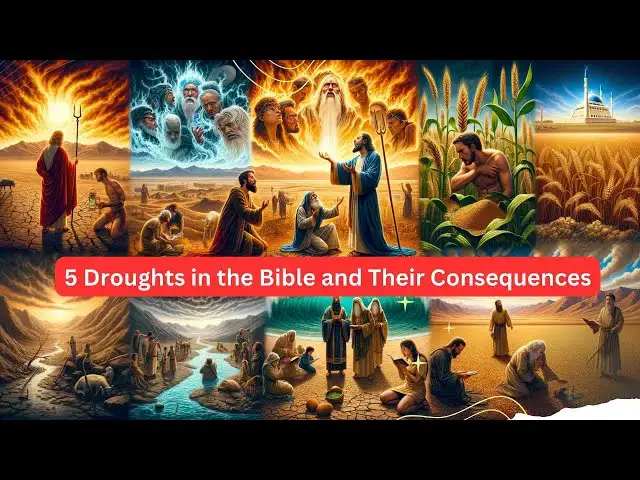

5 Droughts in the Bible and Their Consequences
Apr 16, 2024
The Bible narrates several instances of drought, each carrying profound lessons and consequences for the people involved. These events are often used as metaphors for spiritual dryness or as divine responses to human behavior. Here are five notable droughts mentioned in the Bible and their consequences:
Visit: https://scripturalthinking.com
or subscribe my YouTube channel https://www.youtube.com/@scripturalthinking
The Drought in the Time of Elijah (1 Kings 17-18): This drought was a direct consequence of the Israelites' apostasy, led by King Ahab and Queen Jezebel, who promoted the worship of Baal, a Canaanite deity associated with rain and fertility. Elijah, the prophet, declared that there would be neither dew nor rain in the next few years except at his word. The drought lasted for three and a half years, leading to famine throughout the land. It ended with a dramatic confrontation between Elijah and the prophets of Baal on Mount Carmel, where God sent fire from heaven to consume Elijah's sacrifice, followed by a heavy rain, signifying the end of the drought and God's supremacy over Baal.
The Seven-Year Drought in the Time of Joseph (Genesis 41): Pharaoh's dream, interpreted by Joseph, forecasted seven years of abundance followed by seven years of severe drought. This event led to Joseph's elevation as a key administrator in Egypt, tasked with storing grain during the years of abundance to prepare for the years of famine. The drought extended beyond Egypt, affecting the surrounding regions and eventually leading to Joseph's reunion with his brothers and the migration of the Israelite family to Egypt. This drought is seen as part of God's plan to preserve the Israelite people during a time of famine.
The Drought in the Time of Jeremiah (Jeremiah 14): This drought was a punishment for Judah's sins, including idolatry and ignoring the covenant with God. Jeremiah, the prophet, prays for the people, confessing their sins and pleading for mercy. The drought symbolizes the spiritual dryness and barrenness of the people due to their unfaithfulness. Despite Jeremiah's intercessions, the Lord declares that He will not listen to their cries for rain because of their persistent sinfulness.
The Three-Year Drought During David's Reign (2 Samuel 21): This drought was a divine response to Saul's bloodguilt for killing the Gibeonites, with whom Israel had a covenant. David sought the Lord's reason for the drought, and upon learning of the cause, he made amends with the Gibeonites. To atone for the bloodguilt, seven descendants of Saul were handed over to the Gibeonites and put to death. After this act of justice, God was moved to end the drought, illustrating the importance of keeping covenants and addressing injustices.
The Drought Called by Amos (Amos 4:7-8): The prophet Amos speaks of a time when God withheld rain from certain cities but provided it for others, causing people to stagger from city to city in search of water. This selective drought was a punishment for Israel's sins, particularly social injustices and religious complacency. Amos used the drought as a metaphor for Israel's spiritual thirst, emphasizing that their true need was to seek God.
Each of these droughts in the Bible underscores a theme of divine judgment and correction, but also of mercy, redemption, and the restoration of relationship between God and His people when they turn back to Him. These stories serve as reminders of the consequences of turning away from divine commandments and the blessings of obedience and faithfulness.
Show More Show Less