Up next in 10


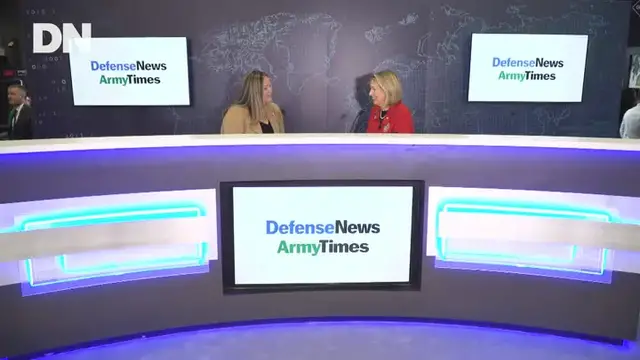
TAPS founder Bonnie Carroll discusses how the organization supports grieving military families through connection, community and compassionate care after loss.
Show More Show Less View Video Transcript
0:00
Hi, I'm Natalie Oliverio with Defense News, and I have the honor of meeting with Bonnie Carroll
0:07
president and founder of the Tragedy Assistance Program for Survivors, TAPS. Bonnie, it is an absolute honor to sit here with you this morning. How are you
0:17
Great, great, Natalie. It's so good to be here, and it's so good to be back at AUSA. We are so glad that you're here again, and I am excited, I know our audience is excited
0:26
to hear all about what is happening right now with TAPS. Well, great. TAPS is the organization
0:32
caring for the families of America's fallen heroes, but really it's for everyone grieving
0:37
the loss of a life that included service to this country. TAPS has been around now for over three
0:43
decades, providing this amazing support whenever and wherever, however, a service member is lost
0:52
taps this air for all those who are affected by that death. And you know, that's beyond just the
0:59
what you see in the news. It's beyond the high profile. It's suicide. It's illness. It's accident
1:05
It's any circumstance. I think that's something easily conflated with people not really understanding
1:13
what losing someone in the line of service really means. It's not just active combat
1:21
It's not only during deployment. It's most of the time it's at home
1:28
Absolutely, Natalie. And for our families, regardless of how that death occurs
1:33
they are honoring a life that included service. So for our families, right now, if a catastrophic injury took place
1:41
say at the height of the wars in Iraq and Afghanistan, and the service member heroically
1:47
survived. The family may then have been a caregiver for 10, 20 years before now the death is occurring
1:57
So we're really looking at that caregiver to survivor journey for those who have lost loved
2:02
ones to suicide, looking at all of the complications around that loss. That's really important, Bonnie
2:09
as you well know, and most survivors that I have spoken with seem to say the same thing
2:17
that as time moves on, the calls stop coming, the offers to provide meals or child care
2:25
they don't roll in as often. So I'm wondering, in the view of TAPS, what is the biggest gap
2:33
between how the Army supports a family immediately after a death and what that
2:39
family actually needs in the months and years that follow. We love our Army partners and we have a great relationship. So when a death occurs
2:48
we're connected immediately with the family and then we can come on and provide emotional support
2:52
additional casework assistance that goes beyond what the government can provide because not everyone is eligible We also can provide a 24 helpline connections to additional resources in the local community It really is this wonderful big family that then goes on forever You know grief is not
3:13
a mental illness. It isn't something that you can resolve with clinical intervention. Grief really
3:18
is the losing a love. It's a broken heart. And the only thing we can do is come together as a
3:25
community to grieve that loss as one and honor that life lived. That is so beautiful. I think
3:33
grief is such a difficult thing for a lot of people to understand and to live through and
3:40
live with. How do you help survivors grasp that concept? You know, it's so important for families
3:50
just to know that they are not alone, that they've got this wonderful big community who just get it
3:54
It's being with your tribe. It's being with others who speak your language in a safe space
4:00
So TAPS is a force multiplier. We hear over and over again from Army commands that they just couldn't have gotten through without our support
4:09
coming right alongside, providing all that additional assistance and wraparound care that really only we can do
4:17
Yeah, absolutely. How well does the military recognize that a family's needs don't end with the funeral
4:27
And what happens to survivors who are still struggling years or even decades later
4:32
It's so important that the military recognizes that for a family, they truly do then grieve for a lifetime
4:40
And the most important thing that they can do is be connected with others, to join this community, to have the additional support
4:48
So I love that the Army leadership is recognizing the connection and the strength that partnering with all of our military service organizations can give
4:59
It's absolutely great. Never been better. We love the fact that Army leadership recognizes that we are a force multiplier
5:07
And how many years has it been that you've been partnering? Well, TAFS has been around now 33 years
5:14
Over three decades. Yes, we've got over 120 staff. Most of them are survivors themselves who are now giving back to this community
5:23
and it's so important. When a family calls that 24-7 helpline at 2 in the morning
5:28
they're talking to another widow, another mom, another surviving dad who gets it
5:34
Wow. How vast is that phone tree for someone who's going to pick up the call at 2 a.m.
5:42
How does TAPS manage something so huge? Because we have families now all over the country who have now gone through this journey with us
5:52
and are able to reach back to those newly bereaved. A lot of people think it's only a few a year, but to be honest
5:58
Last year we had 9 newly bereaved military families grieving the death of a loved one who came to us And whether that was suicide illness accident combat they found their family in TAPS
6:16
Nearly 10,000 people last year. Yeah. 10,000. 10,000 in one year. And that's an average of 26 per day or one per hour coming to us saying, I am grieving a loss
6:28
I need support. You know, I need to be around a community that understands what I'm experiencing
6:35
That is exceptional. That is amazing, Bonnie. Are there survivors who are being missed by the military support system
6:45
whether because of a circumstance of their death, their relationship to the service member
6:50
or their eligibility for government benefits? What needs to change in order to reach them
6:55
I think that understanding that an organization like TAPS that is entirely private and independent
7:03
but yet a partner with the military, with the Army, can do so much to support the mission
7:09
We can be there for siblings. We have a massive sibling network right down to a little subgroup for twins who have lost their twin sibling
7:17
We've got programs for parents, for step-parents, for all those grieving a loss, for battle buddies
7:23
So really recognizing the force multiplication taps is to the Army whenever a death occurs
7:32
It's just phenomenal. It's really a lot to take in when you listen to what you're talking about you've already accomplished over three decades, just the past year
7:43
How do you maintain, how do you sustain the readiness to serve
7:48
Even with a vast network of survivors who've been there, who've get it. helping others carry the load, the invisible burden of grief is heavy. How are you going to
8:00
keep up with it? It's heavy, but it's wonderful to just see the connection, especially with the
8:05
kids. The kids are so honest. I had a little kid come into the good grief camp last week
8:11
and just looked at another kid and just very honestly said, is your dad dead
8:15
And the other little kid goes, uh-huh. And they said, well, who's your dad? Tell me what's your
8:20
dad, what was he like? And they immediately could have an honest conversation, find out they're not
8:25
alone, and I guarantee they will be friends for life. How brave. I know. How brave of them to have
8:32
the courage not only to reach out, but to say confidently, this is what happened to me. Did it
8:37
happen to you? Yeah. And to talk about suicide, to talk about being a caregiver as a child, that's
8:43
tough. Now that we've been around for over three decades, we have kids who came to TAPS in a
8:49
stroller that are now legacy mentors for the new kids. It's great. It's great. I would love to be
8:55
introduced to some of them. That is so special. If you could require army and the defense
9:02
department to leaders to make or one concrete change tomorrow to improve life for military survivors what would it be And how would you measure whether it actually worked
9:17
Understanding what grief is and what it is not. Grief is the normal human response to loss
9:22
to death. It is often coupled with trauma. Trauma is a separate experience. TAPS has the
9:28
ability now over 30 years, recognized by the American Psychological Association, by our awards
9:34
in peer-based emotional support, the research that we've done to really be able to come into
9:40
a family's life and make a difference, have an impact, help them transform the pain of their loss
9:45
into now healing, hope, and resolution. So I would, I just continuously in my meetings with
9:52
Army leadership and all the way down to the briefings we do with casualty officers
9:56
Let them know how important this connection to the community at TAPS is for all those grieving a loss
10:07
Bonnie, after a survivor reaches out to TAPS and they're immediately welcomed and they're reached by someone who has been most likely where they are
10:20
how do you find the next right step for them? Because as you've described, grief is not one size fits all
10:28
It presents and it feels different to a lot of people. So how does TAPS determine what to do next
10:36
We've done 30 years of research. We really talk to survivors and look at this journey
10:41
We published actually on our bereavement model. And that first phase is safety and stabilization
10:48
Just coming into a family's life and making sure their needs are met. They understand their benefits
10:53
They're stabilized because the shock of loss doesn't allow them at this point to do what many people think would be grieving
11:04
The grief may not come for weeks or months later when the full realization of the death finally sinks in
11:12
So we are there to meet a family wherever they are, providing those needs
11:17
But we always lead with safety and stabilization and then providing the emotional support that only we can through that peer connection
11:27
And then ultimately finding meaning and purpose. Having families become a peer mentor or for kids becoming a legacy mentor to those newly bereaved, doing things to honor their loved one
11:39
so it's taken now hundreds of thousands of families having input into this journey
11:45
but it works. It definitely does. I am honored to sit here with you today Bonnie and I am
11:53
so grateful for the work the tireless effort that TAPS makes for our community and I'm so
11:59
thankful that you guys are here and are going to be here for a long long time. Thank you so much
12:04
for being here today. Thanks so much, Natalie. Great to be with you
news